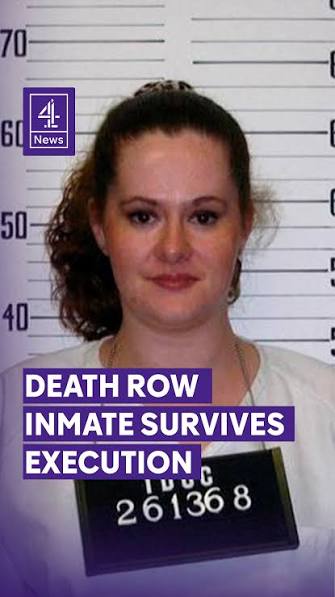
A scheduled execution in Tennessee turned into an extraordinary medical and legal crisis after death row inmate Christa Pike survived two doses of lethal injection drugs and was transported to a hospital.
Pike, 50, was scheduled to be executed at Riverbend Maximum Security Institution in Nashville on September 30, 2026. Instead, witnesses reported that she remained conscious and continued breathing after two doses of pentobarbital were administered.
The Tennessee Department of Correction later confirmed that Pike was transported to an off-site medical facility. Her attorneys said she was receiving life-saving treatment and remained in critical condition.
The failed execution immediately raised questions about Tennessee’s lethal injection protocol, medical procedures and what should happen when an execution does not result in death.
Governor Bill Lee ordered a comprehensive third-party review. He also paused another scheduled execution for the remainder of 2026.
Tennessee Death Row Inmate Survives Two Lethal Injections

The execution began after a series of last-minute legal developments.
According to reports, a federal appeals court temporarily stopped the execution only hours before it was scheduled to begin. The U.S. Supreme Court later cleared the way for Tennessee to proceed.
Pike was brought into the execution chamber at approximately 7:27 p.m., according to media witnesses. She was placed on a gurney and connected to an intravenous line.
She was also allowed to make what were expected to be her final remarks.
However, the procedure did not proceed as expected.
Witnesses reported that Pike remained responsive after the first dose. She reportedly lifted her head and indicated that she was experiencing discomfort in her arm.
A second dose was subsequently administered.
Despite the two injections, witnesses said Pike continued breathing and could be heard making snoring sounds after the execution chamber’s curtain was closed.
The microphone was eventually turned off, and media witnesses were escorted from the area.
Pike was later transported by ambulance to a hospital rather than leaving the prison after her death.
What Happened During the Failed Execution?
The precise medical reason for the failed execution has not yet been established publicly.
The Tennessee Department of Correction said officials followed the state’s established execution protocol.
In a statement issued after the incident, the department said the lethal injection chemical used under the protocol had consistently been effective and that officials followed every required step.
However, Pike’s attorneys had previously raised concerns about her medical condition and difficulty accessing her veins.
According to her legal team, execution personnel spent an extended period attempting to establish intravenous access. Her attorneys said several attempts were made before the execution proceeded.
They had argued before the execution that Pike’s medical condition could complicate the procedure.
Those claims are now part of the broader questions surrounding the failed execution.
Importantly, officials have not publicly established that a particular medical condition or drug problem caused the failure. Governor Lee’s ordered review is expected to examine what happened.
Why Was Christa Pike on Death Row?
Christa Pike was sentenced to death for the 1995 murder of 19-year-old Colleen Slemmer.
Pike was 18 when the killing occurred. She was later convicted of first-degree murder and sentenced to death in 1996.
According to court records and reporting, Pike and her boyfriend, Tadaryl Shipp, were involved in Slemmer’s killing in Knoxville.
The case attracted significant attention because of the brutality of the crime and details presented during the prosecution.
Shipp was also convicted but received a life sentence rather than the death penalty. Pike remained on Tennessee’s death row for decades.
Pike’s execution would have been historically significant because she would have become the first woman executed by Tennessee in more than 200 years.
She was also the only woman on Tennessee’s death row at the time of the scheduled execution.
Pike’s Execution Had Already Faced a Court Challenge
The failed lethal injection came after an intense legal battle.
On September 30, a federal appeals court issued a temporary stay shortly before the planned execution.
The court’s decision involved questions surrounding Pike’s legal claims, including arguments concerning her history and whether certain mitigating evidence had been adequately considered.
Tennessee officials appealed.
The U.S. Supreme Court subsequently allowed the execution to proceed.
That meant Pike was ultimately taken to the execution chamber later that evening.
The legal fight did not end when the injection began.
After witnesses observed that Pike remained alive, her lawyers filed emergency legal motions seeking to halt the process.
They argued that continuing the execution under those circumstances would expose Pike to unconstitutional pain and suffering.
Tennessee Department of Correction Defends Its Protocol
The Tennessee Department of Correction has said that its personnel followed the state’s approved execution procedures.
The state’s current lethal injection system uses a single-drug protocol involving pentobarbital.
Tennessee revised its lethal injection procedure following an independent review of previous execution problems. The revised protocol was completed in December 2024, and executions resumed in May 2025.
The state says the protocol is designed to provide a lawful and effective method for carrying out death sentences.
However, the Pike case has exposed an unusual question: what happens when an inmate remains alive after the state has administered the prescribed drugs?
According to reporting on the state’s protocol, it calls for a second set of syringes if an inmate is not deceased after the first set.
The protocol does not clearly explain what should happen if the inmate remains alive after the second set.
That issue is now likely to receive close scrutiny during the state’s review.
Governor Bill Lee Orders Review
Tennessee Governor Bill Lee responded to the failed execution by ordering a comprehensive third-party review.
Lee described the incident as deeply disturbing and said the state needed answers.
He also announced that another execution scheduled for December 2026 would not take place this year.
The decision effectively pauses Tennessee’s scheduled executions while officials investigate the circumstances surrounding Pike’s case.
The governor’s review could examine several areas, including:
- How intravenous access was established.
- Whether the execution drugs were properly administered.
- Whether the drugs were effective.
- Whether the execution team followed every required procedure.
- Whether Pike’s medical condition affected the process.
- What emergency medical response was available.
- Whether the existing protocol adequately addresses a failed execution.
The investigation will be important because the Tennessee Department of Correction maintains that officials followed the established protocol.
Why the Hospital Transfer Matters
An execution is intended to end with a formal determination of death inside the execution facility.
In Pike’s case, that did not happen.
Instead, she was transported to an outside medical facility after officials determined that she had survived the procedure.
Her attorneys said she was receiving life-saving medical care and was in critical condition.
At the time of the latest reports, authorities had not publicly released a detailed medical prognosis.
That distinction matters because surviving an attempted execution does not automatically mean an inmate has recovered from the effects of the drugs.
The medical consequences could depend on the amount of medication administered, how it entered the body, the person’s underlying medical condition and the treatment received afterward.
Further information will likely depend on medical evaluations and legal proceedings.
An Unprecedented Case in Modern U.S. Executions
The incident has attracted national attention because of the unusual circumstances.
Robin Maher, executive director of the Death Penalty Information Center, said the situation was unprecedented in the modern U.S. execution system.
The Death Penalty Information Center has documented previous cases in which inmates experienced serious problems during lethal injection attempts, including difficulties establishing intravenous access.
However, reports indicate that Pike’s case is unusual because she remained alive after receiving the execution drug itself.
That makes the Tennessee case different from an execution that is stopped before drugs are administered.
It also raises broader questions about how states should respond when a lethal injection does not result in death.
Tennessee Has Faced Execution Problems Before
Pike’s case is not the first time Tennessee has faced problems involving lethal injection.
In 2022, the state stopped the scheduled execution of Oscar Smith after Governor Lee granted a temporary reprieve. An independent review later led Tennessee to revise its execution procedures.
In another case in May 2026, Tennessee halted the planned execution of Tony E. Carruthers after officials reportedly spent more than an hour attempting to establish intravenous access.
The state later continued with its revised execution system.
These earlier incidents are likely to become relevant as officials examine the Pike execution.
The key question is whether the latest failure represents an isolated problem or exposes a broader weakness in the state’s execution procedures.
That determination will depend on the findings of the official investigation.
What Happens to Christa Pike Now?
The immediate issue is Pike’s medical condition.
Her attorneys said she remained alive and was receiving treatment after being transported from the prison.
The next stage is likely to involve both medical and legal proceedings.
Because Pike has survived the attempted execution, courts could be asked to determine what happens to her death sentence.
Her lawyers have already called for her sentence to be changed to life imprisonment.
However, the legal consequences of surviving an execution attempt are complex.
Tennessee’s death penalty law and the state’s execution procedures will both be relevant. Courts may also have to consider constitutional questions surrounding any future attempt to execute Pike.
At this stage, it is too early to say exactly what the final legal outcome will be.
Why the Pike Case Could Change Tennessee’s Execution Policy
The incident could lead Tennessee to review more than the specific execution team involved.
Officials may examine the entire procedure.
That could include drug testing, drug storage, medical screening, IV placement, emergency response and the rules governing a second dose.
The state has already revised its execution protocol in recent years.
The latest incident could result in another review or additional changes.
Governor Lee’s decision to pause the remaining scheduled execution of 2026 demonstrates that the administration intends to examine the process before proceeding with another execution.
The outcome of the investigation will therefore be closely watched by courts, prison officials, defense attorneys, prosecutors and death penalty advocates.
The Broader Death Penalty Debate
Pike’s failed execution has also reignited debate over capital punishment in the United States.
Supporters of the death penalty generally argue that courts can impose capital punishment for the most serious crimes and that lawful sentences should be carried out.
Opponents argue that execution procedures can fail and may expose prisoners to prolonged suffering.
The Pike case has provided a new focus for that debate because the execution did not follow the expected sequence.
However, the legal and ethical arguments surrounding capital punishment are broader than this single case.
The immediate factual questions remain whether Tennessee followed its protocol, why the drugs failed to produce death and what medical and legal consequences followed.
What Officials Have Confirmed So Far
As of October 2, 2026, several facts are established by official statements and multiple news reports.
Christa Pike was scheduled for execution in Tennessee.
Two doses of pentobarbital were administered.
She remained alive afterward.
Witnesses reported that she remained conscious at points during the procedure and continued breathing.
She was transported to a hospital.
Her attorneys said she was receiving life-saving treatment and was in critical condition.
The Tennessee Department of Correction said its staff followed the state’s approved execution protocol.
Governor Bill Lee ordered a third-party review.
The governor also paused another scheduled execution for the remainder of 2026.
What remains unknown is equally important.
Officials have not publicly established exactly why the execution failed.
The final medical outcome is also not yet known.
The investigation should provide more information about those unanswered questions.
Conclusion: Tennessee Faces Major Questions After Failed Execution
The Tennessee death row inmate who survived two lethal injections has become the focus of a major legal and medical investigation.
Christa Pike was supposed to become the first woman executed by Tennessee in more than two centuries.
Instead, she survived two doses of lethal injection drugs and was taken by ambulance to a hospital.
The Tennessee Department of Correction maintains that its personnel followed the approved protocol. Meanwhile, Pike’s lawyers have raised serious concerns about the execution procedure and her medical treatment.
Governor Bill Lee has ordered an independent review and paused another scheduled execution in 2026.
For now, the central questions remain unanswered: Why did the lethal injection fail? Were the drugs properly administered? Did Pike’s medical condition contribute to the failure? And what should Tennessee do next?
Those questions will likely be addressed through the state’s investigation and subsequent court proceedings.
Until those findings are released, claims about the precise cause of the failure should be treated cautiously.
The Pike case has nevertheless created an extraordinary situation in Tennessee’s death penalty system and could have significant consequences for how the state conducts executions in the future.
FAQs
Who is Christa Pike?
Christa Pike is a Tennessee death row inmate who was sentenced to death for the 1995 murder of 19-year-old Colleen Slemmer in Knoxville. Pike was 18 at the time of the crime.
Did Christa Pike survive the lethal injection?
Yes. Reports from AP, Reuters and other outlets say Pike survived two doses of pentobarbital during the September 30, 2026 execution attempt.
Was Christa Pike taken to a hospital?
Yes. The Tennessee Department of Correction confirmed that Pike was transported to an off-site medical facility. Her attorneys later said she was receiving life-saving medical care.
What drug was used in the execution?
Tennessee’s current lethal injection protocol uses pentobarbital as a single-drug method. The state revised its protocol in December 2024.
Why did the execution fail?
Officials have not yet publicly established the exact cause. Pike’s attorneys raised concerns about her medical condition and difficulty accessing her veins, while Tennessee officials said the execution team followed the approved protocol. A third-party review has been ordered.
Did Tennessee stop other executions after the incident?
Yes. Governor Bill Lee announced that another scheduled execution would not take place in 2026 while the state reviews what happened.
Could Christa Pike face another execution attempt?
That question has not been finally resolved. Pike’s attorneys are seeking a change to her sentence, while the state has ordered a review of the failed execution. Any future action would depend on legal proceedings and the outcome of the review.
Was Christa Pike the only woman on Tennessee’s death row?
Yes. Tennessee’s Department of Correction identifies the female death row population separately, and reporting before the execution identified Pike as the state’s only woman sentenced to death.
Why is the case attracting national attention?
The case is unusual because Pike reportedly remained alive after two doses of the execution drug and required emergency medical treatment. Death penalty experts have described the circumstances as highly unusual.
About the Author