A growing wave of technology failures across the United States has triggered an unexpected political backlash against President Donald Trump’s administration. Republican lawmakers are demanding answers from the White House after a series of disruptions affected major technology companies, banking services, airline operations and sensitive government communications.
The GOP tech outage backlash has intensified as questions mount over whether the incidents are simply unrelated technical failures or signs of deeper weaknesses in America’s digital infrastructure.
The disruptions have affected Microsoft services, major financial institutions, United Airlines, the Federal Aviation Administration (FAA) and even communications systems used by the National Security Agency (NSA).
Although senior administration officials insist there is no evidence of a coordinated cyberattack, several Republican lawmakers are questioning whether the government has provided enough information.
Their concerns have placed additional pressure on the White House to explain what happened, identify potential vulnerabilities and reassure Americans that essential services remain secure.
The political controversy is particularly significant because criticism is coming from Trump’s own party. Republican senators and representatives are joining calls for congressional briefings, greater transparency and stronger cybersecurity protections.
Meanwhile, cybersecurity experts warn that America’s growing dependence on interconnected technology makes even isolated technical failures potentially dangerous.
GOP Tech Outage Backlash Grows as Republican Lawmakers Demand Answers

The recent outages have created an unusual situation for the Trump administration. Instead of facing criticism exclusively from Democrats, the White House is also dealing with questions from Republican lawmakers and conservative commentators.
Senator Josh Hawley of Missouri has been among the most vocal critics of the official explanations.
Hawley questioned whether the timing of multiple outages could reasonably be dismissed as coincidence. He argued that Congress needs a proper briefing and that Americans deserve to understand what is happening.
His comments reflect wider concerns within the Republican Party about the reliability of essential American infrastructure.
Senator John Kennedy of Louisiana also suggested that hackers could be responsible for some of the disruptions. Although he did not establish that the incidents were coordinated, he questioned whether the failures were simply accidental.
Other Republican lawmakers have raised similar concerns.
Senator Rick Scott of Florida called for congressional briefings, while Republican representatives Mike Lawler and Nancy Mace demanded more information about the disruptions.
Mace highlighted the number of major outages within a short period and argued that Congress should receive immediate answers.
These demands have increased pressure on the administration to provide a clear explanation.
However, lawmakers have not presented evidence proving that a foreign government or coordinated hacking operation caused the outages.
The distinction is important. Demanding an investigation does not mean that a cyberattack has been confirmed.
Nevertheless, the political message is becoming increasingly clear: Republican lawmakers want greater transparency from the administration.
Multiple Technology Outages Raise National Security Concerns
The controversy began gaining momentum after several major technology disruptions occurred within days of one another.
Although the affected organizations operate different systems, their problems have raised questions about the resilience of American infrastructure.
The incidents have affected several important sectors.
Microsoft Services Experience Major Disruption
Microsoft experienced a significant service disruption that affected email and workplace applications.
The outage created difficulties for employees and organizations relying on Outlook and other Microsoft services.
The company attributed the problem to an earlier network capacity upgrade.
The incident demonstrated how a technical issue affecting one major provider can interrupt business operations across multiple industries.
For many organizations, digital communication systems are essential to daily operations. Even a temporary interruption can create significant financial and operational consequences.
FAA System Failure Disrupts Air Travel
One of the most serious incidents involved the Federal Aviation Administration.
A nationwide ground stop was issued after problems affected air traffic control systems. The disruption lasted approximately four and a half hours and caused widespread flight delays.
Thousands of flights experienced disruption as airlines and passengers struggled to adjust their schedules.
Officials linked the incident to a router-related technical problem at an Arkansas facility.
The FAA’s explanation has not eliminated public concerns.
Air traffic control systems are essential to aviation safety. Therefore, even a temporary technical failure can attract considerable attention.
The incident also raised questions about the condition of older technology used across critical government infrastructure.
Banking Disruptions Increase Public Anxiety
Several major financial institutions also experienced service problems.
Customers reported difficulties accessing banking services, checking balances and completing certain digital transactions.
JPMorgan Chase identified a software bug behind its disruption and said the issue was not cyber-related.
Problems affecting banking systems are particularly concerning because millions of Americans depend on digital platforms for everyday financial activities.
Even when customer funds remain secure, service interruptions can create confusion and anxiety.
NSA Communications Network Faces Temporary Disruption
The National Security Agency also reported a temporary disruption affecting an internal network used for classified communications.
The agency described the problem as a temporary degradation during scheduled maintenance.
Although mission-critical capabilities were reported to remain operational, the incident attracted considerable attention because of the NSA’s national security responsibilities.
The appearance of problems across both commercial and government systems has strengthened calls for a broader examination of America’s digital infrastructure.
The Associated Press and Reuters have reported on the growing political and public concern surrounding the incidents.
Reuters+2
White House Defends Its Response to the Technology Crisis
The Trump administration has pushed back against suggestions that the recent outages represent a coordinated national cyberattack.
Senior officials have repeatedly stated that investigators have not found evidence connecting the incidents to a foreign government, criminal hacking group or other malicious actor.
Director of National Intelligence Jay Clayton has played a central role in communicating the government’s assessment.
Clayton explained that the disruptions appear to involve separate service failures associated with maintenance work, software changes and technology upgrades.
According to his assessment, organizations are increasingly attempting to strengthen their systems by installing security patches and replacing outdated infrastructure.
However, these upgrades can sometimes create unexpected problems.
The administration argues that technical changes intended to improve security may temporarily disrupt services when organizations encounter compatibility issues or unexpected system failures.
Secretary of State Marco Rubio has also attempted to reassure Americans.
Rubio said there was no evidence suggesting that the incidents were connected or caused by malicious actors.
Homeland Security Secretary Markwayne Mullin and FBI Deputy Director Christopher Raia have also supported the assessment that the disruptions were separate technical problems.
Their statements are intended to reduce public anxiety and prevent speculation from spreading.
However, the administration faces a difficult communication challenge.
Several outages occurred within a relatively short period. As a result, many Americans are questioning whether officials fully understand the situation.
The absence of evidence confirming a coordinated attack does not eliminate the need to investigate vulnerabilities.
That distinction is becoming central to the political debate.
Republican Senators Question Whether the Outages Are Coincidental
The most significant development in the GOP tech outage backlash is the growing willingness of Republican lawmakers to publicly challenge the administration’s explanations.
Senator Josh Hawley has questioned the suggestion that the incidents are simply unrelated technical problems.
He argued that the concentration of failures across important American services deserves serious congressional attention.
Senator John Kennedy has also expressed concerns about potential hacking activity.
Meanwhile, Senate Majority Leader John Thune has acknowledged the broader threat posed by hostile actors.
Thune emphasized that the United States must remain prepared to defend banking, transportation and communications networks against potential attacks.
These concerns are not limited to one political party.
Republican lawmakers are increasingly joining Democrats in demanding information about cybersecurity preparedness.
Representative Mike Lawler has called for an immediate congressional briefing and a coordinated government response.
He also highlighted the importance of taking artificial intelligence-related security threats seriously.
Representative Nancy Mace similarly demanded explanations about the number of outages occurring within a short period.
Her comments highlighted the importance of understanding whether the failures share any underlying vulnerabilities.
The lawmakers’ demands suggest that the issue could become a significant congressional oversight matter.
However, it is important to distinguish between political concern and verified intelligence.
No public evidence has established that a single attacker caused all the reported disruptions.
Bipartisan Senate Letter Raises Concerns About Artificial Intelligence
Another important development has emerged from the Senate, where lawmakers have raised concerns about artificial intelligence and the security of critical infrastructure.
Democratic Senator Maria Cantwell and Republican Senator Mike Rounds sent a letter to Jay Clayton outlining their concerns about vulnerabilities in American technology systems.
Their message focused on the growing ability of artificial intelligence to identify weaknesses in software.
The senators warned that AI tools could help attackers discover and exploit vulnerabilities faster than organizations can respond.
This creates a difficult situation for companies and government agencies.
When security weaknesses are discovered, organizations must install patches and updates to protect their systems.
However, updating interconnected technology can also create operational problems.
The senators highlighted the possibility that security upgrades could disrupt essential services if organizations cannot test and implement them effectively.
Their concerns extend beyond large technology companies.
Hospitals, utilities, smaller government agencies and other critical infrastructure providers could also face risks.
The lawmakers called for stronger cybersecurity support and better protection for AI systems themselves.
Their letter demonstrates that the debate is not simply about determining what caused the latest outages.
It is also about preparing the country for future cybersecurity challenges.
AI can improve cybersecurity by helping specialists identify weaknesses before criminals exploit them. However, the same technology can potentially increase the speed and scale of cyber threats.
This creates a growing challenge for American policymakers.
The Senate letter was reported by The Guardian on November 18, 2026.
The Guardian
Could Artificial Intelligence Be Behind the Technology Disruptions?
Artificial intelligence has become an important part of the discussion surrounding the outages.
Some officials and commentators have suggested that AI-related security developments could be contributing to the pressure on older technology systems.
However, there is currently no confirmed evidence that AI directly caused the reported outages.
The distinction between AI-related security upgrades and AI-powered attacks is particularly important.
Organizations increasingly use automated tools to identify software vulnerabilities.
These tools can examine large amounts of code and detect weaknesses that might otherwise remain undiscovered.
Once vulnerabilities are identified, companies may rush to install patches.
However, complicated systems cannot always be updated without risk.
Some older platforms depend on technology that may not work smoothly with modern software.
An update to one component can also affect another connected service.
This is especially challenging for organizations operating large networks.
For example, a bank may depend on multiple systems for customer authentication, payments, account access and transaction processing.
If one component experiences a technical problem, other services may also become unavailable.
AI can make the process of identifying vulnerabilities faster, but organizations still need proper testing, human oversight and reliable recovery systems.
The recent disruptions have therefore renewed questions about whether American companies and government agencies are modernizing their infrastructure quickly enough.
Trump’s Response Draws Criticism From Political Allies
President Donald Trump’s reaction to the outages has also become part of the controversy.
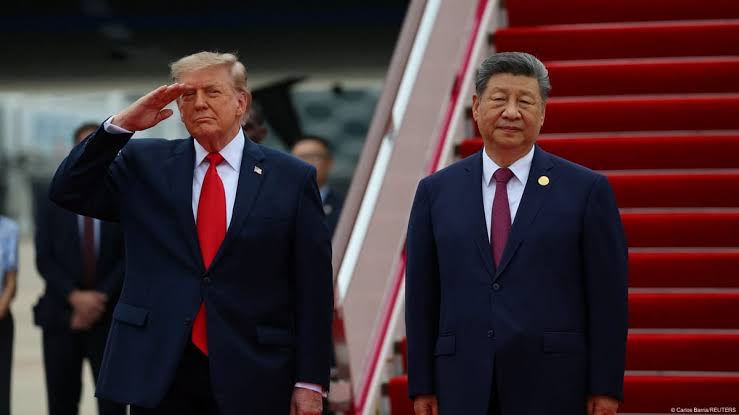
While traveling in Asia, Trump appeared dismissive when journalists questioned him about the technology failures.
He suggested that technical disruptions can happen, even in powerful countries with substantial financial resources.
His response did little to satisfy critics who wanted a detailed explanation.
Some conservative voices argued that the administration needed to communicate more clearly with the public.
Former White House press secretary Karoline Leavitt emphasized the importance of transparency.
She suggested that the White House should explain what officials know and provide reassurance after Trump returns from his overseas trip.
Leavitt also welcomed Jay Clayton’s public explanation that intelligence officials were not seeing evidence of a coordinated cyberattack.
Former Department of Homeland Security spokesperson Tricia McLaughlin expressed frustration over the lack of information.
She argued that Americans deserve to know what is happening rather than receiving vague reassurances.
Conservative commentator Meghan McCain also called for a senior administration official to address the public directly.
These reactions demonstrate that concern about the outages extends beyond traditional political opponents.
Even individuals who have supported Trump or his administration are asking for clearer answers.
The White House now faces pressure to demonstrate that it has a comprehensive understanding of the disruptions.
The Washington Post+1
Markwayne Mullin Faces Questions Over the Federal Response
Homeland Security Secretary Markwayne Mullin has also faced criticism over his handling of the technology disruptions.
The nationwide aviation ground stop placed additional attention on the federal government’s ability to respond to infrastructure emergencies.
Mullin defended the administration’s handling of the incident and said officials worked to ensure aircraft returned safely.
However, his response attracted criticism after questions emerged about his decision to travel to a college football game following the aviation disruption.
Some commentators questioned whether senior officials should have remained focused on the situation while passengers were dealing with widespread travel problems.
Mullin defended his actions and explained that the trip had been planned.
During subsequent congressional testimony, he addressed the government’s response and defended the position that the outages were separate technical failures.
He also indicated strong confidence that foreign adversaries were not responsible.
Nevertheless, the controversy has created additional scrutiny for the Department of Homeland Security.
The agency plays an important role in protecting the country’s critical infrastructure.
Its responsibilities include coordinating cybersecurity efforts and responding to threats affecting essential services.
Lawmakers are likely to continue examining whether federal agencies have sufficient resources and technical capabilities to address increasingly complicated digital threats.
The Associated Press reported on Mullin’s congressional testimony and the questions surrounding the federal response.
AP News
Why America’s Aging Technology Infrastructure Is a Growing Concern
The recent outages have exposed a problem that cybersecurity specialists have warned about for years: America’s dependence on aging digital infrastructure.
Many essential services operate through complicated networks developed over several decades.
Although organizations regularly introduce new software and hardware, older systems often remain part of their operations.
Replacing these systems can be expensive, complicated and time-consuming.
Government agencies face additional challenges because they must maintain services while upgrading important technology.
Financial institutions, airlines and healthcare providers also need to protect sensitive information while ensuring their systems remain available.
This creates several potential weaknesses.
First, outdated software can contain security vulnerabilities. Criminals may exploit weaknesses when organizations fail to install important updates.
Second, complicated upgrades can introduce new problems. Even security improvements can cause unexpected interruptions if they are not tested properly.
Third, interconnected systems can create wider disruption. A technical failure in one service may affect other organizations that depend on the same infrastructure.
Fourth, organizations need reliable backup systems. Without effective recovery plans, relatively small technical problems can create significant operational difficulties.
The latest incidents have demonstrated why infrastructure modernization should be treated as a national priority.
However, replacing older systems alone will not solve every cybersecurity problem.
Organizations also need trained employees, regular security assessments, emergency response procedures and reliable backup arrangements.
For the federal government, the challenge is particularly important because disruptions can affect public safety, national security and economic stability.
What the Outages Mean for American Businesses and Ordinary Citizens
Although the political debate is focused on Washington, the consequences of technology failures are being experienced by ordinary Americans.
Modern life depends heavily on digital services.
People use online banking to pay bills, mobile applications to manage finances and workplace platforms to communicate with colleagues.
Air travel also depends on complex digital systems.
When these services become unavailable, even temporarily, the consequences can spread quickly.
Banking Customers Face Uncertainty
Banking disruptions can prevent customers from accessing important financial information.
People may struggle to check balances, complete payments or transfer money.
Even when banks confirm that customer funds remain secure, temporary access problems can create understandable anxiety.
Customers should rely on official banking communications rather than unverified social media claims.
Airline Passengers Experience Travel Problems
The FAA ground stop demonstrated how a technical problem can affect passengers across the country.
Flight delays can create missed connections, additional accommodation expenses and disruptions to business travel.
Airlines may also need several hours to restore normal schedules after an initial system failure.
Businesses Face Operational Challenges
Companies relying on cloud platforms and digital communication systems can lose productivity during outages.
Employees may be unable to access documents, communicate with customers or complete essential tasks.
Smaller businesses can be particularly vulnerable because they may have fewer backup resources.
Government Agencies Must Protect Sensitive Information
Disruptions involving government networks raise additional concerns.
Federal agencies handle sensitive information and coordinate important national operations.
Even temporary technical problems can create operational challenges.
This is why cybersecurity experts emphasize the importance of resilience, not simply preventing attacks.
A secure system must also be capable of recovering quickly when something goes wrong.
Could the Outages Lead to a Larger Congressional Investigation?
The growing political pressure could lead to additional congressional hearings and oversight.
Republican lawmakers are demanding explanations, while bipartisan concerns about cybersecurity are creating opportunities for cooperation.
Several questions are likely to remain central to the debate:
What specific technical problems caused each outage?
Were any common vulnerabilities discovered during the investigations?
Did security upgrades contribute to the disruptions?
Were federal agencies properly prepared for unexpected system failures?
Are existing cybersecurity protections sufficient against AI-assisted threats?
What additional resources do critical infrastructure providers need?
Lawmakers may also seek information about how federal agencies coordinate with private companies during major technology disruptions.
This is particularly important because much of America’s digital infrastructure is operated by private organizations.
The government cannot protect the entire system independently.
Technology companies, banks, airlines, telecommunications providers and federal agencies must work together to identify threats and respond to emergencies.
A coordinated approach could help prevent future disruptions.
However, any investigation must distinguish between confirmed technical findings and unverified theories.
Public concern is understandable, but speculation about foreign involvement should not replace evidence.
What Happens Next in the GOP Tech Outage Backlash?
The coming days could prove important for the White House.
Officials will need to provide consistent explanations and demonstrate that investigations are progressing.
Republican lawmakers are likely to continue pressing for briefings and detailed information.
The administration must also explain how it plans to improve infrastructure reliability.
The debate could expand into broader discussions about AI regulation, cybersecurity funding and the modernization of federal technology systems.
Another important question concerns accountability.
If investigations identify failures in maintenance procedures, outdated equipment or inadequate oversight, lawmakers may demand corrective action.
Companies could also face pressure to improve transparency when major service disruptions affect customers.
For the White House, the political challenge is significant.
Trump’s supporters expect the administration to demonstrate strength on national security and government efficiency.
Repeated disruptions affecting essential services could weaken public confidence if officials fail to communicate effectively.
At the same time, the administration has an opportunity to demonstrate that it can respond responsibly to complicated technical problems.
A transparent investigation, supported by clear evidence, could help restore public confidence.
Conclusion: Republican Pressure Puts White House Cybersecurity Response Under Scrutiny
The GOP tech outage backlash has become a major political challenge for the Trump administration.
Multiple disruptions affecting Microsoft, banks, airlines, the FAA and the NSA have raised questions about the reliability of America’s digital infrastructure.
Republican senators and representatives are demanding answers, while bipartisan lawmakers are warning about the potential risks associated with artificial intelligence and outdated technology.
The administration maintains that there is no evidence linking the incidents to a coordinated cyberattack.
That explanation may prove correct, but it does not eliminate the need for transparency and accountability.
Americans depend on digital systems for banking, transportation, communication and national security.
Those systems must remain reliable, even as organizations upgrade their technology and respond to new cybersecurity threats.
The immediate challenge for the White House is to explain what happened.
The longer-term challenge is to ensure that similar disruptions do not threaten essential American services again.
For Republican lawmakers, the message is clear: Americans deserve reliable infrastructure, stronger cybersecurity protections and straightforward answers from their government.
Frequently Asked Questions (FAQs)
1. Why are Republican senators demanding answers from the White House?
Republican lawmakers are concerned about multiple technology outages affecting banks, airlines, Microsoft services and government networks. They want detailed explanations, congressional briefings and stronger cybersecurity protections.
2. Which Republican senators have questioned the technology outages?
Senators Josh Hawley, John Kennedy and Rick Scott have raised concerns about the disruptions. Republican Senator Mike Rounds has also joined Democratic Senator Maria Cantwell in calling for stronger cybersecurity protections.
3. Were the recent US technology outages caused by a cyberattack?
There is currently no confirmed evidence that the outages were caused by a coordinated cyberattack. Intelligence Director Jay Clayton and other administration officials have attributed them to separate technical failures, maintenance and system upgrades.
4. Did artificial intelligence contribute to the outages?
There is no confirmed evidence that artificial intelligence directly caused the reported outages. However, lawmakers have warned that AI can help identify software vulnerabilities and potentially accelerate cyber threats.
5. Which American services were affected by the outages?
Reported disruptions affected Microsoft services, major banks, United Airlines, FAA air traffic control systems and an internal NSA communications network.
6. What did Donald Trump say about the technology disruptions?
Trump appeared dismissive of the problems during his Asian trip, suggesting that technical failures can happen even in powerful countries. His response attracted criticism from some Republican allies and conservative commentators.
7. What is the biggest cybersecurity concern following the outages?
The biggest concern is the vulnerability of interconnected and aging technology infrastructure. Experts warn that inadequate maintenance, software weaknesses and complicated upgrades can disrupt essential services.
8. Could Congress investigate the outages further?
Yes. Republican and Democratic lawmakers have called for congressional briefings and greater transparency. Further oversight could examine infrastructure vulnerabilities, maintenance procedures and federal cybersecurity preparedness.
About the Author