Strait of Hormuz Open: Oil Crash, Ceasefire Relief, Global Markets Surge
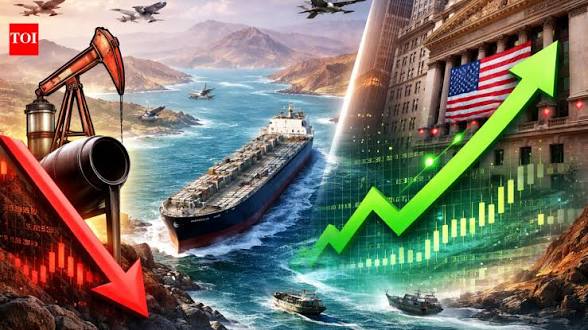
The reopening of the Strait of Hormuz has triggered one of the most dramatic financial reactions of 2026. Oil prices plunged sharply, stock markets rallied, and investors worldwide breathed a sigh of relief following confirmation that commercial vessels could resume transit through the critical shipping lane.
The development comes after a ceasefire agreement tied to ongoing tensions in the Middle East, easing fears of prolonged energy disruptions. With global oil flows expected to stabilize, the immediate result has been a steep drop in crude prices and renewed optimism across financial markets.
This article explores what happened, why it matters, and how the reopening of the Strait of Hormuz could reshape the global economy in the months ahead.
What Happened: Strait of Hormuz Officially Reopened

The dramatic shift in markets began when Iran confirmed that the Strait of Hormuz was fully open to commercial shipping during an active ceasefire. The announcement followed weeks of uncertainty that had severely disrupted global oil supplies.
Oil prices dropped by more than 10–11%, pushing Brent crude below $90 per barrel—its lowest level in over a month.
The reopening came alongside a ceasefire linked to broader Middle East negotiations. Officials confirmed that vessels could safely pass through the strait, restoring confidence in global shipping networks.
Markets responded almost instantly. Major global indices surged as investors recalibrated expectations toward stronger economic growth and lower inflation risks.
Why the Strait of Hormuz Matters So Much
To understand the magnitude of this event, it’s essential to recognize the strategic importance of the Strait of Hormuz.
The narrow waterway connects the Persian Gulf to global shipping lanes and handles a massive share of the world’s energy supply.
Key facts include:
- Nearly 20% of global oil supply moves through the Strait
- Around 18–19 million barrels of oil per day pass through it
- Major exporters including Saudi Arabia, Iraq, and Iran depend on the route
- A closure can instantly trigger global inflation spikes
These figures illustrate why markets react so dramatically whenever the strait is threatened.
When Iran restricted traffic earlier in 2026, it created what analysts described as the largest supply disruption in modern energy history.
Oil Prices Crash: A Historic Market Reaction
Perhaps the most visible effect of the reopening has been the sudden collapse in oil prices.
Within hours of the announcement:
- Brent crude fell by roughly 10–12%
- U.S. crude dropped to around $83–$88 per barrel
- Energy stocks declined sharply
- Airlines and logistics companies rallied
These changes reflect shifting expectations that oil supplies will return to normal levels.
The dramatic fall also ended weeks of upward pressure that had driven prices to extreme highs during the conflict.
At one point earlier in 2026:
- Oil prices surged above $126 per barrel
- Supply disruptions triggered inflation fears
- Governments considered emergency energy responses
Those fears now appear to be easing—at least temporarily.
Global Stock Markets Surge on Relief
As oil prices dropped, global equity markets surged in response.
Key reactions included:
- U.S. stock indices rose sharply
- European markets posted strong gains
- Technology and airline sectors rallied
- Energy company shares fell due to lower oil prices
The Dow Jones Industrial Average jumped by more than 900 points, highlighting investor optimism.
European markets also surged, with the FTSE 100 and DAX reaching multi-week highs following the announcement.
The surge shows how closely stock markets are tied to oil supply stability.
Ceasefire Relief: A Turning Point in the Crisis
The reopening of the Strait of Hormuz was made possible by a ceasefire that paused hostilities tied to regional conflicts.
Negotiations helped reduce military pressure and allowed shipping lanes to reopen under coordinated monitoring.
Key outcomes of the ceasefire include:
- Reduced risk of tanker attacks
- Stabilization of shipping routes
- Improved diplomatic communication
- Short-term relief for global trade
The ceasefire also restored hope that long-term negotiations could produce lasting stability in the region.
Still, analysts warn that peace remains fragile.
Impact on Inflation and Interest Rates
Lower oil prices have far-reaching economic implications, especially for inflation.
Energy costs influence:
- Transportation
- Manufacturing
- Food production
- Consumer goods pricing
As oil prices drop, inflation pressure typically eases.
Economists now believe that falling energy prices could give central banks more flexibility to consider interest rate cuts later in 2026.
This possibility has fueled additional optimism among investors.
Why Investors Are Celebrating the News
Financial markets thrive on predictability.
The reopening of the Strait restored confidence in supply chains and reduced fears of long-term disruptions.
Investor optimism stems from several factors:
- Lower fuel costs improve corporate profitability
- Reduced inflation supports consumer spending
- Stable oil supplies reduce recession risks
- Improved geopolitical outlook boosts confidence
Together, these factors create a powerful combination for stock market growth.
Impact on Airlines, Shipping, and Logistics
Few industries benefit more from falling oil prices than airlines.
Fuel is often the largest operating expense for airline companies.
After the reopening:
- Airline stocks surged
- Shipping firms gained cautiously
- Travel companies saw increased investor interest
Lower fuel costs translate directly into higher profit margins.
Shipping companies, however, remain cautious because:
- Security concerns still exist
- Insurance costs remain elevated
- Full traffic recovery may take time
Energy Sector Loses Ground
While most industries celebrated falling oil prices, the energy sector faced immediate losses.
Oil producers rely heavily on high crude prices to maintain profitability.
After the reopening:
- Energy stocks declined
- Exploration budgets faced pressure
- Investor expectations shifted
Lower oil prices can reduce earnings potential for major oil companies.
However, long-term impacts depend on how stable the ceasefire remains.
What Could Still Go Wrong
Despite the optimism, risks remain.
Experts warn that the reopening does not guarantee long-term stability.
Key concerns include:
- Ceasefire breakdown
- Renewed military conflict
- Shipping security threats
- Political disagreements
Even minor incidents could disrupt shipping again.
Markets remain highly sensitive to geopolitical headlines.
How the Crisis Started
To fully understand the reopening’s significance, it’s important to review the origins of the crisis.
The conflict began when regional tensions escalated into military strikes targeting Iranian infrastructure.
Iran responded by restricting passage through the Strait of Hormuz.
This decision:
- Blocked major oil shipments
- Triggered global panic
- Sent oil prices soaring
- Disrupted international trade
At its peak, the disruption became the largest oil supply shock in modern history.
Global Economic Ripple Effects
The earlier closure of the Strait had already caused significant economic damage.
Consequences included:
- Rising fuel prices
- Increased shipping costs
- Higher consumer inflation
- Market volatility
Countries heavily dependent on imported oil were especially affected.
Asia—including India—felt the pressure strongly due to reliance on Middle Eastern energy supplies.
Why India and Asia Are Watching Closely
Asian economies depend heavily on energy imports.
Countries such as:
- India
- China
- Japan
- South Korea
receive a significant portion of their oil shipments through the Strait of Hormuz.
Disruptions can affect:
- Fuel prices
- Manufacturing costs
- Transportation expenses
Because of this reliance, Asian markets reacted strongly to reopening news.
Will Oil Prices Continue Falling?
This is the question investors are asking worldwide.
Short-term expectations suggest:
- Continued price stabilization
- Possible further declines
- Reduced volatility
However, long-term trends depend on:
- Diplomatic progress
- Military stability
- Shipping reliability
If tensions rise again, prices could spike rapidly.
Long-Term Outlook for Global Markets
Markets thrive on stability.
If the Strait remains open:
- Oil prices may stabilize
- Inflation could decline
- Economic growth may strengthen
- Investment activity may increase
However, experts emphasize caution.
Geopolitical stability remains unpredictable.
What This Means for Everyday Consumers
Lower oil prices affect daily life in multiple ways.
Potential consumer benefits include:
- Lower fuel prices
- Reduced transportation costs
- Stabilized food prices
- Lower inflation pressure
These changes can improve household budgets worldwide.
The Strategic Importance of Maritime Trade Routes
The Strait of Hormuz is not just an oil route—it is a cornerstone of global trade.
Modern economies rely on:
- Reliable shipping
- Secure trade routes
- Predictable supply chains
Any disruption creates ripple effects across industries.
This is why governments closely monitor maritime security in the region.
What Governments Are Doing Next
Governments and military forces continue monitoring the situation closely.
Security measures include:
- Naval patrols
- Maritime surveillance
- Diplomatic negotiations
- Trade coordination
These efforts aim to prevent future disruptions.
Expert Predictions for the Next 90 Days
Analysts forecast three possible scenarios:
Scenario 1: Stable Peace
Oil prices remain moderate, markets continue rising.
Scenario 2: Fragile Stability
Minor incidents create temporary volatility.
Scenario 3: Renewed Conflict
Oil prices spike sharply again.
Most economists currently expect fragile stability as the most likely outcome.
Conclusion: A Moment of Relief—But Not the End of Risk
The reopening of the Strait of Hormuz marks a significant turning point in the global energy crisis of 2026.
Oil prices have fallen sharply. Markets have surged. Investors are optimistic.
But uncertainty remains.
The world is watching closely to see whether the ceasefire holds and whether stability becomes permanent.
For now, the reopening represents a rare moment of relief in an otherwise volatile geopolitical landscape.
FAQs
Why did oil prices fall after the Strait of Hormuz opened?
Oil prices fell because reopening restored confidence that global supply chains would resume normal operations, reducing fears of shortages.
How important is the Strait of Hormuz to global oil supply?
The Strait handles nearly 20% of global oil shipments, making it one of the most critical energy routes in the world.
Will fuel prices decrease for consumers?
Fuel prices may gradually decline if oil prices remain stable and the ceasefire holds.
Why did global stock markets surge?
Investors reacted positively to lower oil prices, which reduce inflation risks and improve economic outlooks.
Is the Strait of Hormuz fully safe now?
Not completely. While open, security risks remain due to ongoing geopolitical tensions.
How does this affect inflation worldwide?
Lower oil prices help reduce transportation and production costs, which can ease inflation pressure globally.
Could oil prices rise again?
Yes. Any renewed conflict or disruption could quickly push prices higher.
What industries benefit most from falling oil prices?
Airlines, logistics companies, travel businesses, and manufacturing sectors benefit the most.
How useful was this post?
Click on a star to rate it!
Average rating 0 / 5. Vote count: 0
No votes so far! Be the first to rate this post.
About the Author

usa5911.com
Administrator
Hi, I’m Gurdeep Singh, a professional content writer from India with over 3 years of experience in the field. I specialize in covering U.S. politics, delivering timely and engaging content tailored specifically for an American audience. Along with my dedicated team, we track and report on all the latest political trends, news, and in-depth analysis shaping the United States today. Our goal is to provide clear, factual, and compelling content that keeps readers informed and engaged with the ever-changing political landscape.