Abomination Scandal:Mamdani NYC Map Eviscerated,Panic,Fury
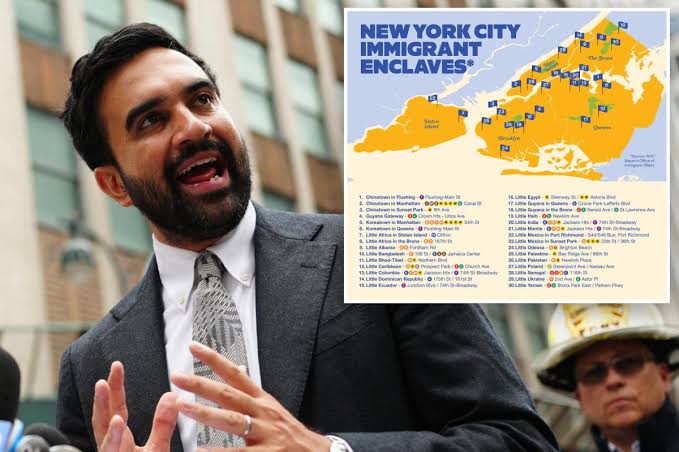
A new political controversy has erupted in New York City after a map highlighting immigrant communities triggered intense debate over history, representation, and cultural recognition. The dispute surrounding the Mamdani NYC map controversy has generated criticism from some communities, while supporters argue the discussion has been shaped by political divisions and misunderstandings about the purpose of the project.
The map, promoted as part of an effort to highlight New York’s diverse immigrant neighborhoods, drew attention after critics argued that several historically significant communities were missing. Among the communities mentioned in criticism were Italian, Irish, and Jewish neighborhoods, including the famous Little Italy area.
The backlash quickly expanded beyond a discussion about a map. It became a larger debate about how cities recognize immigrant history, whose stories receive official attention, and whether government-sponsored cultural projects should include every major community.
What Is the Mamdani NYC Map Controversy?
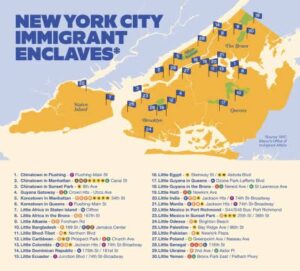
The controversy centers around a New York City immigrant enclaves map designed to showcase neighborhoods connected to immigrant communities across the city’s five boroughs.
The map highlighted dozens of cultural communities, including neighborhoods associated with Asian, Middle Eastern, Caribbean, Latin American, and other immigrant groups. However, critics questioned why some historically important communities were not included.
Reports noted that Little Italy and some Irish and Jewish communities became major points of criticism. Opponents argued that these neighborhoods played a major role in shaping New York’s identity and should have been represented.
Supporters of the project responded that immigrant communities continue to evolve, and modern demographic patterns may differ from historical migration patterns.
Why Did the Map Trigger Public Anger?
Maps created by government institutions often carry symbolic importance. They are not just geographic tools; they can influence how people understand history and identity.
Critics of the NYC immigrant map argued that leaving out certain communities created a perception that some groups were being ignored.
For many New Yorkers, neighborhoods such as Little Italy represent generations of migration, struggle, and cultural contribution. Critics said recognition should include both newer immigrant communities and historic immigrant communities.
The debate intensified because New York City has long been known as a global center of immigration. Millions of residents trace their family histories to migration waves that transformed the city over centuries.
The Political Battle Over Representation
The dispute quickly became political, with opponents using the controversy to criticize leadership decisions and supporters defending the broader goal of celebrating immigrant diversity.
Critics claimed the map reflected selective recognition, arguing that cultural representation should not exclude communities with deep historical roots.
Supporters countered that the map was focused on highlighting current immigrant enclaves rather than creating a complete history of every immigrant group that has shaped New York.
Reports indicate that officials later acknowledged the concerns and discussed updating the map to include additional neighborhoods.
Historical Importance of New York’s Immigrant Neighborhoods
New York City’s identity has always been connected to immigration.
From Ellis Island arrivals to modern global migration, different communities have built neighborhoods, businesses, institutions, and cultural traditions.
Little Italy
Little Italy became one of the most recognizable Italian-American neighborhoods in the United States. Although the area has changed significantly over time, its historical importance remains a major part of New York’s cultural story.
Irish Communities
Irish immigrants played a major role in New York’s development, particularly during the 19th and early 20th centuries. Their influence shaped politics, labor movements, and community institutions.
Jewish Neighborhoods
Jewish immigrant communities contributed significantly to New York’s cultural, economic, and social development. Historic neighborhoods became centers of education, commerce, and community life.
Critics of the map argued that these histories deserve acknowledgment alongside newer immigrant communities.
Supporters Defend the Purpose of the Map
While critics described the map as a serious omission, supporters argued that the controversy overlooked the project’s purpose.
They said the map was created to highlight active immigrant communities rather than provide a complete encyclopedia of every ethnic group that has existed in New York.
Officials also stated that the list was not meant to represent all immigrant communities in the city and that additional updates could be made.
This argument reflects a broader challenge faced by modern cities: deciding how to balance historical recognition with current demographic realities.
Social Media Reaction and Public Debate
The controversy spread rapidly online, where users debated whether the map represented inclusion or exclusion.
Some people criticized the omission of historic neighborhoods, saying cultural recognition should include communities that built the foundation of the city.
Others argued that immigrant identity changes over time and that cities must recognize newer communities as well.
The online debate revealed a deeper disagreement over how society defines immigrant heritage.
Is an immigrant neighborhood defined by current immigrant populations?
Or should historical contributions receive equal recognition?
That question became central to the discussion.
Why Cultural Maps Are Often Controversial
Government-created cultural maps can become sensitive because they involve decisions about visibility and recognition.
Choosing which communities appear on a map can unintentionally create feelings of inclusion or exclusion.
Experts often point out that cities contain thousands of overlapping histories, making it difficult to represent every group equally.
A map showing one set of communities does not necessarily mean others are unimportant, but omissions can still create strong emotional reactions.
The Bigger Issue: Who Gets Recognized in Modern Cities?
The Mamdani NYC map controversy reflects a larger national conversation about identity and representation.
Major cities across the world face similar questions:
- Which communities should receive official recognition?
- How should historical contributions be balanced with current demographics?
- Can cultural projects represent everyone fairly?
New York, because of its enormous diversity, faces these questions more intensely than many other places.
Future Impact of the Controversy
The controversy may influence how future cultural projects are designed.
Officials may face pressure to create broader consultation processes before releasing maps, reports, or campaigns highlighting communities.
Including representatives from different cultural groups could help prevent misunderstandings and ensure wider participation.
The debate also demonstrates how cultural issues can quickly become political issues in modern cities.
Conclusion
The Mamdani NYC map controversy has become a major debate over representation, immigrant history, and cultural recognition in New York City.
While critics argue that important communities were overlooked, supporters maintain that the map was designed to highlight selected immigrant enclaves rather than provide a complete historical record.
The controversy highlights a larger challenge facing diverse cities: recognizing both historic communities and newer immigrant populations while ensuring that cultural stories are represented fairly.
As New York continues to evolve, debates like this show how strongly communities value recognition of their history and contributions.
FAQs
1. What is the Mamdani NYC map controversy?
The controversy involves a New York City immigrant enclaves map that faced criticism after some communities argued they were not represented.
2. Why did critics object to the NYC immigrant map?
Critics said historically significant communities, including Little Italy and some Irish and Jewish neighborhoods, were missing from the map.
3. Was the map intended to include every immigrant community?
Officials said the map was not designed as a complete list of all immigrant communities in New York City.
4. Did officials respond to the criticism?
Reports said officials discussed adding additional neighborhoods and updating the map after concerns were raised.
5. Why are cultural maps politically sensitive?
Because maps influence public recognition, communities may feel excluded if their history is not represented.
6. What role does immigration play in NYC history?
Immigration has shaped New York’s population, economy, neighborhoods, and cultural identity for generations.
7. Could the map controversy affect future city projects?
The debate may encourage officials to use broader community consultation when creating cultural recognition programs.
The controversy surrounding the Mamdani NYC map controversy continued to gain attention as political figures, community leaders, and residents debated the meaning behind cultural representation in New York City.
For critics, the issue was not only about a missing neighborhood on a map. They argued that official recognition carries symbolic importance and that excluding communities with deep historical connections to New York can create feelings of neglect.
For supporters, the debate highlighted the difficulty of representing a city with centuries of migration history. They argued that no single map can capture every community that has contributed to New York’s development.
The disagreement revealed a larger challenge: how can a modern city recognize its past while also representing its present?
Community Leaders Demand Broader Inclusion
Following the criticism, some community representatives called for a more inclusive approach to cultural mapping.
They argued that immigrant history should not be viewed only through current population patterns. Instead, they said historical contributions, cultural institutions, and generational impact should also be considered.
Many community advocates emphasized that immigrant neighborhoods often change over time. A neighborhood may no longer have the same population it had decades ago, but its historical influence can remain significant.
This argument became one of the central points of criticism surrounding the NYC map debate.
The Challenge of Defining an Immigrant Enclave
One reason the controversy became complicated is that the term “immigrant enclave” can have different meanings.
Some people define an immigrant enclave as a neighborhood where a large number of foreign-born residents currently live.
Others believe the term should include historically important communities where immigrant groups built cultural institutions, businesses, and traditions.
Because of these different interpretations, disagreements over maps and lists are common.
A neighborhood can be historically important while no longer having the same demographic makeup it once had.
New York’s Changing Demographic Landscape
New York City has experienced continuous waves of immigration for more than a century.
Different groups have arrived during different periods, creating neighborhoods that reflect changing global migration patterns.
Earlier generations of immigrants established communities that became symbols of American opportunity. Later waves created new cultural centers throughout the city.
Today, neighborhoods representing communities from Asia, Latin America, Africa, the Caribbean, and the Middle East continue to reshape New York’s identity.
The debate surrounding the map reflects this constant transformation.
Critics Warn About Cultural Erasure Concerns
Some critics used strong language to describe their concerns, arguing that missing communities could contribute to cultural erasure.
They said official projects should recognize both emerging immigrant communities and historic groups that helped build the city.
According to critics, recognition is not only about geography. It is also about preserving memories, traditions, and contributions of previous generations.
They argued that a complete picture of New York’s immigrant story requires acknowledging multiple chapters of history.
Supporters Say Representation Must Include New Communities
Supporters of the project emphasized that immigrant communities today look different from those of previous generations.
They argued that New York must recognize communities that have grown in recent decades and avoid focusing only on historical migration patterns.
They said celebrating newer immigrant communities does not diminish the contributions of earlier groups.
Instead, they believe cities should continue expanding recognition efforts as demographics change.
How Political Controversies Grow in the Digital Age
The rapid spread of the NYC map controversy demonstrates how quickly local issues can become national conversations.
Social media platforms allow criticism and support to spread instantly.
A project designed for a local audience can become part of a broader political debate within hours.
Online discussions often become more intense because cultural issues are connected to personal identity and community pride.
This makes government communication especially important when dealing with sensitive topics.
Lessons for Future Cultural Projects
The controversy offers several lessons for future city initiatives.
1. Community Consultation Matters
Officials may need to involve more community groups before releasing cultural projects.
Early discussions can help identify concerns and improve accuracy.
2. Historical Context Is Important
Modern demographic information alone may not fully represent a community’s importance.
Historical contributions can provide a broader understanding.
3. Transparency Can Reduce Confusion
Clearly explaining the purpose and limitations of a project can prevent misunderstandings.
Could the Map Become More Comprehensive?
One possible outcome of the controversy is that future versions of the map may include additional communities and historical context.
Updating cultural projects is common, especially when public feedback identifies gaps.
A revised approach could combine:
- Current immigrant population data
- Historical migration information
- Cultural institutions
- Community input
Such an approach could provide a more complete picture of New York’s diverse identity.
The Broader Debate About Identity and Recognition
The Mamdani NYC map controversy represents a much larger conversation happening in many diverse cities.
Communities often ask:
- Who gets recognized?
- Whose history is highlighted?
- How should governments represent diversity?
- How can cities avoid leaving groups behind?
These questions have no simple answers because cities are constantly changing.
New York’s immigrant story includes many generations, languages, cultures, and experiences.
Public Reaction Remains Divided
Even after explanations from officials, opinions remain divided.
Some residents believe the controversy was exaggerated and that the map’s purpose was misunderstood.
Others maintain that cultural recognition must be handled carefully because omissions can have symbolic consequences.
The disagreement shows how deeply people value their communities’ histories.
Final Thoughts: A Debate Beyond One Map
The Mamdani NYC map controversy is about more than a single document. It represents a broader discussion about history, identity, immigration, and representation.
New York City has always been shaped by people from around the world. Every generation has added new chapters to the city’s story.
The challenge for policymakers is creating projects that honor both historic communities and newer immigrant groups.
As debates over representation continue, the controversy serves as a reminder that cultural recognition requires careful planning, transparency, and meaningful community involvement.
A map may be a simple visual tool, but the stories behind those lines represent generations of people who helped build one of the world’s most diverse cities.
Additional FAQs
8. Why are maps important in cultural discussions?
Maps influence how people understand communities, history, and identity. Being included can represent recognition and visibility.
9. Can a cultural map include every community?
Because cities have complex histories, creating a complete map of every community can be challenging. Many projects focus on specific goals or time periods.
10. What can cities do to avoid similar controversies?
Cities can involve diverse communities, explain project goals clearly, and include both historical and current perspectives.
11. Does excluding a neighborhood mean it is unimportant?
Not necessarily. A map may have limited goals, but omissions can still create concerns among communities.
12. Why does immigrant history matter in New York?
Immigration has shaped New York’s culture, economy, neighborhoods, and global reputation for generations.
How useful was this post?
Click on a star to rate it!
Average rating 0 / 5. Vote count: 0
No votes so far! Be the first to rate this post.
About the Author

usa5911.com
Administrator
Hi, I’m Gurdeep Singh, a professional content writer from India with over 3 years of experience in the field. I specialize in covering U.S. politics, delivering timely and engaging content tailored specifically for an American audience. Along with my dedicated team, we track and report on all the latest political trends, news, and in-depth analysis shaping the United States today. Our goal is to provide clear, factual, and compelling content that keeps readers informed and engaged with the ever-changing political landscape.