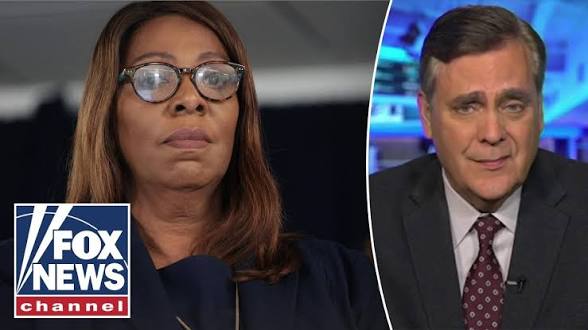
Constitutional law professor Jonathan Turley has raised serious questions about New York Attorney General Letitia James leading the investigation into allegations of sexual assault involving a former Cornell University student.
Turley argued that removing James from the Cornell probe could become “VERY difficult” after New York Gov. Kathy Hochul appointed her as special prosecutor. His comments have added another layer to an already intense debate over prosecutorial independence, neutrality and the handling of the allegations.
The appointment followed growing scrutiny of the original investigation. Hochul said she had lost confidence in the ability of Tompkins County District Attorney Matthew Van Houten to oversee the case after new information emerged.
James has said her office will conduct a thorough investigation and follow the evidence. However, Turley questioned whether her previous public comments could create an appearance of bias.
The controversy now centers on a difficult legal question: Can a prosecutor who has already made public comments about an alleged victim still lead an investigation that may result in criminal charges?
Why Jonathan Turley Is Questioning the Cornell Probe

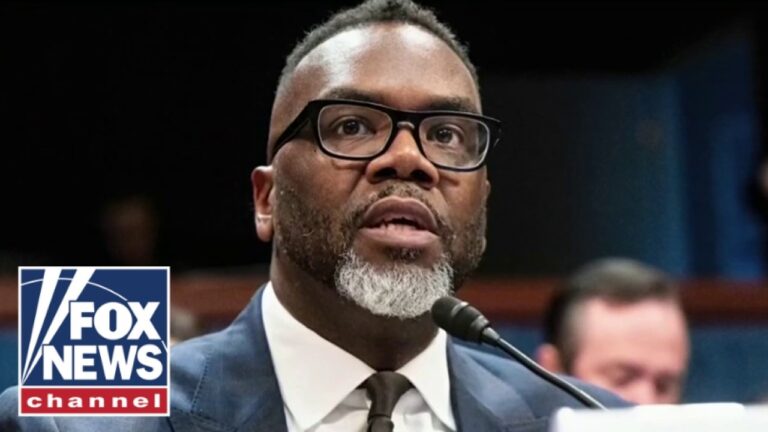
Jonathan Turley, a constitutional law professor at George Washington University Law School and frequent legal commentator, appeared on Fox News to discuss the decision to place Letitia James in charge of the Cornell investigation.
Turley’s central concern is not simply whether James has the legal authority to investigate. Instead, he focused on whether the investigation will be viewed as neutral by the public and by the people who could ultimately face prosecution.
Fox News reported that Turley criticized Hochul’s decision to assign James to the case and argued that questions surrounding her neutrality could make the situation difficult to resolve.
That concern matters because criminal investigations depend heavily on public confidence.
A prosecutor does not only need legal authority. The prosecutor also needs to demonstrate that decisions are based on evidence rather than political pressure, public sentiment or predetermined conclusions.
The Cornell case has already attracted enormous attention. As a result, virtually every decision made by investigators is likely to receive intense scrutiny.
How Letitia James Became the Special Prosecutor
The controversy began with allegations involving a former Cornell student and members of the Chi Phi fraternity.
The woman, identified in court documents as Jane Doe, alleges that she was drugged and sexually assaulted at a Cornell fraternity house in October 2024.
The allegations were initially investigated by Cornell police and local authorities. The Tompkins County district attorney eventually decided not to bring criminal charges.
The case returned to the national spotlight after the woman filed a civil lawsuit in September 2026. Newly public information and documents generated renewed questions about how the original investigation was conducted.
Gov. Kathy Hochul responded by appointing New York Attorney General Letitia James as special prosecutor.
Hochul said newly released information raised serious questions about the earlier investigation. She said she had lost faith in the local district attorney’s ability to handle the case at that point.
James now has responsibility for determining what evidence exists, what additional investigative steps may be required and whether criminal charges are legally justified.
Importantly, the appointment does not mean that anyone accused in the case has been found guilty.
The allegations remain allegations unless established through the legal process.
Why Turley Says Removing James Could Be Difficult
Turley’s warning focuses on the practical consequences of changing prosecutors after a high-profile appointment has already been made.
Once a special prosecutor is officially assigned, removing that prosecutor is not necessarily as simple as deciding that another lawyer would be preferable.
James was appointed through an executive order from the governor. Her office has been publicly tasked with examining the case.
That means any attempt to remove her could raise additional questions.
Why was she removed?
Was there an actual conflict of interest?
Did she make statements that legally disqualified her?
Or was the removal simply the result of political disagreement?
Those questions could become almost as controversial as the original appointment.
Turley’s argument is therefore significant because it points to what could happen next. If concerns about James’ neutrality continue to grow, officials could face pressure to change the arrangement. But doing so could create a new dispute over prosecutorial independence.
The Neutrality Question
At the center of the debate is neutrality.
Before being appointed special prosecutor, James publicly commented on the allegations and expressed sympathy for the woman involved.
Supporters of James argue that acknowledging an alleged victim’s suffering does not automatically mean a prosecutor has prejudged the criminal case.
Critics see the issue differently.
They argue that a prosecutor should avoid language that could be interpreted as reaching a conclusion before reviewing all evidence.
That distinction is especially important in a criminal investigation.
A prosecutor must consider evidence supporting the allegations. At the same time, the prosecutor must also consider evidence that could contradict them.
The accused individuals are entitled to due process regardless of how disturbing the allegations may be.
That does not mean allegations should be ignored. It means investigators must establish facts through evidence and legal procedure.
This tension is likely to remain one of the most closely watched aspects of the Cornell investigation.
The Cornell Case Has Already Produced Major Questions
The controversy is not limited to Letitia James.
The original investigation itself has come under intense scrutiny.
According to reporting by The Associated Press, the woman reported the alleged assault to campus police weeks after the incident. The original prosecution decision was later criticized after additional information became public.
The Tompkins County district attorney has defended the initial decision not to prosecute while also reopening the investigation after the emergence of additional information.
That creates a complicated investigative history.
Authorities must now determine what investigators knew in 2024, what information was available to prosecutors, what evidence was collected and what evidence may no longer be available.
Those questions could be critical to the new investigation.
New Evidence Could Change the Legal Picture
One of the biggest reasons the case has been reopened is the emergence of information that was not fully reflected in earlier accounts of the investigation.
Reports have described additional interview material, messages and documents from Cornell’s internal investigation.
The Washington Post reported that Cornell’s internal process involved more than 50 interviews with 32 witnesses. Court documents also provided additional information about the university’s disciplinary proceedings.
The existence of extensive university records does not automatically establish criminal liability.
However, it could give investigators new leads.
James’ office will have to determine which evidence can be independently verified, which evidence is admissible and whether it establishes the elements required for criminal charges.
That process could take months.
Why New York Law Matters
Another major issue involves New York’s laws concerning intoxication and consent.
The original decision not to prosecute was partly connected to questions about whether the available evidence established that the alleged victim was legally incapable of consent under New York law.
That issue has generated calls for changes to the state’s sexual assault laws.
Critics argue that existing rules can make prosecution difficult when a person voluntarily consumes alcohol or drugs and later becomes incapacitated.
Supporters of reform say the law should better address situations in which intoxication prevents meaningful consent.
However, changing the law and prosecuting an existing case are separate matters.
James must work with the law currently in effect unless lawmakers change it in a way that legally applies to the case.
That could create another challenge for prosecutors.
The Burden of Proof Remains Critical
Any criminal prosecution arising from the Cornell investigation would face the normal burden of proof.
The government would have to present evidence sufficient to support criminal charges and ultimately prove guilt beyond a reasonable doubt if the case reaches trial.
That is different from a university disciplinary proceeding or a civil lawsuit.
Cornell has already conducted an internal disciplinary process and imposed sanctions against members of the fraternity. However, university proceedings use different standards and procedures from criminal courts.
A criminal investigation therefore cannot simply rely on the existence of university discipline.
Investigators must independently establish whether crimes occurred and whether there is sufficient admissible evidence against specific individuals.
Cornell Faces Its Own Independent Review
The controversy has also placed Cornell University under significant pressure.
Cornell President Michael Kotlikoff has said the allegations are deeply disturbing and has supported the state investigation.
The university’s board of trustees has also moved toward an outside review of how Cornell handled the allegations.
That review could examine whether university officials properly investigated the complaint, whether information was communicated to law enforcement and whether disciplinary decisions were appropriate.
The university has defended aspects of its response while acknowledging that the case has raised serious concerns.
This means multiple investigations are now unfolding at the same time.
There is the criminal investigation led by James, the university’s internal response, the outside review and the civil litigation filed by the former student.
Each process has different purposes.
Why Turley’s Warning Matters
Turley’s warning matters because changing prosecutors at this stage could create additional uncertainty.
If James remains in charge, critics will continue to question whether she can conduct the investigation without an appearance of bias.
If she is removed, supporters could argue that political pressure interfered with an investigation that was specifically created to restore public confidence.
Either scenario presents challenges.
That is why the question of prosecutorial neutrality is so important.
The ideal outcome is an investigation that is trusted regardless of whether it produces charges.
If prosecutors ultimately decline to charge anyone, the decision should be supported by evidence and law.
If prosecutors bring charges, those charges should also be supported by evidence rather than public pressure.
What Happens Next?
The next stage will likely involve extensive evidence review.
Investigators may examine police reports, witness interviews, digital communications, university records and other available evidence.
They may also interview witnesses again.
The attorney general’s office could ultimately present evidence to a grand jury if prosecutors determine that criminal charges are warranted.
Gov. Hochul has said James should follow the facts wherever they lead.
That standard will be crucial.
The investigation must account for both the allegations and the rights of the accused.
At the same time, the alleged victim deserves a thorough investigation that addresses unanswered questions surrounding the original handling of her complaint.
The Bigger Debate Over Prosecutorial Independence
The Cornell controversy has expanded beyond one university or one prosecutor.
It has become a broader debate over how high-profile investigations should be handled when political officials are involved.
Governors have authority to appoint special prosecutors under certain circumstances. However, the credibility of such appointments can depend heavily on public perception.
A prosecutor who appears independent can help restore confidence.
A prosecutor perceived as politically motivated can make that task much harder.
That is the problem Turley is highlighting.
His warning does not establish that James is legally disqualified from the Cornell case. Instead, it raises a question about whether her appointment can withstand continued scrutiny.
That distinction is important.
Could Letitia James Still Lead the Investigation Successfully?
Yes.
James has significant legal authority and access to investigative resources through the New York Attorney General’s Office.
Her supporters argue that giving the investigation to a statewide official can provide independence from local institutions and eliminate concerns about the original prosecutor’s handling of the case.
The appointment also gives investigators the opportunity to examine the case with fresh eyes.
James has pledged to conduct a thorough and fair investigation.
The ultimate test, however, will be the evidence.
If investigators can demonstrate that decisions were made objectively and that all relevant evidence was considered, concerns about neutrality may diminish.
If major conflicts emerge, pressure for changes could intensify.
What Jonathan Turley’s Argument Does Not Mean
Turley’s criticism should not be interpreted as a finding that James has committed misconduct.
It also does not establish that the allegations against the Cornell students are true or false.
Instead, his argument concerns the appearance of neutrality and the difficulties that could arise from having a politically prominent attorney general oversee a case after making public comments about it.
That is a legal and institutional question rather than a determination of guilt.
The distinction is particularly important in a case involving serious allegations and intense public attention.
A High-Stakes Test for New York Prosecutors
The Cornell investigation now presents a major test for New York’s criminal justice system.
James must investigate allegations that have already generated national attention while maintaining confidence among the public, the alleged victim and the accused.
That is an unusually difficult balance.
Turley’s warning that removing James could be “VERY difficult” highlights the consequences of the governor’s decision.
Once a special prosecutor is appointed, changing course can create new legal and political questions.
For now, James remains in charge.
The most important question is no longer simply who leads the investigation.
It is whether investigators can establish the facts, protect due process and make decisions that can withstand scrutiny.
The Cornell case is likely to remain under intense national attention as that process continues.
Frequently Asked Questions
Who is Jonathan Turley?
Jonathan Turley is a constitutional law professor at George Washington University Law School and a legal commentator who frequently discusses major constitutional and criminal justice issues.
Why is Jonathan Turley criticizing Letitia James?
Turley has questioned whether James can provide the appearance of neutrality needed to lead the Cornell investigation, particularly because of public comments made before her appointment as special prosecutor.
Who appointed Letitia James to the Cornell investigation?
New York Gov. Kathy Hochul appointed James as special prosecutor through an executive order after saying she had lost confidence in the Tompkins County district attorney’s ability to handle the investigation.
What is the Cornell investigation about?
The investigation concerns allegations by a former Cornell student who says she was drugged and sexually assaulted by members of the Chi Phi fraternity in 2024. The allegations are disputed, and the accused individuals have due-process rights.
Was the Cornell case previously investigated?
Yes. Cornell police and local authorities investigated the allegations in 2024. The Tompkins County district attorney initially declined to bring criminal charges. The investigation was later reopened after additional information became public.
Why was the investigation reopened?
The case received renewed attention after the former student filed a civil lawsuit containing additional allegations and information. Newly reported material also raised questions about how the original investigation was handled.
Has Letitia James charged anyone?
At the time of writing, James has been appointed to investigate the case, but an appointment as special prosecutor does not itself mean criminal charges have been filed or that anyone has been found guilty.
Could Letitia James be removed from the case?
That is the issue Turley says could be “VERY difficult.” Because James was formally appointed special prosecutor, removing or replacing her could create additional legal and political questions.
What happens if prosecutors find enough evidence?
If investigators determine that the evidence supports criminal charges, prosecutors could seek indictments and present the case to a grand jury. Any prosecution would still require proof under the applicable criminal law.
Why is prosecutorial neutrality important?
Neutrality helps ensure that criminal decisions are based on evidence and law rather than political pressure. It also protects public confidence in the justice system and the rights of accused individuals.
Conclusion
Jonathan Turley’s criticism of Letitia James has added a significant legal dimension to the growing controversy surrounding the Cornell investigation.
The key issue is not simply whether James has authority to investigate. It is whether she can maintain the appearance of impartiality while examining a case that has already generated intense political and public pressure.
Removing her could create another controversy. Keeping her could continue questions about neutrality.
For now, the investigation remains with James.
The outcome will ultimately depend on evidence, New York law and the decisions prosecutors make as they reconstruct what happened and determine whether criminal charges are justified.
Until that process is complete, allegations should remain allegations, and every person involved is entitled to due process.
About the Author