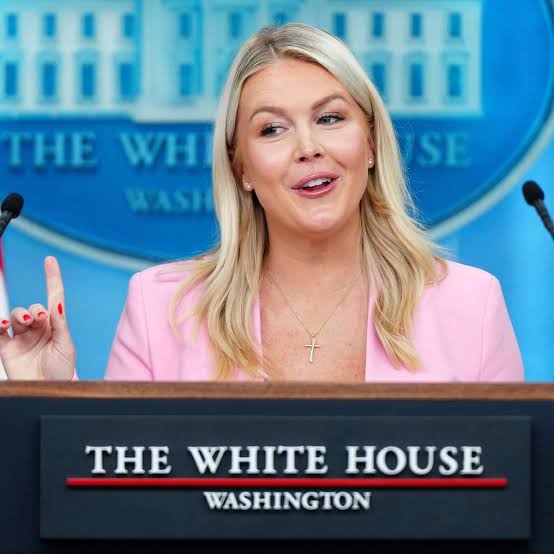
Her comments have attracted attention because she previously served as one of President Donald Trump’s most prominent public spokespeople. Now speaking as a private citizen, she says she is experiencing the same uncertainty as millions of other Americans.
The former press secretary believes the White House should communicate directly with the public about what officials know, what they are investigating and whether there is any reason to expect further disruption.
Her message also comes amid conflicting public reactions to the outages. While some Americans have expressed fears about a possible coordinated cyberattack, government officials and affected companies have said that the incidents appear to involve separate technical problems.
The debate has placed government communication, cybersecurity and public confidence at the centre of a growing national discussion.
Karoline Leavitt Calls for Greater White House Transparency

Leavitt’s central message was straightforward: Americans deserve clear and timely information when major disruptions affect their daily lives.
During her Fox News appearance on November 17, she urged the administration to explain the situation rather than allow uncertainty and online speculation to dominate public discussion.
“What I would say to the White House is transparency is key,” Leavitt said.
She also suggested that President Trump or another senior administration official should deliver a direct message to the American people after the president returns from his overseas trip.
According to Leavitt, officials should explain what they know and what they believe to be true. Such communication, she argued, could help reduce anxiety and prevent unnecessary rumours from spreading.
Her remarks were particularly significant because she previously had access to government briefings and information unavailable to ordinary citizens.
However, she acknowledged that her position has changed since leaving the administration.
She is now watching the same developments as other Americans, without the benefit of classified briefings or direct access to government officials.
This change in perspective appears to have influenced her concerns.
Leavitt said she understands why people are worried when essential services suddenly become unreliable. She also pointed out that uncertainty can become more damaging when official explanations are limited.
Her appeal was therefore not simply about defending the administration. It was also about ensuring that the public receives enough information to understand what is happening.
The Independent+2
Former Press Secretary Admits She Is Worried Too
One of the most striking parts of Leavitt’s interview was her admission that she is personally concerned about the recent disruptions.
She explained that she is no longer working inside the federal government and no longer receives classified updates about potential threats.
She described herself as an ordinary American trying to understand the situation.
Leavitt also mentioned checking her bank account with some worry, highlighting how disruptions to financial services can create anxiety even among people who previously worked at the highest levels of government.
Her comments made the issue more relatable to viewers.
For many households, access to banking applications, online payments, email and transportation services is essential. When several services experience problems within a short period, people naturally begin asking whether the incidents are connected.
However, concern should not automatically be treated as proof of a coordinated attack.
That distinction is particularly important in the current debate.
Leavitt’s request focuses on communication and transparency. She has not established that the outages were caused by a single hostile actor.
Instead, she wants officials to explain the available evidence and communicate their conclusions clearly.
Her position reflects a wider challenge facing modern governments: maintaining public confidence when complex technology systems experience unexpected failures.
Series of Technology Outages Raises National Concerns
The controversy surrounding Leavitt’s remarks follows several major technology disruptions across the United States.
These incidents have affected different industries, including aviation, banking, cloud computing and digital communications.
Although the problems have occurred close together, companies and government agencies have generally attributed them to separate technical issues.
Nevertheless, the timing has raised questions about the resilience of America’s digital infrastructure.
1. Microsoft Outage Disrupts Essential Services
One of the most significant incidents involved Microsoft services, including Outlook and Teams.
The disruption affected users who depend on these platforms for communication, business operations and everyday activities.
Microsoft attributed the problem to a technical issue connected to an earlier network capacity upgrade and a subsequent network change.
The incident highlighted how heavily businesses and individuals depend on cloud-based platforms.
When a major technology provider experiences an outage, the consequences can extend beyond the company’s own customers.
Businesses may struggle to communicate, employees can lose access to essential tools, and organisations may experience interruptions to their normal operations.
For this reason, technology reliability has become an important national concern.
2. Nationwide FAA Ground Stop Disrupts Air Travel
Another major incident involved the Federal Aviation Administration (FAA).
A nationwide ground stop temporarily disrupted flight operations across American airports for more than four hours.
The disruption caused significant inconvenience for passengers and affected airline schedules.
Aviation systems depend on reliable communication networks, technical equipment and information-sharing systems.
Even a relatively small technical failure can create widespread operational problems.
The incident demonstrated how vulnerable modern transportation systems can be when essential technology stops working.
It also increased pressure on federal authorities to explain the circumstances behind the disruption.
3. Banking Customers Experience Access Problems
Financial services have also experienced disruptions.
Customers of major banks, including JPMorgan Chase, Bank of America and Wells Fargo, reported difficulties accessing their accounts.
For many Americans, mobile banking is the primary way to monitor money, pay bills and complete financial transactions.
Even temporary problems can create uncertainty, particularly when other services are experiencing disruptions at the same time.
JPMorgan Chase attributed its reported issue to a temporary software bug involving on-premises hardware systems.
The bank also rejected suggestions that its problem was connected to a cyberattack.
These explanations are important because they provide a possible technical reason for the disruption without suggesting that customer accounts were necessarily compromised.
However, the incidents demonstrate why financial institutions must maintain reliable backup systems and communicate quickly with customers.
4. Airline Technology Problems Add to Uncertainty
United Airlines also experienced technology-related disruption.
Airline operations depend on interconnected systems for scheduling, departures, passenger information and communication.
When these systems become unavailable, even briefly, delays can spread across airports and affect connecting flights.
United described its disruption as a technology-related issue.
The company did not identify it as a cyberattack.
Together, these incidents have created a difficult communication challenge for the government.
Officials must explain what happened without making unsupported claims or creating unnecessary public alarm.
AP News+2
Trump Administration Faces Questions About the Outages
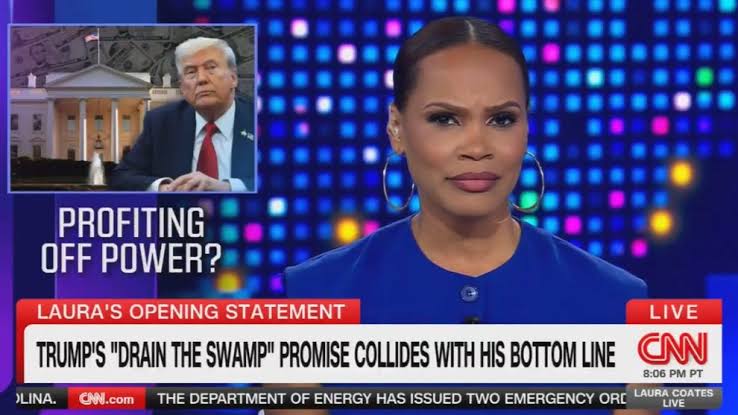
Leavitt’s comments have placed additional attention on how the Trump administration is responding to public concerns.
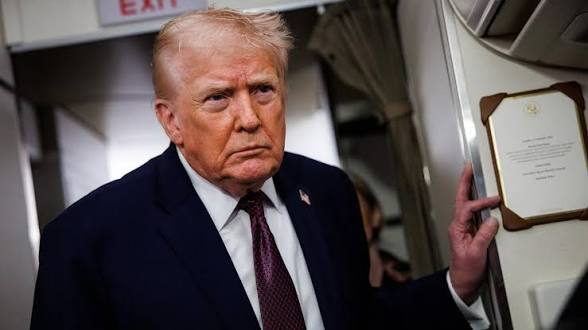
President Donald Trump has played down suggestions that the recent technology problems represent a major national crisis.
When reporters asked him about the disruptions during his overseas trip, Trump responded by describing them as part of life in a large and powerful country.
His comments reflected confidence that the problems did not necessarily indicate a broader emergency.
However, not everyone has found that reassurance sufficient.
For Americans dealing with banking difficulties, delayed flights and unreliable digital services, general statements may not answer the questions they want addressed.
People want to know whether the incidents are connected, whether investigations are underway and whether similar problems could happen again.
Vice President JD Vance has also attempted to calm public concerns.
During an appearance on Fox News, Vance said he did not believe Americans needed to build bunkers or stockpile food and water because of the incidents.
He acknowledged the importance of being prepared while indicating that the administration did not see an approaching crisis.
Leavitt referred to Vance’s remarks during her interview.
She suggested that if the administration genuinely believes there is no major crisis approaching, it should communicate that position clearly and consistently.
Her argument is that reassurance becomes more effective when it is supported by specific information.
A government statement explaining the available evidence can help people distinguish between genuine risks and unsupported online claims.
The administration therefore faces a balancing act: avoiding unnecessary panic while providing enough detail to maintain public confidence.
The Independent+2
Marco Rubio Rejects Claims of a Coordinated Cyberattack
Secretary of State Marco Rubio has also addressed concerns about the recent technology disruptions.
According to reporting by The Associated Press, Rubio said there was no evidence showing that the incidents were connected or caused by a malicious actor.
His comments were intended to address speculation that a foreign government, criminal organisation or hacker group might be responsible.
This clarification is important because multiple outages occurring close together do not automatically establish a common cause.
Different organisations operate separate networks, software platforms and infrastructure.
Each system can experience technical failures for different reasons.
Rubio’s position was that the government had not found evidence linking the incidents.
Other officials have also offered explanations for individual disruptions.
The affected companies and agencies have cited technical problems, software bugs, network upgrades and maintenance-related issues.
The National Security Agency’s reported communications disruption was also attributed to temporary degradation during scheduled routine maintenance, according to reporting on the wider outage situation.
These explanations do not mean that cybersecurity risks should be ignored.
Instead, they highlight the importance of distinguishing verified information from speculation.
Leavitt’s demand for transparency fits into this debate.
The government can reassure the public while explaining the evidence behind its conclusions.
A clear account of what investigators have found would be more useful than simply dismissing public concerns.
AP News+2
Social Media Speculation Adds Pressure on Washington
Another major part of the controversy involves social media.
Leavitt specifically mentioned TikTok as a platform where discussions about the outages have gained momentum.
Users have been sharing videos, theories and questions about the possibility of a larger problem affecting American infrastructure.
Some online discussions have suggested that the incidents could be connected to foreign cyber operations.
Others have raised concerns about artificial intelligence, infrastructure vulnerabilities and the possibility of coordinated digital disruption.
However, these claims must be treated carefully.
Viral posts do not establish the cause of a technical failure.
A video showing a banking application malfunctioning cannot prove that a foreign government is responsible. Similarly, several unrelated service disruptions do not automatically demonstrate a coordinated operation.
This is where official communication becomes especially important.
When verified information is difficult to find, unsupported explanations can spread rapidly.
People may begin connecting unrelated events simply because they occurred within the same period.
That does not mean every concern is unreasonable.
Critical infrastructure deserves serious attention, and cybersecurity threats remain an important national security issue.
But responsible reporting requires evidence.
Leavitt believes the White House should take a more direct role in addressing public uncertainty.
Her suggestion is that senior officials should explain what is known rather than allow rumours to shape the conversation.
Such communication could help reduce confusion and encourage people to rely on verified updates.
Why White House Transparency Matters
Transparency is an important part of effective government communication, particularly during periods of uncertainty.
When public services are disrupted, people expect government officials to provide accurate information.
They do not necessarily expect immediate answers to every technical question.
However, they do expect officials to explain what is known, what remains uncertain and what steps are being taken.
There are several reasons why this matters.
Protecting Public Confidence
Public confidence can decline when major disruptions occur without clear explanations.
Even when an incident is caused by an ordinary technical problem, a lack of communication can encourage unnecessary fear.
Clear updates help people understand the situation.
They also demonstrate that officials are taking public concerns seriously.
Preventing Misinformation
False claims can spread quickly during national emergencies.
When official information is limited, misleading posts may gain attention.
A consistent communication strategy can help counter misinformation before it becomes widespread.
Strengthening Accountability
Government agencies and private companies both have responsibilities when essential services fail.
The public deserves information about the causes of significant disruptions, where possible.
Transparency also encourages organisations to identify weaknesses and improve their systems.
Helping Americans Make Informed Decisions
People need reliable information to make practical decisions.
For example, airline passengers want to know whether flight operations are affected. Banking customers want to understand whether their money and personal information remain secure.
Clear communication allows people to respond appropriately instead of relying on speculation.
Leavitt’s appeal highlights these basic expectations.
Her argument is that transparency is not simply a political advantage. It is an important part of maintaining trust between the government and the public.
Karoline Leavitt’s Position After Leaving the White House
Leavitt’s latest comments are also notable because of her previous position in the Trump administration.
She served as White House press secretary and became one of the administration’s most recognisable public communicators.
The role required her to defend administration policies, respond to reporters and explain presidential decisions.
She left the position in August 2026.
Since then, her perspective has shifted from government spokesperson to political commentator and private citizen.
That change is particularly relevant to her latest remarks.
While serving in the administration, she had access to government officials and information that ordinary Americans could not obtain.
Now, she says she is asking many of the same questions as other citizens.
Her comments demonstrate how quickly public expectations can become personal when essential services are affected.
She is not simply discussing a technical problem from a political perspective. She is describing the uncertainty experienced by people who depend on banking, communication and transportation systems.
Her public appeal also demonstrates that calls for transparency can come from within a political administration’s wider circle of supporters.
It is possible to support a president while still asking his administration to communicate more effectively.
That distinction is important in understanding the significance of her remarks.
Could the Outages Affect Trump’s Public Image?
The recent disruptions could create a political challenge for the Trump administration if public concerns continue.
Technology failures are not automatically the responsibility of the president.
Private companies operate many of the systems involved, while federal agencies oversee different parts of national infrastructure.
Nevertheless, Americans often look to the federal government for reassurance when several major services experience problems.
The administration’s response could therefore influence public perceptions of its ability to manage national challenges.
There are several factors that may shape the political impact.
First, the public will want to know whether the incidents were genuinely unrelated.
Second, officials will need to demonstrate that appropriate investigations and technical reviews are taking place.
Third, the government will need to communicate consistently.
If the explanations remain clear and evidence-based, public concern may decrease.
However, if conflicting statements emerge or important information is withheld, questions could continue.
Leavitt’s comments suggest that the administration should not underestimate the importance of public communication.
Even when there is no evidence of a national security emergency, people still deserve straightforward answers about disruptions affecting their lives.
What Happens Next?
The next phase of the situation will depend on how effectively government officials and affected organisations explain the disruptions.
Americans will likely continue looking for answers about the reliability of essential services.
The administration may need to provide additional information about the technical failures, ongoing investigations and measures being taken to prevent similar incidents.
There are several important questions that remain relevant:
Were the disruptions entirely unrelated?
Have all affected systems returned to normal operation?
Are additional cybersecurity reviews underway?
What safeguards are being introduced to prevent future failures?
How will federal agencies communicate with the public during similar incidents?
These questions require evidence-based answers.
The government must also avoid creating unnecessary alarm. Public communication should explain genuine risks without exaggerating threats.
Leavitt’s recommendation is that the White House should deliver a clear message directly to Americans.
Whether that message comes from Trump, Vance or another senior official, its purpose should be to explain the available information and address public concerns.
The effectiveness of that communication could play an important role in restoring confidence.
Conclusion: Leavitt’s Warning Highlights the Need for Honest Communication
Karoline Leavitt’s latest warning has brought renewed attention to the importance of transparency during periods of national uncertainty.
The former White House press secretary wants the Trump administration to communicate more directly with Americans following a series of technology disruptions affecting aviation, banking and digital services.
Her comments come as President Trump and other senior officials have attempted to reassure the public that there is no evidence of a wider crisis.
Although authorities have attributed the reported incidents to separate technical problems, public questions remain.
The central issue is not simply whether the outages were caused by cyberattacks. It is whether Americans are receiving enough reliable information to understand what happened.
Leavitt believes the White House should take the lead in providing that information.
Her message also highlights an important principle of public leadership: reassurance works best when it is supported by facts.
As investigations and technical reviews continue, the administration will face pressure to explain the situation clearly.
For now, Leavitt’s call for transparency has added another voice to the growing debate over America’s digital infrastructure, cybersecurity and public trust.
Frequently Asked Questions (FAQs)
1. Why is Karoline Leavitt demanding White House transparency?
Karoline Leavitt is urging the Trump administration to communicate more clearly about recent technology outages affecting American services. She believes officials should explain what they know to reduce public anxiety and prevent misinformation.
2. What did Karoline Leavitt say about the recent outages?
During her November 17 appearance on Fox News’ Fox & Friends, Leavitt said, “Transparency is key.” She encouraged the White House to deliver a direct message explaining the situation to Americans.
3. Is Karoline Leavitt still the White House press secretary?
No. Leavitt left her position as White House press secretary in August 2026. She has since appeared as a political commentator and television contributor.
4. Which technology services have experienced disruptions?
Reported disruptions have affected Microsoft services, including Outlook and Teams, airline operations, banking services and other digital systems.
5. Did the recent outages result from a cyberattack?
There is no confirmed evidence establishing that the reported outages were part of a coordinated cyberattack. Government officials and affected organisations have attributed individual incidents to separate technical problems.
6. What did Donald Trump say about the technology outages?
President Trump played down concerns about the disruptions. When questioned by reporters, he described technical problems as something that can happen in a large and powerful country.
7. What did JD Vance say about a possible national crisis?
Vice President JD Vance said he did not believe a major crisis was approaching. He also indicated that Americans did not need to build bunkers or stockpile food and water because of the reported incidents.
8. Why is transparency important during technology outages?
Transparency helps people understand what happened, distinguish verified information from rumours and make informed decisions. It can also strengthen public confidence in government institutions.
9. Did Karoline Leavitt suggest that Americans should stockpile supplies?
Leavitt said that being prepared for emergencies is always sensible. However, she also referred to Vance’s reassurance that the administration did not see a crisis coming.
10. What should Americans expect from the White House?
Americans can reasonably expect clear explanations about known technical problems, relevant cybersecurity assessments and updates about measures being taken to protect essential services.
About the Author