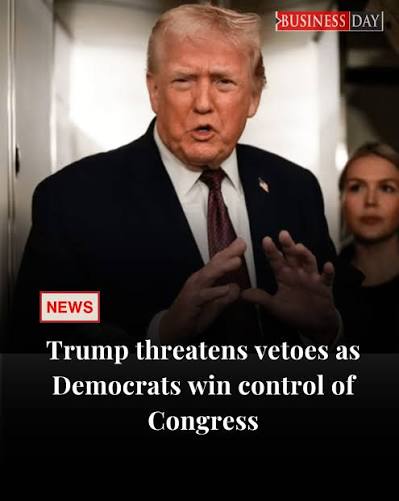
President Donald Trump is preparing for a major political shift in Washington after Democrats secured control of both chambers of Congress in the 2026 midterm elections.
Despite the possibility of an increasingly confrontational relationship, Trump has suggested that bipartisan agreements could eventually emerge. The president believes Democrats may initially challenge his administration but could later approach the White House to negotiate agreements on important national issues.
His comments have raised questions about how the administration will manage a Democratic-controlled Congress during the final two years of his second presidential term.
The upcoming political transition could reshape debates over healthcare, prescription drug prices, immigration, government spending and economic policy.
Trump has also made clear that cooperation will have limits. He has warned that he intends to veto legislation he considers harmful to the country.
This creates an unusual political situation. The White House and Congress will be controlled by opposing parties, yet both sides will face pressure to demonstrate that they can deliver results for American voters.
The central question is whether Trump’s prediction of bipartisan deals will become reality or whether Washington will enter another period of political confrontation.
Democrats Take Control of Congress After Midterm Election Losses for Republicans
The 2026 midterm elections delivered a significant setback to Republicans.
Democrats won control of both the House of Representatives and the Senate, changing the balance of power in Washington ahead of the 2027 congressional session.
The results were particularly important because Republicans had previously enjoyed unified control of the federal government.
The Democratic victories reflected growing concerns among voters about economic conditions, inflation, healthcare expenses and the administration’s policy decisions.
According to Associated Press election coverage, Democrats secured major gains across congressional races, including several contests in traditionally competitive and Republican-leaning areas.
The election results also gave Democrats greater authority over congressional committees, legislative priorities and investigations into federal government activities.
AP News+1
For Trump, the outcome creates a difficult political environment.
Although he remains president and retains significant executive authority, he will face a Congress controlled by political opponents.
Democratic lawmakers will have opportunities to challenge administration policies, introduce alternative legislation and demand greater oversight of federal agencies.
However, winning congressional control does not automatically mean Democrats can pass every proposal.
The president retains his veto authority, while Senate rules create additional obstacles for legislation that lacks sufficient bipartisan support.
These political realities explain why negotiations could become essential during the next two years.
Trump Predicts Bipartisan Agreements With Democrats
Trump’s comments about future cooperation have attracted considerable attention.
In a November 12 interview with sports commentator Stephen A. Smith at the White House, the president discussed how he would approach the incoming Democratic-controlled Congress.
Trump suggested that he would initially reject legislation he considered harmful.
However, he also predicted that Democrats could eventually seek negotiations.
His message was that political disagreements would not necessarily prevent agreements on specific policy issues.
The president specifically mentioned healthcare and prescription drug prices as areas where bipartisan cooperation could become possible.
Trump argued that Democrats might eventually recognise the need to negotiate rather than continue sending legislation that he would reject.
His comments indicate that he sees veto power as both a constitutional protection and a negotiating tool.
The administration could use this approach to encourage lawmakers to reach compromises before legislation reaches the president’s desk.
Just The News+1
However, Democrats have not uniformly accepted Trump’s invitation.
Several lawmakers have expressed doubts about whether the president is genuinely interested in compromise.
They argue that cooperation must involve meaningful negotiations rather than simply accepting the administration’s existing policy positions.
That disagreement could determine whether bipartisan agreements become a realistic possibility.
Healthcare Could Become the First Major Area for Negotiations
Healthcare is one of the most important issues Trump has identified as a potential area for bipartisan cooperation.
American families continue to face concerns about insurance costs, prescription medications and access to affordable medical services.
These issues affect voters across party lines, making healthcare a possible starting point for negotiations between the White House and Democratic lawmakers.
Trump has repeatedly highlighted his administration’s efforts to reduce prescription drug prices.
During his November 12 interview, he discussed the administration’s Most Favored Nation agreements with pharmaceutical companies.
He argued that these arrangements would help reduce the cost of commonly used medications and improve affordability for American consumers.
The president also claimed that his administration had negotiated agreements with 26 pharmaceutical companies.
However, the actual impact of these arrangements will depend on implementation, drug availability and the savings consumers receive.
Democrats are likely to push their own healthcare priorities.
These could include:
Lower prescription medication costs.
Greater protection for people with existing medical conditions.
Affordable health insurance coverage.
Stronger support for Medicare and Medicaid.
Measures to reduce out-of-pocket medical expenses.
Greater transparency in pharmaceutical pricing.
The Affordable Care Act could also become an important part of congressional negotiations.
Democrats have expressed interest in restoring healthcare subsidies that expired under the administration’s previous legislative changes.
A bipartisan agreement could require compromises from both parties.
For example, Democrats might support selected administration proposals to reduce medication costs while seeking additional protections for people who depend on federal healthcare programmes.
Trump could also use healthcare negotiations to demonstrate that his administration can work with political opponents.
Nevertheless, disagreements over federal spending and insurance coverage could make a comprehensive agreement difficult.
Prescription Drug Prices Offer Common Ground
Prescription drug affordability represents another potential opportunity for cooperation.
American consumers have long complained about the high cost of certain medications compared with prices in other developed countries.
Trump has made lowering these expenses a central part of his healthcare message.
His administration has promoted international pricing agreements designed to pressure pharmaceutical companies into offering lower prices in the United States.
The president has argued that American patients should not pay substantially more for identical medications.
Democrats have also supported efforts to make prescription drugs more affordable.
This shared concern creates an opportunity for negotiations.
However, the parties may disagree about how to achieve lower prices.
Republicans could favour market-based negotiations and agreements with pharmaceutical companies.
Democrats may demand stronger government oversight, additional consumer protections and expanded federal negotiating authority.
The challenge will be finding a proposal that both sides can support.
If Trump and congressional Democrats reach an agreement, prescription drug pricing could become an early example of successful bipartisan cooperation.
However, political announcements alone will not guarantee lower prices. Consumers will ultimately judge the outcome by whether their medication costs actually decrease.
Trump Warns Democrats About His Veto Power
Although Trump has expressed interest in cooperation, he has also delivered a clear warning.
He intends to use his presidential veto against legislation he considers unacceptable.
Before the midterm elections, Trump discussed the possibility of becoming known as “Mr. Veto” if Democrats won control of Congress.
He argued that the presidency gives him significant authority to reject legislation and protect his administration’s priorities.
Following the election results, he continued to combine invitations for cooperation with warnings about presidential power.
This approach suggests that Trump does not intend to surrender control over his policy agenda simply because Democrats have won congressional majorities.
The Constitution gives the president the power to veto legislation passed by Congress.
Congress can override a presidential veto, but doing so requires a two-thirds majority in both the House and Senate.
That is a difficult threshold.
Democrats are not expected to have enough seats to override Trump’s vetoes independently.
Consequently, Republicans could remain important participants in major legislative negotiations even after losing control of Congress.
The president’s veto threat could therefore influence discussions involving government spending, healthcare, immigration and economic legislation.
At the same time, frequent vetoes could increase political tensions and make Washington less effective.
The administration will need to balance its political objectives against the practical need to keep the federal government functioning.
CBS News+2
Democrats Remain Sceptical About Trump’s Promises
Not every Democratic lawmaker believes Trump’s comments will produce meaningful cooperation.
Some Democrats have questioned whether the president is genuinely prepared to negotiate or simply wants to shift political responsibility for disagreements onto Congress.
Their concerns reflect the difficult relationship between Trump and congressional Democrats during his second term.
Before the election, the president frequently criticised Democratic candidates and warned voters against giving the opposition control of Congress.
Following the Republican losses, his public statements became more focused on the possibility of working across party lines.
That change has attracted attention from Democratic lawmakers who want to see concrete proposals rather than political promises.
According to Roll Call’s November 12 reporting, some Democrats remain doubtful about Trump’s intentions.
Senator Tim Kaine, for example, indicated that Democrats should continue presenting legislation that benefits the public and then judge the president by his response.
Representative Robert Garcia also signalled that Democrats intend to introduce affordability proposals early in the new Congress.
These positions suggest that Democratic leaders want to test Trump’s willingness to cooperate through actual legislative negotiations.
The relationship could therefore begin with competing proposals rather than an immediate agreement.
For Democrats, the challenge will be maintaining their campaign promises while finding areas where cooperation is possible.
For Trump, the challenge will be convincing opposition lawmakers that negotiations can produce meaningful results.
Roll Call+1
Immigration Could Become Another Major Bipartisan Issue
Immigration is another policy area where Trump has suggested that negotiations could be possible.
The issue remains politically sensitive because Republicans and Democrats have significantly different approaches to border security, immigration enforcement and legal immigration.
Trump has made stricter border enforcement a major priority.
Democrats, meanwhile, have argued for a combination of border security, immigration reform and protections for certain immigrant communities.
A bipartisan immigration agreement would require both parties to make difficult compromises.
Potential areas of negotiation could include:
Additional resources for border security.
Improvements to immigration court operations.
Faster processing of asylum applications.
Stronger action against human trafficking.
Changes to legal immigration procedures.
Greater oversight of immigration enforcement.
Trump’s willingness to discuss an immigration agreement could create an opportunity to revisit legislation that has struggled to gain sufficient congressional support.
However, immigration is also an issue that could quickly produce political confrontation.
Democrats may oppose enforcement measures they consider excessive, while Republicans could reject proposals they believe weaken border security.
The White House will therefore need to determine which elements of its immigration agenda are negotiable.
A successful agreement could demonstrate that both parties are capable of addressing a major national challenge.
Without compromise, immigration could become one of the first major sources of conflict between Trump and the incoming Congress.
The New Congress Could Focus on Inflation and Living Costs
Economic affordability is likely to dominate much of the political discussion in 2027.
The 2026 election results highlighted voter concerns about the cost of everyday necessities.
Families are particularly sensitive to expenses involving housing, food, healthcare, transportation and energy.
Democrats have promised to prioritise these issues after taking control of Congress.
Trump has also maintained that improving economic conditions remains a central objective of his administration.
This creates a potential area of cooperation, even though the two parties disagree about the causes of economic problems and the best solutions.
Democratic lawmakers could introduce legislation targeting household expenses.
Possible priorities include:
Expanding access to affordable housing.
Reducing healthcare expenses.
Supporting working families.
Improving access to childcare.
Addressing energy and transportation costs.
Reviewing federal tax and spending policies.
The White House may support selected proposals if they align with Trump’s economic agenda.
However, disagreements over tariffs, government spending and taxation could complicate negotiations.
The administration has defended its economic policies, while Democrats have criticised several decisions they believe have increased costs.
According to Associated Press reporting published November 8, economic dissatisfaction was a major issue following the midterm elections.
The report also highlighted the difficulty of addressing inflation while managing federal borrowing and the national deficit.
The Washington Post+1
Both parties will face pressure to demonstrate that they can improve the financial situation of ordinary Americans.
That pressure could encourage cooperation on selected economic measures.
Farm Bill Could Provide an Early Test of Bipartisan Cooperation
Agriculture may offer one of the first practical opportunities for bipartisan negotiations.
On November 19, Trump urged congressional Republicans to pass a new farm bill before Democrats take control of Congress in January.
The legislation is important for farmers, ranchers and communities that depend on federal agricultural programmes.
The House approved its five-year version in April, but the bill still requires Senate approval.
The legislation has faced disagreements involving agricultural subsidies and food assistance programmes.
Democrats have also raised concerns about provisions in Trump’s 2025 tax legislation that require states to share certain food-stamp costs with the federal government.
Senate Agriculture Committee leaders John Boozman and Amy Klobuchar have expressed interest in completing the legislation.
More than 400 agricultural organisations have also called for action, warning that continued delays create uncertainty for farmers and rural communities.
This issue illustrates why bipartisan negotiations may become necessary.
Agricultural policy affects communities across the country, including areas represented by both Republicans and Democrats.
Although Trump wants Republicans to complete the legislation before the transition, the incoming Democratic majority could influence future negotiations.
A compromise on the farm bill would provide an early indication of whether Washington’s political divisions can be overcome when national interests are involved.
Reuters
Democratic Control Will Change Congressional Investigations
Bipartisan cooperation will not be the only priority for the incoming Democratic majority.
Democrats are also preparing to use their new congressional authority to increase oversight of the Trump administration.
Control of congressional committees gives the majority greater influence over hearings, investigations and requests for government information.
This could lead to investigations involving federal agencies, administration decisions and executive policies.
House Democrats are expected to focus on government accountability and the administration’s use of executive authority.
The Senate majority will also have significant influence over committee operations and the legislative agenda.
These developments could create an uncomfortable environment for the White House.
Trump may have to respond to congressional investigations while simultaneously negotiating legislation with Democratic leaders.
The president and his allies could argue that some investigations are politically motivated.
Democrats, however, are likely to describe oversight as an essential responsibility of Congress.
This creates a potential contradiction in the relationship.
Both sides may seek cooperation on healthcare or economic issues while fighting over investigations and presidential authority.
The result could be a Congress where bipartisan agreements and political confrontations happen at the same time.
What the Democratic Majority Means for Trump’s Remaining Presidency
The 2026 midterm results will have a significant impact on Trump’s final two years in office.
Democratic control of Congress means the president will face greater resistance when attempting to advance major legislative priorities.
During the first part of his second term, Republicans had greater opportunities to support the administration’s agenda.
That situation will change in January 2027.
Democrats will have greater control over congressional scheduling, committee leadership and the introduction of legislation.
They can also use their majorities to challenge administration proposals and demand explanations from federal officials.
However, their ability to enact major policy changes will remain limited by several constitutional and procedural obstacles.
The president can veto legislation, and Senate rules generally require 60 votes to overcome a filibuster on most major bills.
Democrats will therefore need Republican support for many significant legislative agreements.
The new political environment may also influence Trump’s approach to executive orders.
If Congress rejects his proposals, the administration could rely more heavily on executive authority in areas where the law allows it.
However, executive actions can face legal challenges and may be reversed by future administrations.
According to CBS News, the president’s comments following the election have combined an interest in working with Democrats with warnings about his veto authority.
CBS News+1
Why Bipartisan Cooperation Matters for American Voters
Political disagreements in Washington often have direct consequences for ordinary Americans.
When Congress and the White House cannot agree, important legislation can become delayed.
Government funding disputes can create uncertainty for federal workers and public services.
Healthcare disagreements can affect families seeking affordable insurance and medication.
Immigration disputes can prevent changes to border management and legal immigration procedures.
Economic disagreements can also make it harder to address inflation, federal borrowing and household expenses.
This is why bipartisan cooperation could become particularly important during the next congressional session.
Voters who supported Democrats may expect the new majority to challenge Trump’s policies.
Meanwhile, Americans who supported Republicans may expect the president to defend his agenda.
However, voters from both parties also want practical solutions to everyday problems.
This creates an opportunity for lawmakers to focus on areas where their interests overlap.
Healthcare affordability, infrastructure, agricultural support and selected economic reforms could offer opportunities for agreement.
Nevertheless, cooperation will require political discipline.
Both parties will need to accept that compromise does not necessarily mean abandoning their core principles.
For Trump, reaching agreements could help demonstrate that his administration remains capable of governing despite losing congressional control.
For Democrats, successful negotiations could show voters that their electoral victory can produce tangible improvements.
Could the Trump-Democrat Showdown Lead to Government Gridlock?
There is also a significant possibility that the relationship will deteriorate.
The president and congressional Democrats have different priorities on several major issues.
If negotiations fail, both sides could resort to political pressure and legislative obstruction.
One major concern will be federal government funding.
Congress must approve spending legislation to keep federal agencies operating.
Disagreements over spending priorities could create another government shutdown threat.
The national debt ceiling could also become a major issue.
Lawmakers may disagree over whether to increase borrowing authority, reduce spending or introduce new revenue measures.
These disputes could become particularly difficult because neither party will have complete control over the legislative process.
Reuters’ pre-election analysis identified government funding and debt ceiling negotiations as potential sources of conflict during 2027.
The election results have made the political environment more challenging because Democrats will now control both chambers.
Investing.com+1
A prolonged political standoff could affect financial markets, federal services and public confidence.
However, neither party has an incentive to allow every major issue to remain unresolved.
The need to avoid economic disruption could eventually encourage negotiations.
Trump’s Political Strategy Faces a New Test
Trump’s ability to maintain influence over Congress will be tested in the coming months.
His supporters expect him to defend his administration’s achievements and continue advancing his political priorities.
At the same time, Democratic victories have given the opposition a stronger position.
The president’s decision to publicly discuss bipartisan agreements suggests that he recognises the importance of adjusting his political strategy.
Rather than relying exclusively on Republican support, he may need to negotiate with Democratic lawmakers on selected issues.
This does not necessarily mean a major change in his political philosophy.
Trump could continue opposing Democratic proposals while supporting individual agreements that benefit his administration.
Such an approach would allow him to maintain his political identity while demonstrating a willingness to govern.
However, his relationship with Democratic leaders will depend heavily on trust.
If lawmakers believe negotiations are genuine, they may be more willing to participate.
If they view the president’s comments as political messaging, cooperation could become much harder.
The incoming Congress will therefore provide an important test of Trump’s negotiating skills.
What Happens Next as the New Congress Prepares to Take Office?
The transition period before January 2027 will be important for both parties.
Republicans still have an opportunity to complete legislation before Democrats assume control of Congress.
Trump’s November 19 appeal for action on the farm bill demonstrates the administration’s interest in advancing selected priorities before the political transition.
Democratic leaders, meanwhile, are preparing their legislative agenda.
Healthcare, affordability, government oversight and economic policy are expected to remain important areas of attention.
The first months of the new Congress could reveal whether Trump’s prediction of bipartisan deals was realistic.
Several developments will deserve particular attention:
Whether Trump and Democratic leaders establish regular negotiations.
Whether healthcare legislation receives bipartisan support.
Whether prescription drug pricing becomes an early agreement.
Whether immigration reform attracts support from both parties.
Whether Congress reaches agreements on federal spending.
Whether presidential vetoes become a regular feature of the new political relationship.
These developments will help determine whether Washington moves towards compromise or deeper political division.
Conclusion: Trump and Democrats Face a Defining Political Moment
The Trump-Democrat showdown is shaping up to be one of the defining political developments of the next two years.
Democrats have secured control of both chambers of Congress, giving them greater influence over legislation and government oversight.
Trump, however, remains president and retains the constitutional authority to veto legislation.
His prediction that Democrats will eventually negotiate bipartisan deals reflects an understanding that neither side can easily govern without considering the other.
Healthcare, prescription drug prices, immigration and economic affordability could provide opportunities for cooperation.
Nevertheless, disagreements over presidential authority, government spending and investigations could produce significant confrontations.
The coming congressional session will reveal whether both parties can put political differences aside when important national issues are involved.
For American voters, the real measure of success will not be the number of political agreements announced in Washington.
It will be whether those agreements improve healthcare access, reduce household expenses and address the country’s most pressing challenges.
Trump may be predicting bipartisan deals, but the incoming Congress will determine whether those promises become political reality.
Frequently Asked Questions (FAQs)
1. Why is Trump predicting bipartisan deals with Democrats?
Trump believes Democrats may initially oppose his proposals but eventually seek negotiations on important issues, including healthcare and prescription drug prices.
2. Who controls Congress after the 2026 midterm elections?
Democrats won control of both the House of Representatives and the Senate, giving them a congressional majority beginning in January 2027.
3. Will Trump work with the new Democratic Congress?
Trump has indicated that he is willing to work with Democrats on selected issues. However, he has also warned that he will veto legislation he considers harmful.
4. What issues could Trump and Democrats negotiate?
Potential areas include healthcare, prescription drug prices, immigration, agricultural policy, government spending and economic affordability.
5. Can Trump veto legislation passed by Democrats?
Yes. The president has constitutional veto authority. Congress can override a veto only with a two-thirds majority in both chambers.
6. Why are Democrats sceptical about Trump’s promises?
Some Democratic lawmakers question whether Trump genuinely intends to compromise. They want to evaluate his willingness to cooperate through actual legislative negotiations.
7. When will Democrats take control of Congress?
The newly elected Democratic majorities are scheduled to take office when the 120th Congress begins in January 2027.
8. Could the new Congress face a government shutdown?
Yes. Disagreements over federal spending and government funding could create shutdown risks if lawmakers fail to reach an agreement.
9. Will healthcare become a major priority?
Healthcare could become an important area for bipartisan negotiations, particularly prescription drug prices, insurance affordability and federal healthcare programmes.
10. What does the Trump-Democrat showdown mean for America?
It means a period of divided government in which the president and congressional Democrats will need to negotiate on major legislation while competing over policy priorities and government oversight.
About the Author