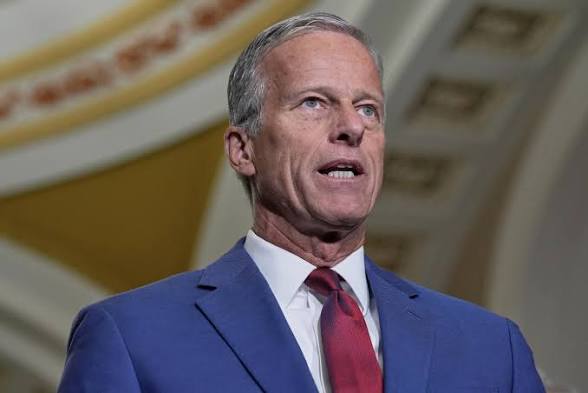
The fight over control of the U.S. Senate has entered an increasingly confrontational phase, with Senate Majority Leader John Thune accusing Democrats of blocking legislation for political reasons as the 2026 midterm elections approach.
Thune, a South Dakota Republican, has repeatedly attacked Senate Democrats over their handling of Republican-backed legislation. In a September 24 Senate speech, he described Democrats as the “Party of No” and argued that partisan opposition had prevented action on issues including energy costs, permitting reform and tax policy.
The confrontation has intensified as lawmakers race toward the midterms. The Senate adjourned before the election with several major proposals still unresolved, reflecting the deep partisan divisions that have made it increasingly difficult for Congress to move legislation.
Thune’s argument is straightforward: Republicans believe they have offered legislation that deserves bipartisan support, while Democrats are allegedly refusing to cooperate because they do not want to give the Republican majority or President Donald Trump legislative victories.
Democrats, however, have disputed the Republican characterization of the Senate’s legislative battles. The disagreements involve not only political strategy but also substantive disputes over the contents and consequences of individual bills.
John Thune Escalates His Attack on Senate Democrats
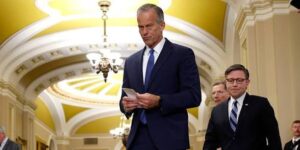
Thune’s latest rhetoric is part of a broader campaign to portray Senate Democrats as obstructing the Republican agenda.
In his September 24 Senate remarks, Thune argued that Democrats had slowed presidential nominations and opposed Republican priorities throughout the current Congress. He also accused Democrats of refusing to support legislation even when Republicans claimed that the measures enjoyed broad public or bipartisan backing.
The majority leader subsequently sharpened that message.
On September 29, Thune said Democrats had chosen to “play politics” rather than cooperate on what he described as consequential legislation. He specifically cited the CLARITY Act and permitting reform as examples of measures that Democrats had prevented from advancing.
That puts the Senate showdown into a larger election-year context.
Republicans control the Senate, but their majority remains politically vulnerable heading into November. Recent polling and campaign developments have given Democrats opportunities in several traditionally Republican states, increasing the stakes surrounding every legislative fight.
The Permitting Reform Fight
One of Thune’s most important complaints involves permitting reform.
Republicans and Democrats have spent months negotiating legislation intended to make it easier and faster to approve major infrastructure and energy projects.
Thune argues that the negotiations had produced a compromise incorporating Democratic demands. According to his account, the White House and Senate Republicans accepted the Democrats’ latest proposal, yet Democrats still declined to move forward.
For Thune, that is evidence that the disagreement is no longer primarily about policy.
Instead, he argues that Democrats are concerned about allowing Republicans and the White House to claim a legislative victory ahead of the election.
That accusation goes directly to the heart of the Senate’s current political problem.
When Congress approaches an election, bipartisan negotiations can become more difficult because lawmakers have incentives to deny opponents opportunities to campaign on legislative accomplishments.
Democrats, meanwhile, can argue that refusing to advance a bill is not automatically obstruction if senators believe the proposal remains inadequate.
The distinction matters because Senate procedure often requires negotiation before controversial legislation can move forward.
Energy Costs Become a Major Political Weapon
Energy prices have become another major flashpoint.
Thune has repeatedly highlighted the Ratepayer Protection Act, arguing that the measure would protect consumers from electricity-cost increases associated with data centers.
The House passed the measure by an overwhelming 417-3 vote, according to Thune’s September 29 remarks. He argued that such a large bipartisan House vote should make the legislation an obvious candidate for Senate action.
But the Senate did not produce the same result.
Recent reporting confirms that the legislation became one of the final major points of confrontation before the Senate left Washington for the pre-election period. Republicans accused Democrats of obstruction, while Democrats argued that the Republican proposals were inadequate or addressed issues in ways they could not support.
This dispute illustrates why the phrase “obstruction” is politically powerful but also contested.
A party’s decision to oppose legislation can be described as obstruction by its opponents. The same action can be described as legitimate opposition by the party voting against the bill.
Thune Says Democrats Are Choosing Politics Over Policy
Thune’s central argument is that Democrats are deliberately preventing Republican legislative victories.
In his September 24 speech, he pointed to permitting reform as what he considered the clearest example.
According to Thune, Democrats had negotiated for months with Republicans and the administration. He said that when Republicans accepted the Democrats’ final counterproposal, Democrats still declined to allow the legislation to proceed.
That led Thune to conclude that political considerations were driving the opposition.
His argument is particularly relevant because the 2026 midterm campaign is now dominating Washington.
Republicans want to demonstrate that they can govern with control of the Senate. Democrats want to prevent the GOP from building a strong legislative record that can be used in campaign advertisements.
The result is a political environment in which legislation can become part of the election campaign even before it reaches a final vote.
Why the Senate Is So Difficult to Move
The Senate is structurally different from the House.
Even when one party controls the chamber, passing major legislation often requires negotiation and procedural agreement. That makes the Senate especially vulnerable to partisan gridlock.
The current fight demonstrates the problem.
Republicans can argue that they control the chamber and therefore should be able to advance their priorities. Democrats can counter that Senate rules and the chamber’s traditions give the minority significant power to slow or challenge legislation.
That tension has existed for years, but the political environment has made it more intense.
The Senate’s pre-election adjournment demonstrated the consequences.
Several major proposals remained unresolved, including legislation dealing with energy, artificial intelligence, environmental policy and other issues.
The inability to reach agreement has therefore become a campaign issue itself.
Democrats Reject the Republican Narrative
While Thune has made obstruction the centerpiece of his criticism, Democrats have a different explanation.
Opposition to a Republican bill does not necessarily mean opposition to the underlying goal.
For example, lawmakers can agree that electricity costs matter while disagreeing about how the federal government should address data-center demand.
They can support permitting reform while disagreeing over environmental safeguards, judicial review or the balance between development and regulation.
That distinction is important when evaluating the Senate conflict.
The Republican leadership’s argument is that Democrats have already negotiated away their objections in some cases. Democrats can respond that the final Republican proposal still contains provisions they cannot support.
The political battle therefore extends beyond whether legislation is blocked.
It is also a battle over who gets blamed for the blockage.
The Midterm Elections Raise the Stakes
The timing could hardly be more politically sensitive.
The 2026 midterms are approaching, and control of Congress is at stake.
Recent polling has shown Democrats making gains in several Senate contests that Republicans previously considered relatively secure. Reuters reported that Democrats were becoming competitive in multiple states won comfortably by Trump in 2024, forcing Republicans to devote resources to defending territory that once appeared safer.
Other recent polling has shown Democrats reaching or exceeding 50 percent in important Senate races, including contests in Texas and Alaska.
That environment gives both parties powerful incentives.
Republicans want voters to see a functioning GOP-controlled Senate delivering results.
Democrats want voters to see the Republican majority as ineffective and overly focused on partisan priorities.
Every failed vote can therefore become campaign material.
John Thune’s “Party of No” Message
Thune’s decision to label Democrats the “Party of No” is designed to simplify a complicated legislative dispute.
The message is easy for voters to understand: Republicans say they are proposing solutions, while Democrats allegedly say no.
Thune used the phrase repeatedly in his September 24 Senate speech, arguing that Democrats had opposed Republican priorities ranging from tax relief to energy policy.
He also pointed to earlier congressional conflicts, including government funding disputes.
However, voters evaluating the argument should examine individual bills rather than simply accepting either party’s characterization.
A bill can receive overwhelming support in one chamber and still face legitimate objections in another.
Likewise, a procedural delay can sometimes represent genuine obstruction and sometimes reflect negotiations over legislation.
The facts of each dispute matter.
The Battle Over Legislative Victories
The most revealing part of the current confrontation may be the disagreement over political victories.
Thune argues that Democrats do not want Republicans to pass legislation that can be promoted during the campaign.
That accusation is difficult to separate from the broader reality of election-year politics.
Both parties routinely highlight accomplishments and attack the other side’s failures.
If Republicans pass a popular bill shortly before the election, GOP candidates can campaign on that achievement.
If Democrats block it, Democrats can argue that they prevented a bad policy from becoming law.
Either way, the legislative process becomes intertwined with electoral strategy.
Why This Fight Matters Beyond Washington
The Senate confrontation has consequences beyond political messaging.
Permitting reform could affect energy and infrastructure projects.
Data-center legislation could affect electricity policy and the costs associated with rapidly expanding artificial-intelligence infrastructure.
Tax legislation affects household finances and business decisions.
Government funding affects federal agencies and workers.
That means congressional gridlock can have practical consequences even when voters are not following every Senate procedural dispute.
The challenge is separating genuine policy disagreement from political theater.
Thune’s rhetoric is clearly intended to put pressure on Democrats. His office has also repeatedly used official statements to argue that Democratic opposition has prevented the Senate from advancing legislation.
At the same time, reporting on the Senate’s final pre-midterm session shows that both parties remained deeply divided over the substance of legislation.
What Happens After the Midterms?
The November elections could dramatically change the Senate’s dynamics.
If Republicans retain control, Thune is likely to continue pressing Democrats to support the GOP agenda while arguing that voters rejected Democratic obstruction.
If Democrats win control, the political narrative could reverse.
Republicans would become the Senate minority, and Democrats could use the same procedural tools to shape or delay Republican priorities.
That possibility explains why the current dispute is bigger than one bill.
It is part of a broader struggle over the future balance of power in Congress.
John Thune Faces Pressure From Both Directions
Thune’s position is also complicated by pressure from within the Republican Party.
The majority leader has faced criticism from some conservatives who want the Senate to move more aggressively on President Trump’s agenda.
Recent reporting has highlighted tensions between Trump and Thune over Senate strategy, including disputes about Republican priorities and the use of Senate procedures.
That means Thune must navigate two separate challenges.
He must persuade Democrats to cooperate on legislation while also convincing Republicans that the Senate is moving quickly enough.
The political pressure is particularly intense because Republicans are heading into a difficult midterm environment.
A Senate Showdown With Election Consequences
The fight between John Thune and Senate Democrats is therefore about more than rhetoric.
It represents a fundamental disagreement over how Congress should function during a period of divided political priorities.
Thune argues that Democrats have turned opposition into a strategy and are blocking legislation because they do not want Republicans to claim victories.
Democrats reject that framing and maintain their right to oppose legislation they consider flawed.
Meanwhile, the legislative record shows that major bills have stalled amid intense partisan disagreement. The Senate’s departure before the midterms left several significant proposals unresolved.
That reality gives both parties ammunition.
Republicans can point to stalled bills as evidence of Democratic obstruction.
Democrats can point to those same failures as evidence that Republicans have been unable to build sufficient bipartisan support.
The voters will ultimately decide which interpretation is more persuasive.
For now, John Thune is making his position unmistakable: he wants Republicans to campaign on what they say they have attempted to accomplish, while portraying Democrats as the obstacle standing in the way.
With the midterms approaching, that message is likely to become even louder.
FAQs
Who is John Thune?
John Thune is a Republican U.S. senator from South Dakota and the Senate majority leader. He has emerged as one of the leading Republican voices in the Senate’s legislative battles.
Why is John Thune criticizing Democrats?
Thune argues that Senate Democrats have blocked or delayed Republican-backed legislation for political reasons. He has specifically cited permitting reform, energy legislation, tax policy and other Republican priorities.
Did John Thune call Democrats the “Party of No”?
Yes. In a September 24, 2026 Senate speech, Thune explicitly described Democrats as the “Party of No” while criticizing their opposition to Republican priorities.
What is the permitting reform dispute?
Republicans and Democrats negotiated for months over permitting reform. Thune says Republicans accepted Democratic demands but Democrats still refused to advance the legislation, which he characterized as political obstruction.
What is the Ratepayer Protection Act?
The Ratepayer Protection Act is legislation focused on electricity costs associated with data-center development. Thune highlighted its 417-3 House vote as evidence of broad bipartisan support.
Why is the Senate gridlocked?
The Senate is divided by major policy disagreements, procedural battles and intense election-year politics. Both parties have competing incentives to advance or block legislation before voters go to the polls.
Can Democrats be fairly described as obstructing legislation?
That depends on the legislation and the political definition of obstruction. Republicans, including Thune, use the term to describe Democratic efforts to prevent bills from advancing. Democrats can argue that opposing legislation is part of normal congressional debate when they disagree with its substance.
Why does the dispute matter before the 2026 midterms?
Control of Congress is at stake. Republicans want to demonstrate that they can govern effectively, while Democrats want to capitalize on stalled legislation and challenge the GOP majority. Recent polling suggests Democrats are competitive in several Senate races, making the legislative record particularly important.
What happens to the stalled legislation?
Some proposals could return during a post-election lame-duck session or in the next Congress. Their future will depend heavily on the results of the 2026 elections and the willingness of both parties to negotiate.
What is the main message from John Thune?
Thune’s core argument is that Republicans are trying to deliver legislation while Democrats are blocking it for political reasons. His “Party of No” framing is designed to make Senate gridlock a central issue in the 2026 midterm campaign.
About the Author