Iran Retaliation: IRGC Missiles Target US Bases in Jordan, Larak Island Strikes
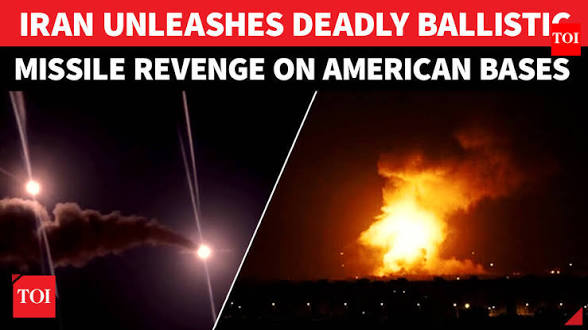
Iran and the United States have entered another dangerous phase of military confrontation after US forces struck Iranian launchers on Larak Island in the Strait of Hormuz. Iran subsequently announced retaliatory missile attacks against US military facilities in Jordan, while Tehran also claimed attacks against American military targets in the United Arab Emirates.
The latest Iran retaliation marks a significant escalation after several weeks of relative calm between Washington and Tehran. US officials said American forces targeted two Iranian launchers on Larak Island after Iranian forces were observed preparing systems that could threaten shipping in the Strait of Hormuz.
Iran described the American operation as aggression and warned that attacks against Iranian territory would receive a response. The Islamic Revolutionary Guard Corps, or IRGC, subsequently claimed responsibility for missile attacks against US bases in Jordan.
The developments have raised fresh concerns about the security of the Strait of Hormuz, the safety of US forces across the Middle East and the possibility of a wider regional confrontation.
What Happened on Larak Island?
The latest escalation began with a US military operation against Iranian launch systems on Larak Island.
Larak is an Iranian island located near the strategically important Strait of Hormuz. The waterway is one of the world’s most important energy corridors, making military activity in and around the area particularly significant for international trade and oil markets.
According to a US official cited by Reuters, American forces struck two Iranian launchers on August 30. The official said IRGC personnel had been observed preparing to launch rockets with sea mines into the Strait of Hormuz.
The United States therefore presented the operation as a preventive military action designed to protect maritime traffic and prevent Iranian forces from threatening the strategic waterway.
Iran, however, viewed the attack very differently.
Iranian officials and state media condemned the strike and warned that the United States would face consequences. Reports from Iranian media said the attack caused deaths and injuries, although casualty figures remain subject to conflicting reports.
The Larak Island operation consequently became the immediate trigger for the latest round of retaliation.
Iran Retaliates Against US Bases in Jordan
Following the Larak Island attack, Iran announced that it had launched ballistic missiles toward US military facilities in Jordan.
The IRGC said two American air bases in Jordan were targeted. Reports identified the facilities as King Hussein Air Base and Al-Azraq, although details concerning damage remain disputed.
Jordanian air defenses reportedly intercepted incoming missiles. Other reports also said that most or all of the projectiles directed toward the bases were stopped before causing significant damage.
The distinction between Iranian claims and independently verified battlefield results is important.
Iran has presented the operation as a successful act of retaliation. The United States and Jordan have emphasized interception and defensive capabilities.
As the situation continues to develop, the exact extent of damage to US facilities remains difficult to establish independently.
Why Jordan Matters in the Iran-US Conflict
Jordan occupies an important strategic position in the Middle East.
The country borders Iraq, Syria, Israel and Saudi Arabia and has long maintained close security cooperation with the United States. American military personnel and assets operate from facilities in Jordan as part of broader regional security operations.
That makes US bases in Jordan potential targets during a major confrontation with Iran.
For Tehran, striking American military infrastructure in Jordan can demonstrate that the consequences of US military action may extend beyond Iranian territory. For Washington, attacks on personnel or facilities in Jordan could create pressure for a stronger response.
This creates a difficult strategic calculation for all sides.
Jordan also has an interest in preventing its territory from becoming a battlefield between larger powers.
Iran’s Wider Response in the Region
The latest Iranian response was not limited to Jordan.
Iranian forces also claimed to have attacked US military targets at the Al Minhad airbase in the UAE using drones. Iranian Army officials said dozens of drones were launched toward locations associated with US helicopters and forces.
The UAE, however, disputed aspects of the Iranian claims.
The Emirati government reported intercepting an Iranian drone over its territorial waters and rejected claims that its Al Minhad airbase had been successfully attacked.
This disagreement highlights a recurring feature of the conflict: information released during military confrontations can change quickly, and claims from opposing sides may not be independently verifiable immediately.
For readers following the crisis, it is therefore important to distinguish between:
- Claims made by Iranian officials
- Statements from the US military
- Statements from Jordan and the UAE
- Independent reporting
- Confirmed physical damage and casualties
Strait of Hormuz Becomes the Center of the Crisis
The Strait of Hormuz is central to understanding the latest escalation.
The narrow waterway connects the Persian Gulf with the Gulf of Oman and is critical to global energy shipments.
Any military confrontation involving Iranian missile systems, naval forces, mines or shipping routes can therefore have consequences far beyond Iran and the United States.
The US strike on Larak Island was reportedly connected to concerns about Iranian preparations involving sea mines.
Iran, meanwhile, has repeatedly emphasized its strategic influence over the Strait.
This creates a potentially dangerous cycle:
US sees a threat to maritime security → US strikes Iranian military assets → Iran retaliates against US forces → Washington considers another response → regional tensions increase.
The longer this cycle continues, the greater the risk that a limited military exchange could develop into a broader conflict.
Oil Markets Watch the Latest Iran Retaliation
The renewed confrontation is also important for global energy markets.
Any disruption to the Strait of Hormuz can affect oil transportation and increase uncertainty for energy traders.
Reports following the latest attacks indicated renewed pressure on oil prices as investors assessed the possibility of further escalation.
Markets are particularly sensitive to developments involving:
- Iranian missile launches
- Naval activity
- Sea mines
- Tanker incidents
- US military operations
- Threats to shipping
- Possible closure or disruption of the Strait of Hormuz
Even when actual oil supplies are not immediately interrupted, the possibility of disruption can cause prices to rise because traders begin pricing in additional geopolitical risk.
Trump Threatens a Strong Response
US President Donald Trump has warned that Washington would respond forcefully following Iran’s attacks on American forces.
Reuters reported that Trump vowed a strong response after Iran launched attacks against US bases in Jordan and made claims regarding American military targets in the UAE.
That statement increases uncertainty over what could happen next.
A US response could potentially involve additional strikes against Iranian missile infrastructure, military bases or other strategic assets.
However, the United States also has an interest in preventing a wider regional war.
The challenge for Washington is to demonstrate deterrence without triggering a chain reaction that expands the conflict.
Iran Says It Still Supports Negotiations
Despite the military escalation, Iranian President Masoud Pezeshkian has indicated that Tehran remains interested in a negotiated solution.
According to Reuters reporting, Pezeshkian said Iran still wanted a negotiated end to the conflict and argued that continued war was not in Tehran’s interest.
That creates a striking contrast between military retaliation and diplomatic messaging.
Iran is attempting to demonstrate that it can respond militarily to American attacks while also keeping open the possibility of negotiations.
Whether Washington accepts that approach remains uncertain.
For diplomacy to succeed, both sides would likely need to establish limits on military operations while addressing the broader disagreements that produced the confrontation.
Could the Conflict Spread Further?
The possibility of further escalation is now one of the biggest concerns.
Iran has demonstrated that it can target American positions beyond its immediate borders. US forces, meanwhile, possess significant military capabilities throughout the region.
Potential flashpoints include:
Jordan
US military infrastructure in Jordan could remain vulnerable if Tehran continues targeting American assets.
UAE
The UAE hosts important American military facilities, making it another potential area of concern despite Emirati efforts to prevent direct involvement.
Strait of Hormuz
The waterway remains especially sensitive because even a limited maritime incident could have global economic consequences.
Gulf Shipping
Commercial vessels could face increased risks if mines, missiles or naval confrontations threaten shipping routes.
Regional US Bases
American military installations across the Middle East could become involved if the confrontation expands.
What Does This Mean for the United States?
For Washington, the latest Iran retaliation creates several strategic challenges.
First, the United States must protect its military personnel and installations.
Second, it must maintain freedom of navigation through the Strait of Hormuz.
Third, American leaders must decide how strongly to respond to Iranian attacks.
A major military response could deter future Iranian attacks but also risk triggering additional retaliation.
A limited response might reduce escalation but could be interpreted by Tehran as a sign that Washington is unwilling to absorb further attacks.
The balance between deterrence and escalation will therefore be critical.
What Does It Mean for Iran?
Iran faces its own difficult choices.
The government wants to demonstrate that US attacks will not go unanswered. At the same time, Tehran has economic and diplomatic reasons to avoid an unlimited war.
Iran’s economy has already faced significant pressure from sanctions and regional instability.
A prolonged military confrontation could increase economic damage, disrupt trade and place additional pressure on Iran’s energy infrastructure.
That may explain why Iranian officials continue to combine strong military rhetoric with references to negotiations.
Jordan Faces a Difficult Position
Jordan is arguably one of the countries most exposed to the consequences of the latest confrontation.
Amman has strong security ties with Washington but does not necessarily want to become a direct participant in an Iran-US war.
When missiles travel through or toward Jordanian airspace, the country must protect its territory regardless of the broader political dispute.
Jordanian air-defense operations can therefore become an important part of the regional military picture.
At the same time, repeated attacks or falling debris could create risks for civilians.
Global Security Implications
The latest Iran retaliation is more than another exchange of missiles.
It demonstrates how quickly a confrontation in one part of the region can spread geographically.
The sequence from Larak Island to Jordan and the UAE shows the interconnected nature of US military operations and Iranian retaliation.
It also demonstrates the importance of missile-defense systems.
If incoming Iranian missiles are successfully intercepted, the immediate physical consequences may be limited. But interception does not eliminate the strategic consequences of the attack.
Every missile launch can increase pressure for another military response.
That is why diplomatic efforts remain important even while military operations continue.
What Happens Next?
The next major question is whether the United States will respond militarily.
President Trump has already threatened a forceful response, meaning another round of strikes cannot be ruled out.
Iran, meanwhile, has signaled that it will respond to attacks against its territory.
This creates the possibility of a continuing retaliation cycle.
The most important developments to watch include:
- Any new US strikes inside Iran
- Additional Iranian missile or drone attacks
- The security of the Strait of Hormuz
- Oil tanker and shipping incidents
- Statements from Jordan and the UAE
- US military casualty reports
- Iranian casualty and damage assessments
- Potential diplomatic negotiations
The situation remains fluid, and claims made during active military operations should be treated cautiously until independently confirmed.
Conclusion
The latest Iran retaliation against US bases in Jordan represents a major escalation following the American strike on Iranian launchers on Larak Island.
The United States says the Larak operation was intended to eliminate Iranian systems associated with a potential threat to shipping in the Strait of Hormuz. Iran responded by targeting US military positions in Jordan and claiming additional attacks against American forces in the UAE.
The immediate military consequences remain under assessment, but the strategic implications are already significant.
The confrontation places Jordan and other regional states in an increasingly difficult position, while the Strait of Hormuz remains a critical global concern.
Perhaps most importantly, both sides still face incentives to avoid an uncontrolled regional war. Iran has indicated an interest in negotiations, while Washington must weigh military deterrence against the danger of further escalation.
For now, the world is watching to see whether the latest exchange ends as a limited retaliation or becomes the beginning of another sustained phase of the US-Iran conflict.
FAQs
1. Why did Iran attack US bases in Jordan?
Iran said the attacks were retaliation for US strikes against Iranian launchers on Larak Island in the Strait of Hormuz.
2. What happened on Larak Island?
US forces reportedly struck two Iranian launchers on Larak Island after observing IRGC personnel preparing systems that US officials said could be used to deploy sea mines in the Strait of Hormuz.
3. Which US bases in Jordan were targeted?
Reports identified King Hussein Air Base and Al-Azraq as the two US-linked facilities targeted by Iranian ballistic missiles.
4. Were Iranian missiles intercepted?
Jordanian air defenses reportedly intercepted incoming Iranian missiles. Details concerning the number of interceptions and the overall damage have varied among reports.
5. Did Iran also attack US forces in the UAE?
Iran claimed that it launched drones toward US military targets at Al Minhad airbase in the UAE. Emirati authorities disputed claims of a successful attack and reported intercepting an Iranian drone.
6. Why is the Strait of Hormuz important?
The Strait of Hormuz is a major international energy route. Any prolonged military disruption there could affect shipping, oil prices and global energy markets.
7. Will the US retaliate against Iran?
President Donald Trump has threatened a strong response following the Iranian attacks. The exact nature and timing of any US military response remain uncertain.
8. Does Iran want negotiations?
Iranian President Masoud Pezeshkian has said Tehran remains interested in dialogue and a negotiated solution, despite the latest military escalation.
9. Could the Iran-US conflict spread?
Yes. The involvement of military facilities in Jordan and the UAE demonstrates how quickly the confrontation can extend beyond Iranian and US territory. Further escalation could also affect Gulf shipping and energy markets.
10. What should readers watch next?
The key indicators are additional US or Iranian strikes, developments around the Strait of Hormuz, attacks on regional military bases, oil-market movements and renewed diplomatic negotiations.
How useful was this post?
Click on a star to rate it!
Average rating 0 / 5. Vote count: 0
No votes so far! Be the first to rate this post.
About the Author

usa5911.com
Administrator
Hi, I’m Gurdeep Singh, a professional content writer from India with over 3 years of experience in the field. I specialize in covering U.S. politics, delivering timely and engaging content tailored specifically for an American audience. Along with my dedicated team, we track and report on all the latest political trends, news, and in-depth analysis shaping the United States today. Our goal is to provide clear, factual, and compelling content that keeps readers informed and engaged with the ever-changing political landscape.