FLYDUBAI HIJACKER EXPOSED: Radicalized co-pilot Hamam Al-Hammami unmasked, extremist links leaked
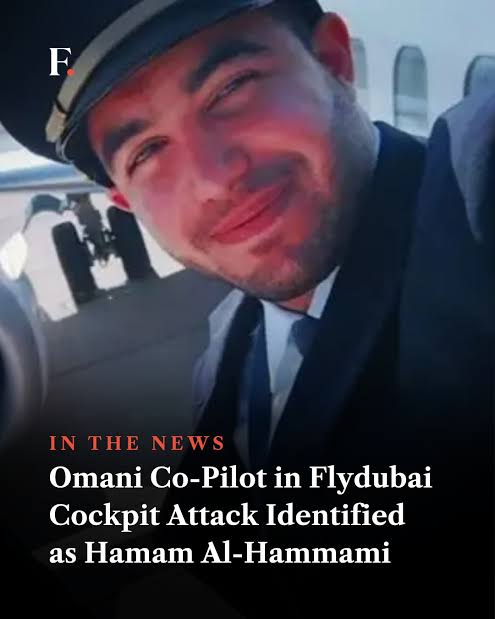
The investigation into the dramatic Flydubai Flight FZ1073 incident has taken a major turn after multiple reports identified the co-pilot involved in the cockpit attack as Hamam al-Hammami, an Omani national.
The identification comes days after the September 30 incident, when the Dubai-to-Tel Aviv flight experienced a violent confrontation inside the cockpit and was forced to make an emergency landing in Saudi Arabia.
According to the latest reporting from the Associated Press and Reuters, al-Hammami is the co-pilot accused of attacking the captain and attempting to interfere with control of the aircraft. However, authorities have not publicly released a complete account of his alleged motive or established whether he had outside connections.
The United Arab Emirates has described the incident as an attempted terrorist act. UAE investigators are examining the circumstances, motives and possible connections while also reviewing physical and digital evidence.
That distinction is important because several claims about al-Hammami’s background are still being investigated.
What Happened on Flydubai Flight FZ1073?

Flydubai Flight FZ1073 departed Dubai on September 30, 2026, bound for Tel Aviv.
There were 174 passengers and eight crew members aboard, according to Saudi authorities cited by Al Jazeera. The aircraft later made an emergency landing at Tabuk in northwestern Saudi Arabia.
During the flight, a confrontation reportedly began in the cockpit.
The co-pilot allegedly attacked Captain Smit Machchhar. Later UAE findings said the co-pilot used the aircraft’s emergency crash axe and attempted to take control of the aircraft’s controls.
Flight-tracking data showed the aircraft experiencing dramatic altitude changes. Reuters reported that the aircraft lost more than 16,000 feet during its most severe descent. Al Jazeera reported that tracking data showed a plunge of more than 17,000 feet over a short period.
The captain, despite being injured, managed to open the cockpit door.
Passengers then rushed toward the cockpit and helped overpower the co-pilot.
Two reserve Flydubai pilots who were reportedly travelling on the aircraft subsequently took control and helped bring the plane safely to Tabuk.
Who Is Hamam al-Hammami?
Hamam al-Hammami has been identified by multiple media organizations as an Omani citizen.
Al Jazeera, citing AP and other reports, said three people familiar with the situation identified him as the co-pilot. The sources included diplomatic officials who spoke anonymously because they were not authorized to discuss the investigation publicly.
The Indian Express also reported that al-Hammami was identified as the Omani co-pilot accused of attacking Indian captain Smit Machchhar.
Reports have also attempted to reconstruct his education and aviation career.
According to reporting cited by Al Jazeera and the Indian Express, he was born in the UAE and had an Omani father and Syrian mother. A LinkedIn profile reportedly associated with him listed aviation-related employment and education in the United Kingdom.
However, not every biographical detail has been independently confirmed by authorities.
Did Oman Previously Flag Hamam al-Hammami?
One of the most significant questions in the investigation concerns al-Hammami’s previous aviation career.
Several media reports, citing unnamed sources, say he had previously been removed from flying duties in Oman because of concerns about alleged extremist views.
The Associated Press reported that he had previously been grounded in Oman because of suspected extremist views. Al Jazeera similarly reported claims that Omani authorities had barred him from flying because of concerns about his alleged ideological views.
The Indian Express reported that he had worked for Oman Air for several years and that concerns allegedly emerged during his training.
However, there are differences between reports regarding exactly when the concerns arose and what authorities allegedly found.
The Indian Express noted that some reports placed the discovery of alleged extremist material in 2024, while other reporting has given different dates. The exact nature of the material has also not been publicly detailed by authorities.
That means claims about a previously documented extremist background should currently be treated as reported allegations rather than a fully established public record.
What Are the Alleged Extremist Links?
The phrase “extremist links” has appeared widely in coverage of the Flydubai incident.
However, investigators have not publicly established that al-Hammami belonged to a particular extremist organization.
Al Jazeera reported that authorities were still trying to determine whether he acted alone or had connections to extremist groups. The same report said there had been no official confirmation of his identity or beliefs at the time of publication.
This is an important distinction.
There is a difference between:
- Alleged extremist views
- Possession of alleged extremist material
- Online activity attributed to an individual
- Membership in an extremist organization
- Direct operational links to an extremist group
These categories should not be treated as interchangeable.
The investigation is reportedly examining digital evidence and possible connections. UAE authorities have said they will determine the full circumstances, motives and related links after completing the investigation.
Social Media Claims Require Caution
Various reports and social media posts have circulated claims about accounts allegedly belonging to al-Hammami.
Some reports have referred to alleged online material that investigators may be examining.
But social media attribution can be difficult to establish. Names, photographs and profiles can be copied, deleted or impersonated.
For that reason, claims about specific online posts should not automatically be treated as proof that an individual created or endorsed them.
The UAE investigation is expected to examine digital evidence as part of the broader inquiry. Authorities have specifically said they are reviewing physical and digital evidence.
What Was the Alleged Motive?
The motive remains one of the biggest unanswered questions.
UAE authorities have described the incident as an attempted terrorist act. The Attorney General said investigators determined that the co-pilot attacked the captain and attempted to take control of the aircraft.
But authorities have not yet publicly provided a complete explanation of why the attack allegedly happened.
Reuters reported that the motive remained unclear, while Israeli officials had suggested that the co-pilot may have been radicalized.
That means claims that he definitely intended to crash the aircraft for a particular ideological reason remain subject to investigation.
Investigators will need to establish intent using evidence such as communications, digital records, employment history, interviews and other material.
Captain Smit Machchhar’s Role
Captain Smit Machchhar became a central figure in the incident after surviving the cockpit assault.
According to accounts reported by Al Jazeera, Machchhar was seriously injured but managed to open the cockpit door. This allowed passengers to enter and help restrain the co-pilot.
The aircraft was subsequently stabilized.
Passengers and reserve pilots played important roles in the emergency response. Two off-duty pilots on board later took control of the aircraft and assisted with the emergency landing in Saudi Arabia.
Machchhar was later transferred to Abu Dhabi for continued medical treatment.
Why the Emergency Landing Happened in Saudi Arabia
The aircraft was travelling from Dubai toward Tel Aviv when the cockpit incident occurred.
Following the loss of control and emergency situation, the flight diverted to Tabuk, Saudi Arabia.
Saudi authorities said the aircraft landed safely at Prince Sultan bin Abdulaziz International Airport at approximately 9:45 a.m. local time.
The captain and co-pilot were taken to hospital, while passengers later continued their journey on another Flydubai aircraft.
Saudi investigators also participated in the initial examination before the pilots were transferred to the UAE.
Why the Pilot-Vetting Question Matters
The case has raised broader questions about aviation security and pilot background checks.
If reports about previous concerns regarding al-Hammami are ultimately confirmed, investigators will likely examine how those concerns were handled and whether relevant information was available to later employers.
That does not by itself establish that any airline knowingly ignored a security warning.
Instead, investigators must determine:
- What information existed about the pilot?
- Which authorities had access to it?
- Was the information formally communicated?
- What background checks were conducted?
- What did previous employers know?
- Did the pilot pass required aviation security assessments?
- Were there gaps between national and international databases?
These questions could become an important part of the investigation.
Flydubai Investigation Continues
Flydubai has said an investigation is underway.
The UAE is leading the investigation because of the aircraft’s registration and jurisdictional considerations.
The UAE Attorney General said investigators are examining the circumstances of the incident, motives and possible connections. Technical examinations and analysis of physical and digital evidence are also underway.
The investigation could therefore provide substantially more information in the coming days.
At present, however, several important questions remain unanswered.
What We Know and What Remains Unconfirmed
Reported or established developments
- The flight was Flydubai FZ1073.
- The aircraft was travelling from Dubai to Tel Aviv.
- A violent cockpit incident occurred.
- The captain was injured.
- The co-pilot was accused of attacking the captain.
- Passengers helped overpower the co-pilot.
- Reserve pilots helped operate the aircraft.
- The plane landed safely in Tabuk.
- The co-pilot has been identified by multiple reports as Hamam al-Hammami.
- UAE authorities have described the incident as an attempted terrorist act.
Still under investigation
- The precise motive
- Whether al-Hammami acted alone
- Whether he had operational links to an extremist organization
- The exact nature of alleged extremist material
- The authenticity and meaning of specific social-media claims
- How previous concerns, if confirmed, were handled
- Whether any additional people were involved
This distinction is essential when reporting on an unfolding security investigation.
What Happens Next?
Investigators are expected to continue examining evidence from the aircraft, the cockpit, digital devices and the co-pilot’s professional history.
Authorities will also likely review communications and background information connected to the pilot.
The UAE has said the final findings will be released after the necessary investigative procedures are completed.
Meanwhile, aviation authorities and airlines may review their procedures for pilot screening, particularly when information from another country’s security system is involved.
The incident has already generated international attention because it involved an aircraft carrying passengers between the UAE and Israel and because the alleged attacker was a member of the flight crew.
Frequently Asked Questions
Who is Hamam al-Hammami?
Hamam al-Hammami has been identified by multiple media reports as the Omani co-pilot accused of attacking the captain of Flydubai Flight FZ1073. His identity has not been accompanied by a complete official public biography from authorities.
What happened on Flydubai Flight FZ1073?
A violent confrontation reportedly occurred in the cockpit while the aircraft was travelling from Dubai to Tel Aviv. The co-pilot allegedly attacked the captain and attempted to interfere with aircraft controls. Passengers and reserve pilots helped regain control before the aircraft landed in Tabuk, Saudi Arabia.
Was Hamam al-Hammami linked to an extremist group?
No specific organizational link has been publicly established by investigators so far. Reports have described alleged extremist views and previous concerns, but authorities are still investigating whether he acted alone or had connections to other individuals or groups.
Was he previously banned from flying?
Multiple reports say he had previously been removed or barred from flying duties in Oman amid concerns about alleged extremist views. The precise circumstances and timing remain subject to further verification.
Did the co-pilot try to hijack the aircraft?
The UAE Attorney General said investigators found that the co-pilot attacked the captain and attempted to take control of the aircraft’s controls. The incident is being investigated as an attempted terrorist act.
Where did the aircraft land?
The aircraft made an emergency landing at Tabuk in northwestern Saudi Arabia. The passengers later continued their journey on another aircraft.
Is the investigation finished?
No. Investigators are still examining the incident, including its motive, possible connections and physical and digital evidence.
Conclusion
The identification of Hamam al-Hammami has added a major new element to the investigation into the Flydubai FZ1073 cockpit attack.
Authorities have established that a serious confrontation occurred aboard the aircraft and that the co-pilot allegedly attacked the captain and attempted to interfere with the aircraft’s controls. Passengers and reserve pilots then helped prevent the situation from becoming a larger aviation disaster.
However, the most sensitive claims surrounding al-Hammami — including the precise nature of his alleged extremist views, possible organizational connections and the motivation behind the attack — remain under investigation.
For now, the confirmed facts and attributed allegations should be kept separate as investigators work to establish the complete story.
How useful was this post?
Click on a star to rate it!
Average rating 0 / 5. Vote count: 0
No votes so far! Be the first to rate this post.
About the Author

usa5911.com
Administrator
Hi, I’m Gurdeep Singh, a professional content writer from India with over 3 years of experience in the field. I specialize in covering U.S. politics, delivering timely and engaging content tailored specifically for an American audience. Along with my dedicated team, we track and report on all the latest political trends, news, and in-depth analysis shaping the United States today. Our goal is to provide clear, factual, and compelling content that keeps readers informed and engaged with the ever-changing political landscape.