France is facing a major wave of French student protests, with hundreds of schools closed or blockaded as students, teachers and parents take to the streets over deteriorating education conditions.
What began as localized demonstrations in the Paris region has grown into a nationwide movement. Protesters are demanding more teachers, better-maintained school buildings, shorter or more manageable school days and increased investment in public education.
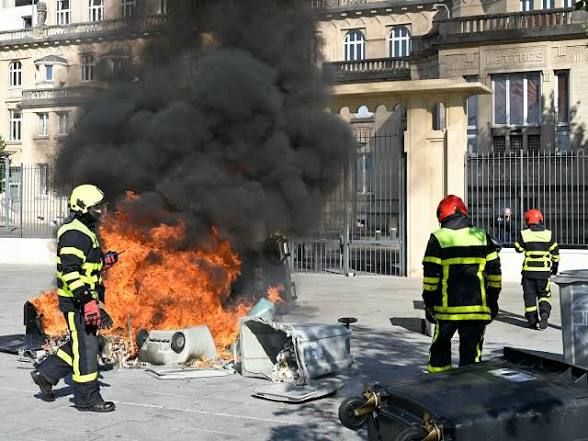
However, the demonstrations have also been marked by serious clashes with police. Tear gas, riot-control weapons, fires and thrown objects have been reported in several cities.
The scale of the unrest has put fresh pressure on Prime Minister Sébastien Lecornu’s government. It also comes as France struggles with a major budget deficit and prepares for a politically sensitive period ahead of the next presidential election.
According to French authorities, 891 schools experienced total or partial disruption on Tuesday. The national high-school student union gave a considerably higher figure, saying around 1,800 of France’s 3,700 high schools were blockaded or closed for the day.
French Student Protests Spread Across the Country
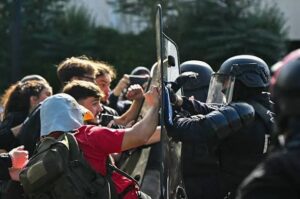
The current wave of French student protests began in the Paris region in September.
Students initially focused on problems inside their schools. They complained about teacher shortages, overcrowded classrooms, long school days and buildings that were poorly maintained.
As the movement spread, however, the protests became part of a wider debate about public spending and the future of France’s education system.
By October 6, demonstrations were taking place in cities including Paris, Marseille, Lyon, Strasbourg, Nantes, Rennes and Bordeaux.
The Interior Ministry said approximately 86,000 people had participated in demonstrations outside Paris by Tuesday morning, with a major march expected in the capital later in the day.
The protests have attracted students as well as teachers, parents and trade unionists.
That broader participation has made the movement more difficult for the government to contain.
Why Are French Students Protesting?
At the center of the demonstrations are complaints about the quality of education.
Students say some schools lack enough teachers. When teachers are absent, replacements are not always available.
This can leave students without lessons and force existing teachers to handle larger classes.
Students have also criticized the physical condition of school buildings.
Reports have described problems ranging from water leaks and inadequate facilities to rodent infestations and buildings that struggle during periods of extreme heat.
The protests therefore are not focused on one single issue.
Instead, students are raising a collection of concerns about how schools are funded, staffed and maintained.
Teacher Shortages
Teacher shortages are among the most frequently cited complaints.
Students argue that missing teachers can disrupt their education for weeks or months.
They say the problem becomes particularly serious when schools cannot quickly find qualified replacements.
The issue has also attracted teachers and parents, many of whom argue that staffing problems affect the entire education system.
Long School Days
Students are also challenging the length of the school day.
Some protesters have criticized schedules that can keep teenagers in school from around 8 a.m. until 6 p.m.
They argue that long hours can increase exhaustion and reduce the quality of learning.
The government has acknowledged that school schedules are among the issues requiring attention. Prime Minister Sébastien Lecornu has ordered ministers to examine the protesters’ core demands.
Poor School Infrastructure
Another major complaint involves aging and poorly maintained buildings.
Students say some classrooms are uncomfortable, overcrowded or inadequately equipped.
The issue became more visible after France experienced extreme heat, which exposed weaknesses in buildings that lack adequate cooling.
For protesters, the condition of school buildings has become a symbol of what they describe as years of insufficient investment.
Violence Escalates During School Blockades
Although many demonstrations have remained peaceful, several protests have turned violent.
Police have used tear gas and other riot-control measures in response to clashes.
In some locations, protesters have thrown objects at officers, burned rubbish bins and damaged public property.
Some schools have also been burned or ransacked.
The Education Ministry said 24 schools had been burned or ransacked since the protests began.
The violence has created a difficult situation for the government.
Officials say protesters have a right to demonstrate peacefully. At the same time, they argue that attacks on police and destruction of property cannot be tolerated.
Students and rights groups, however, have accused authorities of using excessive force against minors.
That disagreement has become one of the most controversial aspects of the protests.
Teenager Loses Hand During Clash
The seriousness of the confrontations increased dramatically after a 15-year-old teenager lost his hand during an incident involving a police grenade in northern France.
Authorities are investigating the circumstances surrounding the injury.
Reports differ over exactly what happened, including whether the teenager picked up the device or whether it landed near him.
The incident has intensified criticism of police tactics.
Another teenager was seriously injured during an earlier protest in Tours, with prosecutors saying his injuries were compatible with the impact of a defensive projectile.
A separate incident also reportedly left a 14-year-old with severe dental injuries after a confrontation involving police.
The government has faced increasing pressure to explain how riot-control tactics are being used when demonstrations involve large numbers of teenagers.
More Than 6,100 Arrests Reported
The scale of the unrest can also be seen in the number of arrests.
France’s Interior Ministry said more than 6,100 people had been arrested since the protests began.
The overwhelming majority were reportedly minors.
The Justice Ministry said more than 1,800 people were being prosecuted, including 1,483 people under the age of 18.
The numbers have generated a fierce political debate.
Supporters of the police response argue that officers must act when demonstrations turn violent.
Critics counter that a movement involving large numbers of teenagers requires a more restrained approach, particularly when students are protesting conditions inside public schools.
The disagreement has become one of the defining features of the current unrest.
Police Officers Also Injured
The injuries have not been limited to protesters.
French authorities said more than 700 police officers had also been injured during the clashes.
Reuters reported that Interior Minister Laurent Nuñez put the number at approximately 715 officers.
This has strengthened the government’s argument that some demonstrations have moved beyond legitimate protest.
Officials have accused outside political groups and other actors of encouraging violence.
Opposition figures reject those accusations and argue that the government’s response is distracting attention from the students’ original complaints.
Paris Becomes a Major Flashpoint
Paris has emerged as one of the main centers of the protests.
Students have blockaded school entrances and gathered around campuses across the capital.
In some locations, rubbish bins and other objects have been used to create makeshift barricades.
Police have responded with crowd-control measures.
The Paris protests have also attracted national political attention because they place the government under pressure in the country’s political center.
The movement began in less affluent areas around Paris before spreading to other parts of the country.
Students from those communities have emphasized that their concerns are connected to inequality and unequal access to educational resources.
Parents and Teachers Join the Movement
The protests are no longer solely a student movement.
Teachers and parents have increasingly joined demonstrations.
Parents have expressed concern about both school conditions and the police response.
Teachers, meanwhile, have highlighted staffing problems and the pressures facing schools.
This wider support has given the movement greater visibility.
It also means that the government cannot easily dismiss the demonstrations as a temporary student disturbance.
The protests now represent a broader argument about France’s public services and spending priorities.
Government Under Pressure Over Education Funding
The protests are taking place at a difficult time for the French government.
France is attempting to control its public deficit while facing weak economic growth and high government debt.
That limits the government’s ability to respond to demands for substantially greater public spending.
At the same time, education remains one of the most politically sensitive public services.
Students argue that education should not bear the cost of fiscal pressure.
The government, however, must balance those demands against broader budget-reduction targets.
That tension is helping turn the student protests into a national political issue.
Government Promises Action
Prime Minister Sébastien Lecornu has acknowledged the seriousness of the situation.
His government has promised to examine the problems raised by students.
The demands include ensuring that absent teachers are replaced, reviewing school schedules and repairing aging school buildings.
The Education Ministry has also launched an online portal where students can anonymously describe problems in their schools and suggest changes.
The question now is whether those measures will be enough to calm the protests.
Students have spent weeks demonstrating, and many say they want concrete improvements rather than promises.
Political Parties Enter the Debate
The protests are unfolding against a tense political backdrop.
France is moving toward a presidential election period, making the demonstrations particularly significant.
Political parties on both the left and right have attempted to frame the unrest according to their own agendas.
The far-left France Unbowed movement has strongly backed the students while criticizing police tactics.
The government has accused political opponents of helping escalate the movement.
Meanwhile, politicians on the right have emphasized law and order and condemned vandalism.
The competing responses demonstrate how quickly an education dispute can become a national political confrontation.
Why the Protests Matter Beyond Schools
The French student protests are important because they highlight broader concerns about public services.
Students are not simply demanding new classrooms or more teachers.
Their complaints touch on inequality, government spending, social mobility and confidence in the future.
Young people are also questioning whether the education system is preparing them adequately for higher education and employment.
That makes the protests more than a dispute about school facilities.
They reflect growing anxiety among a generation facing an uncertain economic and political environment.
Will French Schools Reopen?
Whether schools return to normal will depend largely on the government’s response and the ability of protest organizers to maintain momentum.
Some schools have already resumed classes after temporary blockades.
Others remain disrupted.
The Education Ministry’s figures and student-union estimates also differ significantly, showing how difficult it is to measure the full impact of the movement.
For families, the immediate concern is whether students can safely attend classes.
For the government, the bigger question is whether reopening schools will end the protests or simply push the demonstrations into another phase.
What Happens Next?
The coming days could determine whether the movement grows or loses momentum.
The government faces pressure from several directions.
Students want visible improvements.
Teachers want better staffing and working conditions.
Parents want safe and functioning schools.
Police want protection from violence.
Meanwhile, opposition parties are using the unrest to criticize the government’s wider policies.
The authorities therefore need to address both sides of the crisis: legitimate concerns about education and violence that has accompanied some demonstrations.
A long-term solution will probably require more than temporary school closures.
France may need to consider staffing levels, infrastructure investment, school schedules and the broader distribution of education resources.
Conclusion: France Faces a Growing Education Crisis
The latest wave of French student protests has developed into one of the country’s most serious education-related demonstrations in years.
Hundreds of schools have been closed or disrupted, while student unions say the number of blockaded or closed schools is much higher.
Tens of thousands of people have joined demonstrations, and clashes with police have produced hundreds of injuries and thousands of arrests.
At the heart of the unrest are relatively straightforward demands: more teachers, better buildings, manageable school schedules and greater investment in education.
But the violent confrontations have changed the political atmosphere.
The loss of a teenager’s hand, injuries to students and police, school damage and mass arrests have turned the demonstrations into a wider debate about policing, government spending and political accountability.
Prime Minister Sébastien Lecornu now faces the difficult task of restoring order while addressing the problems that brought students onto the streets.
For France’s schools, the coming weeks will be crucial.
If the government delivers meaningful improvements, tensions could gradually ease.
If students believe their concerns have been ignored, however, the nationwide protest movement could continue to grow.
FAQs About the French Student Protests
1. Why are students protesting in France?
Students are protesting over teacher shortages, poor school infrastructure, overcrowded classrooms, long school days and concerns about education funding.
2. How many French schools have been affected by the protests?
The Education Ministry reported that 891 schools experienced total or partial disruption on October 6. The national high-school student union reported that about 1,800 of France’s 3,700 high schools were blockaded or closed.
3. How many people have been arrested?
French authorities reported more than 6,100 arrests since the protests began, with most of those arrested reportedly being minors.
4. Have people been injured during the protests?
Yes. Government figures cited by Reuters included at least 215 teenagers, 85 school staff members and more than 700 police officers among those injured.
5. What happened to the 15-year-old student?
A 15-year-old teenager lost his hand during an incident involving a police grenade in northern France. Authorities are investigating the circumstances of the incident.
6. Are all the French student protests violent?
No. Many demonstrations have remained peaceful. However, several protests have involved clashes, fires, property damage and confrontations between protesters and police.
7. What is the French government doing?
Prime Minister Sébastien Lecornu has ordered ministers to address key student demands, including teacher replacements, school infrastructure and school schedules. The Education Ministry has also created an online portal for student complaints.
8. Are teachers and parents supporting the protests?
Yes. Teachers, parents and trade unionists have joined students in demonstrations across France, broadening the movement beyond high-school pupils.
9. Which cities have seen protests?
Demonstrations have been reported in Paris, Marseille, Lyon, Strasbourg, Nantes, Rennes, Bordeaux and several other French cities.
10. Could the French student protests continue?
Yes. The government has begun responding to protesters’ demands, but demonstrations may continue if students and education groups believe that promised reforms are insufficient or too slow.
About the Author