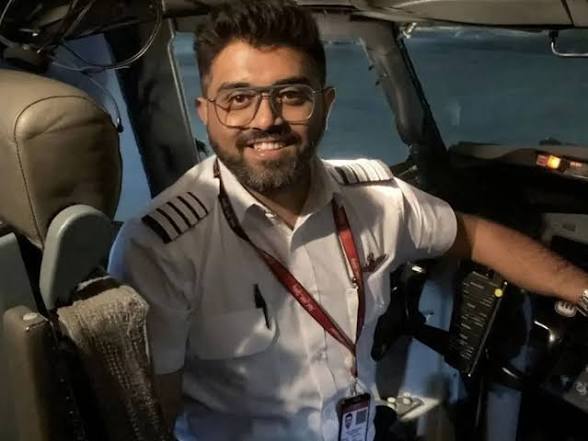
Flydubai Flight FZ1073 became the center of an international aviation investigation after a violent cockpit confrontation sent the aircraft into a dramatic rapid descent while it was flying from Dubai to Tel Aviv.
The Boeing 737-8 MAX was carrying passengers and crew when the co-pilot allegedly attacked the captain inside the cockpit on September 30, 2026. The aircraft subsequently experienced a steep and dangerous loss of altitude before passengers and other crew members intervened.
The flight eventually landed safely in Tabuk, Saudi Arabia.
The incident has generated intense speculation because the aircraft was carrying more than 170 people and was reportedly thousands of feet above Saudi Arabia when the cockpit emergency unfolded. However, investigators have not yet established a final motive.
Reports also confirm that Saudi authorities took the co-pilot into custody and interrogated him before he was transferred to the United Arab Emirates. That custody process has fueled questions about what investigators learned during the initial questioning, although publicly available reporting does not establish a complete transcript or a definitive explanation of what was said.
What happened aboard Flydubai Flight FZ1073?

The flight departed Dubai International Airport for Tel Aviv on September 30.
According to Reuters, the aircraft was cruising at approximately 34,000 feet when the situation inside the cockpit deteriorated. The plane then plunged more than 16,000 feet in a matter of seconds, producing a terrifying situation for those aboard.
Other reporting has described the descent as roughly 17,000 feet.
The aircraft also transmitted emergency signals during the incident. One of the codes, 7700, indicates a general emergency, while 7500 is associated with unlawful interference or hijacking.
Those signals became a major part of the subsequent investigation because they provided investigators with an indication that the emergency had escalated beyond a normal aircraft malfunction.
The captain was seriously injured during the cockpit confrontation.
Despite his injuries, reports say he managed to open the cockpit door. That allowed people outside the flight deck to enter and help restrain the attacker.
Two reserve pilots were also reportedly aboard the aircraft and subsequently helped regain control of the plane.
The aircraft was then diverted to Tabuk, where it made an emergency landing.
Why the co-pilot interrogation matters
The co-pilot’s interrogation has become a major focus of the investigation.
After the emergency landing in Saudi Arabia, the injured pilots received medical treatment while Saudi authorities took custody of the co-pilot.
TIME reported that the suspect faced questioning by Saudi law enforcement before being handed over to UAE authorities.
That means investigators from several jurisdictions now have an interest in determining exactly what happened.
The flight originated in the United Arab Emirates, was heading toward Israel, experienced the emergency over Saudi territory and landed in Saudi Arabia.
The people involved also have different nationalities, making the investigation international from the beginning.
Investigators are expected to examine cockpit recordings, flight-data information, witness accounts, communications with air traffic control and evidence collected from the aircraft.
The purpose will be to establish a timeline rather than rely on early speculation.
Was this really an attempted terrorist attack?
That remains an important unanswered question.
Israeli officials have described the incident as potentially deliberate and have raised the possibility of terrorism. Reuters reported that Israeli Prime Minister Benjamin Netanyahu said the co-pilot had undergone radical Islamist indoctrination, while an initial Israeli assessment reportedly suggested that the co-pilot may have acted alone.
Those are investigative claims, not a final finding.
Flydubai has also urged caution while authorities investigate the circumstances.
The distinction matters because a violent cockpit attack and an attempted terrorist attack are not automatically the same thing under an investigation.
Authorities must establish intent, planning, possible affiliations and the precise sequence of actions before reaching a final conclusion.
At this stage, public reporting has not established that the co-pilot was acting on behalf of an extremist organization.
The dramatic plunge that terrified passengers
The aircraft’s rapid descent is one of the most striking elements of the incident.
Reuters reported that the aircraft dropped from around 34,000 feet by more than 16,000 feet during the emergency. Flight-tracking information and aviation analysis have helped investigators reconstruct the aircraft’s movements.
Passengers initially had limited information about what was happening inside the cockpit.
From the cabin, a sudden descent could appear to be severe turbulence or an aircraft malfunction.
Reuters reported that passengers described the experience as an alarming plunge.
The situation became clearer when the cockpit door was opened and people discovered the violent confrontation inside.
That moment proved critical because the aircraft needed someone to regain control while the captain was injured.
How passengers helped stop the crisis
The role of passengers has become another major part of the story.
According to Reuters, the injured captain was able to open the cockpit door, allowing passengers and crew to intervene. The co-pilot was then restrained.
This intervention gave the reserve pilots an opportunity to stabilize the aircraft.
The incident therefore involved several layers of emergency response:
- The captain fought to regain access to the cockpit.
- Passengers and crew intervened.
- The alleged attacker was restrained.
- Reserve pilots helped stabilize the aircraft.
- The flight was diverted to Saudi Arabia.
- Emergency services received the aircraft after landing.
The sequence is important because it shows why investigators are examining not only the alleged attack but also how cockpit access and emergency procedures worked during the crisis.
Why the “9/11” comparison needs caution
The phrase “9/11 disaster narrowly avoided” has appeared in sensational descriptions of the incident because the aircraft was allegedly placed in an extremely dangerous situation.
However, there is no evidence that this incident was a second September 11 attack, and investigators have not established a connection to the 2001 attacks.
The comparison mainly comes from the possibility of a commercial aircraft being deliberately placed in danger.
The circumstances were also substantially different.
The Flydubai incident involved an alleged attack by a member of the flight crew, rapid intervention by passengers and reserve pilots, and an emergency landing.
Whether the incident was an attempted suicide, an attempted crash, a terrorist act or something else remains a matter for investigators to establish.
Using the 9/11 comparison as a confirmed description would therefore go beyond the available evidence.
What happened after the Saudi landing?
The emergency landing in Tabuk became another unusual part of the story.
The aircraft had been traveling toward Israel but ended up in Saudi Arabia because of the cockpit emergency.
Saudi authorities provided assistance following the landing.
The injured captain was hospitalized, while the co-pilot was detained for questioning.
Subsequent reporting said the pilots were transferred to the UAE. Reuters reported that Saudi Arabia confirmed the injured pilot and co-pilot had been taken to the UAE.
The transfer also shifted the investigation into a new phase.
Saudi Arabia could examine what happened within its territory, while UAE authorities could conduct their own investigation into the crew member, aircraft and airline operations.
Israel also has a significant interest because the aircraft was carrying passengers bound for Tel Aviv.
What are the “Saudi custody secrets”?
Claims about “Saudi custody secrets” should be treated carefully.
It is established that the co-pilot was held and interrogated by Saudi authorities. TIME reported that he was questioned by Saudi law enforcement before being transferred to UAE custody.
But that does not mean a complete secret interrogation transcript has been publicly released.
As of the latest reporting, authorities have not publicly disclosed every detail of the questioning.
That leaves several important questions unanswered:
- What did the co-pilot say during questioning?
- Did he explain why the cockpit confrontation began?
- Did he describe any previous planning?
- Was there evidence of an ideological motive?
- Was anyone else involved?
- Did investigators find evidence of a wider conspiracy?
- Was the aircraft’s descent intentional throughout the incident?
These questions require evidence.
Until authorities release verified findings, claims about a hidden confession or secret Saudi revelation should not be treated as established facts.
Investigators face a complex international probe
The Flydubai investigation involves multiple jurisdictions and agencies.
The UAE has an obvious role because Flydubai is based in Dubai.
Saudi Arabia has jurisdictional relevance because the emergency occurred over Saudi territory and the aircraft landed in Tabuk.
Israel is involved because the aircraft was bound for Tel Aviv and carried passengers heading to Israel.
Investigators will therefore need to compare information from several sources.
Flight-data records can establish the aircraft’s movements.
Cockpit recordings may provide information about what happened inside the flight deck.
Passenger testimony can help reconstruct the moments when people entered the cockpit.
Medical evidence may also help investigators understand the injuries suffered by the captain and co-pilot.
Security information could potentially clarify whether there was advance planning.
Aviation security questions after the Flydubai incident
The incident is likely to renew debate about insider threats in aviation.
Modern commercial aircraft have reinforced cockpit doors and strict procedures designed to prevent unauthorized access.
However, the Flydubai case presents a different scenario because the alleged attacker was a member of the flight crew.
That raises questions about pilot screening, psychological and behavioral assessments, security procedures and how airlines respond when one cockpit crew member becomes a threat to another.
Aviation experts have already begun discussing those issues.
Al Jazeera reported that the incident has raised questions about cockpit security, pilot vetting and the possibility of threats originating from inside the flight deck.
The investigation may ultimately determine whether existing procedures worked as designed or whether additional safeguards are necessary.
What investigators will look for next
The next stage of the investigation is likely to focus on evidence rather than dramatic claims.
Investigators can examine the aircraft’s flight-data recorder and cockpit voice recorder, along with air-traffic-control communications.
They can also interview the captain, reserve pilots, cabin crew and passengers.
The co-pilot’s own account will be particularly important.
Investigators may also examine his employment history, training records and communications before the flight.
However, information about personal history should be distinguished from evidence of criminal intent.
An unusual behavior or personal characteristic does not by itself establish a motive.
Could the aircraft have crashed?
The available evidence indicates that the aircraft experienced a severe emergency and rapid descent.
Reuters reported that the plane descended more than 16,000 feet while the crisis unfolded.
The situation was therefore extremely serious.
However, describing it as a guaranteed crash would be inaccurate.
The captain, passengers, crew and reserve pilots managed to intervene, and the aircraft eventually landed safely.
The incident demonstrates how quickly a serious cockpit emergency can become an aviation crisis without necessarily ending in a crash.
What happens to the co-pilot now?
The co-pilot remains central to the investigation.
Reports initially described him as being held by Saudi authorities. He was later transferred to UAE custody, according to reporting from Reuters and other outlets.
Authorities will have to determine the appropriate legal process based on the evidence.
Possible allegations could depend on what investigators establish regarding the attack, the aircraft’s descent and the co-pilot’s intent.
Until prosecutors or investigators formally announce findings, it is premature to state what final charges will be brought.
Flydubai investigation remains ongoing
The Flydubai Flight FZ1073 incident has already become one of the most closely watched aviation investigations of 2026.
The combination of an alleged cockpit stabbing, a rapid descent, emergency signals, passenger intervention and an emergency landing in Saudi Arabia makes the case highly unusual.
But several of the most dramatic claims circulating online remain unverified.
There is currently no established evidence that the incident was connected to the September 11 attacks.
There is also no publicly confirmed “secret” Saudi confession explaining the entire incident.
What is established is that the co-pilot was taken into custody, questioned by Saudi authorities and subsequently transferred to UAE authorities while multiple countries investigate what happened.
The final explanation will depend on evidence gathered from the aircraft, crew, passengers and investigators.
For now, the most important question is not whether the incident fits a sensational headline, but what the official investigation ultimately determines about the cockpit confrontation, the aircraft’s rapid descent and the co-pilot’s motive.
FAQs
What happened on Flydubai Flight FZ1073?
Flydubai Flight FZ1073 was flying from Dubai to Tel Aviv when a violent cockpit confrontation allegedly occurred between the captain and co-pilot. The aircraft experienced a rapid descent and eventually made an emergency landing in Tabuk, Saudi Arabia.
Was the Flydubai co-pilot arrested?
Reports said the co-pilot was taken into custody in Saudi Arabia after the emergency landing. He was later transferred to UAE custody as the investigation continued.
Was the Flydubai incident a terrorist attack?
Authorities are investigating whether terrorism was involved. Israeli officials have raised that possibility, but a final determination about the motive has not been established publicly.
Did the Flydubai aircraft nearly crash?
The aircraft experienced a severe rapid descent and other dangerous flight movements. However, the captain, passengers, crew and reserve pilots intervened, allowing the aircraft to be stabilized and landed safely in Saudi Arabia.
Did the co-pilot confess during Saudi interrogation?
No complete, publicly verified interrogation transcript has been released. Reports confirm that Saudi authorities questioned the co-pilot, but claims about a secret confession should not be treated as established fact.
Was the incident connected to 9/11?
There is no established evidence connecting the 2026 Flydubai incident to the September 11, 2001 attacks. The comparison relates only to the broader fear of a commercial aircraft being deliberately placed in danger.
Where did the Flydubai aircraft land?
The aircraft made an emergency landing at Tabuk in northwestern Saudi Arabia after the cockpit emergency.
What happened to the captain?
The captain suffered serious injuries during the cockpit confrontation and was hospitalized. Reports said he later remained in stable condition while authorities investigated the incident.
Why was the flight diverted to Saudi Arabia?
The aircraft was experiencing a serious emergency while flying over Saudi Arabia. Tabuk became the emergency landing location, allowing the aircraft to land safely after control was restored.
What happens next in the Flydubai investigation?
Investigators are expected to examine flight data, cockpit recordings, crew and passenger accounts, communications and other evidence. Authorities will then determine the sequence of events, motive and any potential criminal charges.
About the Author