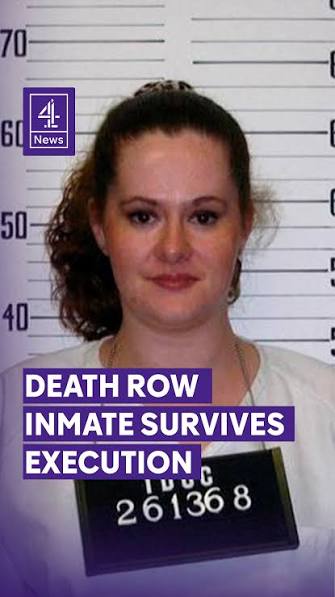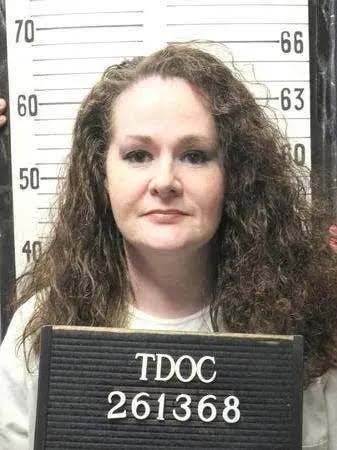
A scheduled execution in Tennessee has drawn international attention after death row inmate Christa Pike survived a failed lethal injection, with witnesses reporting that she remained alive and was heard snoring inside the execution chamber.
Pike, 50, was scheduled to be executed on September 30, 2026, at Riverbend Maximum Security Institution in Nashville. She had been sentenced to death for the 1995 murder of 19-year-old Colleen Slemmer.
Instead of ending with a completed execution, the procedure became a medical and legal crisis. Pike received two doses of the state’s lethal-injection drug, pentobarbital, but she remained alive. Witnesses reported hearing her talking, singing and later snoring during the prolonged procedure.
Her attorneys said she was eventually taken by ambulance to a hospital. They later reported that she was in critical condition and receiving lifesaving treatment.
The failed execution has prompted Tennessee Gov. Bill Lee to suspend further executions for the remainder of 2026 and order an independent review of what happened.
Who is Christa Pike?

Christa Pike has been on Tennessee’s death row for more than three decades.
She was convicted of the 1995 murder of Colleen Slemmer, a 19-year-old fellow student. Pike was 18 when the crime occurred.
Her execution would have been historically significant because she was scheduled to become the first woman executed by Tennessee in more than 200 years. Reports noted that only a small number of women have been executed in the United States since capital punishment was reinstated in the 1970s.
Pike’s legal team had made several efforts to stop the execution.
Her attorneys raised concerns about her medical condition and argued that her physical characteristics could make intravenous access difficult. According to reporting, her lawyers had warned about a blood disorder and issues involving her veins.
Those concerns became especially significant when officials attempted to administer the lethal injection.
What happened during the execution?
The execution began at Riverbend Maximum Security Institution on September 30.
Tennessee uses lethal injection as one of its execution methods. In Pike’s case, officials used pentobarbital, a drug intended to cause unconsciousness followed by respiratory failure.
However, the procedure did not proceed as expected.
Witnesses described difficulties during the process. The execution lasted much longer than anticipated, and Pike remained alive after the first administration of the drug.
A second dose was subsequently administered.
Even after the second dose, however, Pike continued breathing.
According to witnesses cited by the Associated Press, Pike was heard talking, singing and later snoring for more than 90 minutes in the death chamber.
Her attorneys subsequently said that she remained alive after receiving two doses of pentobarbital.
The state eventually stopped the execution and transported Pike to a hospital.
Did Christa Pike really fall asleep?
The phrase “death row snoring” has attracted widespread attention because witnesses said Pike was heard snoring during the failed execution.
However, describing the event simply as an inmate “falling asleep” does not capture the full medical situation.
Witnesses reported that Pike was initially conscious enough to speak and sing. Later, she was heard snoring.
The Associated Press reported that a witness described hearing Pike talking, singing and then snoring loudly during the prolonged procedure.
The Guardian also reported that Pike remained alive and snoring after the second administration of pentobarbital.
Therefore, the available reporting supports the fact that snoring was heard, but it does not establish that Pike simply went to sleep in an ordinary sense.
The effects of the drugs, her medical condition and the unsuccessful execution procedure are matters for medical and official investigation.
Why did the lethal injection fail?
The precise reason for the failed execution has not yet been established.
That question is now central to Tennessee’s independent review.
Pike’s attorneys had previously raised concerns about her veins and medical condition. Those concerns were significant because lethal injection requires reliable intravenous access.
Reports indicated that officials had difficulty completing the procedure and that multiple needles were involved. Her legal team argued that the process caused significant distress.
However, the state has disputed suggestions that officials simply abandoned their established procedures.
Tennessee officials said the state followed its execution protocol.
The independent review is therefore expected to examine whether the protocol was followed correctly, whether Pike’s medical circumstances were adequately considered and why the drugs did not produce the intended result.
Pike received two doses of pentobarbital
One of the most unusual elements of the case was the reported use of two doses of pentobarbital.
Pentobarbital is intended to produce deep unconsciousness and ultimately stop breathing when used for lethal injection.
In Pike’s case, however, the first dose did not result in death.
A second dose was administered, but she still survived.
The Associated Press reported that Pike survived a double dose of the drug and was later taken to hospital.
That outcome has raised questions about drug administration, intravenous access and the execution protocol.
The answers are not yet known.
Investigators will need to determine whether the problem involved the drug itself, how it entered the bloodstream, Pike’s physiology or another procedural factor.
What witnesses heard inside the execution chamber
Media witnesses were present during the execution.
Their accounts have provided important information about what happened because much of the execution procedure occurs behind restricted areas.
Witnesses reportedly heard Pike speaking and singing.
Later, they heard what they described as snoring.
One witness quoted by AP described being deeply affected by hearing Pike talking, singing and then snoring during the lengthy procedure.
The unusual sounds became one of the defining features of the failed execution.
Instead of a short procedure ending in a pronouncement of death, witnesses remained in the area while officials dealt with the continuing medical emergency.
The incident demonstrates why media witnesses can play an important role in documenting executions, particularly when questions arise about whether a procedure followed its intended course.
Pike was taken to hospital
Once officials determined that the execution could not be completed, Pike was transported from the prison to a hospital.
Her attorneys later said she was alive and in critical condition.
The Associated Press reported that her legal team said she was receiving lifesaving care.
The exact details of her medical condition have not been publicly established.
Her attorneys have raised concerns about possible brain damage caused by a lack of oxygen. However, that remains an allegation from the legal team and not a final medical determination.
The hospital treatment therefore became the immediate priority after the failed execution.
Tennessee governor halts further executions
The failed procedure quickly triggered action from Tennessee’s government.
Gov. Bill Lee announced that remaining executions scheduled for 2026 would be halted while the state conducts a review.
Lee called for a comprehensive, independent examination of what happened.
The decision also affects another execution that had been scheduled for later in the year.
The governor’s decision means Tennessee will not proceed with its remaining scheduled executions while the review is underway.
The investigation is expected to focus on the execution procedure rather than determining Pike’s underlying criminal conviction.
This was Tennessee’s second failed execution attempt in 2026
The Pike case is particularly significant because it was not Tennessee’s first execution-related failure this year.
Earlier in 2026, the state also halted the execution of Tony Carruthers after officials encountered difficulties establishing a backup intravenous line.
That earlier incident prompted a temporary suspension of executions.
The Pike case has therefore renewed questions about Tennessee’s lethal-injection procedures and whether existing safeguards are sufficient.
The state now faces pressure to determine whether the two incidents share any procedural similarities.
What is a botched execution?
A botched execution generally refers to an execution attempt in which the established procedure fails or unexpected complications prevent the intended death.
The Death Penalty Information Center maintains records of problematic executions involving various methods. These incidents can include difficulties administering lethal drugs, prolonged procedures and unexpected medical complications.
The term does not necessarily mean that every failed procedure had the same cause.
Different execution methods have produced different types of complications.
In Pike’s case, the central issue was the failure of a lethal-injection procedure involving pentobarbital.
The incident is now being investigated to determine exactly why the protocol failed.
How unusual is a failed lethal injection?
Failed lethal injections are uncommon, but they have occurred in the United States.
Previous cases have involved problems establishing intravenous access, prolonged procedures and unexpected physical reactions.
The Death Penalty Information Center documents numerous historical cases involving complications during executions.
More recent cases have also raised questions about execution protocols.
The Associated Press reported that several states have backup procedures designed to address complications, but the details vary substantially between jurisdictions.
Pike’s case is notable because she reportedly survived two doses of the lethal-injection drug.
That makes the investigation especially important for understanding whether Tennessee’s current safeguards functioned as intended.
Questions about medical warnings
Another major part of the investigation will concern the warnings previously provided by Pike’s legal team.
Her attorneys had argued that medical issues could complicate the lethal injection.
Reports said her lawyers were concerned about a blood disorder and small or difficult-to-access veins.
Those concerns are now being examined in light of what happened during the execution.
The key questions include whether officials had sufficient medical information before the procedure and whether alternative preparations should have been made.
The independent review should provide more information about those issues.
Until then, it would be premature to assign a single cause to the failed execution.
Why the case is attracting global attention
The Pike case has generated worldwide interest for several reasons.
First, the execution was scheduled to be Tennessee’s first execution of a woman in more than two centuries.
Second, the lethal-injection procedure failed even after two doses of pentobarbital.
Third, witnesses reported hearing Pike snoring inside the execution chamber.
Finally, the event prompted the governor to suspend further executions in the state for the rest of 2026.
Together, those developments have made the case one of the most closely watched execution stories in the United States this year.
What happens to Pike now?
Pike’s immediate future remains uncertain.
Her execution was not completed, but the failed attempt does not automatically resolve her death sentence.
The legal consequences of a failed execution can depend on state law, court decisions and the circumstances surrounding the procedure.
Her attorneys are also likely to continue challenging the state’s actions.
At the same time, Tennessee’s independent review could influence decisions about whether and how future executions are carried out.
For now, the state has halted its remaining 2026 executions.
What the investigation will examine
The independent review is expected to address several questions.
1. Was the execution protocol followed?
Investigators will examine whether prison officials followed Tennessee’s written procedures.
2. Was the intravenous access adequate?
Reliable intravenous access is essential for lethal injection. Pike’s medical history had already raised concerns about this issue.
3. Did the drug enter the bloodstream correctly?
Investigators may examine whether pentobarbital was delivered as intended.
4. Why did Pike survive two doses?
This is likely to be one of the central medical questions.
5. Did officials respond appropriately?
The review will also examine how prison personnel reacted once it became clear that the procedure was not producing the expected result.
6. Should Tennessee change its execution procedures?
The findings could influence future policies regarding lethal injection and medical preparation.
The broader debate over lethal injection
Pike’s failed execution has also renewed attention on the broader debate surrounding lethal injection.
Supporters of the method have generally described it as a controlled medical-style procedure intended to produce unconsciousness before death.
Critics have argued that execution procedures can involve serious complications and that secrecy surrounding drugs and protocols can make independent scrutiny difficult.
The Pike case has brought those competing arguments back into public discussion.
However, the independent investigation will need to establish the factual details before conclusions can be drawn about precisely what caused the failure.
Conclusion
The Christa Pike botched execution has become a major story after Tennessee failed to carry out a lethal injection that was intended to end her life.
Pike survived two doses of pentobarbital and was later taken to a hospital in critical condition, according to her attorneys.
Witnesses reported hearing her speak, sing and eventually snore during the prolonged procedure. Those reports have led to the striking phrase “death row snoring,” although the exact medical state Pike was in at that moment remains a matter for medical evaluation.
Tennessee Gov. Bill Lee has halted the state’s remaining executions for 2026 and ordered an independent review.
The investigation will need to establish why the lethal injection failed, whether Pike’s previously reported medical concerns affected the procedure and whether Tennessee’s execution protocol was properly followed.
For now, the most significant confirmed fact is that an execution intended to end in death did not do so. Pike survived and was receiving hospital treatment, while Tennessee began examining what went wrong.
FAQs
Who is Christa Pike?
Christa Pike is a Tennessee death row inmate convicted of the 1995 murder of 19-year-old Colleen Slemmer. She was 18 when the crime occurred.
What happened during Christa Pike’s execution?
Tennessee attempted to execute Pike by lethal injection on September 30, 2026. She survived after receiving two doses of pentobarbital and was later taken to a hospital.
Did Christa Pike really snore during the execution?
Yes. Witnesses reported hearing Pike snoring during the prolonged execution attempt. The Associated Press reported that witnesses heard her talking, singing and later snoring.
Was Christa Pike asleep?
Reports indicate that she was heard snoring, but that does not establish ordinary sleep. Her exact medical condition during that period requires medical assessment.
What drug was used to execute Christa Pike?
Tennessee used pentobarbital for the lethal injection. Pike reportedly survived two doses.
Why did the execution fail?
The exact reason has not yet been established. Investigators are expected to examine drug administration, intravenous access, Pike’s medical condition and the state’s execution procedures.
Is Christa Pike still alive?
According to her attorneys and recent reporting, Pike survived the execution attempt and was hospitalized in critical condition.
Has Tennessee stopped executions?
Gov. Bill Lee halted the state’s remaining scheduled executions for 2026 and ordered an independent review following Pike’s failed execution.
Was Christa Pike the first woman executed in Tennessee in 200 years?
No. Her execution was intended to be the first execution of a woman in Tennessee in more than 200 years, but the procedure failed.
What happens next in the Christa Pike case?
Tennessee is conducting an independent review of the failed execution. Pike’s medical condition and the legal consequences of the unsuccessful execution remain subject to further developments.
About the Author