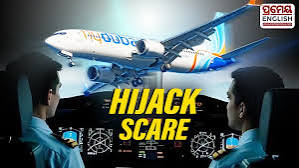
A terrifying cockpit stabbing aboard an Israel-bound Flydubai flight triggered an emergency diversion to Saudi Arabia on Wednesday, September 30, 2026, after a violent confrontation between two pilots.
The Boeing 737 MAX 8 was flying from Dubai to Tel Aviv when the incident unfolded. The aircraft subsequently experienced a dramatic loss of altitude and transmitted emergency signals before landing safely at Tabuk Airport in northwestern Saudi Arabia.
Israeli officials said one pilot stabbed the other and appeared to attempt to take control of the aircraft. Passengers and other crew members reportedly intervened. However, the precise sequence of events, the motive and the circumstances surrounding the confrontation remain under investigation.
Flydubai itself has described the event as an incident in the flight deck and said the aircraft was secured by off-duty Flydubai crew members who were traveling on the flight. The airline also confirmed that the aircraft landed safely and that passengers and crew were accounted for.
What happened on the Israel-bound Flydubai flight?

The flight involved was Flydubai flight FZ1073, traveling from Dubai International Airport toward Ben Gurion Airport near Tel Aviv.
According to flight-tracking data cited by several outlets, the Boeing 737 MAX 8 had reached a cruising altitude of roughly 34,000 feet before undergoing a sudden and steep descent.
Different reports have cited slightly different measurements for the altitude loss. Reuters reported that Flightradar24 data showed the aircraft falling nearly 14,000 feet within about 30 seconds. Other reports described the aircraft as dropping from approximately 34,000 feet to around 17,000 feet.
The difference reflects the fact that flight-tracking measurements and reporting covered different portions of the aircraft’s descent.
The sudden change in altitude occurred around the same time that reports emerged of a physical confrontation inside the cockpit.
Pilot stabbing reportedly triggered the emergency
Israeli officials said the incident began when one pilot attacked the other with a knife.
Reuters reported that the co-pilot allegedly stabbed the pilot and then attempted to crash the aircraft. Passengers and other crew members reportedly managed to overpower the attacker.
Other early reports initially described the situation more cautiously as a violent fight between the pilots.
Flydubai has not publicly confirmed all of the details surrounding the alleged stabbing. In its initial statement, the airline said an altercation occurred in the flight deck and that the aircraft was subsequently secured by off-duty Flydubai crew traveling on the flight.
That distinction is important because the investigation is still developing.
At this stage, claims about the attacker’s motive should not be treated as established fact.
The aircraft plunged thousands of feet
One of the most alarming elements of the incident was the aircraft’s sudden descent.
Flight-tracking information showed the plane dropping sharply after reaching cruising altitude. The Guardian reported that the aircraft descended from approximately 33,000 feet to 17,000 feet in around one minute.
Other reporting described a drop of more than 17,000 feet over a longer period.
The Times of Israel reported that the aircraft initially descended from approximately 34,000 feet to around 17,000 feet before recovering partially and experiencing another sharp descent.
For passengers, such a sudden change would have been extremely alarming.
Flight data also indicated that the aircraft struggled to maintain a stable altitude during parts of the emergency before eventually being brought under control.
Emergency signals raised fears of a hijacking
The aircraft reportedly transmitted emergency transponder signals during the incident.
One of the codes associated with the flight was 7700, the internationally recognized emergency squawk used to indicate a general emergency.
Reports also said the aircraft transmitted 7500, a code associated with unlawful interference or a hijacking situation.
The combination of the cockpit struggle, sudden descent and emergency signals created immediate concern that the aircraft might have been hijacked.
Israeli authorities reportedly scrambled fighter aircraft after the emergency developed because the plane was carrying a large number of Israeli passengers and was approaching the region.
The Israeli government subsequently said the situation was under control and that efforts were underway to bring the passengers safely back to Israel.
Passengers reportedly helped regain control
Passengers played a significant role in the response, according to accounts reported by Israeli media and international news organizations.
Witnesses said passengers moved toward the cockpit after the confrontation and helped restrain the pilot who was allegedly attacking the other pilot.
Some reports also said that off-duty pilots traveling as passengers assisted with operating the aircraft.
CBS News reported that passengers and additional crew members intervened, while Flydubai said its own off-duty crew members traveling on the aircraft helped secure the plane.
This assistance appears to have been crucial in allowing the aircraft to remain airborne and divert safely.
However, investigators will need to establish exactly who entered the cockpit, when they entered, who took control of the aircraft and how the flight was subsequently operated.
Emergency landing in Saudi Arabia
After the cockpit emergency, the aircraft was diverted to Saudi Arabia.
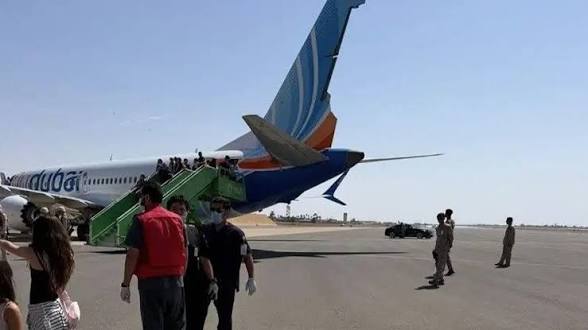
The plane eventually landed safely at Tabuk Airport, located in northwestern Saudi Arabia.
The Guardian reported that the airport is associated with both civilian and military facilities in the region.
According to reports, both pilots were taken to hospital after the aircraft landed.
The injured pilot reportedly suffered stab wounds, while the condition and precise injuries of the other pilot were still being reported differently by news organizations.
Flydubai said all passengers and crew were safe and accounted for following the landing.
Were passengers injured?
The available reporting indicates that passengers were not seriously injured.
Several passengers described frightening moments during the incident, including the aircraft’s rapid descent and the struggle inside the forward part of the plane.
The two pilots were among those who required medical attention after landing.
A passenger account cited by CBS described the aircraft as being close to losing control during the incident. However, passenger accounts are eyewitness testimony and may not establish the precise technical sequence of events.
Investigators are expected to rely on cockpit recordings, flight-data recordings, security footage and witness interviews to reconstruct what happened.
Who were the pilots?
Early reporting about the pilots contained conflicting information, including differences over their nationalities and roles.
Later reporting identified the injured captain as Smit Machchhar, an Indian national who had previously worked for SpiceJet before joining Flydubai. Hindustan Times reported that Machchhar had served as a Flydubai captain on Boeing 737 aircraft since 2022.
However, because the investigation was still developing on September 30, information about the other pilot and the exact employment history of both crew members should be treated cautiously until officially confirmed.
Reports have also differed over which pilot initiated the attack. Reuters and Israeli officials said the co-pilot stabbed the pilot, while some early reports simply referred to a fight between the pilots.
Was this a terror attack?
This remains one of the biggest unanswered questions.
Israeli officials said authorities were investigating whether the incident represented an attempted terrorist attack.
Israeli Defense Minister Israel Katz described the incident in stronger terms, while other officials emphasized that investigators were still working to establish the motive.
The distinction is important.
A violent incident involving a pilot does not automatically establish terrorism. Investigators must determine the person’s motive, whether there was an ideological connection, whether anyone else was involved and whether the alleged attempt to crash the aircraft was intentional.
At the time of initial reporting, officials had not publicly established all of those facts.
The airline also urged against premature speculation while authorities investigated the circumstances.
Why did the plane land in Saudi Arabia?
Saudi Arabia became the emergency destination because the aircraft was near the region when the incident occurred.
The aircraft was flying toward Israel when the emergency developed. Rather than continuing toward its original destination, the crew diverted toward Tabuk.
The airport provided a suitable location for an emergency landing while the aircraft’s situation was stabilized.
The decision also allowed Saudi authorities to respond to the security incident and provide medical treatment to the injured pilots.
The aircraft landed safely, preventing the cockpit confrontation from developing into a larger aviation disaster.
What happened after landing?
After the aircraft arrived at Tabuk, Saudi authorities secured the plane.
The pilots were reportedly taken to hospital for treatment.
Israeli authorities began working on arrangements to return the Israeli passengers home. Prime Minister Benjamin Netanyahu’s office said the situation was under control and that measures were being taken to bring passengers safely back to Israel.
Flydubai said replacement aircraft had been deployed to Tabuk to assist passengers and crew.
The incident therefore shifted from an immediate aviation emergency to a major security and investigative operation.
What investigators will examine
Several key questions will need to be answered before a definitive account can be given.
Investigators are likely to examine:
- Cockpit voice recordings.
- Flight-data recorder information.
- CCTV and airport security footage.
- Passenger and crew statements.
- The identities and backgrounds of the pilots.
- The weapon allegedly used in the stabbing.
- The aircraft’s flight-control inputs.
- Emergency radio communications.
- Transponder and flight-tracking data.
- The motive behind the confrontation.
- Whether anyone else was involved.
Investigators will also need to establish whether the aircraft’s dramatic descent resulted directly from the cockpit struggle or from deliberate control inputs.
The importance of the 17,000-foot plunge
The reported 17,000-foot descent has become one of the defining details of the incident.
However, describing it simply as the aircraft “plummeting 17,000 feet” can obscure an important distinction.
The aircraft did not fall from the sky and continue descending uncontrollably until reaching the ground. Flight-tracking data indicates that it descended sharply, then recovered and continued flying before diverting to Saudi Arabia.
That distinction matters when assessing what happened technically.
The aircraft remained capable of reaching Tabuk and landing safely, suggesting that control was ultimately restored.
Flydubai’s response
Flydubai has kept its public statement relatively limited while authorities investigate.
The airline confirmed that an incident occurred in the flight deck and said the aircraft was successfully secured by off-duty Flydubai crew who were traveling on the flight.
It also confirmed that the aircraft landed safely at Tabuk and that passengers and crew were accounted for.
The carrier said it was cooperating with relevant authorities.
The airline’s cautious wording reflects the fact that the official investigation is still underway.
What is known and what remains unclear?
Several facts are now relatively well established.
The flight was traveling from Dubai toward Tel Aviv. It experienced a serious incident involving pilots. The aircraft made a dramatic descent. Emergency signals were transmitted. The plane diverted to Saudi Arabia and landed safely at Tabuk. The pilots were taken for medical treatment, while passengers were reported safe.
However, other details remain unresolved.
Investigators have not yet provided a complete timeline explaining exactly how the confrontation began.
The motive remains under investigation.
Reports also differ over some details involving the pilots and the precise altitude loss.
Most importantly, the final classification of the incident has not yet been established through a completed investigation.
Why the cockpit stabbing has drawn international attention
The incident is unusual because commercial aviation depends heavily on strict cockpit security and coordinated crew procedures.
A violent confrontation between flight crew members creates an immediate safety problem because the people responsible for operating the aircraft are simultaneously involved in an emergency.
The presence of additional crew members and off-duty pilots on this particular flight reportedly became important after the confrontation.
The event also occurred on an international route carrying many Israeli passengers, which heightened the security response.
The involvement of Saudi Arabia added another regional dimension because the aircraft was diverted to Tabuk rather than continuing toward Israel.
Final update
The cockpit stabbing on the Israel-bound Flydubai flight remains an active investigation.
The most consistent early account is that a violent confrontation occurred between the pilots, one pilot was stabbed, the aircraft suffered a dramatic descent and passengers or additional crew members intervened before the aircraft was diverted to Saudi Arabia.
Israeli officials have said the incident may have involved an attempted effort to crash the aircraft, but investigators still have to establish the motive and precise sequence of events.
What is confirmed is that the Boeing 737 MAX 8 reached Tabuk safely and that passengers survived the frightening mid-air emergency.
As authorities examine cockpit recordings, flight data and witness accounts, further details could change the initial understanding of the incident.
For now, the safest description is a serious cockpit security incident involving a reported stabbing, a dramatic loss of altitude and an emergency landing in Saudi Arabia.
FAQs
What happened on the Flydubai flight to Israel?
A violent incident occurred in the cockpit of Flydubai flight FZ1073 while it was traveling from Dubai to Tel Aviv. Reports said one pilot stabbed the other, after which passengers and additional crew members intervened. The aircraft diverted to Saudi Arabia and landed safely at Tabuk.
How far did the Israel-bound plane fall?
Flight-tracking reports showed a dramatic descent from roughly 34,000 feet. Several reports described the aircraft reaching around 17,000 feet during the initial descent, although the exact measurement differs between reports and flight-tracking calculations.
Where did the Flydubai plane land?
The aircraft made an emergency landing at Tabuk Airport in Saudi Arabia after being diverted from its original route to Tel Aviv.
Were passengers injured?
Initial reports said passengers were safe and accounted for. The pilots were taken to hospital following the incident.
Was the incident confirmed as terrorism?
No final determination had been publicly established at the time of initial reporting. Israeli officials were investigating whether it was an attempted terrorist attack, while the broader investigation into the motive and circumstances continued.
What aircraft was involved?
The flight was operated by a Boeing 737 MAX 8, according to flight-tracking and news reports.
What was the flight number?
The aircraft was operating as Flydubai flight FZ1073, traveling from Dubai toward Tel Aviv.
What happens next?
Authorities are expected to examine flight data, cockpit recordings, passenger testimony and other evidence to determine exactly what happened, why the confrontation occurred and whether the incident was deliberate.
About the Author