POLITICAL CON JOB: Democrats plot desperate midterm survival strategy

The 2026 midterm elections are entering a critical stage, and Democrats are betting heavily on a strategy built around one central message: affordability.
With Election Day approaching on November 3, Democrats are attempting to turn voter frustration over prices, the economy and President Donald Trump into congressional gains. Recent polling and campaign developments suggest the strategy is gaining traction, particularly in House races and several Senate contests.
But calling the strategy a guaranteed political rescue would be premature.
Democrats still face major challenges, including questions about their own policy agenda, turnout, candidate quality and whether an anti-Trump campaign can remain effective through Election Day. At the same time, Republicans retain significant financial resources and are working to keep Trump’s political base energized.
The result is a midterm contest in which both parties are attempting to define the election on their preferred terrain.
For Democrats, that terrain is increasingly the cost of living.
Democrats make affordability the centerpiece
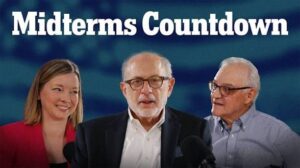
Democratic leaders have spent months refining their message for the 2026 midterms. Instead of relying primarily on traditional Democratic themes, the party has increasingly emphasized grocery prices, housing, health care costs, wages and household budgets.
The shift is deliberate.
A July analysis by the Los Angeles Times described affordability and the economy as central components of the Democratic campaign strategy. Democratic candidates have been encouraged to focus on practical economic concerns rather than abstract ideological debates.
That strategy is also reflected in national messaging.
House Minority Leader Hakeem Jeffries and other Democratic leaders have promoted an “affordable America” theme, arguing that voters are struggling to maintain a comfortable middle-class lifestyle.
The political calculation is straightforward: if voters believe their financial situation has deteriorated, Democrats want them to associate that frustration with the party currently controlling Washington.
That approach could be especially powerful in a midterm election because the president’s party traditionally faces greater pressure from voters.
Is the Democratic strategy really a political “con job”?
The phrase “political con job” is a partisan characterization, not an established fact.
There is, however, a legitimate question about whether Democrats are offering voters a sufficiently detailed alternative agenda or primarily running against Trump and Republican policies.
That criticism has emerged from both outside observers and parts of the Democratic coalition.
One September analysis from Semafor noted that Democrats had increasingly concentrated their midterm pitch around lowering costs rather than presenting a comprehensive point-by-point governing program. The approach is designed to make the election a referendum on economic conditions and Republican control of Washington.
The advantage is simplicity.
Voters do not need to memorize a lengthy policy platform. Instead, Democrats can repeatedly ask whether Americans are better or worse off financially.
The risk is equally clear.
If voters want concrete answers about how Democrats would reduce prices, increase wages, expand housing supply or improve government services, a broad affordability message could eventually appear insufficient.
Trump remains central to the Democratic strategy
Even when Democrats talk about prices, President Trump remains a major part of their argument.
CBS News’ September Battleground Tracker found that both parties viewed Trump as a major factor in the midterm elections. The survey also found Democrats receiving substantial support from voters motivated by opposition to Trump’s policies.
That creates an interesting dynamic.
Democrats do not necessarily need every voter to become enthusiastic about the Democratic Party. Instead, they can attempt to persuade voters that Republican control should be checked.
This is particularly important because midterm elections frequently involve lower turnout than presidential elections.
A voter who is dissatisfied with the president may have a strong reason to participate even if that voter is not deeply enthusiastic about the opposition party.
Democrats appear to be trying to exploit precisely that dynamic.
New polling gives Democrats reason for confidence
Recent polling has provided Democrats with additional encouragement.
A CBS News Battleground Tracker update published October 4 reported that Democrats maintained an edge in the fight for House control, with the model estimating a narrow Democratic majority. The analysis attributed the advantage partly to opposition to Trump’s administration and weaker Republican turnout motivation.
However, a narrow advantage is not the same thing as a guaranteed victory.
House races are decided district by district. A small national movement can produce dramatically different outcomes depending on where votes are concentrated.
That means Democratic strategists cannot afford to rely solely on favorable national numbers.
They need competitive candidates, strong fundraising operations and effective turnout organizations in individual districts.
Senate map creates a different challenge
The Senate presents a more complicated problem.
Democrats may be positioned to make gains in several traditionally Republican states, but winning the Senate requires success across a geographically diverse collection of races.
Reuters reported October 1 that Democrats were becoming competitive in several states President Trump won by double digits in 2024, including Kentucky, Texas and Kansas. That development has forced Republicans to reconsider where they must spend money and deploy campaign resources.
That is strategically important.
If Republicans must spend heavily defending seats that were previously considered relatively safe, Democrats can force the GOP to divide its resources.
The Democratic objective is therefore bigger than simply winning traditionally competitive states.
It is about expanding the battlefield.
Democrats are targeting working-class voters
Another important element of the Democratic midterm strategy is candidate recruitment.
The party has been attempting to place greater emphasis on candidates with working-class backgrounds and biographies that can appeal to voters who have become skeptical of Democrats.
That represents a recognition of one of the party’s major political problems.
Economic populism can be difficult to sell if voters believe Democratic politicians are culturally disconnected from them.
Candidates who have worked in trades, served as firefighters, served in unions or built careers outside Washington can potentially make the affordability message more credible.
The Washington Post reported that Democrats were actively emphasizing working-class candidates as part of their strategy for rebuilding support.
This is not simply a messaging change.
It represents an effort to change who represents the party.
Fundraising gives Democrats another weapon
Money will also play a major role.
Republicans entered the campaign season with a significant financial advantage among national party organizations and major political groups. However, Democrats have been narrowing portions of that gap.
The Washington Post reported in July that Republicans maintained a substantial cash advantage, while Democratic candidates were benefiting from stronger individual fundraising and broader grassroots support.
More recent reports indicate that Democratic-aligned House organizations have accelerated fundraising as the election approaches.
That financial momentum could allow Democrats to expand advertising into districts that Republicans once considered relatively secure.
At the same time, Republicans still possess enormous financial resources.
Therefore, the money race remains highly competitive.
The economy could decide everything
Perhaps the biggest variable is the economy.
Pew Research Center reported in July that Americans were closely divided over which party they trusted more on economic policy, with 37% choosing Democrats and 36% choosing Republicans.
That is significant because Democrats cannot simply assume that economic dissatisfaction automatically benefits them.
They must convince voters that they have better answers.
At the same time, economic dissatisfaction can become politically dangerous for the governing party.
If voters continue to feel that groceries, housing, energy and other essentials are too expensive, Republicans could face a difficult political environment.
Democrats are clearly attempting to capitalize on that frustration.
The Iran conflict adds another political complication
Foreign policy has also become part of the political environment.
Recent reporting has linked the Trump administration’s handling of the Iran conflict to growing political pressure, while higher energy costs have created additional economic concerns.
Democratic strategists can use those developments to connect foreign policy with household economics.
The argument becomes simple:
War affects energy prices, energy prices affect household budgets, and voters can punish the party in power.
Whether voters accept that argument will depend heavily on developments between now and Election Day.
It also creates a major risk for Democrats.
International events are unpredictable. A sudden diplomatic breakthrough, falling energy prices or an improvement in economic conditions could weaken one of their strongest campaign arguments.
Democrats still face an enthusiasm problem
There is another major question: Can Democrats maintain voter enthusiasm?
Recent polling suggests Democrats have reasons to be optimistic. CBS reported that Democratic voters showed stronger enthusiasm in its September survey, while Trump’s political influence continued to motivate both parties.
But enthusiasm can change quickly.
Campaigns often experience late shifts based on news events, candidate controversies, economic developments or unexpected political scandals.
Democrats therefore need to convert polling advantages into actual votes.
That means registration.
That means early voting.
That means absentee ballots where applicable.
And, most importantly, that means turning out voters who may be angry but not necessarily politically engaged.
Republicans are not standing still
The biggest mistake Democrats could make would be assuming Republicans will simply surrender competitive territory.
The GOP is responding by emphasizing Trump’s record, attacking Democratic candidates and attempting to keep conservative voters focused on issues including immigration, national security and government spending.
Trump also remains an unusually powerful political figure.
Republican strategists can use his influence to motivate voters who might otherwise be less interested in a midterm election.
That creates a direct confrontation between two different turnout strategies.
Democrats want voters motivated by opposition to Trump and dissatisfaction with prices.
Republicans want voters motivated by support for Trump and opposition to Democratic policies.
The winner may be the party that produces the stronger emotional response.
The “anti-Trump” strategy has limits
Running against an unpopular president can be highly effective.
But it has a built-in limitation.
Eventually, voters can ask:
What exactly are you going to do if you win?
That question could become increasingly important as Democrats seek control of Congress.
If their campaign remains focused almost entirely on Trump’s presidency, Republicans can argue that Democrats lack a governing agenda.
Democrats are therefore walking a narrow political line.
They want the election to be a referendum on Trump, but they also need to persuade voters that they deserve power.
That is why affordability has become so important.
It can function as both an attack and an alternative.
Democrats can criticize Republicans over prices while promising to make economic issues their priority.
House control could come down to a handful of districts
The House race may ultimately be decided by a relatively small number of competitive districts.
Recent polling has shown Democratic strength in several battlegrounds, but individual races remain volatile.
The Washington Post reported October 2 that several Senate contests were extremely close, including races in Michigan, Iowa and Texas. The same report emphasized that narrow polling leads should be treated cautiously because polling errors have affected recent elections.
That caution applies to the House as well.
A one- or two-point polling advantage does not guarantee victory.
Campaign turnout operations, late-breaking events and undecided voters can all alter the final result.
What Democrats need to do to win
The Democratic strategy can be reduced to several key objectives.
1. Keep affordability at the center
Democrats need to make rising costs understandable in everyday terms.
2. Tie economic dissatisfaction to Republican control
The party wants voters to view the election as a judgment on the governing party.
3. Avoid excessive ideological messaging
Candidates in competitive districts may need pragmatic messages rather than national ideological arguments.
4. Recruit credible local candidates
Working-class backgrounds and strong local connections can help Democrats overcome national party weaknesses.
5. Maintain voter enthusiasm
A favorable poll means little without turnout.
6. Expand the battlefield
Competitive races in traditionally Republican states could force Republicans to spend more resources defending their seats.
Why the strategy could fail
Despite favorable indicators, Democrats have several vulnerabilities.
First, voters may remain skeptical of the party’s economic policies.
Second, Republicans could successfully shift the conversation toward immigration, crime, national security or government spending.
Third, Democratic candidates could become caught in ideological controversies that undermine the affordability message.
Fourth, polling advantages could disappear.
Finally, Democrats may discover that opposition to Trump is not enough to create a durable governing coalition.
The party therefore faces a difficult task: turning dissatisfaction into a positive mandate.
The 2026 midterms are still wide open
The political environment has clearly shifted in ways that Democrats view as favorable.
Recent reporting indicates that Democrats are competitive in more Senate races than initially expected. House forecasts have also shown opportunities for Democratic gains, while fundraising and voter enthusiasm have strengthened.
But the election is not over.
Republicans retain powerful financial networks, a motivated conservative base and the ability to nationalize races around President Trump.
Democrats, meanwhile, are betting that affordability and dissatisfaction with the administration will be enough to produce a wave.
The central question is therefore not whether Democrats have a strategy.
They clearly do.
The question is whether voters will accept the argument behind it.
If voters decide that high prices and economic uncertainty are primarily the result of Republican leadership, Democrats could make major congressional gains.
If voters instead conclude that Democrats are offering more criticism than solutions, the party’s carefully constructed midterm strategy could lose momentum.
Final analysis
The Democratic midterm strategy for 2026 is increasingly clear: focus on affordability, target working-class voters, capitalize on dissatisfaction with President Trump and expand the number of competitive congressional races.
Calling that strategy a “political con job” is ultimately a matter of partisan interpretation. The available evidence does not establish that Democrats are secretly operating a fraudulent scheme. What it does show is a calculated political campaign designed to make economic frustration and opposition to the administration central to the November vote.
That strategy has produced encouraging signs for Democrats.
But encouraging signs are not victories.
With Election Day approaching, both parties still have an opportunity to redefine the race.
For Democrats, the mission is simple: convince voters that Republicans have failed and that Democrats deserve another chance.
For Republicans, the challenge is equally clear: prevent the midterms from becoming a referendum on Trump’s presidency and persuade voters that Democratic control would be worse.
The result could determine not only control of Congress, but also the political balance of power for the remainder of Trump’s term.
FAQs
What is the Democratic midterm strategy for 2026?
The Democratic midterm strategy is increasingly centered on affordability, economic concerns, opposition to Trump administration policies, voter turnout and recruiting candidates who can appeal to working-class voters.
Why are Democrats focusing on affordability?
Economic concerns, including prices and the cost of living, rank among the most important issues for many voters. Democrats believe focusing on household expenses gives them an opportunity to challenge Republicans on their management of the economy.
Can Democrats win control of the House in 2026?
Recent polling and election models indicate that Democrats have a strong opportunity to regain the House, although the final outcome will depend on individual district races, turnout and late campaign developments.
Can Democrats win the Senate?
Democrats face a more difficult path in the Senate, but recent polling has shown them competitive in several states that Republicans carried comfortably in 2024.
Why is Donald Trump important to the 2026 midterms?
Trump remains a central factor because voters continue to evaluate the administration’s policies, economic performance and foreign-policy decisions. Both parties are attempting to use Trump’s political influence to motivate their respective voters.
Are Democrats running primarily against Trump?
Trump is a major part of the Democratic campaign strategy, but Democrats are also emphasizing affordability, economic concerns and candidate-specific issues. Their goal is to connect dissatisfaction with the administration to congressional races.
What could hurt Democrats in the midterms?
A stronger economy, declining prices, weak Democratic candidates, lower Democratic turnout or successful Republican messaging on immigration and national security could weaken the Democratic advantage.
When are the 2026 U.S. midterm elections?
The 2026 U.S. midterm Election Day is November 3, 2026.
Is the Democratic “political con job” claim proven?
No. “Political con job” is a partisan characterization. Available reporting shows that Democrats are pursuing a deliberate midterm strategy centered on affordability and opposition to the Trump administration, but that does not establish that the strategy is fraudulent.
What will determine the 2026 midterm outcome?
The economy, cost of living, presidential approval, candidate quality, fundraising, turnout and the final handful of competitive House and Senate races are likely to be among the most important factors.
How useful was this post?
Click on a star to rate it!
Average rating 0 / 5. Vote count: 0
No votes so far! Be the first to rate this post.
About the Author

usa5911.com
Administrator
Hi, I’m Gurdeep Singh, a professional content writer from India with over 3 years of experience in the field. I specialize in covering U.S. politics, delivering timely and engaging content tailored specifically for an American audience. Along with my dedicated team, we track and report on all the latest political trends, news, and in-depth analysis shaping the United States today. Our goal is to provide clear, factual, and compelling content that keeps readers informed and engaged with the ever-changing political landscape.