Courtney Williams Arrest: Classified Leak, FBI Case, Espionage Charge, Security Breach
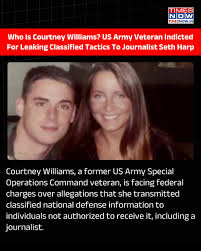
The Courtney Williams arrest has quickly become one of the most talked-about national security cases in recent months. Federal authorities allege that the former U.S. Army employee leaked classified military information to a journalist, triggering an FBI investigation and raising concerns about espionage, national defense security, and the growing debate over whistleblowing.
According to prosecutors, Courtney Williams, a 40-year-old former Army employee from North Carolina, was indicted under federal law for transmitting classified national defense information to unauthorized individuals, including members of the media.
This case is not just about one individual—it reflects broader tensions between national security enforcement, media freedom, and whistleblower protections.
Who Is Courtney Williams?
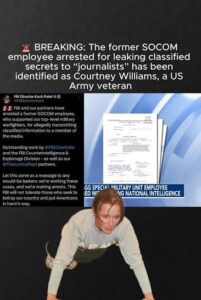
Courtney Williams is a former U.S. Army veteran and defense employee who previously worked with sensitive military operations.
Reports indicate that Williams held top-secret security clearance while supporting specialized military units between 2010 and 2016.
Her role involved handling sensitive information related to military tactics and operational procedures—information strictly restricted under federal law.
Authorities say that after leaving government service, Williams allegedly communicated with a journalist over an extended period, sharing information later published in investigative materials.
Key Background Details:
- Age: 40
- Location: Wagram, North Carolina
- Profession: Former Army employee
- Security Clearance: Top Secret
- Role: Support staff for special operations units
- Charges: Espionage-related offenses
Court records state that Williams communicated with a journalist through more than 10 hours of calls and over 180 messages, some of which allegedly contained classified data.
FBI Case Timeline: How the Investigation Began
The FBI case unfolded over several years, eventually leading to Williams’ arrest.
Phase 1: Initial Communication
Between 2022 and 2025, investigators say Williams shared information with a journalist seeking details about military operations.
Authorities claim that some of the disclosed material involved tactics used by elite military units.
Phase 2: Publication of Information
The communications reportedly contributed to published articles and a book discussing alleged misconduct within military units.
Some of these publications referenced Williams as a source, prompting federal review.
Phase 3: Federal Investigation
Once authorities identified the source, federal investigators began reviewing:
- Phone records
- Text communications
- Social media disclosures
- Published materials
The Department of Justice concluded that classified information had been improperly shared.
Phase 4: Arrest and Charges
Williams was arrested by the FBI and indicted by a federal grand jury.
Officials stated that the case represents a significant national security enforcement action.
Espionage Charges Explained
One of the most serious aspects of the Courtney Williams arrest is the espionage-related charge.
Williams is accused of violating provisions of U.S. federal law that prohibit unauthorized sharing of national defense information.
What Is the Espionage Act?
The Espionage Act is a U.S. federal law designed to prevent unauthorized disclosure of national defense secrets.
Originally passed in 1917, the law remains one of the government’s primary tools to prosecute classified information leaks.
Violations can lead to:
- Long prison sentences
- Large fines
- Permanent criminal records
Historically, several leak cases—including intelligence leaks—have been prosecuted under the same law.
What Information Was Allegedly Leaked?
According to prosecutors, the leaked information included:
- Military tactics
- Operational methods
- Sensitive national defense data
- Internal communications
Officials claim that the information could have endangered military personnel and compromised operational safety.
Authorities also allege that some disclosures were made through social media, increasing the risk of public exposure.
Federal officials emphasized that classified material must only be shared with individuals who have proper authorization and clearance.
Journalist Involvement and Media Debate
One of the most controversial aspects of the case is the involvement of a journalist.
Reports indicate that the journalist used the information to publish investigative materials concerning alleged misconduct inside military units.
Supporters of Williams argue:
- She may be acting as a whistleblower
- She sought to expose wrongdoing
- The prosecution could discourage transparency
Critics argue:
- Classified leaks can endanger national security
- Unauthorized disclosures risk lives
- Legal consequences are necessary
This tension between national security and press freedom has fueled widespread debate across legal and media communities.
National Security Concerns Raised by the Case
Security analysts have expressed concern about the potential consequences of classified leaks.
Officials warn that such leaks can:
- Expose military tactics
- Reveal sensitive operations
- Put service members at risk
- Damage international alliances
Government prosecutors stated that the alleged disclosures risked national security and military personnel safety.
In today’s digital environment, classified leaks can spread rapidly, making containment extremely difficult.
Legal Process Ahead: What Happens Next?
After the arrest, the case entered the federal legal system.
Upcoming Legal Steps:
- Initial Court Appearance
- Bail Review
- Evidence Hearings
- Trial Proceedings
Williams remains presumed innocent until proven guilty in court.
Federal prosecutors must prove:
- Classified information was shared
- The sharing was unauthorized
- The actions violated federal law
How useful was this post?
Click on a star to rate it!
Average rating 0 / 5. Vote count: 0
No votes so far! Be the first to rate this post.
About the Author

usa5911.com
Administrator
Hi, I’m Gurdeep Singh, a professional content writer from India with over 3 years of experience in the field. I specialize in covering U.S. politics, delivering timely and engaging content tailored specifically for an American audience. Along with my dedicated team, we track and report on all the latest political trends, news, and in-depth analysis shaping the United States today. Our goal is to provide clear, factual, and compelling content that keeps readers informed and engaged with the ever-changing political landscape.