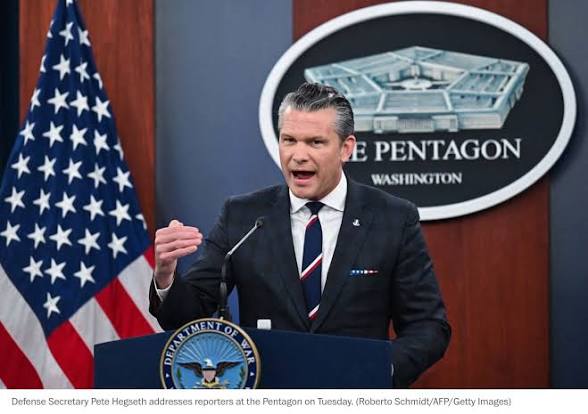
The Pentagon is facing renewed leadership controversy after former Defense Secretary Pete Hegseth chief of staff Joe Kasper publicly called on him to resign. The demand has intensified questions about Hegseth’s leadership, his relationship with senior military officials, and his handling of the ongoing conflict with Iran.
Kasper, who worked closely with Hegseth during the opening months of President Donald Trump’s second administration, delivered his criticism in a November 23 interview with POLITICO. He argued that Hegseth’s ability to lead the Defense Department had become increasingly limited.
His remarks represent a significant political development because the criticism comes from someone who previously occupied one of the most influential positions in Hegseth’s immediate circle.
Kasper did not simply question individual decisions. Instead, he challenged the defense secretary’s overall approach to military leadership, institutional management, and relations with Congress.
He also accused Hegseth of placing personal image and public attention ahead of the Pentagon’s wider responsibilities.
The resignation demand comes during an especially sensitive period for the United States military. Washington remains involved in a major confrontation with Iran, while leadership departures and disagreements inside the Defense Department continue to attract attention.
Although President Trump has continued to support Hegseth, Kasper’s comments have created another challenge for an administration already facing questions about military strategy and Pentagon stability.
Joe Kasper Demands Pete Hegseth Step Down

Joe Kasper’s criticism has become the central development in the latest Pentagon controversy.
According to his interview with POLITICO, Kasper believes Hegseth has reached a point where his effectiveness as defense secretary is seriously compromised.
He argued that the secretary’s ability to perform his responsibilities would deteriorate further unless the situation changed.
Kasper’s message was direct: Hegseth should leave his position.
The importance of this statement goes beyond ordinary political criticism. Kasper previously served as Hegseth’s chief of staff and had direct experience with the department’s internal operations.
His former position gives his assessment additional political significance, although his allegations should still be understood as his own views rather than independently established conclusions.
Kasper also questioned the secretary’s ability to maintain productive relationships with senior military officials.
A defense secretary must work with military commanders, civilian officials, lawmakers, intelligence agencies, and international partners. These relationships are essential for coordinating military operations and implementing national security policies.
Kasper suggested that Hegseth’s approach had damaged important relationships across these areas.
He warned that the consequences could extend beyond political disagreements and affect the department’s ability to function effectively.
Why Kasper Is Criticising Hegseth’s Pentagon Leadership
Kasper’s criticism focuses on several connected issues.
These include military leadership changes, the removal of senior officials, disagreements over the Iran war, and concerns about the secretary’s priorities.
He suggested that Hegseth had become too focused on his public image and personal standing.
According to Kasper, the Pentagon needs consistent leadership and strong institutional relationships rather than decisions driven by individual personalities.
This criticism touches on an important responsibility of the defense secretary.
The Pentagon manages millions of military and civilian personnel, oversees enormous budgets, and coordinates operations across multiple regions. Its leadership structure must remain effective even during periods of political disagreement.
Frequent departures among senior officials can create uncertainty about priorities and responsibilities.
They can also make it harder for experienced leaders to provide continuity during military operations.
Kasper believes these problems have become increasingly serious under Hegseth.
However, the Pentagon has rejected his allegations, arguing that the defense secretary remains focused on strengthening the military and supporting American service members.
Iran War Adds Pressure to the Pentagon Leadership Crisis
The ongoing Iran conflict is another major factor behind the growing controversy.
Kasper sharply criticised the administration’s handling of the war, describing the situation in extremely negative terms during his interview.
His comments suggest that he believes Hegseth’s leadership has become particularly problematic at a time when the United States needs clear military direction.
The conflict places considerable demands on the Pentagon.
Military operations require coordination between commanders, intelligence officials, defence planners, and political leaders. Decisions involving military deployments, weapons supplies, regional security, and potential escalation can have consequences far beyond the battlefield.
This makes communication and institutional stability especially important.
Kasper questioned whether Hegseth had maintained the relationships necessary to manage these responsibilities effectively.
He also expressed concern about the loss of experienced military leadership.
The criticism comes as the administration faces difficult questions about the direction and potential consequences of its Iran policy.
For Hegseth, the challenge is therefore twofold. He must defend the administration’s military strategy while also addressing concerns about his management of the Pentagon.
The resignation demand has added another layer of political pressure to an already difficult situation.
Nevertheless, Kasper’s criticism does not establish that the military campaign has failed or that the Pentagon cannot perform its operational responsibilities. Those questions require separate evidence and assessments.
Senior Military Departures Raise Questions About Pentagon Stability
One of the most significant issues raised by Kasper involves the departure of senior military officials.
The Pentagon has experienced considerable leadership changes during Hegseth’s tenure.
Several high-ranking military figures have been removed, sidelined, or have left their positions. These developments have prompted concerns about institutional continuity and the availability of experienced leadership.
The departure of Army Secretary Dan Driscoll has been particularly important.
Driscoll reportedly had disagreements with Hegseth over the Army’s direction and the removal of senior military officers.
According to ABC News reporting from September 2026, Driscoll had repeatedly raised concerns with the White House about Hegseth’s approach to military leadership.
He reportedly warned that the removal of experienced officers and restrictions on promotions could weaken the Army’s senior leadership structure.
His departure added to questions about the relationship between the civilian leadership of the Defense Department and senior Army officials.
The controversy also attracted attention because President Trump was reportedly surprised by the scale of the concerns raised by Driscoll.
The White House, however, continued to express confidence in Hegseth.
These developments provide important context for understanding Kasper’s latest remarks.
His argument is that the Pentagon cannot function effectively if experienced leaders continue to leave and relationships between senior officials deteriorate.
For a military organisation operating during an international conflict, leadership continuity is especially important.
Command structures need experienced personnel who understand military planning, operational requirements, and the challenges facing troops.
The loss of senior officials does not automatically mean the military is unable to operate. However, repeated leadership changes can create additional pressure on an already demanding organisation.
Kasper Questions the Removal of Pentagon Officials
Kasper also revisited an earlier controversy involving the removal of three Pentagon officials in April 2025.
The officials were Dan Caldwell, Darin Selnick, and Colin Carroll.
They were removed amid an investigation into suspected leaks of sensitive information.
The allegations created significant controversy within the department.
The three officials denied sharing sensitive information without authorisation.
Kasper now questions whether sufficient evidence existed to justify the action against them.
According to reporting cited by the Hindustan Times, Kasper believes the investigation did not establish that the officials had leaked information.
The New York Times had previously reported that an internal investigation found no wrongdoing by the three individuals.
This issue is relevant because it raises broader questions about internal investigations and accountability within the Pentagon.
Government departments must protect sensitive information. However, they must also ensure that disciplinary decisions are supported by evidence and appropriate procedures.
When senior employees are removed under disputed circumstances, the resulting uncertainty can damage trust within an organisation.
Kasper’s renewed criticism suggests that he believes the earlier controversy reflects wider problems with Hegseth’s management style.
The Pentagon has rejected his overall accusations and questioned his motives.
Pentagon Pushes Back Against Kasper’s Allegations
Hegseth’s department has not accepted Kasper’s criticism without a response.
A senior Pentagon official rejected the former chief of staff’s allegations in comments reported by POLITICO.
The official characterised Kasper as a disgruntled former staff member and accused him of spreading false information to the media.
The department also defended Hegseth’s priorities.
Its position is that the secretary remains focused on improving military capabilities, strengthening readiness, and supporting American service members.
This response highlights the sharp disagreement between the former adviser and the current Pentagon leadership.
Kasper believes Hegseth’s approach has weakened the department.
The Pentagon argues that the secretary remains committed to strengthening the armed forces.
Both positions matter when assessing the controversy.
Kasper’s previous role gives him experience with Hegseth’s leadership, but his departure from the department also means his statements reflect the perspective of a former official.
Similarly, the Pentagon’s defence of its leadership represents the administration’s position and does not independently resolve the concerns raised.
The central question remains whether the department can maintain strong leadership, effective decision-making, and confidence among military personnel.
Hegseth’s Relationship With Congress Faces New Questions
Kasper’s criticism also extends beyond military leadership.
He questioned Hegseth’s ability to maintain productive relationships with members of Congress.
This is an important concern because the Defense Department depends on congressional cooperation.
Lawmakers approve defence spending, examine military operations, conduct oversight, and consider important national security legislation.
The department must therefore maintain working relationships with both political parties.
Without congressional support, implementing major defence priorities can become more difficult.
Budget negotiations, military procurement, weapons development, and personnel policies all require cooperation between the executive and legislative branches.
Kasper suggested that Hegseth’s approach could make these relationships increasingly difficult to manage.
The concern is particularly important during the Iran conflict.
Military operations can create difficult questions about spending, authorisation, oversight, and long-term strategy.
Congress may demand explanations about the administration’s objectives and the resources required to achieve them.
If relations between the Pentagon and lawmakers deteriorate, those discussions could become more complicated.
However, Kasper’s warning should not be interpreted as proof that Congress has withdrawn its support from the entire Defense Department.
The relationship between lawmakers and the Pentagon remains a developing political issue.
Pete Hegseth Continues to Receive Donald Trump’s Support
Despite the criticism, President Donald Trump has continued to support his defense secretary.
This support is an important factor in determining whether Kasper’s resignation demand will have any immediate political consequences.
The president has publicly expressed confidence in Hegseth’s leadership.
The White House has also defended the administration’s military decisions and pointed to its assessment of recent operations.
For now, there is no confirmed announcement that Hegseth plans to resign.
Kasper’s demand is therefore a political challenge rather than evidence of an imminent departure.
Presidential support can provide a cabinet secretary with considerable protection during periods of controversy.
However, that support does not eliminate questions from lawmakers, military officials, journalists, or former administration employees.
Hegseth must still demonstrate that the Pentagon can operate effectively and maintain the confidence of its personnel.
The coming weeks could prove important as the administration continues managing the Iran conflict and other national security priorities.
Why Joe Kasper’s Criticism Matters
Former government officials frequently criticise the administrations they once served.
However, Kasper’s comments are notable because of his previous position inside the Pentagon.
As chief of staff, he worked close to the defense secretary and had direct exposure to the department’s senior leadership environment.
That experience makes his criticism politically significant.
It also creates an important distinction between his allegations and ordinary criticism from political opponents.
Kasper is not simply questioning a policy from outside government. He is challenging the leadership approach of someone he previously helped serve.
His comments could encourage further scrutiny of Hegseth’s management decisions.
They may also lead journalists and lawmakers to revisit earlier controversies involving senior personnel departures, internal investigations, and military planning.
However, Kasper’s former position does not automatically make every allegation accurate.
Independent reporting, official documents, and statements from people directly involved remain necessary to establish the facts.
The controversy illustrates the challenges facing any defence secretary who must balance political priorities with the professional requirements of military leadership.
Could Pete Hegseth Face More Political Pressure?
Kasper’s demand arrives amid broader political scrutiny of the defense secretary.
Earlier in November, Hegseth survived a House impeachment vote.
Representative Thomas Massie of Kentucky had also pursued impeachment-related action involving allegations concerning military operations and the administration’s authority in the Iran conflict.
These developments demonstrate that concerns about Hegseth extend beyond former Pentagon employees.
However, political criticism does not automatically translate into removal from office.
The president has the authority to decide whether to retain or replace members of his cabinet, subject to the constitutional and legal framework governing those positions.
For Hegseth, the immediate priority is likely to be maintaining Trump’s confidence and demonstrating that the department remains capable of carrying out its responsibilities.
The resignation demand could nevertheless become a recurring issue in congressional debates and media coverage.
If additional former officials raise similar concerns, pressure on the Pentagon leadership could increase.
At the same time, continued presidential backing could limit the immediate impact of those criticisms.
What Happens Next for the Pentagon?
The next stage of the controversy will depend on how the administration responds to the growing scrutiny.
There are several important issues to watch.
First, the Pentagon will need to demonstrate that its senior leadership structure remains functional.
Second, Hegseth will face continued questions about the departures of experienced military officials.
Third, the administration will need to explain its approach to the Iran conflict and maintain effective communication with Congress.
Finally, President Trump will have to decide whether the criticism surrounding his defense secretary creates a political problem serious enough to require action.
Kasper’s demand has made the leadership debate more public.
It has also brought renewed attention to the relationship between civilian defence officials and the professional military establishment.
The Pentagon’s ability to maintain institutional stability will remain important regardless of whether Hegseth stays in office.
A defence department must function beyond the political fortunes of any individual secretary.
That responsibility becomes even more important when American forces face demanding international security challenges.
Conclusion: Pentagon Turmoil Puts Hegseth’s Leadership Under the Spotlight
The demand from former chief of staff Joe Kasper represents another serious challenge for Pete Hegseth.
His criticism raises questions about military leadership, senior personnel departures, the Iran conflict, and the Pentagon’s relationship with Congress.
Kasper’s previous position gives his remarks additional political weight. However, the Pentagon has strongly rejected his allegations and defended Hegseth’s leadership.
President Trump has also continued to support his defense secretary.
For now, there is no confirmed indication that Hegseth intends to leave his position.
Nevertheless, the controversy places renewed attention on the management of America’s military establishment.
Whether Hegseth can overcome the criticism and restore confidence among former colleagues, military officials, and lawmakers remains an important question.
The coming weeks could determine whether this controversy remains another political dispute or develops into a more significant challenge for the Trump administration.
Frequently Asked Questions (FAQs)
1. Why is Joe Kasper demanding Pete Hegseth’s resignation?
Joe Kasper believes Hegseth’s leadership has become ineffective. He has criticised the defense secretary’s management of the Pentagon, relationships with senior military officials, and handling of the Iran conflict.
2. Who is Joe Kasper?
Joe Kasper is a former chief of staff to Defense Secretary Pete Hegseth. He served during the opening months of Donald Trump’s second administration before leaving the position in April 2025.
3. What did Kasper say about Pete Hegseth?
Kasper argued that Hegseth’s ability to lead effectively had become increasingly restricted. He said it was time for the defense secretary to step down.
4. Why is the Pentagon facing leadership controversy?
The Pentagon has experienced several senior leadership departures and disagreements involving military officials. Critics argue that these developments could affect institutional stability and military leadership.
5. What is Hegseth’s connection to the Iran war controversy?
Kasper criticised the administration’s handling of the Iran conflict and questioned Hegseth’s leadership during the military campaign.
6. Has the Pentagon responded to Kasper’s allegations?
Yes. A senior Pentagon official rejected Kasper’s criticism, described him as a disgruntled former staff member, and defended Hegseth’s commitment to strengthening the military.
7. Does Donald Trump still support Pete Hegseth?
Yes. Trump has continued to express confidence in Hegseth despite growing criticism of his Pentagon leadership.
8. Has Pete Hegseth resigned as defense secretary?
No confirmed resignation has been announced. Kasper’s statement is a demand for Hegseth to leave office, not confirmation that he has resigned.
9. Why are senior military departures concerning?
Frequent departures can affect leadership continuity, institutional experience, military planning, and coordination across the Defense Department.
10. What could happen next in the Pentagon controversy?
Hegseth could face further questions from lawmakers, journalists, and former officials. The administration’s response and Trump’s continued support will be important factors in determining what happens next.
About the Author