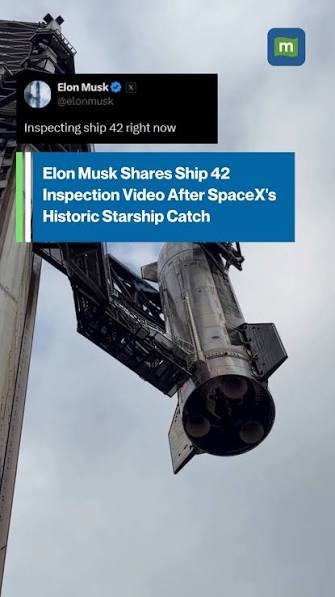
SpaceX has achieved a historic milestone in space exploration after successfully catching its Starship upper stage, Ship 42, using the giant mechanical arms of its launch tower in South Texas. The extraordinary maneuver marks a major step forward in the company’s ambitious plan to make fully reusable rockets a reality.
The spacecraft returned from an orbital flight before descending toward the Starbase launch facility on November 14, 2026. Instead of landing on a traditional platform or splashing down in the ocean, Ship 42 was captured by the enormous mechanical arms attached to SpaceX’s launch tower.
The system, popularly known as Mechazilla, demonstrated that SpaceX could recover not only its Super Heavy booster but also the Starship spacecraft itself after an orbital mission.
The achievement followed Starship Flight 15, which launched on November 13. Although the mission did not deliver a successful recovery of both rocket stages, the spacecraft’s return and capture represented an important breakthrough.
According to reporting by Reuters and Space.com, Ship 42 completed its return approximately 22.5 hours after launch. The spacecraft also completed 14 Earth orbits and deployed 26 Starlink satellites during the mission.
Reuters+1
The successful catch could change how future rockets are designed, recovered, inspected and prepared for subsequent missions.
What Happened During the Historic Starship Flight 15?

The historic catch was the highlight of Starship’s 15th integrated flight test. The mission began on November 13, 2026, when SpaceX launched its massive rocket from Starbase in Boca Chica, Texas.
The launch involved two major components:
Super Heavy Booster: The powerful first stage responsible for lifting Starship away from Earth.
Starship Ship 42: The upper stage designed to travel into orbit, deploy payloads and return to Earth.
SpaceX wanted to recover both stages at the same launch facility. This would have demonstrated a major step toward completely reusable orbital transportation.
However, the mission encountered a problem during the booster’s return.
Super Heavy Booster 22 experienced a low-fuel alarm. Its return maneuver ended earlier than planned, forcing SpaceX to cancel the tower catch attempt. The booster diverted toward an offshore splashdown area in the Gulf of Mexico and was subsequently lost.
Despite this setback, Ship 42 continued its mission.
The spacecraft reached orbit, deployed its satellite payload and prepared for an ambitious return to Starbase. Its successful recovery ultimately turned Flight 15 into a historic achievement, even though the original double-catch objective remained incomplete.
starlust.org+2
How Mechazilla Caught Starship Ship 42
SpaceX informally calls these arms chopsticks because of their shape and function.
The system was originally developed to catch the Super Heavy booster as it returned to the launch site. However, catching the Starship upper stage presented a much more complicated engineering challenge.
Ship 42 had to return from orbital flight at extremely high speed. It also needed to survive atmospheric reentry before approaching the tower with enough precision for the mechanical arms to capture it.
Here is how the recovery worked.
1. Starship Returned From Orbit
After completing its orbital mission, Ship 42 began its journey back toward Earth.
The spacecraft had spent approximately 22.5 hours in space and completed 14 Earth orbits. It then performed a deorbit maneuver to begin its return toward the Texas launch site.
This maneuver changed its trajectory and directed it toward the atmosphere.
2. The Spacecraft Survived Atmospheric Reentry
Atmospheric reentry is one of the most demanding stages of any spacecraft mission.
As Ship 42 entered Earth’s atmosphere, it encountered enormous aerodynamic forces and intense heating.
Its protective heat shield, made up of hundreds of black hexagonal tiles, helped protect the spacecraft from extreme temperatures.
The spacecraft also used its aerodynamic control surfaces to manage its descent and maintain the required flight path.
3. Ship 42 Approached the Launch Tower
After slowing down during atmospheric descent, Ship 42 approached the Starbase launch facility.
The spacecraft had to position itself accurately for the final landing maneuver.
It reignited its engines, rotated into a vertical position and began descending toward the waiting tower.
This phase required precise coordination between the spacecraft’s flight-control systems and the ground recovery infrastructure.
4. Mechazilla’s Arms Secured the Spacecraft
The final moment delivered the biggest breakthrough.
As Ship 42 approached the tower, the mechanical arms moved into position.
Two small fittings near the upper section of the spacecraft connected with the tower’s arms. The system then secured the vehicle, allowing it to hang above the ground.
The successful maneuver demonstrated that SpaceX could recover an orbital Starship upper stage directly at its launch facility.
Reuters reported that the spacecraft completed the catch after returning from its 22.5-hour orbital mission.
Reuters+1
Why the Ship 42 Catch Is Such a Big Deal
The successful SpaceX Starship catch represents more than an impressive engineering demonstration.
It addresses one of the biggest challenges in modern spaceflight: recovering and reusing the entire launch vehicle.
Most traditional orbital rockets discard major components after launch. Recovering those components can reduce manufacturing requirements and potentially lower the cost of accessing space.
SpaceX has already demonstrated the commercial value of recovering and reusing Falcon 9 first-stage boosters.
However, the company wants to take that concept much further with Starship.
The successful Ship 42 recovery brings this ambition closer to reality.
Full Rocket Reusability Could Reduce Launch Costs
Building a large rocket requires significant resources, advanced materials, specialized manufacturing and extensive testing.
If a rocket can fly only once, the operator must replace major hardware before another mission.
Reusable rockets could change that economic model.
Instead of manufacturing a completely new spacecraft for every launch, SpaceX hopes to recover, inspect and prepare existing vehicles for repeated flights.
This approach could eventually reduce the cost of launching satellites, transporting cargo and supporting human spaceflight.
However, catching a spacecraft does not automatically make it ready for another flight. Engineers must inspect its engines, heat shield, structure and other systems before approving another mission.
Faster Turnaround Between Missions
Traditional rocket operations often involve long preparation periods between launches.
SpaceX wants Starship to operate more like a commercial aircraft.
The long-term goal is to launch, recover, inspect, refuel and launch again with significantly less downtime.
A successful tower catch could simplify certain recovery operations because the spacecraft returns directly to the launch infrastructure.
It could also reduce the need to transport a recovered vehicle from a distant landing location.
Nevertheless, rapid turnaround remains a future objective rather than an achievement demonstrated by this single flight.
Better Control Over Spacecraft Recovery
Recovering an orbital spacecraft is not easy.
The vehicle must withstand atmospheric heating, maintain control and reach a precise landing location.
A successful Mechazilla catch demonstrates that the spacecraft can complete these steps while returning to its original launch facility.
This is particularly important for a vehicle designed to support frequent missions.
It also gives engineers valuable information about the spacecraft’s performance during reentry and its interaction with the tower recovery system.
Ship 42 vs. Super Heavy: Why One Catch Succeeded and the Other Failed
The upper stage completed its orbital mission and returned successfully. However, the Super Heavy booster failed to complete its planned tower recovery.
Understanding the difference is important when evaluating the mission.
Mission component | Flight 15 outcome |
|---|---|
Super Heavy Booster 22 | Tower catch aborted |
Ship 42 upper stage | Successful tower catch |
Orbital deployment | 26 Starlink satellites |
Orbital duration | Approximately 22.5 hours |
Earth orbits | 14 |
Double recovery | Not achieved |
The booster experienced a low-fuel warning that affected its return maneuver.
SpaceX’s flight team therefore diverted the booster away from the tower rather than continuing with the planned catch.
Ship 42, meanwhile, completed its own flight profile and returned to Starbase.
This distinction matters because the successful spacecraft catch should not be confused with a complete recovery of the entire Starship launch system.
starlust.org+2
Why Catching Starship Is Harder Than Catching a Booster
SpaceX had already demonstrated that Mechazilla could catch returning Super Heavy boosters.
However, catching the upper stage involved a different set of challenges.
The Super Heavy booster performs its return after separating from Starship relatively early in the mission.
Ship 42 travels much farther. It reaches orbital velocity, completes its mission and returns through Earth’s atmosphere.
This creates several additional engineering demands.
First, orbital speed creates extreme heating. Starship must withstand the temperatures generated during atmospheric reentry.
Second, the spacecraft must control its orientation. It uses aerodynamic surfaces and its propulsion system to manage its descent.
Third, the final approach must be highly accurate. Even a small positioning error could prevent the vehicle from connecting correctly with the tower arms.
Finally, the spacecraft must remain structurally sound. The vehicle needs to survive launch, orbital operations, reentry and the final capture.
The successful Ship 42 catch shows that SpaceX has made major progress in managing these challenges.
It does not mean every future recovery will be successful. Engineers must continue testing the system under different flight conditions.
What Makes the Mechazilla Tower Special?
The massive structure serves as part of the launch infrastructure and the recovery system.
Its mechanical arms are designed to catch returning rocket stages before they reach the ground.
This approach is different from traditional rocket recovery systems.
For example, Falcon 9 boosters generally land on drone ships or designated landing pads using their own landing legs.
Starship’s tower-catch approach instead relies on specialized fittings and mechanical arms attached to the launch tower.
The potential advantages include:
Less need for separate landing hardware.
Direct access to launch-site infrastructure.
Potentially simpler vehicle handling.
A pathway toward faster launch operations.
Greater integration between launch and recovery systems.
However, the system also requires precise timing, reliable control software and a carefully maintained launch tower.
The successful Ship 42 recovery provides an important real-world demonstration of this approach.
SpaceX’s Starship Program: The Bigger Mission
Starship is designed to become a fully reusable transportation system capable of carrying people and cargo beyond Earth.
SpaceX has several major objectives for the program.
Supporting the Starlink Satellite Network
One important application is expanding the company’s Starlink satellite network.
Starship’s large payload capacity could allow SpaceX to deploy more satellites in fewer launches.
During Flight 15, Ship 42 successfully deployed 26 Starlink satellites.
This demonstrated the vehicle’s ability to combine an orbital payload mission with a return-to-launch-site recovery attempt.
Reuters+1
Supporting NASA’s Artemis Program
Starship also has an important role in NASA’s plans to return astronauts to the Moon.
NASA selected SpaceX to develop a Starship-based lunar landing system under its Artemis program.
The spacecraft is expected to support future lunar missions by transporting astronauts from lunar orbit to the Moon’s surface.
However, several major technical challenges remain.
These include demonstrating reliable in-orbit propellant transfer, developing the required lunar landing systems and completing extensive safety testing.
NASA’s lunar ambitions therefore depend on more than successful rocket recovery.
Preparing for Future Mars Missions
SpaceX also views Starship as a key part of its long-term Mars ambitions.
The company wants to develop a transportation system capable of carrying large amounts of equipment, supplies and eventually people to the Red Planet.
A reusable spacecraft could make repeated missions more economically practical.
However, Mars transportation will require many additional technologies, including life-support systems, radiation protection, long-duration mission planning and reliable refueling operations.
The Ship 42 catch is an important engineering milestone, but it is only one part of that much larger objective.
What Happens to Ship 42 After the Successful Catch?
The successful recovery is only the beginning of the next engineering phase.
After the catch, SpaceX engineers began inspecting Ship 42 to evaluate its condition.
The spacecraft had experienced several demanding conditions during its mission. These included launch vibration, orbital operations, atmospheric heating and the final recovery maneuver.
Engineers need to understand how each system performed.
The inspection process is particularly important because SpaceX wants to reuse Starship vehicles rather than simply recover them.
Some of the main areas requiring attention include:
Heat shield inspection: Engineers must examine the protective tiles for damage caused by atmospheric reentry.
Engine inspection: The Raptor engines need detailed checks following launch and landing operations.
Structural examination: The spacecraft’s body, fittings and other components must be inspected.
Flight data analysis: Engineers need to review navigation, control and recovery data.
Reuse preparation: SpaceX must determine how much repair or refurbishment is necessary before another flight.
Elon Musk publicly praised the spacecraft’s condition after the recovery, posting that Ship 42 looked great. However, further inspections are essential before its next flight can be considered.
Reuters+1
The Biggest Challenges SpaceX Still Needs to Solve
Although the SpaceX Starship catch is a historic achievement, several challenges remain before the company can achieve routine full-system reusability.
1. Making the Heat Shield More Reusable
The heat shield remains one of Starship’s most important engineering challenges.
Its hundreds of protective tiles must withstand extreme temperatures during atmospheric reentry.
Even if the spacecraft survives its return, damaged or missing tiles could require time-consuming repairs.
SpaceX wants to develop heat shield technology that requires minimal refurbishment between flights.
That improvement will be essential for achieving rapid reuse.
2. Recovering Both Rocket Stages
Flight 15 demonstrated a successful catch of the upper stage, but it did not achieve a double recovery.
The Super Heavy booster failed to return to the launch tower.
SpaceX must demonstrate that both stages can be recovered reliably during the same mission.
This remains one of the most important milestones for the Starship program.
3. Improving Engine Reliability
Starship relies on powerful Raptor engines for launch, maneuvering and landing.
These engines must perform reliably under different operating conditions.
The company needs to demonstrate consistent performance across repeated missions.
Even a successful recovery cannot eliminate the need for extensive engine testing.
4. Demonstrating In-Orbit Fuel Transfer
Another major challenge involves transferring propellant between Starship vehicles in orbit.
This capability is important for future lunar missions.
A single spacecraft may not carry enough fuel to complete every part of a deep-space journey.
SpaceX therefore plans to use tanker spacecraft to transfer propellant to vehicles preparing for missions beyond Earth orbit.
Reuters identifies this technology as one of the important remaining milestones for Starship’s lunar ambitions.
Reuters
Why the Successful Catch Matters for the Future of Space Exploration
The SpaceX Starship catch could influence the future of commercial spaceflight.
For decades, launching large spacecraft into orbit has involved significant manufacturing and operational costs.
Reusable launch systems offer a different approach.
If Starship can eventually be recovered and relaunched frequently, it could increase the amount of cargo transported into space.
That capability could benefit several industries.
Satellite communications: More affordable launches could support the expansion of global satellite networks.
Scientific research: Researchers could gain access to additional opportunities for deploying scientific equipment.
Space infrastructure: Large payloads could help support the development of future orbital facilities.
Lunar exploration: Reusable transportation systems could support the movement of cargo and astronauts to lunar destinations.
Deep-space exploration: Larger spacecraft could eventually transport equipment and supplies for missions to Mars.
However, these benefits depend on successful development, reliable operations and competitive launch costs.
The successful catch is an important demonstration, not proof that all these goals have already been achieved.
How the Starship Catch Compares With Previous SpaceX Achievements
SpaceX has spent years developing reusable rocket technology.
Its Falcon 9 program demonstrated that rocket boosters could return to Earth and fly again.
The company later expanded its recovery ambitions through the Starship program.
Mechazilla previously demonstrated successful catches of Super Heavy boosters during earlier Starship test flights.
Flight 15 introduced a new milestone because the upper stage returned from orbit and was caught by the same tower system.
This is a significant distinction.
Recovering a booster after its initial ascent is challenging. Recovering an orbital spacecraft after it has travelled around Earth introduces a different level of complexity.
The Ship 42 catch therefore represents an important expansion of SpaceX’s recovery capabilities.
It also provides engineers with valuable information that can shape future Starship designs and flight procedures.
What the Ship 42 Milestone Means for SpaceX’s Next Missions
SpaceX will likely use the data from Flight 15 to improve future missions.
The successful catch provides an opportunity to examine the spacecraft’s performance during the entire flight.
Engineers can study the launch, orbital deployment, deorbit maneuver, atmospheric entry and final tower approach.
The company must also continue investigating the failed Super Heavy recovery.
Both stages need reliable recovery systems if Starship is to achieve its full reusable design.
Future missions will need to demonstrate repeatability.
One successful catch is important, but a commercially useful transportation system requires many successful flights.
SpaceX must also prove that recovered vehicles can be refurbished without excessive time or expense.
The company has made an important step forward, but the journey toward routine orbital transportation remains challenging.
Final Thoughts: A New Chapter for Reusable Rockets
The successful SpaceX Starship catch has delivered one of the most significant moments in the development of reusable orbital rockets.
Ship 42 returned from orbit after completing 14 Earth orbits and deploying 26 Starlink satellites. It then descended toward Starbase and was successfully captured by Mechazilla’s mechanical arms.
Although Super Heavy Booster 22 failed to complete its planned recovery, the upper-stage achievement demonstrated a new capability for SpaceX.
The milestone could help the company move closer to its ambition of creating a fully reusable space transportation system.
However, important challenges remain, including heat shield durability, booster recovery, engine reliability and orbital refueling.
For now, Ship 42’s historic catch represents a major engineering breakthrough.
It shows that recovering an orbital Starship directly at its launch tower is possible. The next challenge is proving that the achievement can become a reliable and repeatable part of future space missions.
Frequently Asked Questions (FAQs)
1. What is the SpaceX Starship catch?
The SpaceX Starship catch is a recovery maneuver in which the spacecraft returns from orbit and is captured by the mechanical arms of its launch tower. Ship 42 completed the first successful upper-stage tower catch on November 14, 2026.
2. What is Ship 42?
Ship 42 is the Starship upper-stage spacecraft used during Flight 15. It completed an orbital mission, deployed 26 Starlink satellites and returned to Starbase for recovery.
3. What is Mechazilla?
Mechazilla is the nickname for SpaceX’s massive launch tower and recovery system. Its mechanical arms, commonly called chopsticks, are designed to catch returning rocket stages.
4. When did SpaceX catch Ship 42?
SpaceX successfully caught Ship 42 on November 14, 2026, at approximately 3:20 p.m. local Texas time.
5. Did SpaceX successfully catch both rocket stages?
No. SpaceX successfully caught the Starship upper stage, but the Super Heavy booster did not complete its planned tower recovery. It diverted toward the Gulf of Mexico.
6. How long did Ship 42 spend in space?
Ship 42 spent approximately 22.5 hours on its mission and completed 14 Earth orbits before returning to Starbase.
7. How many Starlink satellites did Ship 42 deploy?
The spacecraft successfully deployed 26 Starlink satellites during its orbital mission.
8. Why is the Mechazilla catch important?
The catch demonstrates that an orbital spacecraft can return directly to its launch tower. This could help SpaceX develop a fully reusable rocket system and reduce the time and cost associated with future launches.
9. Can SpaceX reuse Ship 42 after catching it?
Potentially, yes. However, engineers must inspect the spacecraft, engines, heat shield and structural components before determining whether it is ready for another flight.
10. Will Starship be used for NASA’s Moon missions?
Yes. NASA selected SpaceX’s Starship as a lunar landing system for its Artemis program. The spacecraft must still complete several important technical demonstrations before supporting crewed lunar missions.
About the Author