France is facing renewed social unrest as hundreds of thousands of people take to the streets over rising living costs, education problems, inequality and concerns about public services. The demonstrations have placed fresh pressure on President Emmanuel Macron’s government as frustration grows among students, workers and families.
On Saturday, October 24, 2026, France’s Interior Ministry estimated that approximately 410,000 people participated in nationwide demonstrations. The CGT trade union reported a significantly higher figure, estimating attendance at nearly 800,000.
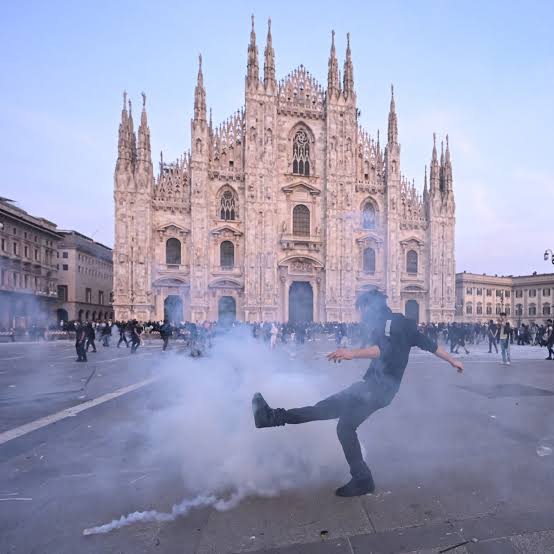
However, the turnout figures represent demonstrators, not confirmed rioters. While many people marched peacefully, some gatherings descended into violence, including clashes between police and masked protesters.
According to Reuters, authorities deployed approximately 70,000 police officers to manage the demonstrations and prevent a repeat of the previous weekend’s widespread disorder. The operation helped limit the scale of violence, although arrests and injuries were still reported.
The unrest reflects a growing public debate about purchasing power, wages, public spending and the affordability of essential services. It also comes as France approaches a politically important period ahead of the 2027 presidential election.
The central question is whether the government can address the economic grievances behind the demonstrations before further protests intensify.
Why Are Protests Spreading Across France?
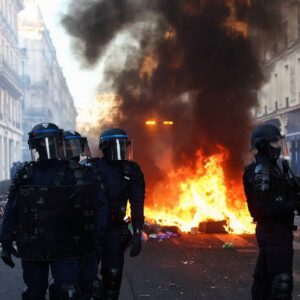
The current wave of France unrest did not emerge from a single demand. Instead, it developed as student demonstrations expanded into a broader movement involving workers, trade unions and campaigners concerned about living standards.
Rising Cost of Living Fuels Public Anger
The rising cost of essential goods has become a major concern for French households. Food, electricity, transport and housing expenses continue to place pressure on family budgets.
Even when inflation slows, consumers do not automatically see prices return to previous levels. As a result, families may continue to struggle when wages fail to keep pace with essential expenses.
Lower-income households face particular difficulties because they spend a larger share of their income on necessities.
For many workers, higher rent and transport costs leave less money for savings, education and unexpected expenses. Meanwhile, pensioners and people on fixed incomes can find it difficult to adjust when everyday costs rise.
Consequently, economic frustration has become an important part of the demonstrations.
Protesters are demanding measures that improve purchasing power, support vulnerable households and make essential services more affordable.
Students Demand Better Schools and More Teachers
Education has also played an important role in the French demonstrations.
The movement initially gained momentum through student protests over staff shortages, deteriorating school facilities and concerns about the quality of public education.
Students and their supporters have called for more teachers, improved classrooms, better learning conditions and increased financial support.
These demands have attracted wider public attention because education affects both immediate living conditions and future employment opportunities.
When schools lack sufficient staff or resources, students may worry about their academic progress and career prospects. Families also become concerned about whether public institutions can provide equal opportunities.
As demonstrations expanded, these education-related grievances became connected to wider complaints about inequality and government spending.
Workers Demand Higher Wages and Better Public Services
Workers and trade unions have added their voices to the protests, calling for higher wages, improved pensions and stronger public services.
Many employees argue that salary increases have not kept pace with the expenses associated with housing, food and transport.
Trade unions have also criticised public spending decisions and called for measures that protect workers and vulnerable households.
The involvement of organised labour has given the movement a broader economic focus. Instead of remaining limited to student concerns, the demonstrations now reflect dissatisfaction across several sections of society.
According to Reuters reporting published on October 25, French unions and protest groups have called for further demonstrations on October 31 and a nationwide strike on November 5.
These planned actions could maintain pressure on the government in the coming weeks.
Clashes and Arrests Raise Concerns Over Public Safety
Although the demonstrations include many peaceful participants, violent incidents have raised serious concerns about public order.
During recent protests, some individuals threw objects and fireworks at police officers. Authorities responded with tear gas, water cannons and other crowd-control measures.
Reports also described looting, damaged shops and attacks on public buildings during earlier demonstrations.
The distinction between peaceful protesters and people committing violence remains important. A large demonstration does not mean every participant supports property destruction or clashes with law enforcement.
Indeed, people attending the same rally may have different motivations. Some want higher wages, others want better schools, and many simply want the government to address the rising cost of living.
Violence can nevertheless undermine those demands by shifting public attention away from the underlying issues.
It can also expose nearby residents, business owners and emergency workers to danger.
Police Deployment and Government Response
French authorities increased security preparations following the serious disturbances reported during earlier protests.
The deployment of approximately 70,000 officers on October 24 demonstrated the scale of the security challenge facing the government.
Authorities sought to prevent vandalism, protect public buildings and keep major transport routes accessible.
Reuters reported that the Interior Ministry recorded 1,314 arrests associated with the latest demonstrations, alongside injuries among police officers. Arrest figures can change as authorities process cases, and arrests do not themselves establish guilt.
The government must now balance public safety with the right to peaceful assembly.
Officials are under pressure to prevent further violence. At the same time, they face demands to engage with unions, students and workers whose concerns extend beyond policing.
A lasting response will likely require both effective law enforcement and credible action on economic grievances.
Italy Faces Similar Anger Over Living Costs
France is not the only European country experiencing demonstrations over economic pressure and public services.
Italy has also witnessed protests involving students, workers and other groups concerned about wages, housing, education and the rising cost of living.
On October 24, demonstrations took place in several Italian cities, including Milan, Rome, Turin and Bologna. Reuters reported clashes in some locations, while the Milan march remained largely peaceful.
The authorities had prepared for possible disorder following violence during the previous weekend.
Housing, Employment and Education Drive Italian Protests
Italian demonstrators have raised concerns about employment opportunities, access to housing, healthcare and education.
For younger people, the combination of uncertain employment and expensive housing can make independent living difficult.
Meanwhile, workers and families are concerned about whether their incomes can cover everyday expenses.
Students have also protested against the condition of school buildings and policies they believe could weaken public education.
These issues have contributed to wider dissatisfaction with government priorities.
The demonstrations do not necessarily represent one coordinated political movement. Rather, they bring together people with overlapping concerns about economic security and public policy.
Government Strengthens Security Measures
Italian authorities increased security preparations after earlier protests resulted in clashes, arrests and damage to businesses.
Police monitored demonstrations and prepared for possible confrontations in major cities.
However, Reuters reported that the October 24 demonstrations in Milan remained largely peaceful, with no shop looting or property vandalism observed by its witnesses.
This contrast shows why it is important to distinguish between the overall size of a protest and the actions of a smaller number of participants.
Italy’s government must address public concerns while ensuring that peaceful demonstrations can take place without violence.
Further protests remain possible as campaigners continue to demand changes to wages, housing and public services.
Spain Confronts Housing Pressure and Public-Sector Disputes
Spain is experiencing its own wave of demonstrations, although the main demands differ from those heard in France.
Housing affordability has become a particularly prominent issue. In cities such as Madrid and Barcelona, campaigners have called for action on rents, evictions and access to affordable homes.
Teachers have also protested over pay, staffing levels and working conditions.
These developments illustrate how economic dissatisfaction can produce different forms of mobilisation in neighbouring countries.
Housing Crisis Places Pressure on Young People
High rents and limited affordable housing have created difficulties for many Spanish residents.
For younger workers, finding a home can be challenging even when they have employment. Rent may consume a substantial share of monthly income, leaving less money for food, transport, savings and other necessities.
Housing campaigners have called for stronger tenant protections, measures to improve affordability and policies that limit the risk of displacement.
Public anger has also grown around evictions and the difficulty of finding secure long-term accommodation.
The issue has become politically significant because housing costs affect not only low-income families but also students, young professionals and workers in major cities.
As a result, housing policy is likely to remain a central topic in Spain’s political debate.
Teachers Demand Better Working Conditions
Spain’s education sector has also seen significant demonstrations.
Thousands of public-school teachers took to the streets of Madrid in October during an indefinite strike over salaries, classroom conditions, resources and working arrangements.
Teachers and unions have argued that public schools need adequate staffing and funding to provide quality education.
These disputes are separate from the French protests, even though some of their underlying concerns are similar.
Both countries face questions about public-service funding, educational opportunity and the cost of maintaining essential services.
Spain has also faced growing political pressure over housing policy. Reuters reported that major unions called for a general strike over housing issues on November 11, subject to the relevant organisational arrangements.
Therefore, the wider European picture is one of overlapping protests rather than a single uprising directed from one country to another.
Is Europe Experiencing One Large Protest Movement?
The simultaneous demonstrations in France, Italy and Spain have raised questions about whether Europe is entering a broader period of social unrest.
Recent reporting from the Associated Press, Reuters and Euronews points to common pressures, including rising living costs, unaffordable housing, education concerns and dissatisfaction with public services.
However, the protests are not all part of one centrally organised movement.
Different unions, student groups, housing campaigners and political organisations have mobilised around their own national and local concerns.
Shared Economic Problems Connect Different Countries
Despite their differences, the demonstrations reveal several common themes.
First, households are concerned about purchasing power. Higher essential expenses can leave families feeling that working full-time is no longer enough to achieve financial security.
Second, housing affordability has become a serious challenge in several European cities. High rents and limited housing supply particularly affect younger residents.
Third, public services are under scrutiny. Education, healthcare and transport are central to daily life, so concerns about funding can quickly become politically sensitive.
Finally, many younger people are worried about their future prospects. The combination of insecure employment, expensive housing and uncertainty about education can contribute to frustration.
These shared problems help explain why demonstrations are occurring across several countries at the same time.
Nevertheless, similar grievances do not prove that all protests are coordinated or that the same political solutions will work everywhere.
What Does the Unrest Mean for Emmanuel Macron?
The demonstrations present a significant political challenge for President Emmanuel Macron.
His government must respond to public dissatisfaction while managing pressure on public finances and preparing for the approaching end of his presidential mandate in 2027.
A growing protest movement can weaken public confidence if citizens believe that officials are not responding to their concerns.
However, the government’s options are not unlimited. Broad spending increases may be difficult to implement when public finances are already under pressure.
Officials must therefore consider which measures can deliver meaningful relief without creating additional economic problems.
Can Negotiations Reduce Tensions?
Dialogue with unions, student representatives and other campaigners could help reduce tensions.
Possible areas for discussion include teacher recruitment, school funding, wage negotiations, support for lower-income households and measures to ease housing costs.
However, negotiations will only satisfy protesters if they produce results that people can see.
Announcements without clear funding or implementation plans may fail to restore confidence.
At the same time, the government must maintain public order and investigate serious offences.
A successful response would need to distinguish between legitimate grievances and criminal acts while ensuring that peaceful demonstrators can exercise their rights.
Why the 2027 Election Matters
France’s approaching presidential election gives the unrest added political significance.
Political parties are likely to use debates over wages, immigration, education, public spending and security to distinguish themselves from their opponents.
The demonstrations may influence the national conversation, particularly if economic pressure remains high.
However, it would be premature to assume that the protests will determine the election outcome.
Voters consider many issues, and public opinion can change as economic conditions and government policies evolve.
The coming months will reveal whether the current demonstrations lead to lasting political changes or gradually lose momentum.
Economic Consequences for Businesses and Families
Prolonged unrest can have consequences beyond politics.
When demonstrations turn violent, businesses may face damaged property, lost sales and temporary closures.
Small businesses can be particularly vulnerable because they may lack the financial resources to recover quickly from unexpected disruption.
Transport interruptions can also affect workers, students, deliveries and customers.
If unrest continues for an extended period, some companies may delay investment or reconsider operating arrangements in affected locations.
However, these outcomes are not inevitable. Peaceful demonstrations can take place without causing significant economic disruption.
Household Confidence Remains a Key Concern
The economic issues behind the protests may be more difficult to resolve than the immediate security problems.
Even after streets return to normal, households still need to pay rent, buy food and cover energy bills.
Workers may continue to demand higher salaries if they believe their purchasing power is declining.
Likewise, students and parents may remain concerned about the quality of public education.
Governments that fail to address these pressures could face renewed demonstrations, strikes or political opposition.
For that reason, restoring calm requires more than deploying police officers. It also requires policies that respond to the financial challenges experienced by ordinary residents.
What Happens Next in France, Italy and Spain?
The next phase of the unrest will depend on several factors, including government negotiations, union strategy, police preparations and economic conditions.
In France, further demonstrations have been announced for October 31, followed by a nationwide strike called for November 5.
In Italy, campaigners continue to mobilise around wages, public services, housing and other policy concerns.
In Spain, housing campaigners and trade unions are maintaining pressure on political leaders, with further action planned around housing affordability and workers’ rights.
These developments mean that protests could remain a significant European news story in the coming weeks.
Nevertheless, the scale and character of future demonstrations remain uncertain.
Some gatherings may remain peaceful, while others could face disruption or isolated violence. Authorities will need to prepare for both possibilities without treating every demonstrator as a threat.
Governments will also face pressure to demonstrate that public concerns are being heard.
Conclusion: France Unrest Highlights Europe’s Cost-of-Living Challenge
France unrest has become a major political and social issue in October 2026, with approximately 410,000 people participating in nationwide demonstrations on October 24, according to the Interior Ministry.
The protests reflect dissatisfaction with rising living costs, school conditions, wages and public services. Although some gatherings have involved clashes, looting and arrests, the turnout should not be described as 410,000 rioters.
Italy and Spain are also experiencing demonstrations over related economic and social concerns, particularly housing affordability, employment, education and public-sector conditions.
However, these events do not constitute one unified European uprising. They are separate movements shaped by different national circumstances and overlapping public frustrations.
For France’s government, the immediate challenge is to protect public safety while responding to legitimate economic concerns. For Italy and Spain, the priority is to address the issues driving demonstrations before dissatisfaction grows further.
Ultimately, the future of the unrest will depend on whether political leaders can turn public pressure into practical improvements in living standards, housing and essential services.
Frequently Asked Questions (FAQs)
1. Why are 400,000 people protesting in France?
France’s Interior Ministry estimated that approximately 410,000 people joined demonstrations on October 24, 2026. Protesters raised concerns about rising living costs, school funding, teacher shortages, inequality and public services.
2. Were all 400,000 French protesters rioters?
No. The figure refers to estimated participation in demonstrations, not confirmed rioters. Many people protested peacefully, although some gatherings involved clashes with police, looting and property damage.
3. What caused the latest France unrest?
The unrest developed from student protests over school conditions and teacher shortages before expanding into wider demonstrations over wages, purchasing power, public spending and living standards.
4. Are protests spreading from France into Italy and Spain?
Demonstrations are occurring in France, Italy and Spain, but they are not all part of one coordinated movement. Each country has its own grievances, including living costs, housing affordability, education and workers’ rights.
5. Why are people protesting in Italy?
Italian demonstrators have raised concerns about employment, wages, education, housing, healthcare and rising living costs. Some protests have experienced clashes, while others have remained peaceful.
6. What are Spanish protesters demanding?
Spanish campaigners have focused heavily on affordable housing, tenant protections, pensions and public services. Teachers have also protested over salaries, staffing and working conditions.
7. How has the French government responded?
Authorities deployed approximately 70,000 police officers for the October 24 demonstrations. Police used crowd-control measures during some clashes, while the government faced calls to address economic grievances and maintain public order.
8. Will the France protests continue in November 2026?
Further demonstrations have been announced for October 31, and unions have called a nationwide strike for November 5. However, the size and impact of these actions remain uncertain.
9. How could the unrest affect Europe’s economy?
Prolonged unrest can disrupt transport, reduce business activity, damage property and weaken consumer confidence. The longer-term effects will depend on the duration of protests and how governments respond.
10. What is the main lesson from the European protests?
The demonstrations highlight the importance of affordable housing, purchasing power, quality public services and economic security. Addressing these issues may help governments reduce public frustration and prevent further escalation.
About the Author