The America synthetic drug crisis is entering a dangerous new phase as powerful synthetic opioids and unpredictable drug mixtures threaten public safety. The U.S. Drug Enforcement Administration (DEA) has warned that fentanyl is increasingly being combined with emerging synthetic substances, including nitazenes, creating a greater risk of fatal overdoses.
In a public safety advisory issued on May 12, 2026, the DEA highlighted the growing danger posed by fentanyl mixed with substances such as nitazenes, xylazine, cychlorphine, and medetomidine. Officials warned that people may consume these substances without knowing what their drugs contain.
The warning comes amid continued efforts to combat illegal drug distribution, counterfeit prescription pills, and opioid-related deaths across the United States.
Nitazenes are particularly concerning because some varieties can be more potent than fentanyl. Moreover, these substances may appear in counterfeit pills or illegal drug powders without any visible sign of contamination.
The consequences can be devastating. A person may believe they are taking a familiar substance but unknowingly consume a mixture capable of causing rapid respiratory depression and death.
According to the DEA, public awareness, access to naloxone, emergency medical treatment, and stronger enforcement are important parts of the response.
The latest developments underline a critical message: America’s illegal drug supply is becoming increasingly unpredictable, making prevention and timely medical intervention essential.
DEA Issues Public Safety Warning Over Emerging Synthetic Drugs
The DEA’s May 2026 advisory identified a changing pattern in the illegal drug market. Traffickers are combining fentanyl with additional synthetic substances, increasing the danger for people who use illicit drugs.
The agency warned that many of these compounds are not approved for human use. People may therefore face serious health risks without understanding what they have consumed.
The substances identified in the advisory include:
- Fentanyl: A powerful synthetic opioid associated with fatal overdoses.
- Nitazenes: A group of synthetic opioids that can be extremely potent.
- Xylazine: A non-opioid veterinary sedative that can cause dangerous sedation and other serious complications.
- Medetomidine: A potent sedative used in veterinary medicine that has emerged in the illegal drug supply.
- Cychlorphine: An emerging synthetic substance associated with the evolving illicit drug market.
These substances do not all act in the same way. Consequently, a mixture can create complicated medical emergencies that are difficult to predict.
The DEA also noted that some synthetic drug combinations may require more complicated overdose treatment. Naloxone can reverse opioid effects, but it does not reverse the effects of non-opioid sedatives such as xylazine or medetomidine.
The advisory urged Americans never to take pills that were not prescribed to them and dispensed by a licensed pharmacy.
It also encouraged people to carry naloxone, learn how to use it, and call emergency services immediately when an overdose is suspected.
Official source: DEA Public Safety Advisory, May 12, 2026.
What Are Nitazenes and Why Are They Dangerous?
Nitazenes are a class of synthetic opioids originally investigated decades ago for potential medical use. However, they were not approved for routine medical use because of safety concerns.
Today, illicit manufacturers produce different nitazene compounds that can enter illegal drug markets. Examples include isotonitazene, protonitazene, and metonitazene.
Some nitazenes have shown potency equal to or greater than fentanyl. However, their effects vary by compound, dose, and whether they are combined with other substances.
This variation makes the threat difficult to assess without specialized laboratory testing.
Nitazenes can be hidden in counterfeit pills
One of the biggest dangers is that nitazenes may be mixed into other drugs without the user’s knowledge.
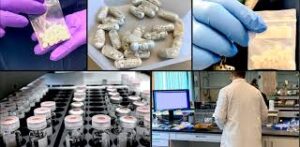
They may appear in illegal powders, heroin mixtures, fentanyl products, or counterfeit prescription pills. A person purchasing what appears to be a familiar medication may have no reliable way to determine its contents by looking at it.
The color, shape, packaging, and markings of a counterfeit pill can imitate those of a genuine medicine. These visual similarities do not establish that a pill is safe.
Some nitazenes may be more potent than fentanyl
Fentanyl is already a powerful opioid. Certain nitazenes can be even more potent, increasing the risk of a life-threatening overdose.
However, it is important not to treat every nitazene as equally powerful. Potency differs across compounds, and comparisons depend on the substance and the evidence being examined.
The main public safety concern remains the same: people cannot reliably judge the strength or composition of an illegal drug.
New variants complicate enforcement
Drug manufacturers may introduce chemically modified substances as authorities target existing compounds.
This creates a continuing challenge for forensic laboratories, law enforcement agencies, and public health officials. Identifying a new substance may require specialized testing, while regulatory and enforcement responses can take time to adapt.
The DEA’s May advisory reported that its laboratories had identified 22 unique nitazene compounds since 2020, with 21 listed as Schedule I controlled substances at the time of the advisory.
These developments demonstrate why monitoring emerging synthetic opioids remains an important part of the national drug response.
Fentanyl Remains a Major Driver of America’s Drug Crisis
Although nitazenes have attracted increasing attention, fentanyl remains a central concern in the American overdose crisis.
Illicit fentanyl is frequently sold as a powder or incorporated into counterfeit pills. It may also be mixed with other drugs, sometimes without the knowledge of the person consuming them.
Because fentanyl is highly potent, even a small amount can cause a fatal overdose under certain circumstances.
The addition of other synthetic substances makes the situation more complicated. Different compounds can affect breathing, consciousness, heart rate, and the body’s response to emergency treatment.
For this reason, authorities warn against assuming that a drug is safe because it looks familiar or resembles a prescription medication.
Why mixed-drug exposure is especially dangerous
Combining potent substances can produce effects that are difficult to predict. Opioids can slow breathing, while sedatives can worsen reduced consciousness and other complications.
A person may become unresponsive quickly. Without immediate assistance, breathing difficulties can lead to oxygen deprivation, permanent injury, or death.
Furthermore, the presence of multiple substances can complicate diagnosis and treatment. Emergency clinicians may need to consider more than one cause of a patient’s symptoms.
The DEA’s warning therefore extends beyond fentanyl alone. It highlights the broader danger created by an illegal drug supply containing several powerful and potentially unknown compounds.
New DEA Warning Highlights Growing Nitazene Concerns
The DEA’s concern about nitazenes is not limited to its national advisory.
On August 25, 2026, the agency’s New Orleans Field Division issued a separate warning following a surge in fatal overdoses involving suspected or confirmed nitazene exposure in Louisiana’s Northshore communities.
The advisory specifically identified St. Tammany, Tangipahoa, and Washington parishes.
According to the DEA, forensic analysis and law enforcement seizures indicated that nitazenes were circulating in the area. Officials warned that these substances could be mixed with fentanyl powder or heroin and pressed into counterfeit prescription pills.
The agency also emphasized that specialized laboratory testing is needed to identify nitazenes reliably.
This regional warning illustrates how an emerging synthetic drug threat can affect individual communities. It also shows why local surveillance, laboratory analysis, and public communication remain essential.
The Louisiana advisory should not be interpreted as proof that every American community is experiencing the same pattern of nitazene exposure. Instead, it provides evidence of a serious regional threat within the broader national synthetic drug crisis.
About the Author