ANDY BARR CHARLES BOOKER: GOP Congressman Slams Democratic Opponent As ‘The Mamdani Of Kentucky’
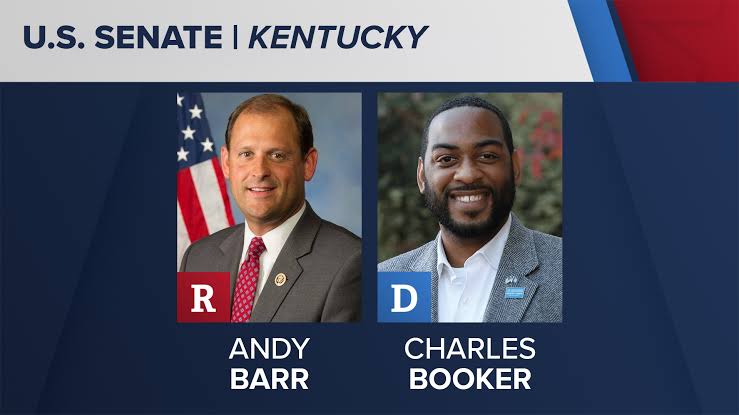
The Kentucky Senate race is attracting growing national attention as Republican candidate Andy Barr sharpens his criticism of Democratic opponent Charles Booker. Barr has branded Booker the “Mamdani of Kentucky,” drawing a comparison between the progressive Democrat and New York City Mayor Zohran Mamdani.
The remark reflects a central Republican strategy in the 2026 election: presenting the contest as a choice between conservative policies and what Barr describes as a growing socialist movement within the Democratic Party.
Barr has repeated the comparison during campaign appearances and media interviews. In an October 11, 2026, interview with Fox News, he criticised Booker’s positions on immigration and healthcare while discussing inflation and Kentucky’s signature bourbon industry.
However, the contest involves more than political labels. Voters are also weighing healthcare costs, household budgets, immigration enforcement and the future of Kentucky’s representation in Washington.
With Republican Senator Mitch McConnell preparing to leave office, the election offers both parties an opportunity to shape the Senate’s future.
Andy Barr intensifies criticism of Charles Booker

Barr’s comparison is part of a broader campaign message designed to connect Booker with the national progressive movement. By invoking Mamdani, Barr is attempting to make the Kentucky contest about more than the candidates’ individual records.
The Republican argues that progressive policies on immigration, healthcare and government spending could have serious consequences for Kentucky. His campaign presents him as a supporter of limited government, border security, tax cuts and private enterprise.
The strategy also reflects a wider political debate over whether Democratic candidates should embrace more ambitious government programs or focus on moderate, locally tailored policies.
For Barr, the Mamdani comparison provides a straightforward way to frame that debate. Instead of discussing each policy separately, he uses a nationally recognisable political figure to suggest that Booker’s approach belongs to the same progressive tradition.
However, the comparison remains a campaign argument rather than an established description of Booker’s political identity.
Who is Charles Booker, and why is Barr targeting him?
Booker is a former member of the Kentucky House of Representatives who represented a Louisville-area district. He previously ran for the U.S. Senate in 2020 and 2022 before securing the Democratic nomination again in 2026.
His campaign has emphasised economic inequality, healthcare affordability and the needs of communities that he believes have received insufficient attention from political leaders.
Booker has also built his political identity around his upbringing in Louisville’s West End. His campaign slogan, “From the Hood to the Holler,” reflects his effort to connect urban communities with rural and working-class voters across Kentucky.
That message offers Democrats an alternative to the traditional political approach in a state where Republicans have enjoyed considerable electoral strength.
Booker argues that rising prices and the cost of essential services affect voters regardless of party affiliation. He has also criticised political corruption and the influence of wealthy donors on public policy.
These positions provide the foundation for his campaign’s argument that Kentucky needs a senator who will prioritise ordinary households.
Barr, by contrast, argues that Booker’s proposed solutions would expand government involvement in ways that could harm economic growth. The disagreement places the candidates on opposite sides of several major policy debates.
Why Zohran Mamdani has become part of the Kentucky campaign
As a democratic socialist, Mamdani is associated with proposals for a more active government role in addressing housing affordability, public services and living costs. His political rise has intensified debates over the future direction of the Democratic Party.
Barr is using that national debate to frame his Kentucky opponent as part of the same ideological movement.
The approach is not new. Republican candidates have frequently associated Democratic opponents with prominent national figures to make complicated policy disagreements easier to communicate to voters.
In Kentucky, the comparison has appeared in campaign messaging and public appearances. Barr used the “Mamdani of Kentucky” label at the Fancy Farm political gathering in August 2026, according to Kentucky Lantern reporting.
The strategy seeks to persuade voters that a Senate vote for Booker would also represent support for a broader progressive agenda.
Yet the comparison has limitations. Mamdani is a New York politician, while Booker is campaigning in a state with a different economic structure, political culture and set of public policy priorities.
Voters must therefore evaluate Booker’s actual proposals rather than assume that the two politicians hold identical views.
Does Charles Booker identify as a democratic socialist?
The distinction between political labels and a candidate’s own identity is important in this race.
Kentucky Lantern reported that Booker does not identify as a democratic socialist, despite Barr repeatedly describing him in those terms. At the Fancy Farm gathering, Booker pushed back against the broader socialist framing used by Republicans.
Booker’s campaign instead emphasises affordability, healthcare, jobs and government accountability.
His published policy platform includes support for Medicare for All, investment in rural healthcare facilities and measures intended to lower living costs. He has also called for stronger action against corruption and greater investment in communities facing economic challenges.
Supporters may see these proposals as practical responses to economic insecurity. Critics may argue that some of them would require too much federal spending or government involvement.
Those disagreements are legitimate subjects for public debate. However, describing a candidate as a socialist does not, by itself, explain how a specific proposal would affect Kentucky families.
For voters, the more useful questions concern costs, funding, implementation and likely outcomes.
Immigration and border security become major campaign issues
Immigration enforcement is another central element of Barr’s criticism.
During his October 11 Fox News appearance, Barr discussed Booker’s position on immigration and argued against policies he considers too permissive. His campaign supports stronger border enforcement, additional resources for border agents and the deportation of immigrants who meet its stated enforcement criteria.
Barr has also criticised positions associated with abolishing Immigration and Customs Enforcement, or ICE. The issue allows him to appeal to voters who prioritise border security and a tougher approach to immigration enforcement.
Booker’s campaign, meanwhile, focuses heavily on economic issues and public services. Immigration is part of the wider political debate, but the available reporting does not establish that every policy attributed to him by Barr accurately reflects Booker’s complete position.
The distinction matters because immigration policy involves several separate questions, including border management, asylum procedures, deportation priorities and the responsibilities of federal agencies.
A campaign slogan can simplify those questions, but it cannot replace a detailed examination of the candidates’ proposals.
Healthcare policy creates another sharp divide
Healthcare is one of the clearest areas of disagreement between Barr and Booker.
Booker supports Medicare for All and has argued that healthcare should be affordable for every Kentuckian. His campaign has also highlighted concerns about Medicaid funding and the financial pressures facing rural hospitals.
According to his published rural healthcare platform, Booker wants to reverse Medicaid cuts he attributes to federal legislation supported by Barr. He has also proposed expanding telemedicine and strengthening investment in rural healthcare workers.
These proposals speak to concerns about access to medical services outside major population centres.
Rural hospitals can play a crucial role in communities where patients may need to travel long distances for emergency treatment or specialist appointments. Healthcare funding can therefore become a practical election issue rather than simply an ideological disagreement.
Barr’s campaign takes a different approach to government spending and economic policy. He argues that conservative policies, economic freedom and reduced regulatory burdens offer a stronger path to prosperity.
The candidates’ competing positions raise important questions about how healthcare should be financed and how federal policy affects hospitals, patients and taxpayers.
Ultimately, voters will have to assess the likely consequences of each approach rather than rely solely on the labels used during campaign appearances.
Cost of living could shape the election
Although ideological disputes generate headlines, household finances remain a major issue in the Kentucky race.
A WLKY report published on October 15, 2026, highlighted the candidates’ differing approaches to reducing living costs. Both campaigns have made affordability a central part of their public arguments, although they disagree about the policies most likely to deliver relief.
Barr’s approach to affordability
Barr argues that increasing energy production, expanding housing supply and supporting private enterprise can reduce costs.
His campaign maintains that lower taxes and policies encouraging investment will help families and businesses. Barr has also highlighted economic development and Kentucky’s potential to attract industries that create jobs.
This approach appeals to voters who believe that expanding supply and reducing regulatory barriers can help control prices.
Booker’s approach to affordability
Booker has focused on rising prices for groceries, fuel, housing and healthcare.
His campaign argues that working families need stronger protections against excessive costs and that government should play a role in addressing economic inequality. His policy platform also highlights small businesses, rural infrastructure and access to essential services.
The competing messages reflect a fundamental disagreement over the causes of high living costs.
Barr places greater emphasis on supply, energy production and economic freedom. Booker emphasises affordability, healthcare access and policies intended to protect households.
Voters may judge both candidates by whether their proposals offer credible, measurable improvements in everyday life.
Why the Senate seat matters nationally
The election has consequences beyond Kentucky because it will determine who occupies the Senate seat being vacated by McConnell.
McConnell has been one of the most influential figures in Republican politics for decades. His departure creates an opportunity for a new senator to influence legislation, judicial confirmations, federal spending and the balance of power in Washington.
Kentucky voters will choose the winner in the November 3, 2026, general election. The winner will serve a six-year term.
Barr is seeking to continue Republican representation, while Booker hopes to win a seat that has long been held by Republicans.
The national stakes explain why the campaign has attracted attention from prominent political figures and national media organisations.
Republicans want to retain control of a seat that could help determine the Senate’s legislative direction. Democrats see an opportunity to challenge that advantage by focusing on economic concerns and dissatisfaction with Washington.
The result will depend on voter turnout, campaign organisation, candidate support and how voters assess the competing messages.
Donald Trump’s support gives Barr a national platform
President Donald Trump endorsed Barr during the Republican primary campaign. That backing reinforces Barr’s connection with the national Republican Party and provides a prominent platform for his campaign message.
Trump’s October 2026 visit to Kentucky also drew attention to the Senate contest and the wider Republican effort ahead of the midterm elections. Reporting from the visit described Trump attacking Democratic candidates while campaigning alongside Republicans.
For Barr, the alliance allows him to present himself as a candidate aligned with the president’s policy priorities.
For Booker, the election offers an opportunity to challenge the Republican agenda by highlighting living costs, healthcare and concerns about political influence.
The endorsement may energise Republican voters, but it does not guarantee the outcome. Election results ultimately depend on how people vote.
Campaign resources and the battle for voter attention
Campaign finances are another important factor in the race.
Barr’s campaign reported a substantial financial advantage over Booker in its October 16 campaign announcement. The figures published by Barr’s campaign stated that he had raised more than $1.5 million in the third quarter and held more than $2.7 million in cash at the end of that reporting period. The same announcement placed Booker’s available cash considerably lower.
Because the figures come partly from campaign-released material, readers should distinguish campaign claims from independently verified financial records.
A financial advantage can help a candidate purchase advertising, employ campaign staff, organise events and reach voters across a large state.
However, money is not the only factor in an election. Candidate credibility, local engagement, political conditions and voter priorities can also influence the result.
Booker’s campaign has attempted to build support through grassroots organising and visits to communities across Kentucky. Barr has relied on his congressional experience, Republican backing and conservative policy message.
Both campaigns must persuade voters that their candidate can represent the state effectively in the Senate.
What voters should consider before Election Day
The “Mamdani of Kentucky” label is likely to remain part of the campaign discussion, but it is only one aspect of the contest.
Voters may wish to compare the candidates across several practical questions:
Healthcare: How would each candidate affect insurance costs, Medicaid and rural hospitals?
The economy: Which proposals offer a credible path to better wages and lower household expenses?
Immigration: What enforcement policies does each candidate support, and how would they be implemented?
Energy: How would their policies affect fuel prices, utility bills and Kentucky industries?
Government accountability: What specific measures would each candidate support to address corruption and political influence?
Federal representation: How would each candidate use a Senate seat to advance Kentucky’s interests?
These questions allow voters to assess specific policies instead of relying on campaign characterisations.
The candidates’ published platforms and independent reporting can help voters understand where they agree, where they differ and what remains uncertain.
Conclusion: Andy Barr’s attack puts ideology at the centre of the race
Andy Barr’s description of Charles Booker as the “Mamdani of Kentucky” has become a prominent feature of the Republican campaign for the open Senate seat.
The comparison links Booker to a wider debate over democratic socialism, government spending and progressive politics. Barr argues that Kentucky needs conservative leadership, stronger border security and policies that encourage economic growth.
Booker, meanwhile, is campaigning on affordability, healthcare, economic inequality and government accountability. He is seeking to convince voters that these issues deserve greater attention from Washington.
The contest is therefore about more than a memorable political label. It is a choice between different approaches to economic policy, public services and federal governance.
As Election Day approaches, voters will have to decide which candidate’s plans best address their concerns and represent Kentucky’s interests.
The “Mamdani of Kentucky” phrase may attract headlines, but the election’s lasting significance will depend on the policies, priorities and representation voters choose.
Frequently asked questions (FAQs)
1. Why did Andy Barr call Charles Booker the “Mamdani of Kentucky”?
Barr used the phrase to associate Booker with progressive politics and the democratic socialist movement linked to New York City Mayor Zohran Mamdani. It is a political criticism used in Barr’s campaign.
2. Who is Charles Booker?
Charles Booker is a former Kentucky state representative and the Democratic nominee
How useful was this post?
Click on a star to rate it!
Average rating 0 / 5. Vote count: 0
No votes so far! Be the first to rate this post.
About the Author

usa5911.com
Administrator
Hi, I’m Gurdeep Singh, a professional content writer from India with over 3 years of experience in the field. I specialize in covering U.S. politics, delivering timely and engaging content tailored specifically for an American audience. Along with my dedicated team, we track and report on all the latest political trends, news, and in-depth analysis shaping the United States today. Our goal is to provide clear, factual, and compelling content that keeps readers informed and engaged with the ever-changing political landscape.