WHITE HOUSE PRESS SECRETARY DEMANDS: Kayleigh McEnany And Ex-Aides React To Katie Zacharia Exit
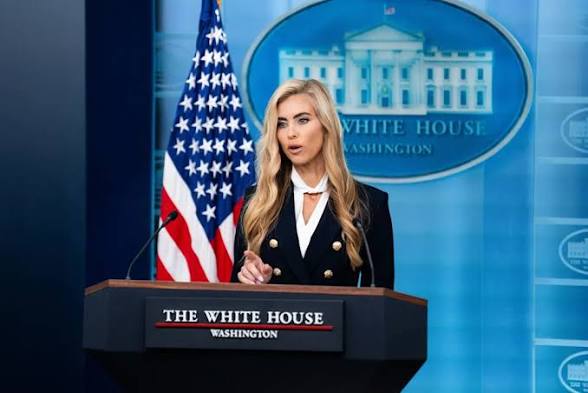
The sudden Katie Zacharia exit from the White House has renewed debate about the intense demands of serving as the president’s press secretary. After just five days in the role, Zacharia departed following a difficult first press briefing, questions about her professional credentials, and President Donald Trump’s public suggestion that she reconsider the position.
The departure has also drawn attention to the experiences of former White House communications officials, including Kayleigh McEnany, who served as press secretary during Trump’s first administration. Their experiences provide useful context for understanding the pressure, preparation, political judgment, and communication skills required to represent a president before the national media.
However, it is important to distinguish confirmed reporting from commentary. Although McEnany has discussed the demands of the job in recent coverage, the available reporting does not establish that she personally demanded Zacharia’s removal. The central question is how the White House press secretary role became the focus of such intense scrutiny after a remarkably short tenure.
What happened to Katie Zacharia?
She began her official duties on October 12 and held her first briefing the following day. The appearance lasted about 14 minutes, and she answered questions from three reporters before ending the session. Her delivery and limited question-and-answer period quickly became subjects of media discussion.
The situation grew more difficult as questions emerged about her professional background and her use of the term “lawyer.” Zacharia confirmed that she had not passed the California bar exam. She defended her description of her legal experience and said she had consulted legal professionals about the terminology she used. She also explained that she had received briefing materials shortly before her first appearance.
On October 16, Trump told reporters that he had encouraged Zacharia to reconsider the role. A senior White House official subsequently confirmed that she was transitioning out of the position. Zacharia later posted a message praising Trump and describing her time working for him as an honor.
Her departure therefore followed several connected developments: a difficult first briefing, scrutiny of her credentials, criticism of her media appearances, and the president’s public expression of doubt about whether she should remain in the job.
Kayleigh McEnany reacts to the Katie Zacharia exit

Former White House press secretary Kayleigh McEnany has offered her perspective on Zacharia’s departure in Fox News coverage published on October 17.
According to the network’s report, McEnany and the Fox & Friends Weekend panel discussed Zacharia’s exit after only five days in the position. McEnany drew on her own experience in the White House briefing room to examine the pressures that accompany the job.
The coverage highlights a central challenge of the press secretary position: the person behind the podium must communicate the administration’s message while responding to unexpected questions, defending policy decisions, and maintaining credibility with reporters.
McEnany held the position during Trump’s first administration, from April 2020 to January 2021. Her experience came during the COVID-19 pandemic, a period marked by intense public scrutiny and frequent questions about government policy.
Although every administration operates differently, the underlying expectations remain similar. A press secretary must understand policy, prepare for difficult questions, coordinate with officials, and communicate accurately under pressure.
McEnany’s perspective is particularly relevant because she has experienced the role directly. However, the published segment description does not establish that she demanded Zacharia’s departure or personally called for her removal. The documented point is that she discussed the exit and the demands of the job.
That distinction matters for accurate reporting. A discussion of the challenges associated with a political appointment is not the same as evidence that a former official helped bring about the appointment holder’s departure.
Why the White House press secretary job is so demanding
The White House press secretary is one of the most visible communications officials in the federal government. The job requires more than reading prepared statements or repeating presidential talking points.
The press secretary must explain decisions, respond to breaking developments, address criticism, and answer questions from journalists representing different political perspectives.
1. Handling unexpected questions
Press briefings rarely follow a completely predictable script. Journalists can ask about foreign policy, immigration, the economy, national security, court decisions, personnel changes, and controversies involving senior officials.
A press secretary must understand enough about each subject to provide an accurate answer or explain when additional information is needed.
Poor preparation can quickly become a headline. A vague response may invite further questions, while an inaccurate statement can damage the administration’s credibility.
2. Communicating under public scrutiny
Every appearance can be reviewed, clipped, shared, and debated online within minutes.
A nervous expression, an unclear answer, or an unexpected pause can become a viral moment. Although presentation is not a substitute for policy knowledge, confidence and clarity can influence how audiences perceive a spokesperson’s performance.
Zacharia’s brief first appearance illustrates how quickly an initial briefing can shape the public conversation surrounding a new appointment.
3. Coordinating with senior officials
The press secretary also needs access to reliable information from policy teams, legal advisers, national security officials, and the president’s senior staff.
This coordination is essential because reporters may ask about developments that are still unfolding. Without timely briefings and clear internal communication, even an experienced spokesperson can struggle to answer questions.
The challenge is especially serious when a new press secretary enters the role with little time to learn internal procedures.
4. Balancing loyalty and accuracy
A White House press secretary is expected to represent the president’s administration. At the same time, the spokesperson must maintain credibility when discussing disputed events or complex policies.
That balance can be difficult. Strong political messaging may satisfy supporters, but reporters will continue asking for evidence, details, and explanations.
A successful spokesperson needs to distinguish between defending an administration’s position and making claims that the available facts do not support.
5. Managing an exhausting schedule
The position can involve early briefings, travel, meetings, interviews, rapid responses to breaking news, and preparation for questions that may arise at any time.
The demands extend beyond the briefing room. A press secretary may need to respond to a major development while traveling or prepare for an interview after a long day of meetings.
This combination of public visibility, political pressure, and a demanding schedule makes the position difficult even for experienced communicators.
Former White House aides weigh in on the controversy
McEnany is not the only former communications figure whose experience offers context for the controversy. The reaction to Zacharia’s debut also included criticism from former officials who have worked with the demands of presidential communications.
Jen Psaki criticizes the first briefing
Former White House press secretary Jen Psaki reacted sharply to Zacharia’s first appearance.
According to reporting on the briefing, Psaki criticized the performance on social media, describing it as resembling a comedy sketch. Her reaction reflected the criticism that Zacharia’s presentation did not meet the expectations associated with the White House podium.
Psaki’s response illustrates how quickly the performance of a new press secretary can become a topic of national political discussion. Former officials understand that the briefing room is not simply a place to deliver prepared remarks. It is also where administrations face direct questions about their decisions.
Kate Bedingfield questions the preparation
Former Biden White House communications director Kate Bedingfield also criticized the rocky debut.
Reporting on the reaction noted that Bedingfield described the briefing as a difficult start and questioned whether Zacharia had sufficient preparation for the role. She emphasized the breadth of issues a press secretary must address and the importance of being ready for extended questioning.
Her concerns point to a practical issue: a press secretary cannot prepare for every possible question, but must have a dependable system for gathering facts, consulting experts, and responding when information is unavailable.
The criticism also raises questions about the transition process. When an administration appoints someone to a high-profile role, it must provide enough time and support for that person to learn the job.
Why former officials’ opinions matter
Former press secretaries and communications directors can provide insight into the demands of the position because they have worked under intense media scrutiny themselves.
However, their opinions should be considered alongside the wider circumstances. A short briefing alone does not establish that someone is incapable of doing the job. Preparation time, access to information, internal support, and the expectations set by senior leadership can all affect performance.
The strongest conclusion is that Zacharia’s debut exposed questions about readiness and preparation. It does not, by itself, establish every reported explanation for her departure.
The legal credentials controversy added pressure
One of the most significant issues surrounding Zacharia’s brief tenure concerned her professional background.
When Trump announced her appointment, he described her as an attorney. Subsequent reporting focused on the fact that she had a law degree but had not passed the California bar exam. Zacharia later addressed the issue in interviews, explaining her legal education and experience while defending her use of the term “lawyer.”
These details require careful distinction. A law degree demonstrates legal education, while authorization to practise law depends on the applicable jurisdiction and professional requirements. The terms “law graduate,” “lawyer,” and “licensed attorney” are not automatically interchangeable in every context.
Zacharia said she had undertaken international transactional legal work and consulted professionals about the terminology she used. She also stated that she would not comment on legal matters in her capacity as press secretary.
The controversy mattered because the press secretary’s credibility is closely linked to public trust. When questions arise about a spokesperson’s qualifications, the administration may face additional questions about how the appointment was vetted.
Nevertheless, the available reporting does not establish that the credentials controversy was the sole reason for Zacharia’s exit. Her short briefing, limited preparation, media criticism, and Trump’s public comments were also part of the wider story.
Trump’s decision to ask Zacharia to reconsider
The president said he had spoken with Zacharia about whether she wanted to continue in the position. He argued that the media had treated her harshly and suggested that she did not need to endure the pressure associated with the job.
Trump also said he wanted her to have a good life and indicated that he would discuss the matter further. Later reporting confirmed that she was transitioning out of the position.
The comments left room for competing interpretations. Supporters could view them as an attempt to protect an appointee from excessive media criticism. Critics could interpret the sequence as evidence that the administration had doubts about her readiness for the role.
Neither interpretation alone explains every aspect of the decision.
What is clear is that the president’s public intervention made the question of Zacharia’s future a national political story. Rather than allowing the communications team to manage the situation privately, the discussion unfolded in front of reporters and audiences across the country.
The episode also demonstrated the importance of presidential confidence. A press secretary needs to communicate the administration’s message, but the role becomes harder when questions arise about whether the president and senior staff fully support the person at the podium.
Why Zacharia’s departure matters for the Trump administration
The Katie Zacharia exit is significant because it happened so soon after her appointment.
The press secretary is responsible for presenting the administration’s positions to journalists and the public. Frequent changes in the role can complicate that task, particularly when a new spokesperson must quickly learn policy details and establish working relationships with reporters.
Zacharia’s departure also followed a period of transition in the communications operation. She had been selected to succeed Karoline Leavitt, who left the role in August 2026.
The abrupt change raises several important questions.
Recruitment: How should the White House assess candidates for a high-pressure communications position?
Preparation: How much time should a new press secretary receive before leading a briefing?
Internal support: What systems are needed to ensure the spokesperson receives accurate, timely information?
Public credibility: How can an administration address concerns about an appointee without intensifying the controversy?
Continuity: Who will communicate policy while the White House considers its next permanent appointment?
These questions extend beyond one person. They concern how a presidential administration manages information, personnel, and public accountability.
Who could replace Katie Zacharia?
As of October 18, 2026, the reporting reviewed for this article does not identify a confirmed permanent successor to Zacharia.
Trump has indicated that he is not in a rush to name a replacement, while coverage of the departure has highlighted the possibility of a transition period.
The next appointment will likely be judged on several factors. First, the candidate will need strong communication skills and a thorough understanding of the administration’s policies. Second, the person will need to handle difficult questions without losing composure. Third, the White House will need to provide sufficient preparation and internal support.
Experience in political communications can be valuable, but it is not the only consideration. A candidate must also be able to distinguish confirmed information from speculation, acknowledge uncertainty when necessary, and maintain a professional relationship with the press corps.
The next press secretary’s first briefing will therefore attract considerable attention. Journalists and political observers will be watching not only the spokesperson’s delivery but also the administration’s approach to transparency, preparation, and accountability.
Until an appointment is officially confirmed, however, names circulating in political discussions should not be presented as the administration’s final choice.
What the controversy reveals about political communication
The episode offers several lessons for anyone studying political communication.
First, preparation matters. A spokesperson needs enough time to understand the administration’s priorities, anticipate difficult questions, and identify the officials who can provide accurate answers.
Second, credibility is essential. A press secretary may face hostile questions, but clear explanations and transparent responses can help maintain trust. Avoiding a question or offering an unclear answer can allow a controversy to grow.
Third, internal support can be as important as individual talent. The White House must ensure that its communications team receives reliable information and understands the president’s expectations.
Finally, public criticism can intensify quickly. A first briefing is only one part of a person’s performance, yet it can shape perceptions before the appointee has time to establish a record.
The experience of former press secretaries such as McEnany provides useful context for understanding these challenges. However, each administration faces different circumstances, and the success of a communications strategy depends on more than one person’s performance.
Conclusion
The Katie Zacharia exit has placed the demands of the White House press secretary position back in the spotlight. Her departure followed a brief tenure, a difficult first briefing, scrutiny of her legal credentials, and Trump’s public suggestion that she reconsider the job.
Kayleigh McEnany and other former White House communications figures have helped bring attention to the pressures of the position. Their reactions highlight the importance of preparation, policy knowledge, credibility, and the ability to answer difficult questions in real time.
At the same time, the available evidence does not show that McEnany demanded Zacharia’s removal. The distinction between commentary and direct involvement remains important.
The next phase will depend on the White House’s approach to staffing and communication. Whether the administration appoints an experienced insider or a new political communicator, the next press secretary will face the same fundamental challenge: explaining presidential decisions clearly while answering questions from a demanding national press corps.
For now, Zacharia’s brief tenure serves as a reminder that one of Washington’s most visible jobs requires more than political loyalty. It also demands preparation, sound judgment, and the ability to perform under constant scrutiny.
Frequently asked questions (FAQs)
1. Why did Katie Zacharia leave the White House press secretary role?
Katie Zacharia left after approximately five days in the position. Her departure followed criticism of her first briefing, scrutiny of her professional credentials, and President Trump’s public suggestion that she reconsider the job.
2. Did Kayleigh McEnany react to Katie Zacharia’s exit?
Yes. McEnany discussed Zacharia’s departure and the challenges of the press secretary role in Fox News coverage published on October 17, 2026.
3. Did Kayleigh McEnany demand that Zacharia be removed?
The available reporting confirms that McEnany discussed the departure, but it does not establish that she demanded Zacharia’s removal.
4. How long did Katie Zacharia serve as press secretary?
Zacharia served for approximately five days before transitioning out of the position, making her tenure exceptionally short.
5. Why was Zacharia’s first briefing controversial?
Her October 13 briefing lasted about 14 minutes and included questions from three reporters. Critics questioned her delivery, preparation, and readiness for the position.
6. What controversy surrounded Katie Zacharia’s legal credentials?
Zacharia has a law degree but confirmed that she did not pass the California bar exam. She defended her use of the term “lawyer” by referring to her education and legal experience.
7. What did Donald Trump say about Zacharia’s departure?
Trump said he had encouraged her to reconsider the job and argued that she had faced harsh media treatment. He also said he wanted her to have a good life.
8. Which former White House aides criticized Zacharia’s first briefing?
Former White House press secretary Jen Psaki and former Biden communications director Kate Bedingfield were among the figures reported to have criticized aspects of Zacharia’s debut.
9. Who will replace Katie Zacharia?
As of October 18, 2026, the sources reviewed for this article do not establish a confirmed permanent successor. The White House has indicated that Trump is not in a rush to name one.
10. Why is the White House press secretary role so demanding?
The position requires policy knowledge, rapid preparation, clear communication, coordination with senior officials, and the ability to answer challenging questions under intense public scrutiny.
How useful was this post?
Click on a star to rate it!
Average rating 0 / 5. Vote count: 0
No votes so far! Be the first to rate this post.
About the Author

usa5911.com
Administrator
Hi, I’m Gurdeep Singh, a professional content writer from India with over 3 years of experience in the field. I specialize in covering U.S. politics, delivering timely and engaging content tailored specifically for an American audience. Along with my dedicated team, we track and report on all the latest political trends, news, and in-depth analysis shaping the United States today. Our goal is to provide clear, factual, and compelling content that keeps readers informed and engaged with the ever-changing political landscape.