ILHAN OMAR CHALLENGES RAID: Legal Team Demands Return Of Seized Evidence, Accuses DOJ Of Unlawful Federal Search
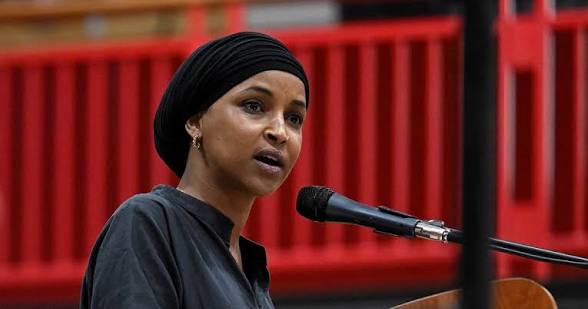
The controversy surrounding Ilhan Omar has intensified following a federal search of her Washington residence and a subsequent demand from her attorneys for the return of seized property. The Minnesota congresswoman’s legal team says the search raises serious questions about how investigators handled the operation and whether they respected safeguards intended to protect her constitutional rights.
According to reports published on October 16 and 17, 2026, attorneys Amy Jeffress and Joshua Matz sent a letter to federal prosecutors challenging the search and requesting the immediate return of the property taken from Omar’s home. They also demanded the preservation of audio and video recordings made during the operation.
The dispute has drawn national attention because Omar is a prominent Democratic lawmaker and a frequent critic of President Donald Trump. It also comes just weeks before the November midterm elections, increasing scrutiny of the timing and handling of the investigation.
However, the allegations made by Omar’s lawyers remain contested. The Justice Department has rejected claims that its investigators violated court orders or legal obligations.
The central question is now whether the search followed the restrictions imposed by the judge, what evidence federal authorities are seeking, and whether Omar’s legal team can obtain the return of the seized materials.
What happened during the federal search of Ilhan Omar’s home?

Federal agents searched Omar’s Washington, D.C., residence on Monday, October 12, 2026. The operation was conducted by Homeland Security Investigations (HSI), the investigative arm of U.S. Immigration and Customs Enforcement, under a search warrant obtained through the Justice Department.
The investigation reportedly concerns allegations involving immigration paperwork from Omar’s childhood and her family’s immigration history. Authorities are examining whether false statements or immigration fraud may have occurred. The precise scope of the investigation remains unclear, and the allegations have not been established in court.
Reports also indicate that investigators seized Omar’s cellphone and passport, along with documents from the residence. More than a dozen grand jury subpoenas were reportedly issued, including subpoenas involving some of her relatives.
These developments have significantly increased the legal and political stakes.
Omar has repeatedly denied wrongdoing and rejected allegations concerning her immigration status. Her attorneys maintain that there is no legitimate basis to suggest she violated laws relating to her citizenship.
The latest dispute, therefore, involves two separate issues: the substance of the federal investigation and the legality of the methods investigators used to gather evidence.
Why Ilhan Omar’s lawyers want the seized evidence returned
Omar’s legal team has asked federal prosecutors to return the property taken during the search. The request forms part of a broader challenge to the investigation and the procedures used by federal agents.
According to reporting by the Associated Press, CBS News and The Washington Post, the attorneys argue that investigators failed to follow important safeguards established by a magistrate judge before the search took place.
Their concerns focus on the following issues.
1. Alleged failure to follow judicial instructions
Omar’s lawyers allege that investigators did not comply with specific instructions intended to protect her legal rights as a sitting member of Congress.
According to their letter, agents were expected to provide a copy of the search warrant and notify the House of Representatives’ Office of General Counsel. The attorneys say those steps were not properly followed.
Such procedures can be important when investigators search a lawmaker’s home because documents or electronic devices may contain information connected to official congressional duties.
However, these claims remain allegations made by the defense. The Justice Department says its attorneys and law enforcement partners complied with the court’s orders and applicable legal obligations.
2. Concerns about congressional privilege
A central issue concerns constitutional protections for legislative work.
Members of Congress have certain protections under the Constitution’s Speech or Debate Clause. These protections help lawmakers carry out their legislative responsibilities without improper interference from the executive branch.
The protections do not provide blanket immunity from criminal investigations. However, they can restrict how investigators access or use certain materials connected to legislative activities.
Omar’s attorneys argue that the procedures established for the search were designed to prevent investigators from improperly reviewing protected congressional materials.
The legal dispute could therefore involve questions about how federal authorities should separate potentially relevant evidence from documents or communications connected to Omar’s official duties.
3. The return of personal property
The demand also concerns the personal property removed from Omar’s residence.
Her cellphone and passport have been identified in reporting about the search. The device may contain personal communications and other information relevant to the investigation, although authorities have not publicly disclosed the full scope of the evidence they are seeking.
A demand for the return of seized property does not automatically mean investigators must surrender it. The outcome depends on the applicable law, the warrant, the status of the investigation and any subsequent court rulings.
Omar’s lawyers are seeking the return of the property while challenging the legality of the search itself.
DOJ rejects allegations of an unlawful search
The Justice Department has strongly disputed the accusations made by Omar’s legal team.
A department spokesperson described the attorneys’ letter as containing false allegations and inaccuracies. The department also maintained that prosecutors and law enforcement partners complied with court orders and legal requirements.
This response is important because the controversy has not yet produced a final judicial determination that the search was unlawful.
Omar’s attorneys say investigators violated judicial safeguards. Federal officials say they followed the law. A court may ultimately need to examine the relevant instructions, the circumstances of the search and the evidence supporting each side’s position.
For readers following the story, it is important to distinguish between an accusation, an official response and a judicial finding.
As of October 18, 2026, the publicly reported dispute centers on the lawyers’ demand for the return of property and their allegations about procedural violations. The Justice Department has rejected those allegations, and no final ruling resolving this specific dispute has been established in the cited reporting.
Why the timing of the raid has become controversial
The timing of the search has become another major source of political debate.
The operation occurred on October 12, only weeks before the November 2026 midterm elections. Omar is seeking reelection, making the investigation especially sensitive in an already polarized political environment.
Her lawyers argue that conducting such a high-profile search so close to an election raises concerns about political interference. They also point to longstanding Justice Department guidance intended to prevent law enforcement actions from improperly influencing elections.
These concerns do not, by themselves, establish that the investigation was politically motivated or legally improper. Instead, they raise questions about whether officials followed the relevant policies and whether the timing could undermine public confidence in the process.
Why election-related investigations receive extra scrutiny
Federal investigations involving political candidates can attract additional scrutiny because even lawful actions may affect public perceptions.
For example, a search involving a prominent candidate may generate widespread headlines before investigators have established whether a crime occurred. That coverage can influence the political debate, even when no charges have been filed.
Justice Department guidance has historically emphasized caution around overt investigative steps that could affect an election. However, the precise application of that guidance depends on the circumstances, and it does not automatically prevent authorities from pursuing legitimate criminal investigations during an election period.
In Omar’s case, her attorneys contend that the timing reinforces their concerns about the investigation. Federal officials, meanwhile, maintain that their actions complied with the law.
The central issue is whether the investigation was conducted according to established procedures, not simply whether it became politically controversial.
What is the federal investigation examining?
Public reporting indicates that investigators are examining possible irregularities involving immigration paperwork connected to Omar’s childhood and her family’s history.
According to Reuters, the inquiry includes allegations relating to false statements and immigration fraud. Reporting also indicates that investigators may be examining whether information provided during earlier immigration or naturalization proceedings was accurate.
Omar arrived in the United States as a child after fleeing Somalia with her family. According to her congressional biography and her attorneys, she became a naturalized U.S. citizen in 2000.
She has repeatedly rejected allegations questioning her immigration history and citizenship. Those allegations have circulated in political debates for years, but their repetition does not establish that they are true.
It is also important to understand that a federal search warrant is not a finding of guilt. Investigators may obtain a warrant to collect evidence relevant to an inquiry, but prosecutors must still establish any criminal charge through the legal process.
Does the investigation mean Omar will lose her citizenship?
Not automatically.
Denaturalization is a separate legal process that involves specific statutory requirements and judicial procedures. An investigation, search warrant or subpoena does not itself revoke citizenship.
Authorities would need to establish a legally sufficient basis for any denaturalization action. The available reporting does not establish that Omar’s citizenship has been revoked or that a court has ruled against her on the allegations under investigation.
Her legal team has strongly disputed the premise of the investigation and maintains that she has not violated laws concerning her citizenship status.
The distinction matters because public discussion can sometimes blur the difference between investigating a possible offense and proving that an offense occurred.
The role of the judge and the search warrant
The search warrant is central to the legal dispute.
Federal authorities generally must establish the required legal basis before a judge or magistrate authorizes a search. The warrant defines the permitted scope of the search, while any additional judicial instructions may impose further conditions.
In Omar’s case, reporting indicates that the magistrate judge raised concerns about protecting congressional privileges before the search was executed. The subsequent disagreement centers partly on whether investigators followed the safeguards established to address those concerns.
Could a court order the return of seized materials?
Potentially, depending on the circumstances and applicable law.
A person whose property has been seized may challenge the search or seek the return of property through the appropriate legal procedures. A court would examine issues such as the validity of the warrant, the government’s continuing need for the materials and whether officials complied with relevant restrictions.
If investigators improperly accessed privileged materials, the court could also consider what remedies are available under the applicable law.
However, the outcome is not predetermined. A demand letter from an attorney is not equivalent to a court order, and the Justice Department’s rejection of the allegations does not settle the matter either.
Further legal filings, official disclosures or a judicial decision may clarify whether the property will be returned and whether any procedural violations occurred.
Why the demand to preserve recordings matters
Omar’s lawyers have also requested that the Justice Department preserve audio and video recordings made during the search.
This request could become significant if the parties disagree about how investigators conducted the operation.
Recordings may help establish when agents arrived, whether they provided the required documentation, what communications took place and whether they followed the judge’s instructions.
The recordings could also help clarify disputed details that are difficult to resolve through competing accounts alone.
Preserving evidence is not the same as proving misconduct. Instead, it helps ensure that potentially relevant information remains available if the court later needs to evaluate the search.
The request reflects the broader strategy of Omar’s legal team: challenge the investigation, seek the return of property and preserve records that could support future legal arguments.
Political reaction and the broader implications
The search has prompted criticism from Democrats and renewed debate over the relationship between federal law enforcement and political power.
Omar has described the investigation as an attempt to target a political opponent. Other Democratic lawmakers have raised concerns about the implications of the operation, particularly given its proximity to the midterm elections.
President Trump has frequently criticized Omar. However, he denied having a role in the October 12 search, saying the matter was up to the Justice Department.
The controversy has consequently become part of a larger national argument about political accountability, prosecutorial independence and equal treatment under the law.
The importance of independent legal review
For the public, the most important question is whether investigators followed the law and whether any alleged violations affected the search or the handling of evidence.
An independent judicial review can help distinguish legitimate law enforcement activity from conduct that violates legal protections.
The same principle applies regardless of political affiliation. Public officials can be investigated when there is a lawful basis to do so, but investigators must respect constitutional protections and court-imposed limits.
Likewise, accusations of political retaliation require evidence and careful examination rather than assumptions based solely on the identities of the people involved.
The current dispute places both principles under scrutiny.
What happens next in the Ilhan Omar raid case?
Several developments could determine the next stage of the case.
First, prosecutors may respond further to the demand for the return of seized property. If the parties cannot resolve the disagreement, Omar’s attorneys could pursue additional legal remedies.
Second, the court may be asked to examine whether investigators complied with the conditions attached to the search warrant. That review could clarify whether the procedures were followed and whether any remedy is appropriate.
Third, the investigation into the underlying immigration allegations may continue. Authorities have not publicly disclosed its full scope, and the existence of an investigation does not establish criminal
How useful was this post?
Click on a star to rate it!
Average rating 0 / 5. Vote count: 0
No votes so far! Be the first to rate this post.
About the Author

usa5911.com
Administrator
Hi, I’m Gurdeep Singh, a professional content writer from India with over 3 years of experience in the field. I specialize in covering U.S. politics, delivering timely and engaging content tailored specifically for an American audience. Along with my dedicated team, we track and report on all the latest political trends, news, and in-depth analysis shaping the United States today. Our goal is to provide clear, factual, and compelling content that keeps readers informed and engaged with the ever-changing political landscape.