BEND OREGON SCHOOL SHOOTING: Armed Civilian Hailed As Hero For Taking Down Active Gunman At Silver Rail Elementary
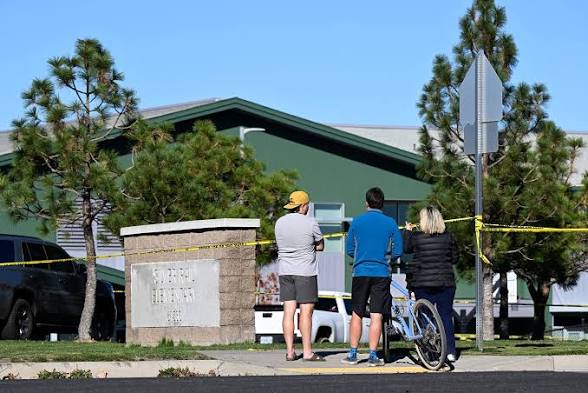
Bend Oregon school shooting: What happened at Silver Rail Elementary?
The Bend Oregon school shooting at Silver Rail Elementary School has left families, educators, and residents of Bend, Oregon, grieving after a deadly attack on October 15, 2026. Authorities reported that four people, including three children and one teacher, were killed. Two other victims, a child and a teacher, were critically injured. The 16-year-old suspected gunman also died.
The tragedy has also drawn national attention to the actions of an armed community member who confronted the attacker before police arrived. Officials praised the intervention, while accounts from witnesses and investigators highlighted the efforts of school staff who also tried to protect children during the attack.
However, the story is about more than one individual’s actions. It is also about the children and teacher who lost their lives, the injured victims, and a community now facing the difficult work of recovery.
This report examines the confirmed timeline, the civilian’s intervention, the response from officials, and the broader questions about school safety raised by the incident.
What we know about the Silver Rail Elementary attack
According to reporting from Oregon Public Broadcasting and information released by local authorities, the incident began shortly before 1 p.m. on Thursday, October 15.
Police received an emergency call at approximately 12:59 p.m. reporting that someone with a long gun had fired at a vehicle near the school. Additional calls then reported that a gunman had entered Silver Rail Elementary. Officers arrived within minutes.
The attack developed rapidly, creating an immediate emergency for students, teachers, and staff.
Authorities said the suspected shooter forced entry through locked doors by firing at them. The attacker then entered the school, where people were trying to protect children and find shelter.
A community member who saw the gunman moving toward the school intervened. Police later confirmed that the suspected shooter was fatally shot by the civilian.
Although the intervention brought the attack to an end, it could not prevent the deaths and injuries that had already occurred.
The investigation remains important for establishing the full sequence of events, the attacker’s motives, and whether any additional warning signs or security failures need to be addressed.
Who is the armed civilian credited with stopping the gunman?
The civilian was identified in media reports as Kaylub Giamanco, a 36-year-old Bend resident and father whose daughters attend Silver Rail Elementary.
According to reporting by CBS News and the Associated Press, Giamanco saw the armed teenager heading toward the school and responded as the danger became clear. He had a legally owned handgun stored in his vehicle. Police said he entered the school, heard gunfire, and confronted the attacker.
His actions have drawn attention because the shooting was unfolding before officers had fully reached and secured the scene.
Oregon Governor Tina Kotek publicly praised the school staff, parents, first responders, and the community member who intervened. Her statement also acknowledged the emotional burden that can follow such an experience.
Giamanco’s family has asked for privacy. In a statement reported by CBS News, the family said he was not seeking recognition and expressed gratitude to emergency responders, school personnel, and members of the community who had offered support.
The family’s request for privacy is significant. While public interest in the intervention is understandable, the people involved in a traumatic event need space to process what happened.
Calling someone a hero is one way people express gratitude for a courageous act. At the same time, the attention should not overshadow the victims or suggest that an armed civilian intervention can guarantee safety in every school emergency.
Teacher’s courage also became part of the story
The accounts emerging from Silver Rail Elementary show that the civilian was not the only person who tried to stop the attack.
According to the Associated Press, a teacher in the classroom attempted to fight back after the gunman entered. She threw a phone at the attacker and then tackled him, trying to stop him from continuing the assault. The armed civilian arrived during the struggle and shot the gunman.
This detail matters because it highlights the role of school employees during an emergency. Teachers are responsible for educating children, but an active-shooter incident can force them into decisions no educator should have to make.
Staff members may have only seconds to react. They must consider where students are located, whether doors can be secured, and how to protect children who cannot quickly evacuate or hide.
The reported actions of the teacher also challenge the idea that the outcome depended on a single person. Multiple people responded to the danger in different ways, while police and emergency personnel rushed to the scene.
Their actions do not erase the devastating loss of life. Nevertheless, they help explain how the emergency unfolded and why officials have praised several members of the school community.
The event also raises questions about the support teachers need after traumatic incidents. Educators who experience violence may require medical care, counselling, paid leave, and sustained assistance when returning to work.
Victims and families face an unimaginable loss
The most painful consequence of the Bend Oregon school shooting is the loss of four lives.
Authorities reported that three children, aged 5, 8, and 11, died alongside a teacher. Another child, aged 7, and a teacher were critically injured and taken to hospital.
The children’s ages make the tragedy particularly difficult for families and residents to comprehend. Elementary school should be a place where children can learn, make friends, and develop confidence in a protected environment.
Instead, families suddenly faced emergency alerts, uncertainty about their children’s safety, and the fear of receiving devastating news.
Parents and relatives gathered at a reunification centre as officials worked to account for students and connect them with their families. Oregon Public Broadcasting reported that hundreds of parents and community members went to Journey Church after the shooting.
These reunification efforts are an important part of emergency management. During a school crisis, authorities must identify who is safe, locate injured people, and prevent confusion as children are released to authorised adults.
For families directly affected by the shooting, however, the practical arrangements are only the beginning of a much longer process.
Those who lost loved ones may face grief, financial pressures, and difficult questions about how to move forward. Injured survivors may need extended treatment and rehabilitation. Children who escaped physical injury may still experience anxiety, nightmares, or fear of returning to school.
The wider community may also need time to process the tragedy. Students, teachers, and parents who were not physically harmed can nevertheless experience significant emotional distress.
How police responded to the emergency
The speed of the emergency response became another important aspect of the investigation.
Bend police received the initial call at approximately 12:59 p.m. on October 15. According to officials, officers arrived around 1:02 p.m., and dispatchers soon received information that the suspected gunman was down.
The short interval illustrates how quickly an active-shooter emergency can unfold.
Police nevertheless had to determine whether other attackers were present, whether additional people were injured, and whether any part of the building remained unsafe. Authorities also had to search the school and account for the people inside.
Emergency responders commonly face difficult conditions during such incidents. They must act quickly while avoiding assumptions that could place additional people at risk.
After the immediate threat ended, the investigation shifted toward documenting the scene, gathering witness accounts, identifying victims, and reconstructing the timeline.
Officials also had to communicate with worried families and provide reliable information to the public.
The response raises several questions that investigators and school administrators may examine:
How quickly did emergency calls reach responding officers?
How did the attacker gain access to the school?
Were existing security procedures followed?
How effectively did staff communicate with students and emergency services?
What support will be available to victims, witnesses, and school employees?
These are questions for a careful investigation, not conclusions that can be drawn from the outcome alone.
Silver Rail Elementary security under scrutiny
The shooting has renewed concerns about how schools protect children from an armed intruder.
According to police reporting, the suspected attacker fired at locked doors to gain entry. That detail is likely to form part of the examination of the school’s physical security and emergency procedures.
Locked doors, visitor controls, emergency alerts, and staff training are all potential parts of a school’s security arrangements. However, no single measure can eliminate every risk.
A locked entrance may delay an intruder, but it cannot guarantee that an attacker will be unable to enter. Security systems must therefore work alongside emergency planning, communication, and training.
Schools can review their preparedness through several practical measures.
1. Review entry points and access controls
School administrators can examine how external doors, windows, visitor entrances, and other access points are secured. They can also review how staff respond when someone attempts to enter without authorisation.
2. Improve emergency communication
Clear instructions help staff understand when to secure classrooms, evacuate, or follow another emergency procedure. Schools should regularly test communication systems and make sure employees know how to report an urgent threat.
3. Train staff for different emergencies
Training should explain the school’s approved procedures in simple, practical terms. Staff members need to know how to receive instructions, protect students, communicate with responders, and reunite children with families after the danger has passed.
4. Prepare age-appropriate guidance for students
Children need guidance that is suitable for their age and individual needs. Schools should avoid creating unnecessary fear while helping students understand how to follow trusted adults’ instructions during emergencies.
5. Support students after a crisis
Safety planning must continue after the immediate emergency ends. Schools should consider counselling, individual support, classroom discussions led by trained professionals, and gradual return-to-school arrangements when necessary.
The key lesson is that school safety requires ongoing evaluation. Officials must examine the evidence from the Silver Rail Elementary attack before deciding which changes are necessary.
The suspected gunman and the ongoing investigation
Authorities identified the suspected shooter as a 16-year-old former student, according to reporting published after the attack. The investigation has focused on the events leading up to the shooting and how the teenager entered the building.
The fact that the suspect was a teenager raises difficult questions, but age alone does not explain why someone commits violence.
Investigators may examine the suspect’s background, access to the weapon, recent activities, communications, and any relevant evidence that could help establish a motive. Findings must be based on verified information rather than speculation or assumptions about mental health, family circumstances, or personal relationships.
It is also important to distinguish between information released by law enforcement and claims circulating on social media. Early reports during a fast-moving emergency can be incomplete or contradictory.
A reliable account should make clear which details have been confirmed, which remain under investigation, and which have not been established.
As the investigation progresses, authorities may provide additional information about the weapon, the timeline, and the circumstances surrounding the attack. Any conclusions should be reported in the context of official statements and corroborated reporting.
How useful was this post?
Click on a star to rate it!
Average rating 0 / 5. Vote count: 0
No votes so far! Be the first to rate this post.
About the Author

usa5911.com
Administrator
Hi, I’m Gurdeep Singh, a professional content writer from India with over 3 years of experience in the field. I specialize in covering U.S. politics, delivering timely and engaging content tailored specifically for an American audience. Along with my dedicated team, we track and report on all the latest political trends, news, and in-depth analysis shaping the United States today. Our goal is to provide clear, factual, and compelling content that keeps readers informed and engaged with the ever-changing political landscape.