Jesse Watters SLAMS Democrats’ Hollywood Push: “This Is Surrendering to the Machine”
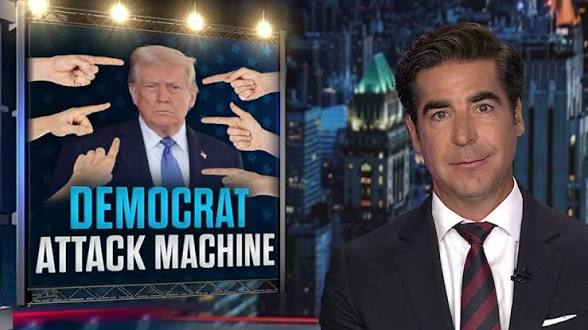
Jesse Watters is taking aim at Democrats’ growing reliance on Hollywood celebrities and entertainment figures as the 2026 midterm elections approach.
During his Fox News program, “Jesse Watters Primetime,” Watters criticized what he portrayed as a Democratic strategy centered on famous entertainers, political celebrities and major cultural figures. His comments came as Democrats highlighted high-profile entertainment personalities in their political messaging and campaign events.
Fox News described Watters’ segment as an analysis of Democrats “renting out Hollywood” as part of their final midterm push.
The Fox host’s criticism focused on whether celebrity endorsements can translate into votes. Watters argued that Democrats are turning to familiar Hollywood names instead of concentrating on issues that directly affect voters.
The debate also followed the Power to the People Festival in Maryland, an event curated by Rage Against the Machine guitarist Tom Morello. According to reporting, Watters mocked several celebrities associated with the event, including Mark Ruffalo and Robert De Niro, while using the phrase “Surrendering to the Machine” in his criticism of Morello.
Jesse Watters Targets Democrats’ Hollywood Strategy
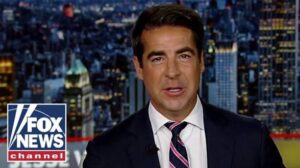
Watters’ central argument was straightforward: Democrats are increasingly using Hollywood as a political megaphone.
On October 6, Fox News published a clip from Jesse Watters Primetime describing his discussion as an analysis of Democrats using Hollywood during the final stretch of the midterm campaign.
The timing is important.
With the 2026 midterm elections approaching, both parties are looking for ways to energize voters, increase turnout and dominate the political conversation.
For Democrats, celebrities can provide something traditional campaign advertisements cannot always deliver: immediate attention.
Actors, musicians and other entertainment figures already have enormous audiences. Their social-media accounts can reach millions of people without requiring a campaign to build the audience from scratch.
Watters, however, questioned whether that attention represents genuine political strength.
His criticism suggests that celebrity involvement can become a substitute for a broader political message rather than an extension of one.
That distinction is at the heart of the controversy.
“Surrendering to the Machine” Becomes the Flashpoint
The phrase at the center of the controversy is particularly notable because of its connection to Tom Morello.
Morello is the guitarist of Rage Against the Machine and has long been associated with progressive political activism. The Power to the People Festival, which he curated, brought together entertainment personalities and political voices.
Watters used the event as evidence for his broader argument about the relationship between Democrats and Hollywood.
Reporting on the segment said Watters mocked Mark Ruffalo’s speech and made jokes about Robert De Niro. He also referred to Morello as “Surrendering to the Machine,” turning the musician’s famous band name into a political punchline.
The criticism fits into a larger culture-war argument frequently made by conservative commentators: that Hollywood has become overwhelmingly aligned with progressive politics.
For Watters, the issue is not simply that celebrities support Democrats.
Instead, he appears to be questioning whether Democrats are overly dependent on celebrity culture to connect with voters.
Why Hollywood Matters in the 2026 Midterms
Celebrity politics is nothing new in the United States.
Presidential candidates have used actors, musicians and other public figures for decades. Celebrity endorsements can generate headlines, attract younger voters and create viral moments.
However, the strategy can also produce political backlash.
A celebrity may have millions of followers, but that does not automatically mean those followers will vote for the candidate being promoted.
This creates a difficult calculation for campaigns.
A famous endorsement can produce enormous media attention. At the same time, it can reinforce the perception that a political party is disconnected from ordinary voters.
That is the argument Watters is making.
His criticism is essentially that voters care about practical issues such as the economy, inflation, jobs, public safety and government performance more than the opinions of famous entertainers.
Whether that argument is correct is ultimately a question for voters.
But it explains why Hollywood has become an increasingly important battlefield in the political culture war.
The Power to the People Festival Draws Watters’ Attention
The Power to the People Festival became a major part of Watters’ criticism.
The event was held at the Merriweather Post Pavilion in Columbia, Maryland, and was curated by Morello. Reporting said the festival featured political and entertainment personalities, giving Watters a prominent target for his criticism of Democratic-aligned celebrity culture.
Watters reportedly spent significant time discussing the event on his October 5 program.
The segment also included references to Mark Ruffalo and Robert De Niro.
According to reporting, Watters spent nearly 13 minutes discussing the festival and associated personalities, while later giving relatively brief attention to a Trump rally. That imbalance itself became a separate point of discussion among some Fox News viewers.
Some viewers criticized Watters for spending so much airtime discussing Democratic-aligned celebrities.
Others defended his approach, arguing that the cultural battle itself is politically significant.
That disagreement illustrates how polarized political media has become.
Watters Says Democrats Are Betting on Famous Names
One of Watters’ broader arguments is that Democrats are attempting to turn celebrity recognition into political momentum.
The strategy has obvious advantages.
A famous actor or musician can instantly attract media coverage. A major concert can generate social-media clips. A celebrity speech can become a headline.
Campaigns can also use entertainment personalities to reach audiences who may not regularly watch political programming.
Yet celebrity politics has a weakness.
It can make an election about personalities rather than policy.
That is precisely where conservative critics like Watters see an opportunity.
If voters believe politicians are more interested in celebrities than everyday concerns, a campaign can lose credibility.
However, Democrats could make the opposite argument.
They can say that musicians, actors and other public figures are also citizens and voters. Their political participation is no different in principle from that of business leaders, athletes, activists or other influential Americans.
That disagreement is unlikely to disappear before Election Day.
Hollywood and the Long-Running Culture War
The fight over Hollywood is not new.
For years, conservative politicians and commentators have accused the entertainment industry of promoting progressive values.
Hollywood figures, meanwhile, have frequently argued that conservative criticism attempts to silence political expression.
The relationship between entertainment and politics is complicated.
Movies, television programs, music and celebrity culture can influence public conversations. But influence is difficult to measure.
A celebrity may change the political preferences of some followers while having no effect on others.
In some cases, a celebrity endorsement can even motivate opponents.
That makes celebrity politics a double-edged sword.
Watters’ criticism therefore reflects a larger question: Can celebrity power actually win elections?
The answer depends on the candidate, the issue and the audience.
The Springsteen Factor
Watters’ October 6 monologue also focused heavily on Bruce Springsteen.
Fox News Radio summarized the segment by saying Watters characterized Democrats’ closing argument as a Springsteen concert and argued that the left was using millionaire rock stars to attack President Donald Trump.
That framing illustrates the central theme of Watters’ argument.
Rather than seeing celebrity involvement as an ordinary part of campaigning, he presents it as evidence of a political movement leaning heavily on entertainment culture.
Springsteen is particularly significant because he is one of America’s most recognizable musicians and has openly engaged in political debates.
His political appearances can therefore generate substantial attention.
For Watters, however, the question is whether that attention translates into electoral support.
Democrats Face a Different Political Challenge
Democrats are not the only party attempting to use culture and popular personalities to influence voters.
Republicans also rely on political commentators, musicians, athletes, online influencers and conservative media personalities.
The difference is largely about which cultural networks each party can activate.
Democrats have historically maintained strong relationships with major entertainment industries.
Republicans have built their own alternative media ecosystem, including podcasts, online personalities, conservative commentators and independent creators.
The result is a political environment where culture and politics are increasingly intertwined.
Watters’ criticism therefore speaks to a much bigger trend than one festival or one television segment.
Why Celebrity Endorsements Can Help Candidates
There are several reasons political campaigns continue to pursue celebrity endorsements.
1. Celebrities Reach Large Audiences
A popular musician or actor may have millions of followers across social-media platforms.
That gives campaigns access to potential voters without relying entirely on traditional advertising.
2. Celebrities Generate News
A celebrity appearance can produce headlines that ordinary campaign events may not generate.
That can increase a candidate’s visibility.
3. Celebrities Can Mobilize Younger Voters
Younger Americans often consume political information through social media and entertainment platforms.
A celebrity may therefore reach people who rarely watch political news.
4. Events Can Create Energy
Concerts and festivals can create an atmosphere that traditional political rallies sometimes lack.
Campaigns may hope that excitement will encourage supporters to register, volunteer or vote.
Why the Strategy Can Backfire
The same strategy has risks.
First, some voters dislike celebrity political activism.
Second, a celebrity may become the story instead of the candidate.
Third, political endorsements can intensify partisan divisions.
Finally, voters may question whether entertainers understand the policy issues they are discussing.
That criticism has become a familiar feature of American politics.
Watters’ argument is built around these vulnerabilities.
He is effectively challenging Democrats to explain why voters should treat Hollywood endorsements as meaningful evidence of political leadership.
Watters’ Broader Midterm Message
The Hollywood segment also fits into a broader pattern in Watters’ political commentary.
In previous discussions, he has criticized Democrats for what he sees as a lack of a clear political agenda. Fox News previously aired a segment in which Watters argued that Democrats did not know what they stood for, while other commentators have debated the party’s direction and progressive influence.
That context matters.
The Hollywood criticism is not simply about actors and musicians.
It is part of a broader argument about Democratic messaging.
Watters is suggesting that cultural politics, celebrity endorsements and anti-Trump rhetoric cannot replace a clear policy agenda.
Democrats, naturally, may reject that characterization.
They can point to their own policy priorities and argue that celebrity participation is simply another method of reaching voters.
The 2026 election will provide the ultimate test.
Will Hollywood Influence the Midterm Vote?
It is difficult to predict how much influence Hollywood will have on the 2026 midterms.
Political campaigns rarely succeed or fail because of one endorsement.
Voters usually make decisions based on multiple factors, including the economy, leadership, local candidates, national events, party identification and personal concerns.
Celebrity endorsements are therefore better understood as one component of a larger political strategy.
For Democrats, Hollywood provides access to enormous cultural influence.
For Republicans, criticizing Hollywood provides an opportunity to portray Democrats as elitist or disconnected.
Both strategies can motivate supporters.
Both can also alienate voters.
Social Media Has Changed the Equation
The political power of Hollywood has also changed because celebrities no longer depend entirely on traditional television networks or newspapers.
Instagram, TikTok, YouTube, X and other platforms allow public figures to communicate directly with followers.
That means a celebrity endorsement can become a political advertisement, fundraising appeal and campaign speech at the same time.
It also means political arguments can spread much faster.
A short clip from a celebrity speech can reach millions of people within hours.
Watters’ own television clips operate within this same ecosystem.
His criticism of Hollywood can itself become viral content, reaching audiences far beyond Fox News.
That creates an interesting paradox.
The more conservative commentators criticize celebrity-driven politics, the more attention the celebrity controversy can receive.
The Bigger Battle Is Over Cultural Influence
Ultimately, the dispute between Jesse Watters and Democratic-aligned Hollywood figures is about more than a campaign event.
It is a battle over who gets to define American culture.
Hollywood has enormous cultural influence.
Conservative media has enormous political influence.
Social-media personalities increasingly have both.
Political parties understand that elections are no longer fought exclusively through policy speeches and television advertisements.
They are fought through podcasts, entertainment, social media, concerts, viral videos and cultural symbolism.
That reality makes Watters’ criticism part of a much larger political transformation.
What Happens Next?
As the 2026 midterm campaign continues, both parties will likely increase their efforts to reach voters through unconventional channels.
Democrats can be expected to continue using cultural figures who share their political views.
Republicans will likely continue attacking Hollywood’s progressive influence while promoting their own media personalities and supporters.
The effectiveness of either approach will ultimately depend on turnout.
If celebrity-backed events motivate people to vote, Democrats can argue that Hollywood remains a valuable political asset.
If voters largely ignore celebrity messaging and focus on economic or policy concerns, Watters’ argument may gain strength.
For now, the dispute remains firmly embedded in the broader culture war.
Conclusion
Jesse Watters’ attack on Democrats’ Hollywood strategy has opened another front in the 2026 midterm political battle.
His argument is that Democrats are relying too heavily on celebrities, musicians and entertainment figures rather than focusing on issues that matter to ordinary voters. Fox News described his recent coverage as an examination of Democrats’ use of Hollywood during the final midterm push.
The Power to the People Festival, Tom Morello, Mark Ruffalo, Robert De Niro and Bruce Springsteen all became part of that discussion.
Whether Hollywood can deliver votes remains uncertain.
Celebrity endorsements can generate enormous attention, but attention is not the same as electoral support.
As Election Day approaches, both parties will have to answer the same fundamental question: Can cultural influence actually translate into political power?
Watters clearly believes Democrats are taking a major risk by putting Hollywood at the center of their campaign strategy.
The voters will ultimately decide whether that criticism sticks.
FAQs
1. What did Jesse Watters say about Democrats and Hollywood?
Jesse Watters criticized Democrats for relying heavily on Hollywood celebrities and entertainment figures during their 2026 midterm campaign push. Fox News described his segment as an analysis of Democrats “renting out Hollywood.”
2. What does “surrendering to the machine” refer to?
The phrase was used in Watters’ criticism of Tom Morello and the broader Hollywood-linked political movement. Reporting connected the phrase to Watters’ discussion of the Power to the People Festival and Morello’s involvement.
3. Who organized the Power to the People Festival?
The festival was curated by Tom Morello, the guitarist of Rage Against the Machine, and was held at the Merriweather Post Pavilion in Columbia, Maryland.
4. Why does Jesse Watters criticize Hollywood’s political influence?
Watters argues that celebrity endorsements do not necessarily address the practical issues voters care about and can allow political parties to focus on personalities instead of policy.
5. Did Jesse Watters discuss Bruce Springsteen?
Yes. Fox News Radio’s summary of Watters’ October 6 monologue said he framed Democrats’ closing argument around a Springsteen concert and criticized the use of millionaire rock stars in political messaging.
6. Can celebrity endorsements influence elections?
Celebrity endorsements can increase visibility, attract media coverage and mobilize supporters. However, their actual effect on voting behavior varies and is difficult to measure.
7. Is Hollywood politically influential?
Hollywood remains culturally influential, but its ability to directly determine election outcomes is much less certain. Voters consider many factors beyond celebrity endorsements.
8. What is the main point of Watters’ criticism?
His central argument is that Democrats should focus on policies and voter concerns rather than relying heavily on famous entertainment figures to generate political momentum.
9. When did Watters discuss the Hollywood push?
Fox News published clips from his coverage on October 6, 2026, while reporting also documented his October 5 discussion of the Power to the People Festival.
10. What could determine whether the strategy succeeds?
Voter turnout, economic conditions, candidate popularity, campaign messaging and major political issues will likely matter more broadly than any individual celebrity endorsement.
How useful was this post?
Click on a star to rate it!
Average rating 0 / 5. Vote count: 0
No votes so far! Be the first to rate this post.
About the Author

usa5911.com
Administrator
Hi, I’m Gurdeep Singh, a professional content writer from India with over 3 years of experience in the field. I specialize in covering U.S. politics, delivering timely and engaging content tailored specifically for an American audience. Along with my dedicated team, we track and report on all the latest political trends, news, and in-depth analysis shaping the United States today. Our goal is to provide clear, factual, and compelling content that keeps readers informed and engaged with the ever-changing political landscape.