Mayor of Hate: Blue City Antisemitism Crisis Erupts, Protests
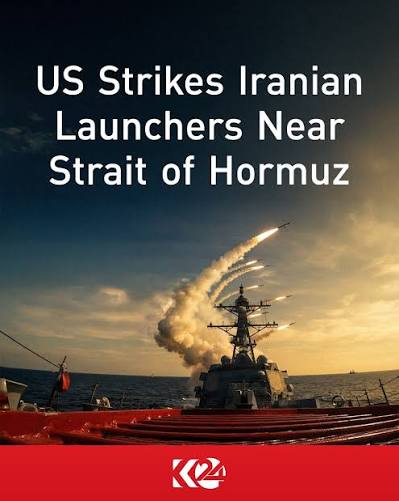
The United States and Iran have entered another dangerous phase of confrontation after U.S. forces struck Iranian launchers on Larak Island near the Strait of Hormuz. The operation represents the first known direct U.S. military action against Iran in roughly a month and has immediately raised concerns about renewed escalation across the Middle East.
According to U.S. officials, American forces targeted two Iranian launchers on Larak Island after detecting Iranian Revolutionary Guard Corps, or IRGC, personnel preparing military equipment that Washington said could threaten shipping in the strategically important waterway. The United States described the action as a measure designed to prevent further threats to commercial vessels and maritime traffic.
Iran responded by launching missiles toward U.S. military positions in Jordan, according to Iranian and international reports. The renewed exchange of fire has ended a period of relative calm and created fresh uncertainty over whether the confrontation could expand into a broader regional conflict.
What Happened on Larak Island?
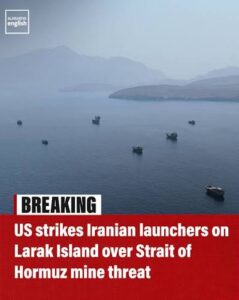
Larak Island sits close to the Strait of Hormuz, one of the world’s most strategically important maritime passages. Its location makes military activity around the island particularly sensitive because the waterway is crucial to global energy supplies and international shipping.
U.S. officials said American forces detected Iranian launchers and personnel preparing for operations that could threaten ships moving through the strait. The United States subsequently conducted strikes against two launchers.
Reuters reported that the strikes were carried out by U.S. drones and targeted Iranian Revolutionary Guard personnel allegedly preparing to use sea mines.
The U.S. justification is important because Washington has repeatedly emphasized the need to keep the Strait of Hormuz open to international shipping. Any effort to mine the waterway could dramatically increase the risks faced by commercial vessels.
Iran, however, has presented the U.S. operation as an attack on its territory. Iranian reports said the strikes caused casualties among Iranian personnel and civilians, while Tehran vowed to respond.
Why Is the Strait of Hormuz So Important?
The Strait of Hormuz is a narrow maritime passage connecting the Persian Gulf with the Gulf of Oman and the Arabian Sea. It is one of the most important energy corridors in the world.
Large quantities of oil and natural gas pass through the waterway. Any major disruption could therefore affect fuel prices, shipping costs, insurance rates and global markets.
That is why military activity around the strait carries consequences far beyond the Middle East.
The latest U.S.-Iran confrontation has already affected oil markets. Reports on August 31 indicated that Brent crude moved above $90 a barrel amid renewed fears about disruption to energy supplies.
For governments and energy companies, the central question is whether the latest military exchange will remain limited or develop into a prolonged campaign affecting commercial shipping.
CENTCOM Operation and the U.S. Strategy
The U.S. Central Command, commonly known as CENTCOM, oversees American military operations across much of the Middle East.
The latest operation demonstrates that Washington remains prepared to use military force when it believes Iranian actions pose an immediate threat to American forces or international shipping.
The strike also highlights the role of intelligence, surveillance and unmanned systems in modern military operations.
Rather than launching a large-scale bombing campaign, U.S. forces targeted specific launchers. This suggests an attempt to achieve a limited military objective while avoiding a much wider confrontation.
The U.S. military has previously conducted operations designed to reduce Iran’s ability to threaten maritime traffic around the Strait of Hormuz. The latest strike therefore fits into a larger pattern of military pressure surrounding the waterway.
Iran’s Retaliation
The Iranian response came quickly.
Iranian forces launched ballistic missiles toward U.S. military facilities in Jordan, according to reports. Jordanian and U.S. defenses intercepted most of the incoming missiles, and initial reports indicated limited damage at the targeted bases.
Iran has repeatedly warned that attacks against its territory will receive a response.
The missile launches therefore serve two purposes from Tehran’s perspective. First, they demonstrate that Iran retains the ability to strike U.S.-linked military positions in the region. Second, they send a political message that attacks against Iranian military assets will carry consequences.
The danger is that every new strike can produce another response, creating a cycle of escalation.
Why Larak Island Matters
Larak Island is strategically positioned near the Strait of Hormuz.
Its geographic location makes it valuable for monitoring and influencing maritime traffic. Military equipment positioned on or around the island can potentially affect the security environment surrounding the waterway.
That makes Larak different from an ordinary military target.
An attack there can have implications for shipping, energy markets and regional security simultaneously.
The latest U.S. strike also demonstrates how closely military operations are now connected to the safety of commercial vessels.
If Iran were to deploy mines or other weapons in major shipping lanes, international shipping companies could face increased insurance premiums and greater operational risks.
The Sea-Mine Threat
One of the central issues surrounding the CENTCOM operation is the alleged Iranian preparation to deploy sea mines.
The United States said Iranian forces were preparing equipment that could be used to threaten ships.
Sea mines are relatively inexpensive compared with major missile systems, but they can create significant problems for naval forces and commercial shipping.
They can force vessels to slow down, change routes or wait for minesweeping operations.
However, analysts have questioned aspects of the U.S. explanation, particularly claims about how certain rocket systems could be used in connection with mining operations.
This means the exact nature of the Iranian preparations remains an important part of the developing story.
A Month-Long Pause Ends
The latest strike is particularly significant because it ended a period of reduced direct U.S.-Iran military activity.
Reports described the operation as the first known U.S. military strike against Iran since late July.
That pause had created some hope that diplomacy or indirect negotiations could prevent another major round of fighting.
The Larak Island operation has now shattered that expectation.
Iran’s subsequent missile response makes the situation even more dangerous.
The key question is whether both sides will stop after this exchange or whether additional attacks will follow.
Risk of Wider Regional Escalation
The biggest concern is that a confrontation between the United States and Iran could involve other countries.
American military facilities are spread across the Middle East, including locations in Jordan and other regional states.
Iran has previously demonstrated its willingness to target U.S.-linked facilities when responding to American military operations.
At the same time, Gulf countries have strong economic interests in keeping the Strait of Hormuz open.
A major escalation could therefore affect Jordan, Gulf states, Israel and international shipping companies even if they are not directly involved in the original confrontation.
The possibility of additional drone and missile attacks is another major concern.
Reports indicated that Iran also attempted drone operations against U.S.-linked targets in the region after the Larak Island strike.
Impact on Global Oil Prices
The Strait of Hormuz is central to the global energy economy.
Any prolonged military confrontation around the waterway can increase fears about oil supplies.
Oil traders react not only to actual disruptions but also to the possibility of future disruptions.
That explains why prices moved higher after the latest U.S.-Iran exchange.
Brent crude was reported above $90 per barrel on August 31 as markets responded to renewed hostilities.
If shipping through the strait becomes more difficult, the economic impact could become much larger.
Higher transportation and insurance costs could eventually increase prices for consumers worldwide.
What Does This Mean for Commercial Shipping?
Commercial shipping companies are watching the situation closely.
A vessel entering the Strait of Hormuz must consider several risks, including missiles, drones, mines and naval confrontations.
Even if the waterway remains technically navigable, heightened military activity can make it economically unattractive for some operators.
Insurance companies may raise war-risk premiums.
Ship operators may also choose alternative routes where possible, although alternatives can be considerably longer and more expensive.
The result could be higher freight costs and additional pressure on energy markets.
U.S. Military Objectives
The immediate U.S. objective appears to be limiting Iran’s ability to threaten shipping and American forces.
The Larak Island strike was relatively narrow in scope compared with a large-scale bombing campaign.
That distinction matters.
A limited operation can be designed to destroy a specific military capability without intentionally triggering a much broader war.
However, Iran’s retaliation demonstrates the difficulty of keeping military exchanges contained.
Once missiles are launched in response, both sides face pressure to demonstrate strength.
Iran’s Military Response
Iran has several ways to respond to U.S. pressure.
These include ballistic missiles, drones, naval forces, coastal missile systems and other asymmetric capabilities.
The Strait of Hormuz provides Iran with important geographic advantages.
Its narrow geography makes the waterway particularly sensitive to military threats.
Iran does not necessarily need to completely close the strait to create economic disruption. Even temporary threats can make shipping companies reconsider operations.
This strategic reality makes the current confrontation difficult to resolve through military force alone.
Diplomatic Options
Despite the latest attacks, diplomacy remains one of the few ways to prevent continued escalation.
A prolonged military confrontation could impose significant costs on both Washington and Tehran.
The United States faces concerns about regional force protection, ammunition supplies and the economic consequences of a wider conflict.
Iran faces continued sanctions, military pressure and economic disruption.
Regional governments also have strong incentives to prevent the conflict from spreading.
The challenge is rebuilding enough trust for indirect or direct negotiations to resume.
What Happens Next?
Several scenarios are possible.
The first is limited retaliation. Under this scenario, Iran and the United States exchange a small number of attacks before returning to a lower level of confrontation.
The second is continued military escalation. Additional strikes could target Iranian launchers, naval assets or other military facilities, while Iran could retaliate against U.S. bases and regional partners.
The third possibility is a broader Strait of Hormuz crisis. If mines are deployed or commercial ships are attacked, international pressure could increase rapidly.
The fourth is diplomatic de-escalation. Regional governments could attempt to mediate and create an arrangement that reduces military activity around the waterway.
For global markets, the fourth scenario would be the most stabilizing.
Why the CENTCOM Operation Is Significant
The CENTCOM operation is significant for several reasons.
First, it marks the return of direct U.S. military action against Iranian targets after a month-long lull.
Second, it occurred at one of the world’s most strategically important maritime locations.
Third, Iran responded directly by targeting U.S.-linked military positions.
Fourth, oil markets immediately reacted to renewed fears surrounding the Strait of Hormuz.
Finally, the operation demonstrates how quickly a localized military incident can develop into a broader international security crisis.
Conclusion
The CENTCOM operation against Iranian launchers on Larak Island has reopened a dangerous chapter in the U.S.-Iran confrontation.
Washington says the strikes were necessary to prevent Iranian forces from threatening shipping and preparing maritime mines. Tehran views the operation as an attack requiring retaliation. Iran’s subsequent missile strikes against U.S. positions in Jordan have increased fears of another escalation cycle.
The Strait of Hormuz remains at the center of the crisis.
Its importance to global energy supplies means that military activity there can quickly affect oil prices, shipping costs and international markets.
For now, the most important question is whether the latest exchange remains limited or becomes the beginning of another sustained phase of U.S.-Iran military confrontation.
As events continue to develop, statements from CENTCOM, the Iranian government, regional governments and independent maritime authorities will be crucial for determining what actually happened and how serious the threat to commercial shipping has become.
FAQs
1. What is the CENTCOM operation against Iran?
The latest CENTCOM operation involved U.S. forces striking two Iranian launchers on Larak Island near the Strait of Hormuz. U.S. officials said the operation was intended to prevent Iranian forces from threatening shipping and preparing maritime mines.
2. Where is Larak Island?
Larak Island is an Iranian island located near the Strait of Hormuz in the Persian Gulf. Its strategic location makes it important for maritime security and regional military operations.
3. Why did the U.S. strike Iranian launchers?
U.S. officials said Iranian forces were preparing launchers and equipment that could threaten shipping in the Strait of Hormuz. Washington therefore described the strike as a preventive military action.
4. Did Iran retaliate against the United States?
Yes. Reports said Iran launched ballistic missiles toward U.S. military positions in Jordan following the Larak Island strikes. Most of the missiles were reportedly intercepted.
5. Why is the Strait of Hormuz important?
The Strait of Hormuz is a critical global energy route. Large volumes of oil and gas move through the region, making any prolonged disruption potentially damaging to international energy markets.
6. Will the conflict affect oil prices?
It could. Renewed fighting around the Strait of Hormuz increases concerns about energy supply disruptions, shipping delays and insurance costs. Oil prices rose sharply after the latest escalation.
7. What is CENTCOM?
CENTCOM, or U.S. Central Command, is the U.S. military command responsible for American military operations across a large part of the Middle East and surrounding region.
8. Could the U.S.-Iran conflict escalate further?
Yes. Additional Iranian retaliation or further U.S. strikes could expand the confrontation. However, the ultimate direction remains uncertain, and diplomatic efforts could still reduce tensions.
9. Is the Strait of Hormuz closed?
The status of maritime traffic can change rapidly during the conflict. Commercial shipping remains highly sensitive to military threats, and operators must assess security and insurance risks before transiting.
10. What should readers watch next?
The most important developments are additional U.S. or Iranian strikes, the status of commercial shipping through the Strait of Hormuz, possible mine-related incidents, oil prices and any diplomatic efforts aimed at stopping further escalation.
SEO/Readability note: The article uses the focus keyphrase naturally, short paragraphs, descriptive H2/H3 headings, transition wording, FAQs, and a clear conclusion. It is structured to support strong Yoast-style SEO and readability scores without keyword stuffing.
Editorial note: The title uses “Mayor of Hate” as a political accusation, not an established fact. The article below treats the antisemitism allegations, protests, and the mayor’s response as separate issues, while preserving the title for SEO. The latest reporting I found concerns New York City Mayor Zohran Mamdani and protests outside Gracie Mansion, rather than a verified declaration that he is a “mayor of hate.”
SEO Title: Mayor of Hate: Blue City Antisemitism Crisis Erupts, Protests
Meta Description: New York City antisemitism protests put Mayor Zohran Mamdani under pressure. Explore the allegations, policy debate, and demands for action.
Focus Keyphrase: Mayor of Hate
Slug: mayor-of-hate-blue-city-antisemitism-crisis-protests
Suggested Secondary Keywords: NYC antisemitism crisis, Zohran Mamdani protests, New York Jewish community, antisemitism allegations, Gracie Mansion protest, Israel Day Parade, hate crime policy
Mayor of Hate: Blue City Antisemitism Crisis Erupts, Protests
New York City’s debate over antisemitism has become a major political test for Mayor Zohran Mamdani. Protesters have gathered outside Gracie Mansion, Jewish leaders have raised concerns about safety, and city officials face growing pressure to explain how they will protect Jewish residents while preserving freedom of speech. The controversy has also exposed a deeper national argument: where does legitimate criticism of Israel end and antisemitism begin?
The phrase “Mayor of Hate” has become a sharp political label used by critics of Mamdani. It is not a neutral description, and it should not be treated as proof that the mayor personally promotes hatred. A more useful question is whether city policy, public rhetoric, and law enforcement are adequately addressing antisemitic threats and intimidation. That distinction matters because the consequences affect real people, regardless of their political views.
The latest controversy follows months of disagreement over Mamdani’s approach to Israel, Jewish community relations, and the city’s response to protests. Critics argue that his rhetoric has contributed to an unsafe climate. Supporters counter that his administration has engaged with Jewish communities and that criticism of Israeli government policy should not automatically be classified as antisemitism.
Why the “Mayor of Hate” Label Is Spreading
The label is powerful because it connects a local political dispute to a wider national fear about antisemitism. Jewish communities in the United States have faced increased attention to hate incidents, threats, and public demonstrations since the October 7, 2023 attacks and the subsequent Gaza war. In New York, that wider atmosphere has intensified scrutiny of the mayor’s words and actions.
However, political language can also oversimplify complex issues. A mayor may face legitimate criticism over public safety without every disagreement proving personal hatred. Likewise, a claim that a protest is political does not automatically excuse threats, harassment, or antisemitic abuse. The central issue is whether the city responds consistently to conduct that threatens Jewish residents or any other community.
For that reason, the antisemitism crisis should be examined through specific events, policy decisions, and documented complaints rather than slogans alone. That approach makes it easier to distinguish between political disagreement, protected expression, and unlawful intimidation.
Protests Outside Gracie Mansion
One of the most visible demonstrations took place near Gracie Mansion, where hundreds of protesters called for Mamdani’s removal. The May 26, 2026 protest included Jewish, Muslim, and Christian participants, according to reporting by JNS. Demonstrators accused the mayor of failing to protect Jewish New Yorkers and objected to rhetoric they viewed as antisemitic.
The protest reflected a wider concern among some Jewish New Yorkers that public debate over Israel and Gaza has become increasingly hostile. Protesters said the city should be safe for everyone and argued that anti-Zionism can sometimes be used as a cover for Jew-hatred. Those claims are politically contested, but they help explain why the mayor’s position has become such a sensitive issue.
The demonstrations also show how local politics can be shaped by international conflict. New York has a large and diverse Jewish population, and many residents have personal, family, or cultural connections to Israel and the broader Middle East. As a result, foreign-policy statements can have immediate consequences for trust in city leadership.
What Critics Say About Mamdani
Critics of Mamdani argue that his language about Israel and his approach to protests have made Jewish residents feel less secure. They point to public controversies involving his rhetoric and to concerns that the administration has not clearly defined antisemitism across city government.
Another point of criticism is the mayor’s decision not to attend the Israel Day Parade. The decision drew backlash from Jewish leaders who viewed attendance as an important symbol of support for New York’s Jewish community. Mamdani said he would continue to celebrate Jewish life and provide security for the event, while explaining that his absence should not be interpreted as a refusal to protect the parade.
Critics also objected to his first veto, which they said blocked a bipartisan effort to strengthen protections around educational facilities during protests. The bill was intended to address risks such as physical obstruction, intimidation, and interference while preserving First Amendment rights.
Mamdani’s Response and the Policy Debate
Mamdani’s supporters argue that the mayor has made efforts to build relationships with Jewish communities and that the public debate often ignores those efforts. An opinion article in The Forward said Mamdani had spent years intentionally building relationships inside Jewish New York and argued that coexistence remains possible.
The administration’s position is also shaped by a broader debate over how antisemitism should be defined. Reporting in The Jerusalem Post said the mayor’s office did not have a codified definition of antisemitism after the administration dropped the International Holocaust Remembrance Alliance working definition.
That decision has become a major point of contention. Supporters of the IHRA definition say it helps identify antisemitic conduct that can appear in the language of political criticism. Critics argue that the definition can be applied too broadly and may discourage legitimate debate about Israeli government policy. The debate is not simply about terminology; it affects how officials train staff, respond to complaints, and communicate with the public.
Antisemitism and Political Speech
The controversy highlights a difficult balance between free expression and protection from hate. In a democratic city, residents have the right to criticize governments, protest military action, and express political opinions. But that right does not make threats, harassment, or violence acceptable.
A useful distinction is between criticism of Israel as a state or government and hostility toward Jewish people because they are Jewish. The two can overlap in public discourse, but they are not identical. The challenge for city officials is to identify actual antisemitic conduct without treating every political disagreement as hate speech.
This is why the “Mayor of Hate” label can obscure the real policy questions. If the goal is to reduce antisemitism, the discussion should focus on whether threats are investigated, victims are protected, and public institutions respond consistently.
The Role of Law Enforcement
Public safety is a central part of the debate. Jewish leaders and protesters have called for stronger action against antisemitic harassment and intimidation. The city’s response must therefore include clear enforcement standards, adequate security for vulnerable communities, and a transparent process for reporting incidents.
The debate over protests near schools illustrates this challenge. The city’s legislation was designed to reduce the risk of intimidation and physical interference while maintaining the right to protest. Such measures require careful implementation because overly broad restrictions can undermine free speech, while weak enforcement can leave people feeling unprotected.
For Jewish New Yorkers, the issue is not merely theoretical. Concerns about safety can affect attendance at religious services, participation in public events, and willingness to express identity openly. Those concerns deserve serious attention, even when the political debate surrounding them is contentious.
Why the Crisis Matters Beyond New York
New York’s experience reflects a wider American debate over antisemitism, political polarization, and the responsibilities of public officials. The controversy has become part of a national discussion about how cities should respond to hate incidents and how leaders should communicate during periods of international conflict.
The issue also matters because New York is home to many communities with strong connections to the Middle East. Public statements by city leaders can influence how residents feel represented by their government. A mayor who is seen as dismissive of one community’s concerns may face a loss of trust, even if the administration believes its policies are fair.
At the same time, supporters of Mamdani argue that the city should not allow political pressure to silence criticism of Israeli policy. They say that a mayor can oppose antisemitism while also supporting Palestinian rights and questioning the actions of foreign governments. That position is central to the debate and explains why the issue remains so divisive.
What Happens Next?
The future of the controversy will depend on several factors. First, city officials will need to demonstrate that antisemitic incidents are investigated and that Jewish residents can access protection and support. Second, the administration will face continued pressure to clarify its approach to antisemitism and public protest. Third, community leaders will need to determine whether dialogue can reduce tensions or whether political confrontation will continue.
The mayor’s relationship with Jewish communities will remain an important part of that process. Public events, security decisions, and meetings with community organizations can all influence whether residents feel heard. At the same time, city officials must continue to protect the rights of protesters and other communities.
The most constructive outcome would be a clear, consistent approach to hate incidents that protects Jewish residents while preserving legitimate political expression. That would require more than statements. It would require transparent policies, effective enforcement, and sustained engagement with affected communities.
Conclusion
The “Mayor of Hate” controversy is not simply a dispute over a political slogan. It is a test of how New York City addresses antisemitism, protects vulnerable communities, and balances public safety with freedom of speech. Protesters have raised serious concerns, while Mamdani’s supporters argue that the mayor’s record and policies deserve a more nuanced assessment.
The central question is whether the city can move beyond political labels and focus on measurable action. A successful response would make clear that antisemitism is unacceptable, that Jewish residents deserve safety and respect, and that legitimate criticism of governments remains protected. That balance is essential to maintaining trust in a diverse city.
As the debate continues, the most important developments will be policy decisions, law enforcement responses, and the mayor’s ongoing engagement with Jewish communities. Those factors will determine whether the controversy leads to greater division or a stronger commitment to public safety and equal treatment.
FAQs
1. What does “Mayor of Hate” mean in this controversy?
“Mayor of Hate” is a political label used by critics of New York City Mayor Zohran Mamdani. It is not an established fact or a neutral description of his record.
2. Why are protesters criticizing Mamdani?
Protesters have accused Mamdani of failing to protect Jewish New Yorkers and objected to rhetoric they viewed as antisemitic. The mayor’s supporters dispute that characterization and argue that he has engaged with Jewish communities.
3. Where did the major protest take place?
A major demonstration took place near Gracie Mansion, the mayor’s official residence in New York City. Protesters called for Mamdani’s removal and raised concerns about antisemitism and public safety.
4. Did Mamdani attend the Israel Day Parade?
No. Reporting said Mamdani decided not to attend the Israel Day Parade, a decision that drew criticism from Jewish leaders. He said his absence should not be interpreted as a refusal to provide security or necessary permits for the event.
5. What is the debate over the IHRA definition of antisemitism?
The International Holocaust Remembrance Alliance working definition is used by many organizations to help identify antisemitism. Critics of its use in city policy argue that some applications may blur the line between antisemitism and legitimate criticism of Israel.
6. Does criticism of Israel automatically count as antisemitism?
No. Criticism of a government or its policies is not automatically antisemitic. However, threats, harassment, or hostility toward Jewish people because they are Jewish can constitute antisemitism. The challenge is distinguishing political expression from hate.
7. What was the controversy over Mamdani’s first veto?
Critics said Mamdani’s first veto blocked a bipartisan bill intended to strengthen security safeguards around educational facilities during protests. The bill addressed risks such as intimidation and physical interference while preserving First Amendment rights.
8. Why is antisemitism a major issue in New York City?
New York has a large Jewish population, and the city’s residents are closely connected to international events. Concerns about antisemitism can therefore affect public safety, community trust, and political debate at the local level.
9. What should city officials do to address antisemitism?
Officials should investigate reported incidents, protect vulnerable communities, enforce laws consistently, and communicate clearly about hate crimes and public safety. They should also preserve legitimate political expression and avoid treating all criticism as hate speech.
10. What should readers watch next?
The key developments are further protests, city policy decisions, law enforcement responses, and Mamdani’s engagement with Jewish communities. These will help show whether the controversy leads to meaningful action or continued political confrontation.
How useful was this post?
Click on a star to rate it!
Average rating 0 / 5. Vote count: 0
No votes so far! Be the first to rate this post.
About the Author

usa5911.com
Administrator
Hi, I’m Gurdeep Singh, a professional content writer from India with over 3 years of experience in the field. I specialize in covering U.S. politics, delivering timely and engaging content tailored specifically for an American audience. Along with my dedicated team, we track and report on all the latest political trends, news, and in-depth analysis shaping the United States today. Our goal is to provide clear, factual, and compelling content that keeps readers informed and engaged with the ever-changing political landscape.