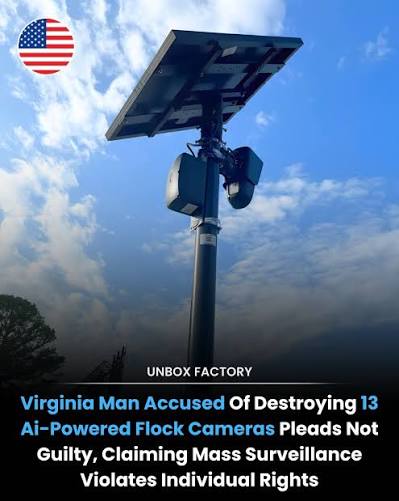
A growing controversy surrounding AI-powered surveillance technology has placed the Flock Camera Error debate at the center of a much larger national conversation about privacy, policing and accountability.
Automated license plate reader cameras are increasingly used by law enforcement agencies across the United States. Companies such as Flock Safety have promoted these systems as powerful tools for locating stolen vehicles, finding missing people and helping investigators solve crimes.
However, recent reporting has raised serious concerns about what happens when the technology gets something wrong.
A camera may capture a blurry image. A license plate may be partially hidden. Lighting conditions may affect recognition. Artificial intelligence may interpret letters and numbers incorrectly. When that information enters a law-enforcement system, an innocent person could potentially become connected to a vehicle, investigation or police alert they have nothing to do with.
That possibility has transformed the Flock Camera Error issue from a simple technology problem into a major question about civil liberties.
The controversy is particularly serious because AI-generated information can appear highly convincing. A computer-generated match may be treated as authoritative even when the underlying image is unclear or inaccurate.
Recent reporting on Flock’s license plate reader systems has highlighted concerns about incorrect readings, police misuse and the broader consequences of allowing surveillance technology to influence real-world decisions.
In one recent case involving Roseville, California, records reviewed by Business Insider reportedly found that a large share of alerts involved incorrect license-plate readings, intensifying concerns about the reliability of automated recognition technology. The report said the problems included misread plates, blurry images and missed vehicles.
The central question is becoming increasingly difficult to ignore:
What happens when an AI-powered camera falsely identifies the wrong person or vehicle?
What Is a Flock Camera Error?
A Flock Camera Error generally refers to a situation in which an automated license plate reader incorrectly captures, reads, matches or reports vehicle information.
Flock Safety operates a network of automated license plate reader cameras. These cameras can capture images of passing vehicles and identify information such as license plates and other visible characteristics.
The technology is designed to help investigators search for vehicles connected to criminal investigations.
Supporters argue that automated license plate readers can help police locate stolen cars, investigate crimes and respond to emergencies more quickly.
But technology is not perfect.
A camera system can experience problems because of:
- Blurry images
- Poor lighting
- Weather conditions
- Obstructed license plates
- Similar-looking letters and numbers
- Unusual camera angles
- Older equipment
- Software recognition mistakes
- Human errors during searches
A single incorrect reading may appear insignificant.
But when inaccurate information enters a police database or generates an alert, the consequences can become much more serious.
An innocent driver may suddenly find themselves associated with a vehicle investigators believe they are searching for.
That is why critics argue that AI-generated results must always be independently verified by human officers.
The Roseville Case Raises Major Questions
Recent reporting has brought new attention to concerns about automated license plate recognition accuracy.
Business Insider reported that Flock Safety cameras in Roseville, California, allegedly misread license plates in a significant percentage of alerts reviewed from 2023 and 2024.
The report said that 71% of the alerts examined involved incorrect readings under the conditions and camera setup involved in the review.
The problems reportedly included blurry images and inaccurate license plate recognition. The reporting also noted that Roseville’s camera configuration and older hardware may have contributed to the unusually poor results.
Importantly, the report indicated that the incorrect alerts reviewed there did not lead to arrests or traffic stops.
However, the findings still raised an important warning.
If automated surveillance technology can generate incorrect information, police agencies must ensure that an alert is not treated as proof of guilt.
A computer match is not the same thing as verified evidence.
The Roseville reporting has therefore become part of a broader discussion about whether law-enforcement agencies should rely on AI-assisted surveillance systems without stronger safeguards.
Why False AI Matches Can Be Dangerous
The danger of a false surveillance match is not limited to a technical mistake.
The mistake can affect a real person.
Imagine driving home when a camera incorrectly reads your license plate.
The system could potentially connect your vehicle to information that actually belongs to another car.
An officer may receive an alert.
The officer may investigate.
Even if the mistake is eventually discovered, the innocent person may experience fear, embarrassment and disruption.
This is why critics of AI surveillance repeatedly emphasize one principle:
Technology should assist human decision-making, not replace human judgment.
A license plate reader can provide a lead.
But a lead is not proof.
Police officers must still verify:
- The actual license plate
- The vehicle make and model
- The vehicle’s color
- The location
- The time of the alleged sighting
- Other available evidence
Without verification, an automated mistake could become a human mistake.
And once a person is falsely accused, correcting the record may not always be easy.
The Woman Fighting Back Against AI Surveillance
The growing public concern behind the Flock Camera Error controversy reflects a larger fear shared by many people: technology can make mistakes, but ordinary citizens may have limited power to challenge those mistakes.
When a person believes they have been wrongly connected to a police investigation because of surveillance technology, they may face an intimidating system involving police databases, private technology companies and government agencies.
The individual may ask:
- Who created the record?
- Which camera captured the information?
- Was the license plate correctly read?
- Did AI generate the match?
- Did a human verify the result?
- How long will the data remain stored?
- Who has access to the information?
These questions are becoming increasingly important as surveillance networks expand.
Critics argue that people need meaningful ways to challenge incorrect data.
If an AI system creates an error, there should be a clear process for identifying the mistake and correcting the record.
Otherwise, innocent people could be forced to fight against information they did not create and cannot easily access.
Court and Legal Concerns Over AI Surveillance
The rapid growth of automated license plate readers has also created new legal questions.
Courts and lawmakers are being asked to consider the balance between public safety and individual privacy.
Supporters of Flock-style camera systems argue that vehicles traveling on public roads can already be observed by police officers and other members of the public.
Critics argue that AI-powered networks create something fundamentally different.
A single police officer cannot continuously monitor thousands of vehicles across multiple cities and states.
A connected surveillance network potentially can.
This raises questions about whether technology changes the nature of surveillance.
Privacy advocates have increasingly called for stronger limits on:
- Data retention
- Data sharing
- Search access
- Officer accountability
- Public transparency
- Independent audits
The Wall Street Journal recently reported intense public debate over the balance between the crime-solving benefits of Flock cameras and concerns about privacy and government surveillance. Readers and critics called for stronger oversight and limits on how the systems are used.
The legal debate is therefore not simply about whether cameras should exist.
It is about what rules should govern them.
Flock Cameras and the Growing Misuse Controversy
Accuracy is only one concern.
Another major issue is how people with access to surveillance systems use the technology.
Recent investigations have revealed cases in which law-enforcement personnel allegedly misused license plate reader systems to track romantic partners and other individuals without legitimate investigative reasons.
The Washington Post reported in August 2026 that numerous law-enforcement officers had been charged with or accused of misusing automated license plate reader systems and other surveillance tools. The investigation described cases involving the tracking of former partners and the serious personal consequences for victims.
Other recent reports have also described alleged misuse of Flock systems by police officers.
These cases have intensified public concerns because they demonstrate that even accurate technology can become dangerous when used improperly.
A surveillance system can create two separate risks:
- The system makes a mistake.
- A person intentionally misuses the system.
Both problems require safeguards.
Flock Announces New Safety Measures
As criticism has grown, Flock Safety has announced changes aimed at reducing misuse.
According to recent reporting, the company has moved toward stronger monitoring and audit requirements following controversies involving the alleged abuse of its surveillance technology.
The Guardian reported that Flock planned mandatory safety measures, including broader use of audit tools designed to identify suspicious activity. The company also moved toward reducing default data retention periods and strengthening controls over how information is shared.
These changes are significant.
However, critics argue that safeguards should have existed from the beginning.
A surveillance system that stores information about millions of vehicles requires strong accountability.
The larger the network becomes, the greater the potential consequences of mistakes or abuse.
Can AI Really Be Trusted to Read License Plates?
AI can be extremely useful.
Modern recognition systems can process huge amounts of visual information much faster than humans.
But AI is not infallible.
A computer does not understand a license plate the same way a human does.
It analyzes patterns and predicts the most likely characters.
That prediction may be wrong.
For example, a system may confuse:
- O and 0
- I and 1
- B and 8
- S and 5
- Z and 2
Poor image quality can make the problem worse.
A partially blocked plate can also lead to incorrect results.
The key issue is not whether AI should ever be used.
The key issue is whether society creates appropriate safeguards around its use.
An AI system should be treated as a tool.
It should not automatically be treated as the final authority.
Why Human Verification Is Essential
The best protection against a Flock Camera Error may be a strong human verification process.
Before taking action based on an automated alert, officers should compare the system’s information with the actual evidence.
They should ask:
Does the plate clearly match?
Does the vehicle match the description?
Is the camera image reliable?
Could the AI have misread the characters?
Is there additional evidence supporting the alert?
These steps may appear basic.
But they can protect innocent people.
Technology often creates an illusion of certainty.
A computer-generated result may look official because it appears on a screen.
However, official-looking information can still be wrong.
That is why transparency and verification are essential.
The Privacy Debate Is Growing Nationwide
Public resistance to automated license plate reader systems has increased across the United States.
Recent reporting has documented growing concern about the expansion of AI-powered surveillance networks.
Axios reported in August 2026 that bipartisan concerns over privacy and misuse had intensified opposition to automated license plate readers, particularly systems operated by Flock Safety. The report described increasing calls for clearer rules governing access, data retention and accountability.
Meanwhile, recent reporting has described an extensive network of data sharing involving Flock technology.
WIRED reported that one police department’s data-sharing network involved more than 2,000 organizations, highlighting concerns about how broadly vehicle information can potentially be shared.
For privacy advocates, the issue is simple:
The more organizations that can access surveillance information, the greater the need for strict oversight.
Public Safety Versus Personal Freedom
Supporters and critics of Flock cameras agree on at least one thing:
Public safety matters.
The disagreement concerns how far surveillance should go.
Supporters argue that automated cameras can help:
- Recover stolen vehicles
- Locate missing people
- Investigate violent crimes
- Identify suspicious vehicles
- Provide investigators with useful leads
Critics argue that these benefits must not come at the cost of unlimited surveillance.
The solution may ultimately involve balance.
Technology can be useful while still being regulated.
Potential safeguards could include:
- Shorter data retention periods
- Mandatory audits
- Search justification requirements
- Independent oversight
- Public reporting
- Penalties for misuse
- Stronger accuracy testing
- Human verification requirements
These measures could help reduce the danger of both intentional misuse and accidental errors.
What Should Happen After a Flock Camera Error?
When surveillance technology incorrectly identifies a vehicle or person, a clear correction process is essential.
Experts and privacy advocates have argued that people should be able to challenge inaccurate information.
A responsible system should provide answers to important questions.
What caused the error?
Was the AI reading incorrect?
Was the image blurry?
Did an officer incorrectly interpret the information?
Was inaccurate data shared with other agencies?
Was the incorrect record deleted?
Transparency can help restore trust.
Without transparency, people may never know why they were investigated or how incorrect information spread.
The Future of AI Surveillance
The Flock Camera Error controversy is part of a much larger debate about artificial intelligence.
AI is entering policing, healthcare, education, finance and other areas where mistakes can affect people’s lives.
The lesson from surveillance technology is clear:
AI must be accountable.
Companies cannot simply say that technology is innovative.
Government agencies cannot simply say that software is efficient.
When AI systems affect real people, accuracy and fairness matter.
The future of surveillance may depend on whether technology companies, lawmakers and police departments can build systems that protect both safety and civil liberties.
That means accepting an important reality:
AI can make mistakes.
And when it does, humans must be able to identify those mistakes and correct them.
Conclusion: The Flock Camera Error Debate Is About More Than Technology
The controversy surrounding the Flock Camera Error issue demonstrates why AI surveillance is becoming one of the most important public policy debates of the modern era.
Automated license plate readers may help police solve crimes and locate dangerous suspects.
But the technology can also create risks.
Incorrect readings can generate false leads.
Improper access can enable surveillance abuse.
Large data-sharing networks can create privacy concerns.
And innocent people may face serious consequences when technology is treated as infallible.
The growing legal and public debate shows that the future of AI surveillance cannot depend only on what technology is capable of doing.
It must also depend on what society decides technology should be allowed to do.
For the falsely accused and those challenging surveillance errors, the fight is ultimately about accountability.
A camera may record an image.
An AI system may generate a result.
But neither should have the final word without human judgment, evidence and the ability to challenge mistakes.
As courts, lawmakers and communities continue examining AI-powered surveillance, one principle is likely to remain central:
Technology should protect innocent people—not make them fight to prove that a machine was wrong.
Frequently Asked Questions
What is a Flock Camera Error?
A Flock Camera Error refers to an incorrect reading, match or alert involving an automated license plate reader system. Errors may occur because of blurry images, poor lighting, obstructed plates or software recognition problems.
Can AI-powered cameras falsely read a license plate?
Yes. Automated recognition technology can make mistakes, especially when image quality is poor or letters and numbers look similar.
Can a Flock camera error lead to a false police investigation?
An incorrect alert can potentially create a false lead. However, responsible law-enforcement procedures should require officers to independently verify information before taking action.
Why are Flock cameras controversial?
Flock cameras have generated controversy because of concerns involving privacy, data sharing, surveillance accuracy and allegations of misuse by people with access to the systems.
Are Flock cameras useful for solving crimes?
Supporters say automated license plate readers can help locate stolen vehicles, find missing persons and provide investigators with useful information during criminal investigations.
What safeguards can prevent false AI accusations?
Important safeguards include human verification, independent audits, strict access controls, shorter data-retention periods and clear procedures for correcting inaccurate information.
Can police officers misuse license plate reader systems?
Recent reporting has documented cases in which officers allegedly used automated license plate reader systems improperly to track personal acquaintances or former partners. Such cases have increased calls for stronger oversight.
What happens when a surveillance camera makes a mistake?
A responsible agency should verify the information, correct inaccurate records and ensure that false data is not improperly used or shared.
Will AI surveillance continue to expand?
AI surveillance technology is likely to continue expanding, but public pressure, court challenges and legislative action may determine what restrictions and safeguards are required.
What is the main lesson from the Flock Camera Error controversy?
The main lesson is that AI-generated information should not automatically be treated as proof. Human verification, accountability and transparency are essential when technology affects people’s rights and safety.
About the Author