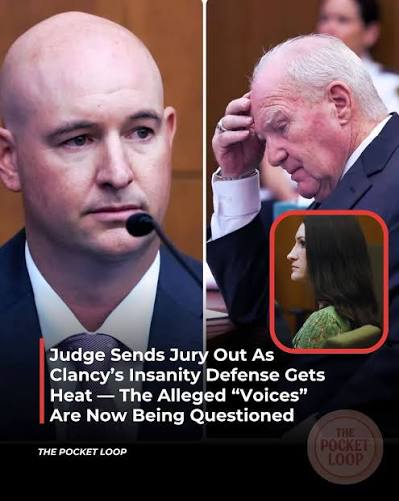
The Lindsay Clancy 911 call shielded controversy has become one of the most closely watched media-access issues surrounding the high-profile Massachusetts murder trial. A judge ruled that news organizations cannot publicly distribute or broadcast the audio of Patrick Clancy’s emergency call made after the deaths of the couple’s three children. The court also restricted the public dissemination of autopsy photographs connected to the case.
The decision does not mean the evidence disappeared from the trial. Instead, the ruling created an important distinction between evidence that can be presented inside a courtroom and material that can be recorded, reproduced, livestreamed, or distributed to the wider public.
Judge William F. Sullivan issued the order after Patrick Clancy requested restrictions on the public release of some of the most sensitive evidence in the case. According to reporting on the ruling, media organizations were prohibited from recording, displaying, reproducing, distributing, or otherwise disseminating the 911 audio and the autopsy photographs.
The ruling immediately raised major questions about privacy, open courts, media access and the treatment of traumatic evidence during nationally watched criminal trials.
What Is the Lindsay Clancy Case About?
Lindsay Clancy, a former labor and delivery nurse from Massachusetts, is charged in connection with the January 2023 deaths of her three young children in Duxbury.
The children were Cora, Dawson and Callan Clancy.
The central issue at trial has not simply been whether Lindsay Clancy caused the deaths. Rather, the major legal dispute concerns her criminal responsibility and mental state at the time of the killings.
Her defense has argued that she was suffering from severe psychiatric illness, including postpartum psychosis. Prosecutors, however, have argued that she understood what she was doing and acted deliberately.
As of the latest reporting, the case has reached the jury-deliberation stage, following weeks of testimony involving family members, first responders and mental-health experts.
Because of the emotional nature of the case, nearly every major courtroom development has attracted intense public attention.
However, the dispute over the 911 call created a separate and important question:
Should every piece of evidence presented during a public criminal trial automatically become material for unrestricted public broadcasting?
The judge’s answer, in this situation, was no.
Judge Bars Media Release of Patrick Clancy’s 911 Call
The court order focused on Patrick Clancy’s emergency call from January 24, 2023.
The recording is among the most emotionally disturbing pieces of evidence associated with the case. Patrick Clancy made the call after returning home and discovering that something was seriously wrong.
Judge Sullivan ruled that media organizations could not record, display, reproduce, distribute or otherwise publicly disseminate the audio recording.
Importantly, the ruling did not necessarily prevent the evidence from being used during the criminal proceedings.
Reports explained that the prosecution and defense could still use the materials as evidence in court, while people physically present in the courtroom could be permitted to hear or view relevant evidence under the court’s procedures.
This distinction is crucial.
Evidence Can Be Publicly Heard Without Being Publicly Distributed
Many people assume that if a criminal trial is open to the public, everything presented during that trial can automatically be copied and published everywhere.
That is not always the case.
Courts can place restrictions on recording and dissemination, particularly when evidence involves:
- Graphic images
- Children
- Victims of violent crimes
- Deeply traumatic recordings
- Family privacy concerns
- Potentially harmful consequences from widespread publication
Therefore, the Lindsay Clancy 911 call shielded ruling did not remove the evidence from the legal process. Instead, it limited how the media could reproduce and distribute that evidence outside the courtroom.
Why Did the Judge Restrict the 911 Call?
The ruling followed a request from Patrick Clancy, the father of the three children.
The court considered the potential consequences of widespread public dissemination of the highly emotional recording and sensitive photographs.
According to NBC Boston’s reporting, the judge concluded that release by the media could create a substantial likelihood of harm or another harmful consequence to the family.
That concern is particularly significant because this case involves the deaths of three young children and has already generated enormous public attention.
In the modern media environment, once a recording is released online, controlling its future use becomes nearly impossible.
Audio can be:
- Uploaded to social media
- Reposted repeatedly
- Edited into videos
- Used in commentary
- Turned into sensational content
- Circulated internationally
- Preserved permanently online
The court’s decision therefore reflected concerns that went beyond ordinary news coverage.
Autopsy Photos Were Also Protected
The judge’s order did not only concern the 911 recording.
Autopsy photographs of the children were also covered by restrictions.
The images could still be relevant evidence during the trial, but the court barred media organizations from publicly recording or disseminating them in the same way they might distribute ordinary courtroom material.
Graphic evidence has always created difficult legal and ethical questions.
Prosecutors may argue that photographs are necessary to establish facts about a crime. Defense attorneys may challenge their relevance or potential prejudicial impact.
At the same time, even when such evidence is legally admissible, courts must consider whether unrestricted public distribution serves the interests of justice.
That issue becomes especially sensitive when the victims are children.
The 911 Call Was Still Heard During the Trial
The media restrictions did not mean the 911 call could never be played in court.
Reporting from the trial indicated that the call was played for the jury, but because of the court order, broadcasters could not include the protected audio in their public coverage or livestreams.
This illustrates the difference between courtroom access and media reproduction rights.
A jury may hear evidence.
Attorneys may discuss it.
Witnesses may testify about it.
People physically present in the courtroom may be exposed to it under court rules.
Yet broadcasters may still be prohibited from transmitting the material to millions of viewers.
That distinction is at the heart of the court’s decision.
Media Access Versus Family Privacy
The ruling has highlighted a difficult balance between two important principles.
On one side is the principle of open justice.
The public has a legitimate interest in understanding how criminal courts operate, particularly in major cases involving serious charges and public controversy.
Journalists play an important role by reporting:
- What happens in court
- What lawyers argue
- What witnesses say
- What evidence is presented
- How judges make decisions
On the other side is the issue of privacy and human dignity.
Not every piece of traumatic evidence necessarily needs to become viral online content.
The emotional reality of a 911 call made by a parent during a family tragedy is very different from a routine court filing.
The court’s order attempted to preserve the ability of the justice system to use the evidence while limiting unnecessary public distribution.
A Case Already Under Massive Public Attention
The Lindsay Clancy trial has received national and international attention.
The case has also generated intense online discussion, including speculation and conspiracy theories on social-media platforms.
The Guardian reported that social-media activity surrounding the case included unverified theories and attempts by online users to reinterpret evidence outside the courtroom process.
This broader environment may help explain why courts and families are increasingly concerned about highly sensitive evidence being released without limits.
Once material enters the online ecosystem, it can be removed from its legal context.
A short video clip may circulate without explanation.
A recording may be edited.
A photograph may be reposted by accounts with no connection to journalism.
As a result, the consequences of public dissemination can continue long after a trial ends.
The Central Question in the Lindsay Clancy Trial
While the 911-call ruling became a major media story, the main legal issue in the murder trial remains Lindsay Clancy’s criminal responsibility.
Both the prosecution and defense have presented sharply different interpretations of her mental state.
The defense has argued that severe mental illness and postpartum psychosis affected her ability to understand reality and bear criminal responsibility.
Prosecutors have argued that, despite mental-health problems, she understood the nature and wrongfulness of her actions and acted intentionally.
The trial included extensive testimony from mental-health professionals and other witnesses.
Reuters reported that the defense argued Clancy’s mind was overwhelmed by postpartum psychosis, while prosecutors maintained that the killings were planned and deliberate.
That difference is legally critical.
A person can be seriously mentally ill while still being found criminally responsible under the law.
Therefore, the jury must consider the specific legal standards governing criminal responsibility, not simply whether the defendant experienced mental-health problems.
Jury Deliberations Put the Case in a New Phase
The trial has now moved beyond weeks of testimony and closing arguments.
Jurors have been tasked with considering the evidence and determining the appropriate verdict.
Recent reporting indicated that the jury ended deliberation sessions without immediately reaching a verdict and was scheduled to continue its work.
The possible legal outcomes carry enormous consequences.
Depending on the jury’s findings, the result could involve:
- A murder conviction
- A lesser criminal finding
- A finding of not guilty
- A finding based on lack of criminal responsibility because of mental illness
The case has therefore become a major legal examination of how courts address severe psychiatric illness in criminal proceedings.
Why the Court’s 911 Call Decision Matters
The Lindsay Clancy 911 call shielded decision may appear to be only a media-access ruling.
However, it raises much broader questions.
1. Can Sensitive Evidence Be Used Without Becoming Viral?
The court’s ruling demonstrates that evidence can be essential to a trial without automatically becoming unrestricted public content.
2. What Rights Do Victims’ Families Have?
Families connected to violent crimes may have strong concerns about traumatic recordings or images being repeatedly circulated online.
3. Where Is the Line Between Transparency and Exploitation?
Public access to courts is important. However, unrestricted publication of highly graphic or emotionally devastating material can create ethical concerns.
4. How Should Courts Respond to Social Media?
Modern courts operate in an environment very different from the past.
A recording that once might have been heard by a limited courtroom audience can now reach millions of people within minutes.
Court Transparency Is Still Important
It is important to understand what the ruling does not necessarily mean.
Restricting the distribution of a specific 911 recording or autopsy photographs does not automatically make an entire trial secret.
Journalists can still report on legal proceedings within applicable court rules.
They can describe testimony and legal arguments.
The public can still learn about the evidence through responsible reporting.
Therefore, the debate is not simply about secrecy versus transparency.
Instead, it involves determining how much protection should apply to the most sensitive forms of evidence.
That is a question courts across the United States increasingly face in the digital age.
The Human Dimension of the Case
Behind the legal arguments, media coverage and online debates is a devastating family tragedy.
The deaths of Cora, Dawson and Callan Clancy remain at the center of every courtroom issue.
For that reason, the decision to restrict the widespread distribution of the 911 call and autopsy photographs has a strong human dimension.
The court was not deciding whether the evidence was relevant to the trial.
Instead, it addressed how that evidence could be reproduced and circulated outside the courtroom.
For Patrick Clancy and other family members, the difference is profound.
A traumatic moment may be part of the judicial record without becoming material repeatedly replayed across social-media platforms.
What Happens Next?
The ultimate focus now remains on the jury’s verdict and the legal determination of Lindsay Clancy’s criminal responsibility.
Whatever the outcome, the case will likely continue to influence public discussion about:
- Postpartum mental health
- Criminal responsibility
- Psychiatric treatment
- Media ethics
- Victims’ rights
- Social-media speculation
- Courtroom transparency
Meanwhile, the Lindsay Clancy 911 call shielded ruling stands as an important reminder that public trials can still involve limits on the dissemination of exceptionally sensitive evidence.
Conclusion
The decision to shield Patrick Clancy’s 911 call from media release represents a significant moment in the Lindsay Clancy murder trial.
Judge William Sullivan’s order prevented media organizations from recording, reproducing or publicly distributing the emergency-call audio and protected autopsy photographs from similar dissemination. At the same time, the evidence could remain part of the judicial process under the court’s rules.
The ruling highlights the increasingly difficult balance between open courts and personal privacy.
The public has an important interest in understanding major criminal trials. However, courts must also consider whether unrestricted publication of traumatic evidence creates additional harm for victims’ families.
As the Lindsay Clancy case moves through its final legal stage, the dispute over the protected 911 call will remain an important example of how the justice system is adapting to an era in which courtroom evidence can instantly become permanent global internet content.
FAQs
1. Why was the Lindsay Clancy 911 call shielded from the media?
Judge William Sullivan barred media organizations from recording, reproducing or disseminating Patrick Clancy’s 911 call because of concerns about the harmful consequences of widespread release of highly sensitive evidence.
2. Was the 911 call removed from the Lindsay Clancy trial?
No. The court’s restrictions focused on media recording and public dissemination. The call could still be used as evidence during the trial under the court’s procedures.
3. Were autopsy photos also restricted?
Yes. The judge’s order also restricted media dissemination of autopsy photographs connected to the deaths of the Clancy children.
4. Who requested the restrictions on the 911 call?
The restrictions followed a request from Patrick Clancy, the father of the three children.
5. What is the main issue in Lindsay Clancy’s murder trial?
The major legal issue is whether Lindsay Clancy was criminally responsible for her actions at the time of the children’s deaths. Her defense has argued severe mental illness and postpartum psychosis, while prosecutors have argued she acted knowingly and deliberately.
6. Has the Lindsay Clancy trial reached a verdict?
According to the latest available reporting, jurors were deliberating and had not immediately reached a verdict.
7. Why is the Lindsay Clancy case receiving so much attention?
The case involves the deaths of three children, complex questions about postpartum mental health and criminal responsibility, and extensive public and social-media interest.
8. Can journalists still report on the Lindsay Clancy trial?
Yes. The restrictions apply specifically to protected materials such as the 911 audio and autopsy photographs. Journalists can continue reporting on court proceedings subject to applicable court rules.
About the Author