The possibility of a Fed rate hike is once again shaking financial markets and creating fresh political anxiety in Washington. After months of expectations that the Federal Reserve might keep interest rates steady, new signals from the central bank and prominent economists have put a different scenario firmly back on the table: another increase in borrowing costs.
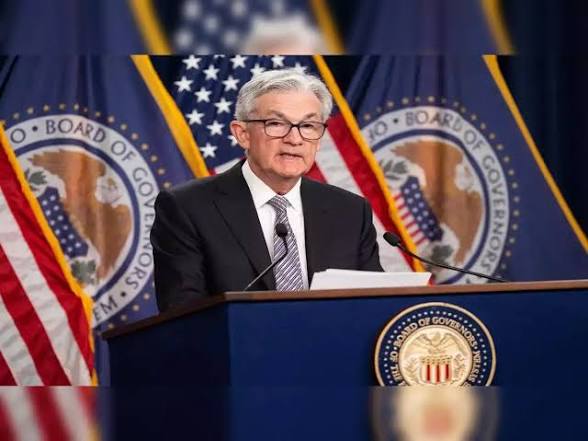
The debate intensified after Federal Reserve Chairman Kevin Warsh delivered closely watched remarks emphasizing the continuing danger posed by inflation. His comments did not explicitly promise an immediate increase, but they made clear that policymakers could tighten monetary policy if inflation fails to show convincing progress toward the Federal Reserve’s long-term target.
That message was enough to trigger a sharp reassessment across financial markets.
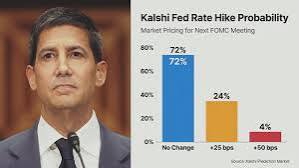
Investors increased their expectations that the Federal Reserve could raise rates at an upcoming meeting. Economists quickly began debating whether the central bank was preparing for action or simply reminding markets that every policy option remains available.
For Republicans, the possibility of higher interest rates could create an uncomfortable political problem. Rising borrowing costs affect mortgages, credit cards, business loans and consumer confidence. If financial conditions tighten while voters are already worried about prices, the political consequences could become significant.
The Fed rate hike debate is therefore no longer just a technical discussion about monetary policy. It has become part of a much larger argument about inflation, economic growth, political pressure and the future direction of the American economy.
Fed Rate Hike Option Moves Back Into Focus
The Federal Reserve has kept its benchmark federal funds target range at approximately 3.50% to 3.75%, according to recent Federal Reserve information. However, the policy debate inside and outside the central bank has become increasingly complicated.
The central issue is inflation.
The Federal Reserve’s long-term inflation objective remains 2%. Yet recent economic data have continued to create concern that price pressures may not be declining quickly enough. Reports following the latest inflation data indicated that the Fed’s preferred inflation measures remained well above the central bank’s target.
That creates a difficult decision for policymakers.
If the Fed keeps rates unchanged for too long while inflation remains elevated, critics could argue that the central bank is failing to act aggressively enough. On the other hand, raising interest rates could slow borrowing, investment and consumer spending at a time when parts of the economy are already facing pressure.
This is why the possibility of a Fed rate hike has returned to the center of the national economic conversation.
Kevin Warsh’s recent comments at the Jackson Hole economic symposium were interpreted by markets as a more hawkish signal than many investors expected. He stressed the importance of restoring confidence that inflation is moving toward the Fed’s 2% target and suggested that policymakers still have work to do if price pressures remain stubborn.
That language immediately changed expectations.
Expert Says a Rate Increase Cannot Be Ruled Out
One of the strongest reactions came from economists who argued that the Federal Reserve’s latest messaging has made a rate increase a serious possibility.
Stephen Stanley, chief U.S. economist at Santander U.S. Capital Markets, said Warsh’s comments pointed toward a possible September increase unless incoming economic data change the outlook significantly.
However, not every economist agrees that a hike is imminent.
Analysts at TD Securities warned investors against assuming that the Federal Reserve has already decided to increase rates. They argued that the central bank’s decision would depend heavily on upcoming economic reports, including employment and inflation data. Their assessment suggested that holding rates steady remained a realistic outcome.
This disagreement highlights the uncertainty surrounding the Fed.
The central bank has not committed itself to a specific path. Instead, policymakers are attempting to balance two major risks.
The first risk is persistent inflation.
The second risk is slowing the economy too aggressively.
A Fed rate hike could help reduce inflation by making borrowing more expensive and cooling demand. But higher rates can also make mortgages, car loans, business financing and other forms of credit more expensive.
That is why every speech by the Federal Reserve chairman is now being examined closely by investors, economists and political leaders.
Markets React to Hawkish Fed Signals
Financial markets responded quickly to the latest developments.
Following Warsh’s Jackson Hole remarks, expectations for a possible near-term rate increase rose sharply. Bond yields increased, the U.S. dollar strengthened and stock markets experienced renewed uncertainty.
The reaction showed how sensitive markets have become to changes in Federal Reserve language.
For months, investors had been debating whether the next major move would be continued stability or renewed monetary tightening. The latest signals have made the second possibility much harder to dismiss.
Markets are particularly focused on whether inflation continues to remain above the Federal Reserve’s preferred target.
If upcoming data show that price pressures are accelerating, policymakers could face stronger arguments for action. If inflation begins declining more convincingly, the case for keeping rates unchanged could become stronger.
This means the Fed rate hike question may ultimately depend on economic reports that have not yet been released.
Why Inflation Remains the Biggest Concern
Inflation is the foundation of the entire debate.
The Federal Reserve’s ability to maintain price stability is one of its central responsibilities. When inflation remains elevated for a prolonged period, households lose purchasing power and businesses face greater uncertainty.
Consumers feel inflation in everyday life.
Higher prices for food, fuel, housing and essential services can create widespread frustration. Even if the economy continues growing, voters may judge economic conditions negatively when their household budgets remain under pressure.
This creates a difficult political environment.
A government may point to employment growth or economic expansion, but families often focus on what they pay at the grocery store, petrol station and housing market.
The Federal Reserve must also consider inflation expectations.
If consumers and businesses begin believing that inflation will remain permanently high, controlling prices can become more difficult. This is one reason central bankers often emphasize the importance of keeping expectations anchored.
Warsh’s recent comments reflected this concern.
The message was clear: if inflation does not move convincingly toward the 2% objective, the Federal Reserve may need to consider additional action.
GOP Faces a Difficult Economic Narrative
The political consequences of a potential Fed rate hike could be significant.
Republicans have frequently focused their political messaging on inflation and the rising cost of living. A renewed increase in interest rates could complicate the broader economic debate.
Higher rates would not necessarily mean that the GOP caused the increase. The Federal Reserve operates independently from the White House and Congress when making monetary-policy decisions.
However, politics often does not work according to technical distinctions.
Voters may simply see higher mortgage costs, more expensive loans and continued inflation. Political parties then face pressure to explain why economic conditions remain difficult.
This is where the idea of a political “panic” begins to emerge.
A rate increase could create uncomfortable headlines for politicians who are already dealing with concerns about affordability. Housing costs could become a particularly important issue because mortgage rates are highly sensitive to broader interest-rate conditions.
A family trying to buy a home may not closely follow Federal Reserve policy speeches. But that family will notice if monthly payments become more expensive.
The same applies to small businesses.
Higher borrowing costs can make it more expensive for companies to expand, purchase equipment or hire additional workers.
The Fed’s Independence Becomes a Major Issue
Another important part of the debate is Federal Reserve independence.
Central banks are expected to make monetary-policy decisions based on economic conditions rather than short-term political interests.
That independence can become controversial when politicians prefer lower rates but inflation remains too high.
Lower interest rates can support borrowing and economic activity. However, if inflation is persistent, keeping rates too low could create additional price pressures.
Higher rates, meanwhile, can be politically unpopular because they increase borrowing costs.
This creates an unavoidable tension.
Political leaders may want policies that support immediate economic growth. The Federal Reserve, however, must also consider the longer-term consequences of allowing inflation to remain elevated.
Recent reporting has highlighted growing scrutiny over the Fed’s credibility and its ability to communicate clearly with markets while maintaining independence from political pressure.
The next policy decision will therefore be judged not only by its economic effects but also by what it says about the central bank’s willingness to act independently.
What a Fed Rate Hike Would Mean for Americans
If the Federal Reserve raises rates, the effects could eventually reach millions of Americans.
1. Mortgage Costs Could Remain High
Higher interest-rate expectations can contribute to continued pressure on borrowing costs.
For potential homebuyers, this can mean higher monthly mortgage payments and reduced purchasing power.
2. Credit Card Borrowing Could Become More Expensive
Many credit-card interest rates are influenced by broader interest-rate conditions.
Consumers carrying significant balances could face additional financial pressure if borrowing costs increase.
3. Business Loans Could Become Costlier
Small businesses often depend on financing to expand operations.
Higher rates could make new investment decisions more difficult.
4. Savings Returns Could Benefit
The impact is not entirely negative.
Higher interest rates can also provide better returns for some savers and investors holding interest-bearing accounts.
5. Inflation Could Eventually Slow
The main reason the Fed would raise rates is to reduce demand and help bring inflation under control.
However, this process can take time and may involve economic trade-offs.
The September Meeting Becomes Crucial
Attention is now turning toward the Federal Reserve’s next major policy meeting.
The Federal Reserve’s official calendar shows that the Federal Open Market Committee continues to hold regularly scheduled meetings throughout the year to determine monetary policy.
Before the next decision, policymakers will receive additional information about employment and inflation.
Those reports could dramatically change expectations.
A stronger-than-expected inflation report could increase pressure for a Fed rate hike.
A weaker inflation reading could strengthen arguments for patience.
Employment data will also be important.
The Federal Reserve has a dual mandate that includes both price stability and maximum employment. Policymakers therefore cannot focus exclusively on inflation while ignoring changes in the labor market.
This balancing act explains why experts remain divided.
Some believe the inflation problem is serious enough to require additional tightening.
Others believe the risks of raising rates are too high unless upcoming data clearly justify the move.
Could the Fed Keep Rates Unchanged?
Yes.
Despite the growing discussion about a hike, many economists still believe the Federal Reserve could remain on hold.
A Reuters poll published earlier in August found that most economists expected the Fed to keep its key interest rate unchanged in the near term and through the end of the year.
Other major financial institutions have also maintained forecasts that the Fed could stay on hold, depending on how inflation and growth evolve.
This is important because headlines about a possible rate increase should not be confused with a guaranteed decision.
The Federal Reserve has left itself flexibility.
The latest signals suggest that a hike is an option on the table, not necessarily a final decision.
That distinction will matter enormously in the coming weeks.
Why the Fed Rate Debate Matters Beyond America
The Federal Reserve’s decisions affect more than the United States.
The U.S. dollar plays a central role in global finance. Changes in American interest rates can influence currencies, international borrowing costs, emerging markets and global investment flows.
A stronger U.S. interest-rate environment can attract international capital toward dollar-denominated assets.
That can place pressure on other currencies.
Countries and companies that borrow in dollars may also face higher financing costs.
For this reason, a potential Fed rate hike is closely watched around the world.
Global markets are now attempting to understand whether the Federal Reserve is preparing for a new phase of tightening or simply maintaining flexibility while waiting for clearer economic evidence.
What Happens Next?
The next stage of the debate will be driven by data.
Investors will closely watch:
- Inflation reports
- Consumer spending data
- Employment figures
- Wage growth
- Oil and energy prices
- Consumer confidence
- Federal Reserve speeches
Each new report could change expectations.
The central question is straightforward but difficult to answer: Is inflation falling fast enough to allow the Fed to remain patient?
If the answer is yes, rates could remain unchanged.
If the answer is no, a Fed rate hike could become increasingly likely.
Final Thoughts
The latest Federal Reserve signals have created a major shift in the economic conversation.
A rate increase is no longer being treated as an impossible scenario. Experts are openly debating the possibility, markets have adjusted their expectations and politicians are watching closely.
For the GOP, the political risks are obvious. Continued inflation combined with expensive borrowing could become a powerful issue for voters. Even though the Federal Reserve makes its decisions independently, economic frustration often becomes a political problem.
At the same time, the Fed faces its own challenge.
Act too slowly, and inflation could remain above target for longer.
Act too aggressively, and the economy could face unnecessary pressure.
That is why the coming economic data will be so important.
For now, the most accurate conclusion is that the Fed rate hike option remains firmly on the table—but the final decision will depend on whether inflation and other economic indicators give policymakers a compelling reason to act.
The next Federal Reserve meeting could therefore become one of the most closely watched economic events of the year.
FAQs
1. Is the Fed planning a rate hike?
The Federal Reserve has not officially committed to a rate increase. However, recent comments and market reactions show that a hike remains a serious policy option.
2. Why could the Fed raise interest rates?
The main reason would be persistent inflation. Higher interest rates can reduce demand and help bring price growth closer to the Fed’s 2% target.
3. What is the current Fed interest-rate range?
Recent Federal Reserve information showed the target range at approximately 3.50% to 3.75%.
4. How would a Fed rate hike affect mortgages?
A rate hike can contribute to higher borrowing costs and may keep mortgage rates elevated, making home purchases more expensive.
5. Would a Fed rate hike hurt the economy?
It could slow consumer spending and business borrowing. However, the Fed may consider this trade-off necessary if inflation remains too high.
6. Why are Republicans concerned about higher rates?
Higher borrowing costs and persistent inflation can create political pressure because voters often judge economic conditions based on affordability and household expenses.
7. When is the next major Fed decision?
The Federal Reserve follows a regular FOMC meeting schedule, with upcoming meetings serving as key moments for interest-rate decisions.
8. Is a rate hike guaranteed?
No. The decision will depend heavily on upcoming inflation, employment and broader economic data.
About the Author