Senate Showdown:AG Blanche Grilled Over Epstein Leaks,Weaponization Fund,Fury
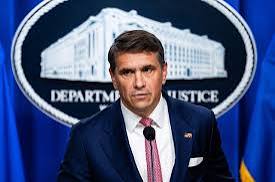
The U.S. Senate Judiciary Committee witnessed a dramatic confirmation hearing as Acting Attorney General Todd Blanche faced sharp questions from both Republicans and Democrats over some of the Justice Department’s most controversial decisions. The hearing quickly evolved into a high-stakes political showdown, with lawmakers pressing Blanche on the handling of Jeffrey Epstein-related files, a proposed “Anti-Weaponization Fund,” and broader concerns about the Department of Justice’s independence.
The hearing underscored growing political divisions in Washington while raising questions about the future leadership of the Justice Department. Although Republicans largely backed Blanche’s nomination, several GOP senators also demanded answers regarding controversial decisions made under his leadership. Democrats, meanwhile, accused the department of placing political loyalty above impartial justice.
Why Todd Blanche Faced Senate Scrutiny

Todd Blanche, who previously served as President Donald Trump’s personal attorney before becoming Acting Attorney General, appeared before the Senate Judiciary Committee seeking confirmation as the nation’s permanent Attorney General.
His nomination comes during a politically charged period marked by ongoing debates over Justice Department independence, politically sensitive investigations, and public trust in federal law enforcement.
Senators from both parties questioned whether Blanche could lead the DOJ independently or whether his close relationship with President Trump would continue influencing major legal decisions.
Epstein Files Returned to the Spotlight
One of the hearing’s most contentious moments centered on the Justice Department’s handling of files related to convicted sex offender Jeffrey Epstein.
Lawmakers criticized the department after sensitive information was improperly disclosed during previous document releases, raising concerns about victim privacy and document review procedures.
Blanche acknowledged that mistakes had been made during the release process and accepted responsibility for those errors. However, he maintained that the department remains committed to protecting victims while pursuing any legitimate criminal investigations that may arise from the available evidence.
Several senators questioned whether sufficient safeguards had been implemented before releasing sensitive materials.
The issue has become politically significant because critics argue the document rollout damaged public confidence while simultaneously fueling conspiracy theories and political accusations.
Questions Over the “Anti-Weaponization Fund”
Perhaps the most controversial topic involved the proposed $1.776 billion “Anti-Weaponization Fund.”
The fund was originally included in a settlement related to litigation involving President Trump and the Internal Revenue Service. It was intended to compensate individuals who claimed they had been unfairly targeted by government investigations.
However, the proposal generated bipartisan criticism almost immediately.
Republican Senator John Cornyn questioned whether the fund had truly been abandoned since no formal written agreement had removed it from the settlement.
Blanche repeatedly insisted during the hearing that:
“The weaponization fund is dead.”
Nevertheless, lawmakers remained skeptical because official settlement documents have not yet been amended.
Republicans Also Pressed Blanche
Although Democrats delivered many of the strongest criticisms, Republicans also challenged Blanche on several issues.
Senator John Cornyn specifically questioned whether future administrations or even President Trump could attempt to revive the compensation fund.
Cornyn argued that verbal assurances may not provide sufficient legal certainty.
Blanche responded that the Justice Department has no intention of implementing the program and that it effectively no longer exists.
The exchange demonstrated that concerns about the fund extend beyond party politics.
Democrats Question DOJ Independence
Democratic senators focused heavily on whether Blanche could separate his previous role as President Trump’s defense attorney from his responsibilities leading the Justice Department.
Several lawmakers argued that recent DOJ actions appeared politically motivated.
They pointed to:
- The controversial IRS settlement.
- The handling of Epstein document releases.
- Decisions involving politically sensitive investigations.
- Alleged favoritism toward Trump allies.
Democrats repeatedly asked Blanche whether he would investigate any individual—including the President—if evidence justified doing so.
Blanche responded that he would faithfully uphold the Constitution and enforce federal law without political bias.
IRS Settlement Draws Fresh Attention
Another major point of contention involved a settlement concerning litigation over leaked Trump tax information.
Critics argue the agreement provided unusually broad legal protections regarding future tax-related claims involving Trump, members of his family, and associated businesses.
Lawmakers questioned why such provisions were included.
Blanche defended the settlement as legally appropriate while rejecting allegations that it granted improper immunity.
However, several senators remained unconvinced, saying the agreement raised legitimate ethical concerns.
Confirmation Faces Political Challenges
Although Republicans maintain a narrow majority on the Senate Judiciary Committee, Blanche’s confirmation is not entirely guaranteed.
Every Republican vote may prove critical.
The hearing showed that even members of Blanche’s own party want greater transparency regarding controversial Justice Department decisions.
Meanwhile, Democrats have united in opposition, arguing the department requires leadership that is clearly independent from political influence.
Public Confidence in the Justice Department
Beyond Blanche’s nomination, the hearing reflected broader concerns about public confidence in the Department of Justice.
The DOJ has increasingly become the center of political battles involving:
- Election investigations
- Former government officials
- High-profile criminal cases
- Disclosure of sensitive federal records
- Congressional oversight
Both parties acknowledged that restoring confidence in federal law enforcement remains an important challenge.
Whether Blanche is confirmed or not, those issues are expected to remain central to future congressional oversight.
What Happens Next?
Following the Judiciary Committee hearing, senators will continue evaluating Blanche’s nomination before deciding whether to advance it to the full Senate.
If confirmed, Blanche would officially become Attorney General and oversee the nation’s largest federal law enforcement agency.
Future debates are expected to focus on:
- DOJ independence
- Federal investigations
- Oversight of politically sensitive cases
- Additional reviews of Epstein-related documents
- Congressional accountability measures
The confirmation process is likely to remain highly political as lawmakers continue examining Blanche’s record and his vision for the Justice Department.
Political Implications
The hearing also highlighted the increasingly partisan nature of federal confirmations.
Supporters argue Blanche possesses extensive courtroom experience and understands complex federal prosecutions.
Critics counter that his previous representation of President Trump creates unavoidable questions regarding impartiality.
Regardless of the final confirmation vote, the hearing demonstrated that future DOJ decisions will likely receive intense congressional scrutiny.
Conclusion
Todd Blanche’s Senate confirmation hearing became much more than a routine nomination process. It evolved into a broader debate about accountability, transparency, political influence, and the future direction of the Department of Justice.
Lawmakers questioned his handling of the Epstein files, scrutinized the abandoned Anti-Weaponization Fund, and challenged his ability to remain independent despite his close ties to President Trump.
As the confirmation process continues, senators must determine whether Blanche has adequately addressed those concerns and whether he is the right person to lead the Justice Department during a politically sensitive period.
Frequently Asked Questions (FAQs)
What was the main focus of Todd Blanche’s Senate hearing?
The hearing focused on his handling of Epstein-related files, the controversial Anti-Weaponization Fund, and concerns about DOJ independence.
Why is the Anti-Weaponization Fund controversial?
Critics argued the proposed fund could improperly benefit individuals claiming political persecution. Blanche said the program is no longer moving forward.
Did Todd Blanche admit mistakes regarding the Epstein files?
Yes. Blanche accepted responsibility for errors made during the release of Epstein-related documents while pledging better oversight.
Will Todd Blanche become Attorney General?
His nomination must still be approved by the Senate after the Judiciary Committee process.
Why is DOJ independence a major issue?
Many lawmakers believe the Justice Department must operate independently from political influence to maintain public confidence in federal law enforcement.
Senate Hearing Sparks Wider Debate Over DOJ Transparency
The confirmation hearing also reignited a broader conversation about transparency within the Department of Justice. Senators from both parties argued that the American public expects federal law enforcement agencies to act independently, follow established legal procedures, and avoid even the appearance of political favoritism.
Several lawmakers stressed that public confidence in the DOJ has declined in recent years due to a series of politically sensitive investigations involving high-profile public figures. They argued that restoring trust would require clear communication, consistent enforcement of the law, and greater accountability from department leadership.
Blanche responded by emphasizing that the Justice Department must remain committed to the Constitution rather than political interests. He stated that career prosecutors and investigators should continue making decisions based on evidence and applicable law.
Epstein Document Controversy Continues
Questions surrounding the release of Jeffrey Epstein-related documents dominated a significant portion of the hearing. Senators questioned whether the department had exercised sufficient caution before releasing records that included sensitive information.
Some lawmakers expressed concern that the release process may have inadvertently exposed victims to additional trauma while also fueling widespread public speculation. Others argued that the public deserves transparency regarding one of the most closely watched criminal cases in modern history.
Blanche acknowledged that mistakes occurred during the document review process and said the department had already begun implementing stronger review procedures to prevent similar issues in the future. He reiterated that protecting victims remains a top priority while ensuring legitimate public records are handled responsibly.
The exchange reflected the ongoing challenge of balancing transparency with privacy protections in high-profile criminal investigations.
Questions About Political Neutrality
Another recurring theme throughout the hearing was political neutrality.
Democratic senators repeatedly asked Blanche whether he would authorize investigations involving political allies if evidence warranted such action. They sought assurances that no individual—including current or former elected officials—would receive special treatment under his leadership.
Blanche responded that every investigation must be guided solely by facts and applicable law. He stated that political affiliation should never determine prosecutorial decisions.
Republican senators also emphasized the importance of fairness, arguing that previous administrations had faced accusations of selective enforcement. They called for equal application of federal law regardless of political ideology.
Although lawmakers differed sharply on specific issues, there appeared to be broad agreement that maintaining public trust requires visible independence from partisan politics.
The Future of the Justice Department
If confirmed by the Senate, Blanche would oversee one of the federal government’s most influential agencies. The Attorney General supervises federal prosecutors, the Federal Bureau of Investigation (FBI), the Drug Enforcement Administration (DEA), the Bureau of Alcohol, Tobacco, Firearms and Explosives (ATF), and numerous other law enforcement divisions.
The role also includes responsibility for defending federal laws in court, overseeing major criminal investigations, enforcing civil rights protections, and coordinating national security-related legal matters.
Given these responsibilities, senators emphasized that the next Attorney General must demonstrate both legal competence and public credibility.
Why the Hearing Matters
Confirmation hearings often serve as an opportunity for senators to evaluate a nominee’s qualifications. However, Blanche’s appearance became much more than a discussion of professional experience.
Instead, it reflected larger national debates about:
- Government accountability
- Transparency in criminal investigations
- Congressional oversight
- Separation between politics and law enforcement
- Protection of victims in sensitive cases
- Public confidence in federal institutions
The hearing attracted significant public attention because each of these issues has become increasingly important in recent years.
Possible Outcomes of the Confirmation Vote
Following the Judiciary Committee hearing, senators will review testimony, written responses, and supporting materials before deciding whether to advance Blanche’s nomination to the full Senate.
Several outcomes remain possible:
- The committee could recommend confirmation.
- Senators could delay the vote while requesting additional information.
- Lawmakers could seek amendments or written commitments regarding future DOJ policies.
- The nomination could ultimately be rejected if sufficient opposition develops.
Political observers note that confirmation votes often reflect both legal qualifications and broader political dynamics.
Reactions Across Washington
The hearing generated immediate reactions from lawmakers, legal analysts, and advocacy organizations.
Supporters argued that Blanche demonstrated professionalism under intense questioning and provided direct answers regarding the department’s future priorities.
Critics contended that several responses lacked sufficient detail, particularly concerning the abandoned Anti-Weaponization Fund and the handling of Epstein-related materials.
Legal experts also noted that confirmation hearings rarely resolve every controversy. Instead, they often establish expectations for future oversight should the nominee ultimately assume office.
Media and Public Attention
The hearing received extensive coverage from national news organizations, legal commentators, and political analysts.
Much of the discussion focused on three major topics:
- Blanche’s previous role as President Trump’s attorney.
- Questions surrounding the DOJ’s handling of Epstein documents.
- The proposed Anti-Weaponization Fund and whether it has been permanently abandoned.
Public interest remained high throughout the proceedings as many Americans continue to closely follow developments involving the Justice Department and federal investigations.
Looking Ahead
The Senate’s decision on Todd Blanche’s nomination will likely influence the direction of the Department of Justice for years to come.
If confirmed, Blanche will face immediate challenges, including restoring confidence in the department, overseeing ongoing investigations, responding to congressional oversight, and ensuring that federal law enforcement maintains both independence and public credibility.
Regardless of the outcome, the hearing highlighted the importance of transparency, accountability, and adherence to the rule of law within one of the nation’s most powerful institutions.
Final Thoughts
Todd Blanche’s Senate confirmation hearing evolved into a pivotal examination of the Department of Justice’s leadership and priorities. Questions surrounding Epstein file disclosures, the proposed Anti-Weaponization Fund, and DOJ independence underscored the intense scrutiny facing both the nominee and the department itself.
While Blanche defended his record and pledged to uphold the Constitution without political bias, senators from both parties signaled that they expect continued oversight of DOJ actions. The confirmation process will now move forward with lawmakers weighing his testimony, qualifications, and commitments before casting their votes.
For Americans following developments in Washington, the hearing served as a reminder that the leadership of the Justice Department carries significant implications for the enforcement of federal law, public trust, and the nation’s justice system.
How useful was this post?
Click on a star to rate it!
Average rating 0 / 5. Vote count: 0
No votes so far! Be the first to rate this post.
About the Author

usa5911.com
Administrator
Hi, I’m Gurdeep Singh, a professional content writer from India with over 3 years of experience in the field. I specialize in covering U.S. politics, delivering timely and engaging content tailored specifically for an American audience. Along with my dedicated team, we track and report on all the latest political trends, news, and in-depth analysis shaping the United States today. Our goal is to provide clear, factual, and compelling content that keeps readers informed and engaged with the ever-changing political landscape.