Thucydides Trap Debate: US China Tensions, Global Power Clash, World Reacts
The phrase “Thucydides Trap” has once again entered global headlines as tensions between the United States and China intensify in 2026. Political analysts, diplomats, economists, and military strategists are debating whether the world’s two biggest powers are heading toward unavoidable confrontation or whether diplomacy can prevent disaster.
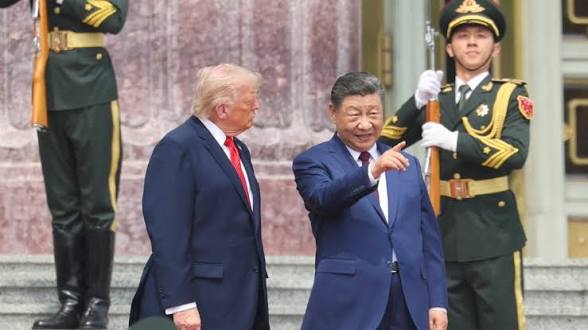
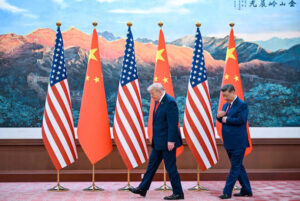
The discussion gained fresh momentum after Chinese President Xi Jinping reportedly referenced the “Thucydides Trap” during a high-profile meeting with US President Donald Trump in Beijing.
At the center of this debate is a difficult question: Can a rising global power and an established superpower coexist peacefully?
For years, the United States has dominated the global political, military, and economic system. Meanwhile, China’s rapid rise has transformed it into a competing superpower with expanding influence across Asia, Africa, Europe, and global trade networks.
As rivalry grows over Taiwan, artificial intelligence, trade routes, military technology, semiconductors, and global influence, many experts believe the relationship reflects the dangerous historical pattern described by ancient Greek historian Thucydides.
The world is watching closely.
What Is the Thucydides Trap?
The “Thucydides Trap” refers to the idea that when a rising power threatens to replace a dominant power, war often follows. The term was popularized by Harvard scholar Graham Allison, who used the historical conflict between Athens and Sparta to explain modern geopolitical tensions.
P(Conflict)↑ when a rising power challenges an established powerP(\text{Conflict}) \uparrow \text{ when a rising power challenges an established power}P(Conflict)↑ when a rising power challenges an established power
Ancient historian Thucydides wrote about the Peloponnesian War, arguing that Sparta’s fear of Athens’ growing strength made conflict inevitable.
Today, many analysts compare:
- Athens → China
- Sparta → United States
The theory became especially influential in discussions about US-China relations during the past decade.
However, scholars remain divided. Some believe the theory accurately explains growing tensions. Others argue that modern globalization, nuclear deterrence, and economic interdependence make large-scale war less likely.
Why the Debate Returned in 2026
The Thucydides Trap debate resurfaced strongly after Xi Jinping directly referenced the concept during talks with Donald Trump in Beijing.
According to reports, Xi warned about the risks of confrontation between a rising and ruling power while calling for stable US-China relations.
The timing is significant because global tensions are already elevated due to:
- Taiwan disputes
- Technology restrictions
- Trade competition
- Semiconductor conflicts
- Military expansion in the Indo-Pacific
- AI rivalry
- Supply chain restructuring
Analysts believe China is signaling concern about increasing American efforts to contain its rise, while Washington continues emphasizing strategic competition.
The renewed discussion immediately spread across global media, academic circles, and social media platforms, where users debated whether history is repeating itself.
US-China Rivalry Is Expanding Beyond Trade
Initially, many Americans viewed the US-China relationship mainly through the lens of trade deficits and manufacturing competition. That has changed dramatically.
The rivalry now touches nearly every strategic sector.
Technology Competition
The United States has imposed restrictions on advanced semiconductor exports and AI technologies aimed at limiting China’s technological advancement. Meanwhile, China continues investing heavily in domestic chip production and artificial intelligence.
Technology has become the new battlefield of geopolitical influence.
Experts warn that whoever dominates:
- AI systems
- Quantum computing
- Semiconductor manufacturing
- Cybersecurity
- Military automation
could shape the future global order.
The competition is no longer simply economic. It is strategic.
Taiwan Remains the Biggest Flashpoint
Many analysts believe Taiwan is the most dangerous issue in US-China relations.
Recent summit discussions reportedly included warnings from Xi Jinping that mishandling Taiwan could lead to conflict.
China views Taiwan as part of its territory, while the United States continues supporting Taiwan’s defensive capabilities.
This creates a highly sensitive geopolitical environment.
Military exercises near Taiwan have increased over recent years, while US naval activity in the Indo-Pacific remains strong.
Strategists fear that:
- miscalculation,
- military accidents,
- cyberattacks,
- or aggressive political moves
could trigger a larger crisis.
Many experts believe Taiwan represents the clearest real-world test of the Thucydides Trap theory.
Economic Interdependence Complicates the Situation
Unlike ancient Athens and Sparta, the United States and China are deeply economically connected.
China remains a major manufacturing hub, while American markets and consumers continue playing a vital role in global trade.
Despite tensions:
- billions in trade continue flowing,
- multinational corporations rely on Chinese supply chains,
- and global markets remain interconnected.
This economic dependence creates both stability and vulnerability.
Some experts argue that strong economic ties reduce the likelihood of war because conflict would damage both economies.
Others disagree.
They warn that economic dependence itself can become a weapon through:
- sanctions,
- export restrictions,
- tariffs,
- and financial pressure.
Recent research also suggests global supply chains are gradually shifting toward “China+1” strategies, where companies diversify manufacturing into other countries while still remaining linked to Chinese production networks.
The Military Dimension Is Growing
The military balance between the US and China has changed significantly over the past two decades.
China has rapidly modernized:
- naval forces,
- missile systems,
- cyber capabilities,
- and military technology.
Meanwhile, the United States maintains extensive alliances and military presence across the Indo-Pacific region.
Defense experts increasingly focus on:
- naval competition in the South China Sea,
- Pacific deterrence strategies,
- and potential Taiwan scenarios.
Military spending and strategic positioning continue increasing on both sides.
This rising tension fuels fears that accidental escalation could occur even if neither side actively seeks war.
Critics Say the Theory Is Overhyped
Not everyone agrees with the Thucydides Trap framework.
Some scholars argue the theory oversimplifies modern geopolitics and exaggerates the likelihood of war.
Critics point out several major differences between ancient Greece and today’s world:
- nuclear weapons create mutual deterrence,
- global trade encourages cooperation,
- international institutions provide diplomatic channels,
- and modern economies are highly interconnected.
Others argue China still faces major domestic challenges:
- aging demographics,
- economic slowdown,
- debt concerns,
- and internal political pressures.
Some analysts even claim the real danger may come from instability inside nations rather than external rivalry alone.
Still, supporters of the theory insist that structural competition between great powers creates unavoidable pressure.
Global Reactions to the Debate
The renewed Thucydides Trap discussion has triggered worldwide reactions.
Europe
European leaders increasingly worry about becoming trapped between Washington and Beijing.
Many European economies depend heavily on Chinese trade while remaining security partners with the United States.
As tensions grow, Europe faces difficult strategic choices regarding:
- technology partnerships,
- defense policy,
- and economic alignment.
Asia-Pacific Nations
Countries across Asia are closely monitoring the rivalry.
Nations such as:
- Japan,
- South Korea,
- India,
- Australia,
- Vietnam,
- and the Philippines
all have significant interests tied to regional stability.
Many governments are attempting to balance relations with both Washington and Beijing while avoiding direct confrontation.
Global Markets
Financial markets react strongly whenever US-China tensions rise.
Investors worry about:
- trade disruptions,
- sanctions,
- semiconductor shortages,
- and supply chain instability.
Research also suggests geopolitical tensions are reshaping global financial systems and encouraging alternative payment networks outside traditional Western systems.
Social Media and Public Debate Explode
The Thucydides Trap discussion has gone viral online.
Social media users are debating:
- whether war is inevitable,
- whether diplomacy can succeed,
- and whether history offers lessons for modern superpowers.
Some users believe the world is entering a “new Cold War.”
Others argue that economic globalization makes a large-scale conflict irrational.
Videos explaining the theory, historical comparisons, and geopolitical analysis have attracted millions of views across platforms.
Public curiosity continues growing because the debate connects directly to fears about:
- global security,
- economic stability,
- and the future international order.
Can the United States and China Avoid Conflict?
This remains the most important question.
Even scholars who support the Thucydides Trap concept often emphasize that war is not guaranteed.
History shows that some power transitions ended peacefully.
Avoiding conflict may require:
- stronger diplomatic communication,
- economic cooperation,
- military restraint,
- and crisis management systems.
Analysts argue that both nations must carefully manage competition without allowing rivalry to spiral into confrontation.
Many experts believe the future relationship will likely include:
- competition,
- cooperation,
- and strategic tension simultaneously.
The challenge is ensuring competition does not become catastrophe.
Why the Thucydides Trap Debate Matters
The debate matters because it influences:
- foreign policy,
- military strategy,
- economic planning,
- and public opinion worldwide.
Governments, businesses, and investors are all preparing for a future shaped heavily by US-China relations.
The rivalry affects:
- technology access,
- trade networks,
- global finance,
- climate cooperation,
- and international security.
Even if conflict never occurs, the strategic competition itself is already reshaping the global system.
The world may be entering a new era defined not by one dominant superpower, but by sustained rivalry between two giants.
That reality will shape the twenty-first century.
Conclusion
The Thucydides Trap debate has become one of the defining geopolitical discussions of modern times.
As tensions between the United States and China continue evolving, fears of confrontation coexist with hopes for peaceful coexistence.
Xi Jinping’s recent reference to the concept during talks with Donald Trump brought the theory back into global headlines, reminding the world that historical power transitions can be dangerous.
Still, history is not destiny.
The future of US-China relations will depend on leadership decisions, diplomatic strategy, economic cooperation, and global stability efforts.
Whether the world witnesses conflict or cooperation may ultimately determine the direction of the international order for decades to come.
FAQs
What is the Thucydides Trap?
The Thucydides Trap is a theory suggesting that war becomes more likely when a rising power challenges an existing dominant power.
Who created the term Thucydides Trap?
The modern term was popularized by Harvard scholar Graham Allison, inspired by the writings of ancient Greek historian Thucydides.
Why is the Thucydides Trap linked to China and the US?
Many experts believe China’s rapid rise challenges America’s global dominance, creating tensions similar to historical power rivalries.
Is war between the US and China inevitable?
Most experts say war is not inevitable, but strategic rivalry and miscalculations increase risks.
Why is Taiwan important in the debate?
Taiwan is considered the most dangerous flashpoint because China claims the island while the United States supports Taiwan’s defense.
How does the rivalry affect the world?
US-China tensions influence global trade, technology, military alliances, supply chains, and financial markets worldwide.
Why are people discussing the Thucydides Trap again in 2026?
The debate returned after Xi Jinping referenced the concept during high-profile talks with Donald Trump amid growing geopolitical tensions.
How useful was this post?
Click on a star to rate it!
Average rating 0 / 5. Vote count: 0
No votes so far! Be the first to rate this post.
About the Author

usa5911.com
Administrator
Hi, I’m Gurdeep Singh, a professional content writer from India with over 3 years of experience in the field. I specialize in covering U.S. politics, delivering timely and engaging content tailored specifically for an American audience. Along with my dedicated team, we track and report on all the latest political trends, news, and in-depth analysis shaping the United States today. Our goal is to provide clear, factual, and compelling content that keeps readers informed and engaged with the ever-changing political landscape.