Mississippi Redistricting Cancelled: Special Session Drama, Political Pressure, America Reacts
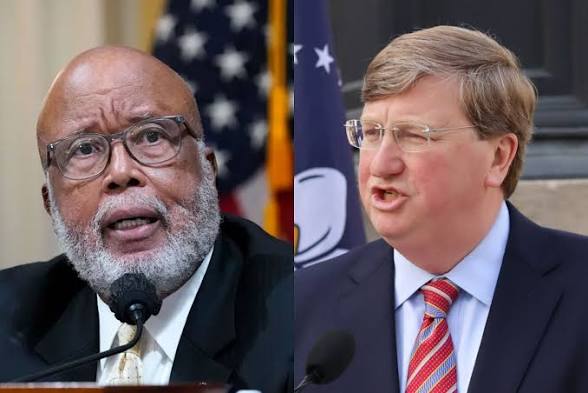
The decision to cancel Mississippi’s planned special legislative session on redistricting has quickly become one of the most talked-about political stories in America. Political leaders, voting rights advocates, and national commentators are all reacting after Mississippi Governor Tate Reeves announced that lawmakers would no longer meet to redraw judicial district boundaries before the upcoming elections.
The cancellation has triggered intense debate over voting rights, partisan strategy, race representation, and the future of redistricting across the southern United States. The controversy comes during a politically sensitive period when several Republican-led states are reconsidering congressional and judicial maps following major court rulings related to the Voting Rights Act.
For many Americans, the issue is larger than Mississippi itself. The battle reflects a broader national conflict over electoral power, minority representation, and how political districts are drawn in the modern era.
Why Mississippi Planned a Special Session

Earlier this year, Mississippi leaders prepared for a special legislative session focused on judicial redistricting. The proposed session was designed to redraw state Supreme Court districts after lower court rulings questioned whether the existing maps complied with voting rights protections.
Governor Reeves originally argued that the Legislature should maintain authority over the process rather than allowing courts to impose changes. However, legal developments dramatically altered the situation.
The Fifth Circuit Court of Appeals later vacated an earlier ruling that claimed Mississippi’s judicial maps violated the Voting Rights Act. Once the injunction disappeared, Reeves announced there was no immediate need for lawmakers to return to Jackson for a special session.
The governor publicly stated that the current maps could remain in place for future elections, effectively ending the urgency behind the session.
The Supreme Court Decision That Changed Everything
The Mississippi controversy cannot be understood without examining the recent U.S. Supreme Court ruling in Louisiana v. Callais. That decision weakened the ability of courts to require majority-minority districts under portions of the Voting Rights Act.
Legal experts say the ruling has already reshaped redistricting battles across the South. States including Tennessee, Georgia, Louisiana, Alabama, and South Carolina have all reconsidered congressional maps following the decision.
Critics argue the ruling could reduce minority voting power by allowing states to dismantle districts that previously ensured Black voters could elect preferred candidates. Supporters, meanwhile, claim the decision prevents unconstitutional racial gerrymandering and restores greater flexibility to state governments.
Mississippi suddenly became a central battleground in this national debate.
Governor Tate Reeves Faces Political Pressure
Governor Tate Reeves faced pressure from multiple directions during the controversy.
Some Republicans wanted immediate congressional redistricting to strengthen GOP control and potentially eliminate the state’s only Democratic congressional district. Others worried that changing maps too quickly before the 2026 midterms could create chaos, invalidate primary elections, or even hurt Republican candidates.
Reeves ultimately chose caution for now.
During radio interviews and public statements, the governor explained that Mississippi had already conducted congressional primaries, making immediate changes difficult. He suggested future redistricting remains likely before 2027 elections but insisted that rushing the process now could create unintended political consequences.
This balancing act highlights the political complexity surrounding modern redistricting battles.
The Debate Over Majority-Black Districts
One of the most controversial aspects of the Mississippi debate involves the future of majority-Black districts.
Mississippi has one congressional district represented by Bennie Thompson, the state’s lone Democratic member of Congress. Voting rights groups argue that district remains essential because Mississippi has one of the highest Black population percentages in the United States.
Civil rights advocates fear future redistricting efforts could dismantle that district and weaken Black political influence.
Supporters of new maps argue districts should prioritize geographic and political fairness rather than racial considerations. Opponents argue that approach ignores historical discrimination and modern voting patterns.
The conflict reflects a national struggle over how America balances race, representation, and constitutional law.
America Reacts to the Cancellation
Reaction across the country was immediate and deeply divided.
Democratic leaders and civil rights organizations welcomed the cancellation of the special session, arguing it prevented rushed political manipulation before important elections. Many activists said the move temporarily protected minority representation and voting stability.
Republican strategists, however, expressed frustration that Mississippi would not move faster on congressional changes. Some conservatives believe redistricting offers an opportunity to strengthen GOP control in the House of Representatives before future national elections.
Meanwhile, independent observers noted that Mississippi’s hesitation contrasts sharply with aggressive redistricting efforts happening elsewhere in the South.
The political divide reveals how redistricting has evolved from a technical process into a national ideological battle.
Southern States Enter a New Redistricting Era
Mississippi is far from alone in facing redistricting turmoil.
In Georgia, Governor Brian Kemp has already called a special session to redraw electoral maps. South Carolina leaders are also considering similar action. Tennessee recently approved controversial new congressional boundaries that sparked protests and lawsuits.
Political analysts describe the current moment as one of the most significant mid-decade redistricting waves in modern American history.
Traditionally, states redraw districts once every ten years following the census. However, recent court decisions and intense partisan competition are encouraging states to revisit maps earlier than expected.
Critics warn the trend could destabilize elections and weaken public confidence in democracy. Supporters insist states have legal authority to adjust maps whenever necessary.
Voting Rights Groups Sound the Alarm
Voting rights organizations responded strongly to Mississippi’s redistricting debate.
Groups focused on racial equality argue recent legal changes threaten decades of progress under the Voting Rights Act. Activists fear that reducing majority-minority districts could silence communities that historically struggled for political representation.
Several advocacy groups are preparing lawsuits in multiple states, arguing new maps unfairly dilute minority voting power.
Some legal scholars believe future Supreme Court battles are inevitable. Others predict Congress may eventually attempt federal voting reforms, although partisan gridlock makes such legislation difficult.
The Mississippi situation demonstrates how state-level redistricting disputes now carry major national implications.
Could Congressional Maps Still Change Later?
Although the special session was canceled, Governor Reeves made clear that redistricting discussions are not over.
The governor indicated Mississippi could still redraw congressional, legislative, and judicial maps before the 2027 election cycle.
That statement has kept political tensions high.
Republicans continue debating whether changing congressional districts could help strengthen GOP control in Washington. Democrats and civil rights groups remain alert for any future attempt to reshape majority-Black districts.
Political experts believe Mississippi may simply be delaying the fight rather than ending it permanently.
National Political Stakes Continue Rising
The Mississippi controversy also connects directly to the battle for control of Congress.
Republicans currently view redistricting as one possible strategy for securing additional House seats ahead of future elections. Democratic leaders warn these efforts amount to partisan gerrymandering disguised as legal reform.
Both parties understand that even small map adjustments can dramatically affect election outcomes.
Because the House of Representatives often operates on narrow margins, district boundaries can influence national policy, presidential agendas, and legislative priorities for years.
That reality explains why Mississippi’s decision generated headlines far beyond the state itself.
Legal Experts Predict More Court Battles
Constitutional scholars expect continued legal warfare over redistricting.
Future lawsuits may challenge whether new maps violate state constitutions, federal protections, or anti-discrimination laws. Courts across the country are already reviewing disputes involving race, partisan fairness, and voter access.
The Supreme Court’s recent rulings have shifted the legal landscape, but many unresolved questions remain.
Can states aggressively redraw maps for partisan advantage? How much racial consideration is legally acceptable? Should courts intervene more aggressively or defer to legislatures?
Mississippi’s canceled session may become an important chapter in answering those questions.
Public Trust and Election Confidence
Another major issue emerging from the controversy is public trust.
Critics argue constant map changes confuse voters and reduce confidence in elections. Frequent redistricting can force candidates to campaign in unfamiliar areas while voters suddenly find themselves represented by different lawmakers.
Election administrators also face logistical challenges when district lines shift close to voting deadlines.
Supporters of reform respond that updating maps is necessary to reflect legal rulings and political realities.
Regardless of political perspective, the Mississippi debate highlights growing national anxiety over election integrity and democratic fairness.
The Political Future of Mississippi
Mississippi’s political future now remains uncertain.
The state continues to lean strongly Republican statewide, but demographic changes and legal developments could shape future elections in important ways.
If congressional lines eventually change, it could transform the political careers of major figures including Bennie Thompson and other Mississippi leaders.
At the same time, civil rights organizations are likely to intensify organizing efforts throughout the state.
The cancellation of the special session may have delayed immediate action, but it also intensified national attention on Mississippi politics.
Conclusion
The cancellation of Mississippi’s redistricting special session has become far more than a routine political decision. It represents a major flashpoint in America’s ongoing battle over voting rights, racial representation, partisan power, and election law.
Governor Tate Reeves chose to pause immediate judicial redistricting efforts after new court rulings changed the legal landscape. Yet his comments also confirmed that future redistricting battles are still likely.
Across America, reactions remain sharply divided. Some see the cancellation as a victory for voting rights and election stability. Others view it as a missed opportunity for political realignment.
What happens next in Mississippi could influence similar battles nationwide as states continue navigating a rapidly changing redistricting environment.
FAQs
Why was the Mississippi redistricting session canceled?
Governor Tate Reeves canceled the special session after a federal appeals court vacated a ruling that previously required Mississippi to redraw Supreme Court districts.
What is the controversy about Mississippi redistricting?
The controversy centers on voting rights, majority-Black districts, partisan politics, and how electoral maps should be drawn following recent Supreme Court decisions.
Could Mississippi still redraw congressional districts later?
Yes. Governor Reeves stated that congressional and legislative maps could still be redrawn before the 2027 elections.
Why are voting rights groups concerned?
Advocates fear new redistricting efforts could weaken minority representation and reduce the political influence of Black voters in Mississippi and other Southern states.
What Supreme Court case influenced this issue?
The debate intensified after the Supreme Court’s Louisiana v. Callais decision, which weakened certain protections under the Voting Rights Act.
Which Mississippi politician is most affected?
Much attention has focused on Bennie Thompson because his majority-Black congressional district could face future changes.
How useful was this post?
Click on a star to rate it!
Average rating 0 / 5. Vote count: 0
No votes so far! Be the first to rate this post.
About the Author

usa5911.com
Administrator
Hi, I’m Gurdeep Singh, a professional content writer from India with over 3 years of experience in the field. I specialize in covering U.S. politics, delivering timely and engaging content tailored specifically for an American audience. Along with my dedicated team, we track and report on all the latest political trends, news, and in-depth analysis shaping the United States today. Our goal is to provide clear, factual, and compelling content that keeps readers informed and engaged with the ever-changing political landscape.