The phrase “Woke 2.0” is becoming part of a wider political debate in the United States as commentators, politicians and media figures argue over whether progressive political messaging is changing again.
The latest discussion comes at a politically sensitive moment. The 2026 midterm elections are approaching, Republicans are debating their electoral strategy, and Democrats are facing their own arguments about language, ideology and how to reconnect with working-class voters.
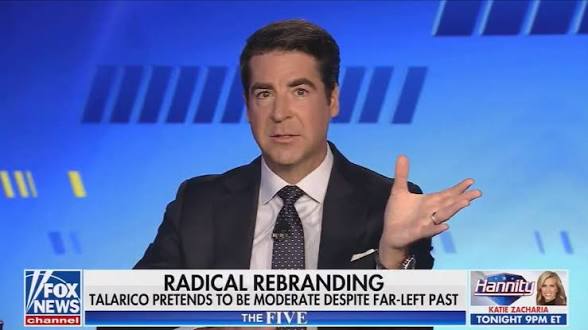
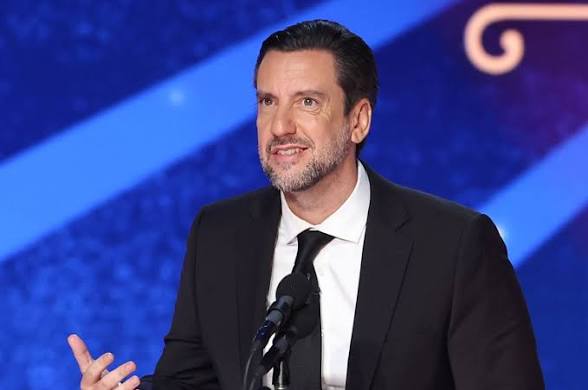
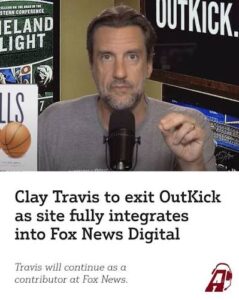
Conservative commentator Clay Travis has built a large audience by criticizing mainstream media narratives, progressive political culture and what he describes as ideological bias in public institutions. While the exact phrase “Woke 2.0” can mean different things to different commentators, the broader warning reflects a familiar conservative argument: that political movements can change their language without necessarily changing their underlying priorities.
But there is another side to the story.
The debate is not simply about whether one political ideology is winning. Republicans themselves are facing serious questions about turnout, messaging and voter confidence. Political analysts associated with conservative media have recently emphasized that the GOP must focus on issues such as affordability, security, trust and confidence rather than relying entirely on ideological attacks.
That creates a complicated political environment.
The Woke 2.0 warning, the debate over the media agenda and growing concerns inside the Republican Party are now becoming connected parts of a much larger political battle.
What Does “Woke 2.0” Actually Mean?
The term “woke” has changed dramatically over time.
Originally, the word was associated with awareness of racial and social injustice. However, it later became a major political label used by conservatives to criticize progressive activism, identity-based politics, corporate diversity initiatives and politically correct language.
Now, some commentators are using terms such as “Woke 1.0” and “Woke 2.0” to describe different stages of progressive political activism.
“Woke 1.0” is often used to describe the period when highly visible progressive movements and slogans dominated political and cultural debates.
“Woke 2.0,” meanwhile, is sometimes used as a warning that progressive politics may be changing its public image rather than disappearing completely.
That argument is politically important.
If voters reject unpopular language or policies, political movements may attempt to communicate their goals differently. Critics argue that this can create confusion because the language changes while the deeper political disagreements remain.
Supporters of progressive politics see the issue differently. They argue that political movements naturally evolve and that changing language or strategy can reflect a genuine attempt to address voter concerns.
The disagreement demonstrates why the phrase has become so controversial.
There is no universally accepted definition of “Woke 2.0.” Instead, it has become a political shorthand for a larger question:
Are political movements genuinely changing, or simply changing the way they present themselves?
Clay Travis and the Conservative Media Argument
Clay Travis has become one of the prominent voices in conservative political and media commentary.
His approach frequently focuses on criticism of what conservatives describe as institutional bias in mainstream journalism, entertainment, education and corporate culture.
The central argument often made by commentators in this space is that traditional media organizations have enormous influence over how political stories are framed.
A story is not only shaped by the facts included.
It can also be shaped by:
- Which facts receive the most attention
- Which voices are invited to speak
- Which controversies dominate headlines
- How political language is presented
- Which stories disappear quickly from public discussion
This is where the media agenda debate becomes particularly important.
Conservative commentators argue that mainstream media organizations can influence political priorities through story selection and framing.
Progressive and mainstream journalists, however, reject the idea that all unfavorable coverage is evidence of an organized agenda. They argue that news organizations must investigate governments, political leaders and powerful institutions regardless of ideology.
The reality is that public trust in media has become deeply connected to political identity.
Many Americans no longer simply disagree about politics.
They disagree about which information sources can be trusted in the first place.
Is There Really a Media Agenda?
The phrase “media agenda” is powerful because it suggests intentional coordination.
However, media bias does not always require journalists secretly working together.
News organizations can develop similar patterns because they share professional cultures, audience expectations and assumptions about what makes a story important.
At the same time, partisan media exists on both the political left and the political right.
A major development in recent years has been the growth of alternative media ecosystems. Reuters has reported on the growing influence of MAGA-aligned influencers and media figures, showing how political communication increasingly moves through partisan and personality-driven platforms rather than traditional institutions alone.
This means the political landscape is no longer dominated by a few television networks or newspapers.
Today, voters receive information from:
- Television networks
- Podcasts
- YouTube channels
- X and other social media platforms
- Independent journalists
- Political influencers
- Conservative media
- Progressive media
- Algorithm-driven content feeds
The result is a fragmented information environment.
Instead of one national conversation, America increasingly has multiple competing versions of political reality.
That is one reason why warnings about a “media agenda” remain so effective politically.
The Democratic Debate Over “Woke” Language
The conversation about “Woke 2.0” is not happening only among conservatives.
Democrats and progressives are also debating whether certain political language has damaged the party’s connection with ordinary voters.
Recent reporting has highlighted concerns among some Democratic figures that highly academic or activist-oriented vocabulary can alienate working-class voters.
The concern is simple:
Can a political party communicate progressive values without sounding disconnected from everyday people?
This question matters because language can become politically symbolic.
A phrase intended to sound inclusive or precise may appear confusing to voters outside political and academic circles.
Some Democrats now argue that the party needs clearer and more direct language.
Others warn that abandoning progressive terminology could weaken commitments to social justice and civil rights.
This creates a difficult balancing act.
Democrats must decide whether changing political language represents:
- A genuine shift in priorities, or
- A strategic effort to communicate existing priorities more effectively.
That debate is one of the reasons critics have begun discussing the possibility of “Woke 2.0.”
Why Republicans Are Also Feeling the Pressure
The title may suggest a simple story of conservative confidence and liberal weakness.
The actual political situation is more complicated.
Republicans are entering the 2026 midterm environment with their own concerns.
Recent political analysis has highlighted worries about Republican turnout and the importance of campaigning on practical issues such as affordability, public safety and voter confidence.
At the same time, major reports have described growing anxiety among Republicans about the direction of the party and the political environment heading into the midterms.
This is where the GOP panic element becomes important.
Republicans may benefit from criticizing unpopular progressive ideas, but attacking “wokeness” alone may not be enough to win elections.
Voters also care about everyday issues.
These include:
- Inflation and prices
- Housing costs
- Jobs
- Wages
- Public safety
- Immigration
- Healthcare
- Government competence
Political strategists increasingly understand that cultural arguments can energize a political base, but elections are often decided by voters who are more focused on practical concerns.
That is why Republicans face a strategic challenge.
They must decide how much attention to give to cultural battles while also addressing economic anxiety.
The Danger of Fighting Yesterday’s Political Battle
One of the biggest risks for both parties is fighting an outdated political war.
Republicans may continue attacking the most extreme examples of progressive activism even when voters are focused on different problems.
Democrats may assume that changing vocabulary automatically solves deeper concerns about ideology and public trust.
Both strategies can fail.
Politics changes quickly.
A message that worked four years ago may not work today.
This is especially true in the social media era.
Political narratives can rise rapidly, dominate public discussion and disappear within weeks.
The real challenge for political leaders is understanding what voters actually care about.
That requires more than watching viral clips or following partisan social media accounts.
It requires listening to people outside the political bubble.
The Rise of Alternative Media
One of the biggest changes in modern politics is the declining power of the traditional media gatekeeper.
Political figures can now communicate directly with millions of people.
Podcasters, YouTubers and influencers can sometimes generate more engagement than major television networks.
This has created enormous opportunities for commentators such as Clay Travis and many others across the political spectrum.
However, the new media environment also creates risks.
Alternative media can challenge institutional narratives, but it can also create new echo chambers.
People may accuse traditional television networks of bias while consuming highly partisan content online.
The problem is not simply mainstream media versus alternative media.
The deeper issue is whether audiences are willing to encounter information that challenges their existing beliefs.
That question will become increasingly important during the 2026 election cycle.
Why the “Woke 2.0” Narrative Could Be Powerful
Political narratives succeed when they are easy to understand.
“Woke 2.0” is powerful because it suggests a simple warning:
Do not assume that a political movement has disappeared simply because its language has changed.
For conservatives, this message can energize voters who believe that progressive institutions remain influential in media, education and corporate America.
But Democrats can also respond to the narrative by arguing that conservative politicians are using a vague label to avoid discussing specific policy questions.
That is the central political battle.
One side asks:
Are progressive ideas being repackaged?
The other asks:
Are conservatives using “woke” as a catch-all political weapon?
Both questions are likely to remain important.
The Real Test for the GOP
For Republicans, the biggest challenge may not be defeating “Woke 2.0.”
The biggest challenge may be proving that they can govern effectively.
Voters may agree with conservative criticism of media bias or progressive cultural politics while still being unhappy about economic conditions.
That is why campaign messaging matters.
A Republican candidate cannot assume that opposition to progressive ideology automatically produces votes.
Candidates must offer solutions.
The GOP’s strongest potential message may combine cultural arguments with practical policies.
For example:
- Lowering everyday costs
- Improving public safety
- Strengthening economic confidence
- Addressing border concerns
- Improving government efficiency
- Building voter trust
This approach is consistent with recent conservative political discussions emphasizing affordability, security, trust and confidence as major priorities.
The lesson is straightforward:
Criticism can attract attention, but solutions are necessary to build lasting political support.
Can Democrats Escape the “Woke” Label?
Democrats face an equally difficult challenge.
They must decide how to respond to a political label that has become deeply unpopular among many conservative and independent voters.
Simply denying the label may not work.
Changing language may also not be enough.
Democrats must demonstrate what they actually stand for.
Some voters may support progressive policies but dislike activist terminology.
Others may reject the policies themselves.
These are two completely different political problems.
A successful Democratic strategy must recognize that distinction.
The party may need to communicate more clearly about:
- Economic opportunity
- Healthcare costs
- Education
- Housing
- Worker wages
- Public safety
- Government accountability
If Democrats can move political discussion toward practical issues, they may reduce the power of broad cultural labels.
If they cannot, critics will continue arguing that “Woke 2.0” is simply the next stage of an existing political movement.
The Bigger Story: Trust
Ultimately, the most important issue behind the Clay Travis media debate may be trust.
Americans increasingly distrust:
- News organizations
- Political parties
- Government institutions
- Social media platforms
- Corporations
- Political experts
That distrust creates an opportunity for political commentators.
People who believe they are being ignored or misled actively search for alternative voices.
This explains the continued growth of political podcasts and independent media.
However, distrust alone does not guarantee truth.
Every information source should be examined critically.
The strongest political system is not one where citizens blindly trust institutions.
It is one where citizens ask difficult questions of every institution.
That includes mainstream media.
It also includes alternative media.
Final Thoughts
The Woke 2.0 Warning reflects a larger struggle over politics, media and public trust.
Clay Travis and other conservative commentators argue that progressive political ideas and media narratives continue to influence American culture, even when language and messaging evolve.
Democrats, meanwhile, are debating how to communicate with voters without relying on language that can appear disconnected from everyday life.
Republicans also face their own problems, particularly concerns about turnout, campaign strategy and voter confidence ahead of the 2026 midterms.
That means the political story is far more complicated than a simple victory for one side.
The coming election battles will likely be decided not only by ideological arguments but by something more practical:
Which political movement can convince voters that it understands their daily lives?
The media agenda debate will continue.
The argument over “woke” politics will continue.
The GOP’s internal concerns will continue.
But voters may ultimately focus on one question above all others:
Who can deliver results?
Frequently Asked Questions
1. What does “Woke 2.0” mean?
“Woke 2.0” is not an official political term. It is generally used by commentators to suggest that progressive activism may be changing its language or strategy rather than disappearing completely.
2. Who is Clay Travis?
Clay Travis is an American conservative commentator, media personality and co-host associated with political and cultural commentary.
3. Why is the media agenda debate important?
The debate focuses on whether news organizations influence public opinion through story selection, framing and editorial priorities. Critics argue that bias exists, while journalists argue that political scrutiny is a normal part of independent reporting.
4. Why are Republicans concerned about the 2026 midterms?
Republicans face questions about turnout, campaign messaging and voter confidence. Recent political discussions have emphasized the need to focus on practical issues such as affordability, security and trust.
5. Are Democrats changing their language on progressive issues?
Some Democratic leaders and commentators have argued that highly academic or activist-oriented language can alienate working-class voters, leading to a broader debate about political messaging.
6. Is alternative media replacing mainstream media?
Alternative media is becoming increasingly influential, especially through podcasts, social media and political influencers. However, traditional news organizations still play a major role in national political coverage.
7. What issues are likely to matter most to voters?
Economic conditions, affordability, jobs, public safety, immigration, healthcare and confidence in government are likely to remain major issues.
8. Can cultural issues alone win elections?
Cultural issues can energize political supporters, but many voters also judge parties based on economic conditions and government performance.
About the Author