Major Escalation: US Launches Fresh Strikes On Iran Following Cargo Ship Attacks
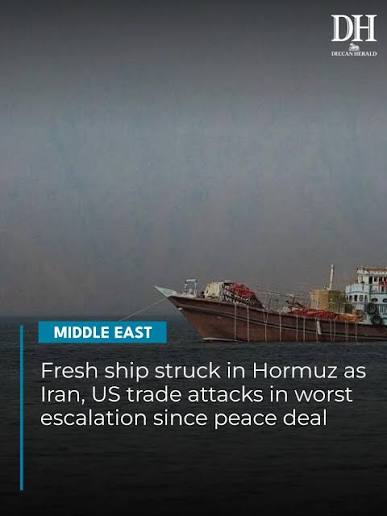
The Middle East has entered another dangerous chapter after the US launches fresh strikes on Iran following a drone attack on a commercial cargo ship in the Strait of Hormuz. The latest military action has raised concerns about a wider regional conflict, disrupted global shipping, and increased fears over energy security.
According to US military officials, the strikes targeted Iranian missile storage sites, drone facilities, and coastal radar installations. Washington described the operation as a limited response designed to protect commercial shipping and uphold freedom of navigation after Iran allegedly attacked the Singapore-flagged cargo vessel M/V Ever Lovely.
Iran, however, rejected the US position and argued that the vessel had violated transit rules. Iranian officials also warned that further military action could trigger additional retaliation.
The renewed violence comes just days after both countries attempted to preserve a fragile ceasefire, making this one of the most significant escalations in recent months.
Why Did the US Launch Fresh Strikes on Iran?
US Central Command announced that American aircraft struck several Iranian military targets after Thursday’s attack on the commercial cargo ship.
According to the Pentagon, the operation focused on:
- Missile storage facilities
- Drone launch infrastructure
- Coastal radar systems
- Military positions supporting attacks on commercial shipping
Officials said these targets were directly connected to the drone strike on the cargo vessel traveling through the Strait of Hormuz. The United States emphasized that the operation was intended as a defensive response rather than the beginning of a broader military campaign.
President Donald Trump also criticized the cargo ship attack, calling it a violation of the recently negotiated ceasefire and warning that attacks on international commerce would not go unanswered.
Cargo Ship Attack Sparks International Alarm
The incident that triggered the latest military response involved the Singapore-flagged cargo ship M/V Ever Lovely, which was reportedly struck by a one-way attack drone while leaving the Strait of Hormuz.
Although no fatalities were reported, maritime authorities described the attack as a serious threat to one of the world’s busiest shipping routes.
Following the incident:
- Commercial shipping slowed significantly.
- Several vessels changed course.
- Maritime security warnings were raised.
- Planned evacuations of stranded sailors were temporarily suspended.
The Strait of Hormuz remains one of the world’s most strategically important waterways because nearly one-fifth of global oil supplies pass through the narrow channel every day.
Even brief disruptions can have immediate consequences for energy markets, shipping companies, and global trade.
Iran Responds to the US Airstrikes
Iran strongly condemned the American military operation.
Iranian officials insisted the United States violated the ceasefire agreement and vowed to respond if additional attacks occur.
State media reported that Iranian military leaders accused Washington of using commercial shipping as a justification for expanding military operations in the region.
Meanwhile, Iran has continued asserting greater control over shipping routes through the Strait of Hormuz, increasing tensions with Western governments and international shipping companies.
The Strait of Hormuz is one of the world’s most critical maritime chokepoints. Connecting the Persian Gulf to the Gulf of Oman and the Arabian Sea, it serves as the primary route for oil exports from several major producers, including Saudi Arabia, Iraq, Kuwait, the United Arab Emirates, and Iran.
According to the U.S. Energy Information Administration (EIA), roughly one-fifth of global petroleum liquids consumption passes through the Strait of Hormuz each day. Any disruption in this narrow waterway can quickly affect energy supplies, shipping costs, and international trade.
The recent cargo ship attack has once again highlighted the vulnerability of this strategic route. Shipping companies are reassessing risks, while insurers are increasing premiums for vessels operating in the region. Some shipping firms have also instructed crews to follow enhanced security measures when transiting the Strait.
Military analysts warn that prolonged instability could reduce shipping traffic and force vessels to seek alternative routes, adding time and expense to global supply chains.
Global Oil Markets React
The news that US launches fresh strikes on Iran immediately influenced global financial and energy markets.
Oil prices rose as traders anticipated possible supply disruptions if hostilities continue. Although no major oil facilities were reportedly damaged, markets often react sharply to heightened geopolitical uncertainty in the Middle East.
Energy experts note several reasons for the market’s sensitivity:
- The Strait of Hormuz handles a significant share of global oil exports.
- Increased military activity raises insurance and transportation costs.
- Shipping delays can tighten short-term energy supplies.
- Investors tend to move toward safe-haven assets during geopolitical crises.
If tensions persist, consumers around the world could eventually experience higher fuel prices, increased transportation costs, and broader inflationary pressures.
International Reactions to the Escalation
The latest confrontation has prompted reactions from governments and international organizations around the world.
The United States stated that its strikes were intended to deter further attacks on commercial shipping and protect freedom of navigation in international waters. American officials emphasized that the operation was limited and focused on military targets linked to the cargo ship attack.
Iran condemned the strikes as an act of aggression and warned that it reserves the right to respond. Iranian leaders accused Washington of escalating regional tensions instead of supporting diplomatic solutions.
Meanwhile, several European governments called for restraint from both sides, urging renewed diplomatic engagement to prevent a broader regional conflict.
The United Nations also expressed concern over the rising violence and reiterated the importance of protecting civilian shipping and maintaining stability in international waterways.
Military Experts Assess the Situation
Defense analysts believe the latest US operation demonstrates a strategy of targeted deterrence rather than preparation for a full-scale war.
By striking missile storage sites, drone infrastructure, and radar facilities, the United States appears to be attempting to reduce Iran’s ability to launch additional attacks against commercial vessels without expanding the conflict unnecessarily.
However, experts caution that even limited military actions carry significant risks.
Potential concerns include:
- Miscalculation leading to wider military confrontation.
- Additional attacks on commercial shipping.
- Retaliation through regional proxy groups.
- Increased cyber operations targeting critical infrastructure.
- Greater instability across the Middle East.
Military specialists emphasize that the coming days will likely determine whether both countries seek de-escalation or continue exchanging military responses.
Shipping Industry Faces New Challenges
Commercial shipping companies are closely monitoring developments in the Gulf region.
Several maritime security organizations have issued updated advisories recommending heightened vigilance while transiting the Strait of Hormuz. Ship operators are reviewing routes, increasing onboard security procedures, and coordinating closely with naval authorities.
Marine insurers are also reassessing risk levels. Higher insurance premiums may increase transportation costs for cargo moving through the region, potentially affecting global supply chains.
If attacks continue, shipping companies may divert vessels around alternative routes where possible, although such options are often longer and more expensive than using the Strait of Hormuz.
These disruptions could have ripple effects across industries that rely on timely deliveries of oil, gas, manufactured goods, and raw materials.
How useful was this post?
Click on a star to rate it!
Average rating 0 / 5. Vote count: 0
No votes so far! Be the first to rate this post.
About the Author

usa5911.com
Administrator
Hi, I’m Gurdeep Singh, a professional content writer from India with over 3 years of experience in the field. I specialize in covering U.S. politics, delivering timely and engaging content tailored specifically for an American audience. Along with my dedicated team, we track and report on all the latest political trends, news, and in-depth analysis shaping the United States today. Our goal is to provide clear, factual, and compelling content that keeps readers informed and engaged with the ever-changing political landscape.