Saudi Deal Twist:Trump Demands Israel Ties,Panic,WW3
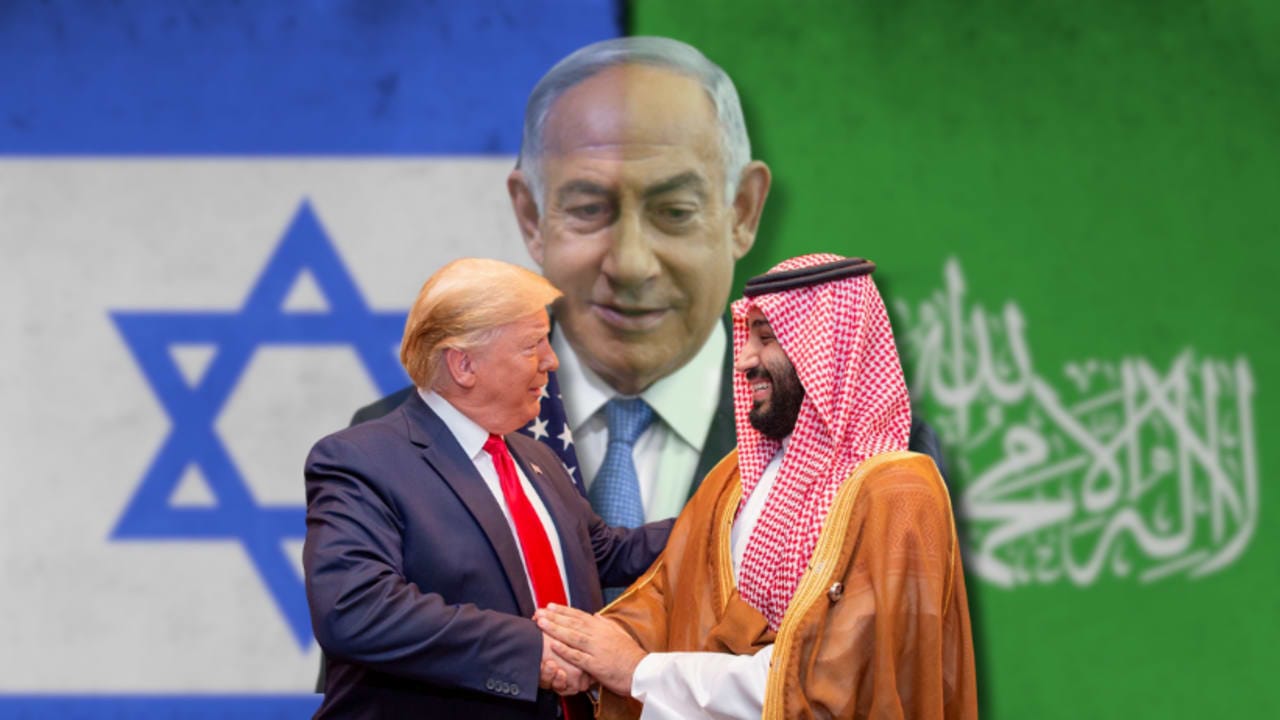
A major diplomatic storm is developing in the Middle East as discussions surrounding a United States–Saudi Arabia agreement become linked with the question of Saudi Arabia establishing relations with Israel. The move has triggered intense debate among regional powers, diplomats, and international observers who believe the decision could reshape alliances across the region.
The Trump administration has pushed for expanding the Abraham Accords, the framework that normalized Israel’s relations with several Arab countries. A possible Saudi-Israel breakthrough has long been considered one of the biggest diplomatic goals in the region. However, the issue remains highly sensitive because Saudi Arabia has repeatedly connected normalization with progress toward Palestinian statehood.
The latest developments have created excitement among supporters of Middle East peace but also raised fears that increased tensions could worsen existing conflicts. Some analysts warn that a major diplomatic shift without regional consensus could create instability rather than calm.
Trump’s Saudi Deal Strategy: Why Israel Ties Became Central
The United States has viewed Saudi Arabia as a critical partner in the Middle East because of its economic influence, energy importance, and strategic position. A stronger partnership with Riyadh has been a major foreign policy objective for Washington.
Reports indicate that Trump has connected elements of a Saudi nuclear cooperation agreement with Saudi participation in the Abraham Accords and diplomatic normalization with Israel.
The strategy behind this approach is based on several goals:
- Strengthening US influence in the Middle East
- Expanding the Abraham Accords
- Building cooperation between Israel and Arab nations
- Countering rival regional influence
- Creating new economic partnerships
Supporters argue that Saudi-Israel relations could transform the region by encouraging trade, technology sharing, security cooperation, and investment.
However, critics argue that diplomacy involving Israel and Saudi Arabia cannot ignore the Palestinian issue, which remains one of the most sensitive political questions in the region.
Why Saudi Arabia’s Decision Matters Globally
Saudi Arabia is not just another regional country. It holds enormous influence because of:
1. Economic Power
Saudi Arabia is one of the world’s largest energy producers and plays a major role in global oil markets.
Any major diplomatic decision by Riyadh can affect:
- International investment
- Energy prices
- Global markets
- Economic partnerships
2. Religious Importance
Saudi Arabia is home to Islam’s two holiest cities, Mecca and Medina. Because of this, its relationship with Israel carries symbolic importance across the Muslim world.
3. Strategic Location
The kingdom sits at the crossroads of important trade and security routes. Its foreign policy choices influence relationships between the United States, Iran, Israel, and other regional powers.
Israel-Saudi Normalization: The Biggest Diplomatic Challenge
The possibility of Saudi Arabia officially recognizing Israel has been discussed for years.
Several Arab countries have already joined the Abraham Accords, creating diplomatic relations with Israel. However, Saudi Arabia’s position has remained more complicated.
Riyadh has stated that normalization requires meaningful steps toward a Palestinian state.
This creates a major challenge because:
- Israel’s government has resisted some Palestinian statehood demands
- Saudi Arabia wants regional stability and domestic support
- The United States wants a historic diplomatic breakthrough
The disagreement over conditions remains the biggest obstacle.
Regional Reactions: Support, Concern, and Uncertainty
The possibility of a Saudi-Israel agreement has produced mixed reactions.
Supporters Say It Could Bring Stability
Those supporting the agreement argue that cooperation between Saudi Arabia and Israel could:
- Reduce hostility between regional powers
- Increase economic opportunities
- Improve security coordination
- Create a new diplomatic balance
They believe stronger relationships between former rivals can reduce the possibility of future conflicts.
Critics Warn of Increased Tensions
Opponents argue that rushing diplomatic agreements without solving deeper disputes could increase frustration.
They warn that:
- Regional groups may reject the agreement
- Iran could view it as a threat
- Palestinian issues could become more complicated
The Middle East has a history of sudden diplomatic changes producing unexpected consequences.
Could This Trigger a Larger Conflict?
The phrase “WW3” often appears during major international crises, but experts usually caution against assuming that every diplomatic confrontation will lead to a global war.
However, the Middle East remains one of the world’s most strategically sensitive regions.
Potential risks include:
Iran’s Response
Iran has historically opposed Israeli expansion of diplomatic ties with Arab countries. A stronger Saudi-Israel relationship could affect the balance between Tehran and its regional rivals.
Proxy Conflicts
The region includes several armed groups connected to larger geopolitical struggles. Any increase in tensions could influence these conflicts.
Military Competition
Security agreements, weapons deals, and nuclear discussions can create fears of an arms race.
Some analysts have raised concerns about nuclear proliferation risks surrounding Saudi nuclear cooperation, arguing that safeguards will be closely watched.
The Nuclear Deal Factor
Another major part of the discussion involves civilian nuclear cooperation between the United States and Saudi Arabia.
Saudi Arabia says nuclear energy could help diversify its economy and reduce dependence on oil.
Supporters say nuclear cooperation could:
- Provide clean energy
- Increase technological development
- Strengthen US-Saudi relations
Critics worry about:
- Nuclear security standards
- Regional competition
- Possible future military applications
Because of these concerns, any agreement is expected to face international scrutiny.
Trump’s Middle East Vision: Expanding the Abraham Accords
A central part of Trump’s Middle East strategy has been the expansion of the Abraham Accords, the diplomatic agreements that created formal relations between Israel and several Arab nations.
The previous agreements demonstrated that some Arab countries were willing to cooperate with Israel on issues such as:
- Technology
- Trade
- Tourism
- Security
- Investment
A Saudi-Israel normalization agreement would represent a much larger diplomatic achievement because Saudi Arabia is one of the most influential Arab nations.
For Trump, such a deal would be viewed as a major foreign policy success. It could strengthen US partnerships in the region and reshape the political landscape of the Middle East.
However, diplomacy between Saudi Arabia and Israel remains more complicated than previous agreements because of Saudi Arabia’s conditions regarding Palestinian rights and regional stability.
Israel’s Position on a Saudi Agreement
Israel has shown strong interest in establishing formal relations with Saudi Arabia. A deal with Riyadh could provide Israel with a major diplomatic breakthrough.
Potential benefits for Israel include:
Greater Regional Acceptance
Saudi recognition would be seen as a significant shift in the Arab world’s relationship with Israel.
Economic Opportunities
A relationship with Saudi Arabia could create opportunities in:
- Technology
- Infrastructure
- Tourism
- Energy cooperation
- Investment
Security Cooperation
Israel and Saudi Arabia share concerns about regional threats, particularly regarding Iran’s influence.
However, Israeli political leaders face challenges because any agreement may require compromises on sensitive issues, especially regarding the Palestinian territories.
Saudi Arabia’s Balancing Act
Saudi Arabia must carefully balance multiple interests.
The kingdom wants:
- Strong relations with the United States
- Economic growth through Vision 2030
- Regional security
- Influence in global politics
At the same time, Saudi leaders must consider public opinion across the Muslim world.
A sudden agreement with Israel without addressing Palestinian concerns could create political pressure.
This makes Saudi Arabia’s decision one of the most important diplomatic calculations in modern Middle Eastern politics.
Iran’s Potential Response to a Saudi-Israel Deal
Iran is expected to closely watch any developments involving Saudi Arabia and Israel.
For years, Iran and Israel have been involved in a wider regional competition involving:
- Military influence
- Political alliances
- Proxy groups
- Nuclear concerns
A stronger Saudi-Israel-US partnership could be viewed by Tehran as a challenge to its regional position.
Possible Iranian responses could include:
- Increased diplomatic opposition
- Stronger messaging against the agreement
- Attempts to strengthen alliances with regional partners
However, the exact response would depend on how any final agreement is structured.
Global Powers Watching the Saudi Deal
The Saudi-Israel question is not only a Middle Eastern issue. Major global powers are also monitoring developments.
United States
Washington sees Saudi Arabia as a strategic partner and wants to maintain influence in the region.
A successful agreement could strengthen American diplomatic standing.
China
China has expanded economic relations in the Middle East and has attempted to increase its diplomatic role.
Any major US-backed agreement could affect the competition between Washington and Beijing.
Russia
Russia also maintains relationships with several Middle Eastern countries and watches regional shifts carefully.
Changes in alliances could influence energy markets and geopolitical competition.
Oil Markets and Economic Impact
Saudi Arabia’s decisions often affect global economic conditions because of its importance in the energy sector.
A major diplomatic agreement could influence:
- Investor confidence
- Energy partnerships
- Regional development projects
Saudi Arabia’s Vision 2030 plan focuses on reducing dependence on oil by expanding sectors such as:
- Tourism
- Technology
- Infrastructure
- Renewable energy
Improved relations with Israel and the United States could support some of these economic goals.
Is World War 3 a Real Possibility?
The term “WW3” has become common in online discussions whenever tensions rise between major countries. However, experts generally argue that diplomatic crises do not automatically lead to a global war.
The Saudi-Israel issue involves serious geopolitical risks, but several factors could prevent escalation:
- Diplomatic negotiations
- International pressure
- Economic interests
- Regional security agreements
A larger conflict would depend on many unpredictable events, including military actions, alliances, and responses from regional powers.
The current situation is better understood as a high-stakes diplomatic struggle rather than proof of an unavoidable world war.
Future Scenarios: What Happens Next?
Several possible outcomes could emerge.
Scenario 1: Historic Saudi-Israel Agreement
A successful agreement could transform Middle East diplomacy.
Possible results:
- Expanded Abraham Accords
- Increased investment
- Stronger regional cooperation
- New security partnerships
Scenario 2: Slow Negotiations
The most likely outcome may be continued discussions.
Sensitive issues could delay any final agreement while both sides seek acceptable terms.
Scenario 3: Rising Regional Tensions
If negotiations collapse or create political backlash, tensions could increase.
Possible consequences:
- Stronger opposition movements
- Increased diplomatic disputes
- Greater regional uncertainty
Why This Deal Matters for the Future of the Middle East
The Saudi-Israel question represents a larger struggle over the future direction of the region.
One vision focuses on:
- Economic cooperation
- New alliances
- Diplomatic normalization
Another focuses on:
- Unresolved conflicts
- Political disagreements
- Historical grievances
The final outcome will depend on whether leaders can balance strategic interests with public expectations.
Conclusion: A Diplomatic Gamble With Global Consequences
The Saudi deal twist involving Trump, Israel, and Middle East diplomacy has become one of the most closely watched geopolitical developments.
A Saudi-Israel agreement could create a historic shift in regional relationships and strengthen cooperation between former rivals. However, the path remains complicated because of Palestinian issues, regional rivalries, and security concerns.
While dramatic headlines warn of panic and global conflict, the reality is more complex. The future depends on negotiations, political decisions, and how regional powers respond.
The Saudi deal is not just about one agreement — it represents a broader battle over diplomacy, security, and influence in the Middle East.
Frequently Asked Questions (FAQs)
1. What is the Trump Saudi Israel deal?
The Trump Saudi Israel deal refers to efforts to connect stronger US-Saudi relations with the possibility of Saudi Arabia normalizing diplomatic relations with Israel.
2. Why is Saudi Arabia important in Middle East politics?
Saudi Arabia is important because of its economic power, oil production, religious significance, and strategic location.
3. Has Saudi Arabia recognized Israel?
Saudi Arabia has not officially established diplomatic relations with Israel, though discussions about normalization have taken place.
4. Why does Trump want Saudi Arabia to join the Abraham Accords?
Trump has promoted expansion of the Abraham Accords as a way to increase cooperation between Israel and Arab countries.
5. Could the Saudi-Israel deal cause a major war?
A diplomatic agreement itself is unlikely to automatically cause a global war, but regional tensions could increase depending on reactions from other countries.
6. How could Iran react to Saudi-Israel normalization?
Iran may oppose closer Saudi-Israel ties because of existing regional competition with Israel and US allies.
7. What role does the United States play in the deal?
The United States acts as a key mediator and strategic partner for both regional security and diplomatic negotiations.
8. Why is the Palestinian issue important?
Saudi Arabia has linked normalization with Israel to progress on Palestinian issues, making it a major factor in negotiations.
How useful was this post?
Click on a star to rate it!
Average rating 0 / 5. Vote count: 0
No votes so far! Be the first to rate this post.
About the Author

usa5911.com
Administrator
Hi, I’m Gurdeep Singh, a professional content writer from India with over 3 years of experience in the field. I specialize in covering U.S. politics, delivering timely and engaging content tailored specifically for an American audience. Along with my dedicated team, we track and report on all the latest political trends, news, and in-depth analysis shaping the United States today. Our goal is to provide clear, factual, and compelling content that keeps readers informed and engaged with the ever-changing political landscape.