Thanksgiving travel is facing growing disruption across the United States as severe weather threatens major airports during one of the busiest holiday periods of the year. Hundreds of flights have experienced delays, while airlines and airport authorities prepare for additional problems caused by heavy rain, strong winds and possible flooding.
The timing is particularly difficult for millions of Americans planning to visit family and friends for Thanksgiving. Travelers are already dealing with recent airline technology failures, expensive airfares and crowded airport terminals. Now, approaching storm systems could create another challenge for the country’s aviation network.
According to recent flight-tracking figures reported by the Associated Press, more than 1,100 flights were delayed and 31 were cancelled on Wednesday morning, November 25. These figures highlight the pressure facing airlines as holiday travel reaches its busiest period.
AP News
The Federal Aviation Administration (FAA) has also warned that weather conditions could affect flights throughout the holiday week. Rain and thunderstorms are expected across several regions, including the Southeast, Mid-Atlantic and Northeast.
Meanwhile, the West Coast is preparing for heavy rainfall, strong winds and coastal flooding.
With Thanksgiving arriving on November 26, passengers are being encouraged to monitor their flight information, allow additional time at airports and prepare for possible schedule changes.
Thanksgiving Travel Faces a Difficult Start
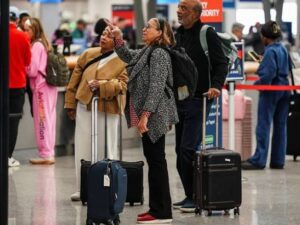
Thanksgiving is traditionally one of the most important travel periods in the United States. Millions of people travel by plane, car, train and bus to celebrate the holiday with relatives.
However, this year’s travel period has started under unusual pressure.
Airlines are managing high passenger demand while dealing with operational problems and challenging weather forecasts. Recent technical failures have also raised concerns about whether the aviation industry can maintain reliable services throughout the holiday rush.
The FAA expects more than 417,000 flights during the nine-day Thanksgiving travel period. This would make it the busiest Thanksgiving air travel period in 16 years, according to the Transportation Department’s November 23 announcement.
US Department of Transportation
Tuesday, November 24, was expected to be the busiest day, with more than 52,000 flights scheduled.
Wednesday and Thursday are also important travel days. Many passengers are trying to reach their destinations before Thanksgiving celebrations begin.
Unfortunately, storm systems moving across both coasts could complicate those plans.
Even a relatively small number of weather-related delays can affect thousands of passengers. This happens because aircraft and airline crews operate on interconnected schedules.
When one flight arrives late, its next departure may also be delayed. As a result, problems at one airport can spread to other cities.
For passengers with connecting flights, the situation can become especially stressful.
More Than 1,100 Flights Delayed on Wednesday
Flight disruptions are already affecting holiday travelers.
According to Associated Press reporting on Wednesday morning, FlightAware recorded more than 1,100 delays and 31 cancellations across the United States.
Although these figures represent a snapshot rather than the complete day’s totals, they demonstrate the challenges facing the aviation industry.
AP News
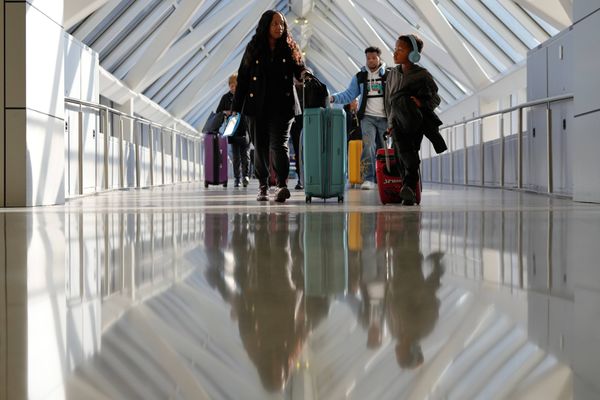
Airports are experiencing increased passenger traffic as people attempt to reach their destinations before Thanksgiving.
Long security lines are adding another problem.
Some travelers have reported particularly long waits at major airports. Miami International Airport experienced security lines lasting approximately 81 minutes, while Newark and Portland also reported waits of around 40 minutes.
These conditions show why passengers should arrive earlier than usual.
A flight can be operating on schedule while passengers still face difficulties reaching their departure gates because of crowded terminals and security queues.
Travelers should therefore consider the entire airport journey rather than focusing only on the scheduled departure time.
Checking in online, reviewing airport security information and keeping boarding documents accessible can help reduce unnecessary stress.
Powerful Storms Threaten the East Coast
One of the biggest concerns for Thanksgiving travel is a developing storm system expected to affect the Eastern Seaboard.
Forecasters are warning about heavy rainfall and strong winds from the Carolinas through the Mid-Atlantic and into the Northeast.
The storm could affect several major airport markets, including:
Atlanta, Georgia
Charlotte, North Carolina
Washington, D.C.
Philadelphia, Pennsylvania
New York City
Boston, Massachusetts
Miami and Orlando, Florida
These cities are important parts of the American aviation network. Disruptions at major airports can affect flights operating far beyond the immediate storm area.
According to Reuters, the storm is expected to bring heavy rain and wind across the East Coast during the Thanksgiving travel period. Some areas could experience rainfall rates approaching one inch per hour, while wind gusts could exceed 50 mph.
Reuters
Such conditions can make airport operations more difficult.
Heavy rainfall can reduce visibility and affect runway conditions. Strong winds can also create challenges for aircraft during takeoff and landing.
Air traffic controllers may need to increase the distance between aircraft to maintain safe operations. This can reduce the number of flights an airport can handle during busy periods.
Even when an airport remains open, airlines may need to delay departures or adjust flight schedules.
New York and the Northeast Face Thanksgiving Weather Concerns
New York City is among the locations receiving particular attention.
The storm is expected to move into the New York region on Thanksgiving Day, bringing rain and potentially strong winds.
The weather could also affect the 100th Macy’s Thanksgiving Day Parade.
The famous parade attracts large crowds and features enormous character balloons. However, strong winds can make operating these balloons dangerous.
New York City regulations prohibit full-size parade balloons when sustained winds exceed 23 mph or wind gusts exceed 35 mph.
Organizers may therefore need to adjust balloon operations depending on actual weather conditions.
The National Weather Service forecast discussed by the Associated Press suggested that rain could hold off until after the parade begins and potentially finishes. However, wind conditions remain an important concern.
Los Angeles Times+1
For air travelers, the same weather system could create additional problems throughout the Northeast.
Passengers flying through New York, Philadelphia and Boston should pay close attention to airline notifications.
West Coast Storms Add to Travel Problems
The East Coast is not the only region facing challenging weather.
Parts of the West Coast are also preparing for heavy rain, strong winds and possible coastal flooding.
Washington state, Oregon and California are among the areas expected to experience unsettled weather.
The San Francisco Bay Area is receiving particular attention because of concerns about coastal flooding.
High tides, strong onshore winds and heavy rainfall could increase water levels in vulnerable coastal areas.
San Francisco International Airport is preparing for possible weather-related problems by checking drainage systems and pump stations.
Airport officials have also discussed preparations involving sandbags and portable flood barriers.
These measures are intended to reduce the risk of flooding affecting airport operations.
According to the Associated Press, airport crews are also keeping drainage areas clear and preparing backup equipment.
Los Angeles Times
Weather-related disruptions at San Francisco International Airport could affect passengers connecting to other destinations.
San Francisco is an important hub for domestic and international travel. Therefore, even limited disruptions could create delays across several routes.
Travelers flying through the region should check whether their airlines have issued weather advisories or flexible rebooking options.
Snow Could Affect Other Parts of the Country
Rain and flooding are not the only weather concerns.
Snow is also possible in several inland regions.
Parts of the Rockies, northern Michigan, western New York and northwestern Pennsylvania have been identified as areas where winter weather could create travel difficulties.
Snow and icy conditions can affect airport runways, ground transportation and road access.
Airports may need additional time to clear runways and prepare aircraft before departure.
Passengers connecting through airports in affected regions should also consider the possibility of delays even if their final destination has clear weather.
This is because airline schedules depend on aircraft arriving from other cities.
Recent Airline Technology Failures Increase Concerns
Weather is not the only problem facing Thanksgiving travelers.
The aviation industry has experienced several significant technology disruptions in recent weeks.
These incidents have raised questions about operational reliability during a period when airlines are already handling substantial passenger demand.
FAA Network Failure Disrupted Nationwide Flights
On November 13, a communications-related network malfunction at the Federal Aviation Administration caused a major disruption.
The incident triggered a nationwide ground stop and affected thousands of flights.
Reuters reported that the disruption affected more than 18,000 flights and approximately one million passengers. The nationwide interruption lasted nearly five hours.
Investing.com
The incident became one of the most significant recent disruptions to American air travel.
The FAA subsequently paused the deployment of additional routers while the agency examined the problem.
The failure created concerns about the reliability of systems supporting air traffic control operations.
The timing was particularly unfortunate because Thanksgiving travel demand was approaching.
United and Delta Also Experienced Technical Problems
Additional airline disruptions followed the FAA incident.
United Airlines experienced a widespread technology outage, while Delta Air Lines encountered problems involving an automated aircraft weight-and-balance system.
Delta’s system problem resulted in more than 1,000 delayed flights on one Sunday, according to Associated Press reporting.
The airline later said its operations had stabilized.
Los Angeles Times+1
These incidents illustrate how modern airline operations depend on complex technology.
Airlines use automated systems to coordinate aircraft movements, calculate operational requirements and manage schedules.
When these systems fail, employees may need additional time to complete essential tasks.
The result can be delayed departures, aircraft waiting at gates and missed connections.
For passengers, the combination of technical problems and severe weather creates additional uncertainty.
Thanksgiving Air Travel Demand Reaches a 16-Year High
Despite the possibility of disruptions, demand for Thanksgiving travel remains substantial.
The Transportation Department and FAA expect more than 417,000 flights during the nine-day holiday period.
This forecast represents the busiest Thanksgiving air travel period in 16 years.
The FAA also identified November 24 as the expected busiest day, with more than 52,000 flights forecast.
US Department of Transportation
The high volume of flights creates additional pressure on airports, airlines and air traffic controllers.
Even normal operational problems can become more difficult to manage when thousands of flights are moving through the system.
Passenger demand is also affecting airport security operations.
The Associated Press reported that the Transportation Security Administration expected to screen approximately 17.6 million passengers from Tuesday through Monday.
This includes travelers heading to Thanksgiving celebrations and people returning home after the holiday.
AP News
Millions of Americans Are Also Traveling by Road
Air travel is only one part of the Thanksgiving transportation picture.
The American Automobile Association estimated that approximately 81.5 million Americans would travel at least 50 miles during a six-day holiday period.
Most of these travelers are expected to use cars.
Although this estimate is slightly below last year’s 81.6 million figure, it still represents an enormous number of people on American roads.
Investing.com+1
Weather conditions could create problems for drivers as well.
Heavy rain can reduce visibility and increase the risk of accidents. Strong winds can make driving difficult, especially for larger vehicles.
Snow and icy roads could also affect travel in northern and mountainous areas.
Drivers should check road conditions before leaving and allow additional time for their journeys.
Rising Airfares Add Financial Pressure
Another challenge for Thanksgiving travelers is the rising cost of airline tickets.
Domestic airfares have increased compared with previous holiday periods.
According to Reuters, Kayak data showed that average domestic Thanksgiving airfares were approximately $469 two weeks before the holiday. This represented an increase of around 57% compared with the previous year.
Hopper also reported that Thanksgiving round-trip domestic fares were significantly higher than a year earlier.
Investing.com+1
Higher ticket prices are making travel more expensive for families.
Some passengers are reconsidering their plans because of the combination of expensive flights and possible disruptions.
Others are choosing to drive instead.
The financial impact can become even greater when a passenger experiences an unexpected delay.
Additional hotel nights, airport transportation, meals and replacement tickets can increase the total cost of a trip.
Travelers should review their airline’s policies before departure.
They should also check whether their credit cards or travel insurance policies provide protection against specific travel disruptions.
However, coverage varies, and passengers should not assume every weather-related expense will be reimbursed.
Which Airports Could Experience the Biggest Disruptions?
Weather forecasts suggest that several major airport regions could experience challenging conditions.
The exact impact will depend on the storm’s movement, wind intensity, rainfall and local airport operations.
| Airport region | Main weather concern |
|---|---|
| Atlanta | Heavy rain and possible thunderstorms |
| Charlotte | Rain and strong winds |
| Miami | Rain and thunderstorms |
| Orlando | Unsettled weather |
| Washington, D.C. | Heavy rain and coastal storm effects |
| Philadelphia | Rain and strong winds |
| New York City | Thanksgiving Day rain and wind |
| Boston | Rain and possible wind-related delays |
| San Francisco | Heavy rain and coastal flooding |
The Points Guy reported that several East Coast airports could face increased disruption risks beginning Wednesday and continuing into Thanksgiving Day.
The Points Guy
However, this does not mean every flight at these airports will be delayed.
Weather conditions can vary significantly between airports, routes and departure times.
Some flights may operate normally while others experience substantial delays.
Passengers should therefore rely on live airline updates rather than assuming that all flights in a particular region will be affected.
Why One Delayed Flight Can Affect Hundreds of Others
Many passengers wonder why a weather problem in one city can affect flights across the country.
The answer is connected to the way airlines organize their operations.
Aircraft rarely remain at a single airport throughout the day.
Instead, they travel between multiple destinations according to carefully planned schedules.
For example, an aircraft scheduled to fly from Atlanta to New York may first arrive in Atlanta from another city.
If the incoming flight is delayed because of bad weather, the aircraft may not be ready for its next departure.
This can create a chain reaction.
The same problem can affect pilots, cabin crew and ground staff.
Airline employees must follow strict working-hour requirements. A delayed schedule can therefore create additional staffing complications.
Connecting passengers may also miss their onward flights.
When several airports experience poor weather at the same time, these problems can spread across the airline network.
This explains why weather disruptions sometimes continue even after conditions improve.
Airlines may need several hours to reposition aircraft, reorganize crews and return schedules to normal.
What Airlines Are Doing to Manage Thanksgiving Delays
Airlines are preparing for a difficult holiday period by monitoring weather forecasts and adjusting operations where necessary.
Their priorities include maintaining safe aircraft operations, communicating with passengers and reducing the impact of unexpected disruptions.
Some airlines may introduce travel waivers for passengers flying through affected airports.
These waivers can allow eligible customers to change their travel dates without paying certain change fees.
However, the conditions depend on the airline, route and specific advisory.
United Airlines, for example, has issued a weather-related travel advisory for passengers traveling through San Francisco International Airport.
Travelers should check the airline’s official website for the latest information about eligibility and alternative travel arrangements.
The Points Guy
Travel Waivers Can Help Passengers Avoid Problems
A travel waiver can be useful when a passenger expects difficult weather at their departure airport or destination.
Depending on the airline’s policy, passengers may be able to:
Change their departure date.
Select another available flight.
Avoid certain change fees.
Adjust their travel plans before severe weather arrives.
However, passengers should read the conditions carefully.
Not every ticket qualifies for free changes, and some restrictions may apply.
Travelers should also avoid cancelling their tickets without understanding the refund and rebooking rules.
Important Tips for Thanksgiving Travelers
With Thanksgiving approaching, passengers can take several practical steps to reduce the risk of travel problems.
Preparation is especially important for people flying through major airports in storm-affected regions.
1. Check Flight Status Before Leaving Home
Passengers should check their flight status directly through their airline’s website or mobile application.
Flight information can change quickly during severe weather.
Checking before leaving home can help passengers avoid unnecessary airport trips.
2. Arrive at the Airport Early
Crowded terminals and longer security lines can increase the time needed to reach departure gates.
Passengers should follow their airline’s recommended arrival time and consider allowing additional time during the holiday rush.
3. Enable Airline Notifications
Airline applications can provide important updates about gate changes, departure times and cancellations.
Passengers should enable notifications and keep their contact details updated.
4. Keep Essential Items in Carry-On Bags
Travelers should keep important items in their carry-on luggage.
These include:
Prescription medication.
Identification documents.
Phone chargers.
Essential toiletries.
Important travel documents.
A change of clothes.
This preparation can be helpful if checked baggage is delayed.
5. Review Alternative Flight Options
Passengers traveling for important family events should consider available alternative flights.
Knowing which flights operate later in the day or through nearby airports can make rebooking easier if disruptions occur.
6. Monitor Weather at Connecting Airports
Checking only the weather at the departure and arrival cities is not enough.
Connecting airports may experience different conditions.
A storm affecting a connecting city could disrupt a journey even when both the departure and final destination have clear skies.
7. Understand Refund and Rebooking Rights
Passengers should understand their rights when flights are cancelled or significantly changed.
In the United States, passengers generally have the right to a refund when an airline cancels a flight or makes a significant schedule change and the passenger chooses not to accept the alternative arrangement.
Refund eligibility and additional compensation depend on the circumstances and applicable rules.
The U.S. Department of Transportation provides information about airline refund requirements.
Travelers should keep receipts, cancellation notices and other relevant documents.
Could Thanksgiving Travel Problems Continue After the Holiday?
The travel situation may remain challenging even after Thanksgiving Day.
Many Americans will begin returning home on Friday, Saturday and Sunday.
The return journey could create another major increase in airport demand.
Sunday after Thanksgiving is traditionally one of the busiest travel days of the year.
Airlines will need to manage returning passengers while continuing normal domestic and international operations.
Any delays that begin during Thanksgiving could also affect aircraft and crew availability later in the weekend.
This is particularly important when weather problems occur across multiple regions.
The Points Guy has highlighted the potential for further disruptions during the post-Thanksgiving travel rush, especially if bad weather affects major airport hubs.
The Points Guy
Passengers returning home should therefore avoid assuming that travel conditions will immediately improve after November 26.
Checking flight schedules before heading to the airport will remain important throughout the weekend.
The Bigger Challenge Facing America’s Aviation Industry
The Thanksgiving travel disruptions highlight wider challenges facing the American aviation industry.
Airlines must manage increasing passenger expectations, complex technology systems, airport congestion and unpredictable weather.
The recent FAA network malfunction has also renewed attention on the importance of reliable aviation infrastructure.
Technology plays a central role in modern air travel.
Air traffic control systems, airline scheduling platforms and aircraft management software must work together to keep flights operating safely.
When one part of this network experiences problems, the effects can spread quickly.
The recent United and Delta disruptions demonstrate how technical failures can create difficulties even without severe weather.
Now, with storms threatening important travel corridors, airlines face another test.
The FAA and Transportation Department will also be under pressure to maintain safe and efficient operations during the holiday period.
Ultimately, passenger safety remains more important than maintaining every scheduled departure time.
Airlines may need to delay flights when weather conditions make operations unsafe.
For travelers, patience and preparation will be essential.
Conclusion: Thanksgiving Travelers Face a Challenging Holiday Period
Thanksgiving travel delays are creating additional uncertainty for millions of Americans preparing to celebrate the holiday.
More than 1,100 flight delays were already reported on Wednesday morning, November 25, while storms threatened major airport regions across the East and West coasts.
Recent FAA, United and Delta technology problems have added to concerns about airline reliability.
The FAA’s forecast of more than 417,000 flights during the nine-day holiday period highlights the enormous scale of this year’s travel demand.
Heavy rain, strong winds, coastal flooding and possible snow could create further problems for passengers.
However, not every airport or flight will experience disruption.
Travelers can reduce uncertainty by checking flight information regularly, arriving early, monitoring weather forecasts and understanding their airline’s rebooking policies.
As Thanksgiving approaches, the biggest priority for airlines and airport authorities will be keeping passengers safe while maintaining operations as smoothly as possible.
Frequently Asked Questions (FAQs)
1. Why are Thanksgiving flights being delayed in 2026?
Thanksgiving flights are facing delays because of severe weather forecasts, heavy passenger demand and recent airline technology failures. Storms across the East and West coasts could create additional disruptions.
2. How many flights have been delayed before Thanksgiving?
According to Associated Press reporting, FlightAware recorded more than 1,100 flight delays and 31 cancellations on Wednesday morning, November 25, 2026. These figures are a snapshot and may change throughout the day.
AP News
3. Which US airports could be affected by Thanksgiving storms?
Airports serving Atlanta, Charlotte, Miami, Orlando, Washington, Philadelphia, New York, Boston and San Francisco could experience weather-related disruptions.
4. Will New York airports experience Thanksgiving delays?
New York airports face a risk of weather-related delays because heavy rain and strong winds are forecast in the region on Thanksgiving Day. Actual disruptions will depend on changing weather conditions.
5. What is causing the East Coast storm?
A developing coastal storm is expected to bring heavy rainfall and strong winds across parts of the Eastern United States. The system could affect several major cities and transportation networks.
6. Are West Coast flights also affected?
Yes. Heavy rain, strong winds and possible coastal flooding could affect parts of Washington, Oregon and California. San Francisco is among the areas receiving particular attention.
7. What should passengers do if their Thanksgiving flight is delayed?
Passengers should check their airline’s application, contact the airline about alternative flights, monitor airport announcements and keep essential items in their carry-on luggage.
8. Can passengers change their Thanksgiving flights without paying fees?
Some airlines may offer travel waivers for passengers traveling through affected airports. However, eligibility depends on the airline’s announcement, ticket conditions and travel dates.
9. Will Thanksgiving travel delays continue after November 26?
Further disruptions are possible during the post-Thanksgiving return period. Sunday is traditionally one of the busiest travel days, and continuing storms could affect airline schedules.
10. Where can travelers check real-time flight delays?
Travelers can check flight information through their airline’s official website or application. They can also use FlightAware and the FAA’s National Airspace System Status website for additional information.
About the Author