Kyiv Obliteration:Russia Launches Massive Attack On Capital,Panic
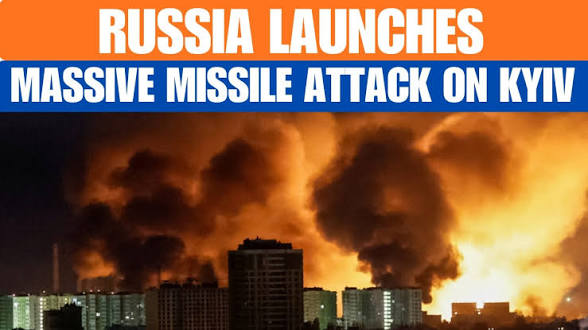
Russia launched one of its biggest aerial assaults on Ukraine’s capital, Kyiv, in the latest escalation of the ongoing war. Waves of ballistic missiles, cruise missiles, and attack drones targeted the city for several hours overnight, forcing thousands of residents into shelters as explosions echoed across multiple districts. Ukrainian officials reported casualties, fires, and extensive infrastructure damage while air defense systems attempted to intercept incoming threats.
The latest strike comes amid increasing tensions between Moscow and Kyiv as both sides continue long-range attacks on military, energy, and logistics targets. The assault has renewed international concerns over the humanitarian situation and the future direction of Europe’s largest conflict since World War II.
One of the Largest Attacks on Kyiv
According to Ukrainian authorities, Russia launched 41 missiles and 125 drones, with Kyiv being the primary target. Air raid sirens sounded across the capital during the early hours, sending residents rushing to underground metro stations, parking garages, and bomb shelters.
Ukraine’s Air Force said many incoming weapons were intercepted, but several missiles and drones penetrated the defenses, causing destruction across multiple districts of the city.
Officials described the assault as one of the largest attacks on Kyiv in recent months.
Explosions Across the Capital
Residents reported continuous explosions lasting for hours.
Emergency services responded to multiple incidents involving:
- Fires in residential buildings
- Damage to office complexes
- Industrial facility fires
- Damaged transportation infrastructure
- Broken windows across large sections of the city
Authorities also confirmed damage near metro infrastructure used as public shelters during attacks.
Casualties Reported
Emergency officials confirmed that civilians were killed and dozens injured during the strikes.
Rescue teams worked throughout the morning searching damaged buildings and helping trapped residents.
Officials warned that casualty figures could change as rescue operations continued.
Several injured civilians were transported to hospitals across Kyiv while emergency crews extinguished fires in numerous neighborhoods.
Ukraine’s Air Defenses Under Pressure
Although Ukrainian air defenses intercepted a significant number of incoming missiles and drones, officials acknowledged that defending against large-scale attacks remains increasingly difficult.
Military officials stated that:
- Numerous drones were destroyed
- Several ballistic missiles were intercepted
- Some missiles successfully reached their targets
Ukraine has repeatedly called for additional Patriot missile systems and interceptor supplies from Western allies to strengthen its defensive capabilities.
Russia’s Strategy
Military analysts believe Russia continues employing combined attacks involving:
- Ballistic missiles
- Cruise missiles
- Shahed attack drones
- Decoy drones
Launching multiple weapon types simultaneously complicates interception efforts and places significant pressure on Ukrainian air-defense networks.
Analysts say these attacks also seek to exhaust interceptor stockpiles before future operations.
Why Kyiv Remains a Primary Target
Kyiv remains Ukraine’s political, military, and administrative center.
Targeting the capital allows Russia to:
- Pressure Ukrainian leadership
- Disrupt government operations
- Damage infrastructure
- Create psychological pressure among civilians
- Demonstrate long-range strike capability
Despite repeated attacks, Ukrainian government institutions continue operating.
Ukraine Responds
Ukraine has intensified long-range drone operations against targets inside Russia, including energy infrastructure and logistics facilities.
Recent Ukrainian strikes reportedly targeted fuel depots, industrial facilities, and other sites that Kyiv says support Russia’s military operations.
Both countries have increasingly expanded strikes beyond frontline battlefields.
Civilian Life Disrupted
The overnight attack severely disrupted normal life in Kyiv.
Residents faced:
- Extended air-raid alerts
- Transportation disruptions
- Temporary power interruptions in some areas
- School schedule adjustments
- Delays to public services
Many families spent several hours underground before authorities declared it safer to leave shelters.
Damage Assessment Continues
Engineers continued inspecting:
- Apartment buildings
- Roads
- Utility systems
- Public buildings
- Commercial properties
Authorities warned residents to avoid damaged structures until inspections were completed.
Emergency services also worked to restore electricity and other essential services where needed.
International Reaction
World leaders condemned attacks on civilian areas and renewed calls for protecting civilians under international humanitarian law.
Several governments reaffirmed military and humanitarian assistance for Ukraine while urging renewed diplomatic efforts to reduce violence.
Western leaders also reiterated support for strengthening Ukraine’s air-defense capabilities.
Humanitarian Impact
Each large-scale strike increases humanitarian challenges.
Families continue dealing with:
- Property destruction
- Temporary displacement
- Psychological stress
- Medical emergencies
- Interrupted education
Aid organizations remain active across affected regions, providing emergency assistance and shelter.
Economic Consequences
Large missile attacks also affect Ukraine’s economy by damaging infrastructure and disrupting business activity.
Potential impacts include:
- Repair costs
- Insurance losses
- Reduced productivity
- Supply chain disruptions
- Increased reconstruction expenses
Maintaining essential services during wartime continues to be a major challenge.
Military Analysis
Defense experts note that Russia has increased the frequency and scale of coordinated missile-and-drone attacks.
These operations are designed to:
- Test air-defense systems
- Stretch interceptor supplies
- Damage critical infrastructure
- Pressure political leadership
Ukraine, meanwhile, continues investing in domestic drone production and strengthening partnerships with international allies.
Outlook
The latest assault suggests that long-range aerial attacks are likely to remain a central feature of the conflict.
Military analysts expect:
- Continued missile exchanges
- Expanded drone operations
- Increased demand for air-defense systems
- Ongoing international military assistance
- Continued diplomatic efforts despite limited progress
While no immediate breakthrough toward peace appears likely, global leaders continue encouraging negotiations alongside military support.
Conclusion
Russia’s latest large-scale missile and drone attack on Kyiv marks another significant escalation in the ongoing conflict. The assault caused civilian casualties, damaged infrastructure, and highlighted the continuing pressure on Ukraine’s air-defense network. Ukrainian authorities continue rescue and recovery operations while international partners assess additional support measures. As both sides sustain long-range strikes, the conflict remains highly volatile, with civilians continuing to bear much of the humanitarian burden.
Frequently Asked Questions (FAQs)
1. What happened in Kyiv?
Russia launched a large-scale overnight attack using missiles and drones, causing casualties and widespread damage across Kyiv.
2. How many missiles and drones were launched?
According to Ukrainian officials, Russia launched 41 missiles and 125 drones, with Kyiv as the main target.
3. Were there civilian casualties?
Yes. Officials reported deaths and dozens of injuries, while rescue operations continued after the strikes.
4. Why is Kyiv frequently targeted?
Kyiv is Ukraine’s capital and the country’s political and administrative center, making it a strategic target in the conflict.
5. How did Ukraine respond?
Ukraine’s air defenses intercepted many incoming weapons, and Kyiv has continued long-range strikes on military-related targets inside Russia while seeking additional international air-defense support.
International Diplomatic Response
The latest large-scale strike on Kyiv prompted renewed diplomatic activity as governments and international organizations condemned attacks on civilian areas and reiterated support for Ukraine. Several Western leaders emphasized the need to strengthen Ukraine’s air-defense capabilities while continuing humanitarian assistance. At the same time, officials urged all parties to pursue diplomatic efforts aimed at reducing the violence, although no immediate breakthrough appeared likely.
The attack also fueled discussions among NATO allies regarding future military aid packages, particularly additional air-defense systems, interceptor missiles, and financial support for Ukraine’s reconstruction.
Impact on Critical Infrastructure
Beyond residential neighborhoods, the overnight assault affected parts of Kyiv’s critical infrastructure. Emergency crews responded to reports of damage involving transportation facilities, utility networks, and commercial buildings. Authorities worked to restore electricity and other essential services where disruptions occurred.
Protecting infrastructure has become increasingly important as repeated attacks place additional pressure on Ukraine’s economy and public services. Engineers continue assessing the structural safety of damaged buildings while repair teams work around the clock.
Humanitarian Challenges Continue
Large-scale missile and drone attacks have created ongoing humanitarian concerns across Ukraine. Families affected by the strikes face temporary displacement, property damage, and psychological stress.
Humanitarian organizations continue providing:
- Emergency shelter
- Medical assistance
- Food and clean water
- Psychological support
- Essential household supplies
Local volunteers have also played an important role in assisting emergency responders and supporting displaced residents.
Economic Consequences of the Attack
Repeated attacks on major cities carry significant economic costs. Damage to infrastructure, businesses, and residential areas requires extensive reconstruction efforts and places additional strain on public finances.
Economic impacts may include:
- Increased rebuilding costs
- Business interruptions
- Supply chain disruptions
- Reduced investor confidence
- Higher government spending on emergency response
Despite these challenges, Ukrainian authorities continue efforts to maintain essential public services and economic activity.
Russia’s Military Objectives
Military analysts suggest that Russia’s continued use of combined missile and drone attacks serves several objectives, including placing sustained pressure on Ukraine’s air defenses, disrupting infrastructure, and demonstrating long-range strike capabilities.
Such operations often involve different weapon types launched simultaneously, making interception more challenging and increasing the complexity of defensive operations.
Ukraine’s Defense Strategy
Ukraine has continued investing in advanced air-defense capabilities while working closely with international partners. The country has also expanded domestic drone production and strengthened surveillance systems to improve early warning and response.
Officials have repeatedly emphasized that additional interceptor missiles and advanced defense systems remain critical for protecting cities from future attacks.
Civilian Resilience
Despite repeated attacks, life in Kyiv continues. Residents have adapted to frequent air-raid alerts by relying on shelters, emergency supplies, and mobile warning systems. Schools, businesses, and public services have developed contingency plans to operate whenever security conditions permit.
This resilience has become a defining feature of daily life in the Ukrainian capital.
Global Security Implications
The continuing conflict has broader implications beyond Ukraine. Security experts warn that prolonged hostilities could affect regional stability, energy markets, and international trade.
Governments continue monitoring developments closely while balancing military assistance, humanitarian support, and diplomatic engagement.
Prospects for Peace
Although diplomatic channels remain open, meaningful negotiations face significant obstacles. Both Russia and Ukraine continue to pursue military objectives while expressing differing conditions for any future settlement.
Analysts believe that sustained international engagement will remain important in supporting humanitarian relief and encouraging dialogue, even if a comprehensive agreement is not imminent.
Conclusion
Russia’s latest massive attack on Kyiv underscores the ongoing intensity of the war and the significant challenges facing Ukraine. The assault resulted in civilian casualties, infrastructure damage, and renewed international concern over the conflict’s trajectory. As emergency crews continue recovery operations and allies assess further support, the humanitarian and security consequences remain substantial. While Ukraine strengthens its defenses and reconstruction efforts, the broader international community continues to watch developments closely, recognizing that the conflict remains one of the most consequential security crises in Europe.
Frequently Asked Questions (FAQs)
6. Why are missile and drone attacks often launched together?
Combined attacks are intended to complicate air-defense operations by forcing defenders to respond to multiple types of threats at the same time.
7. What infrastructure was affected in Kyiv?
Officials reported damage to residential buildings, transportation facilities, commercial properties, and utility infrastructure, though assessments were ongoing.
8. How has the international community responded?
Many governments condemned the attacks, reaffirmed support for Ukraine, and discussed additional military and humanitarian assistance.
9. What humanitarian challenges remain?
Affected communities continue to require emergency shelter, medical care, infrastructure repairs, and psychological support due to repeated attacks.
10. What is the outlook for the conflict?
While diplomatic efforts continue, analysts expect long-range missile and drone attacks to remain a significant feature of the conflict in the near term, alongside continued international support for Ukraine.
How useful was this post?
Click on a star to rate it!
Average rating 0 / 5. Vote count: 0
No votes so far! Be the first to rate this post.
About the Author

usa5911.com
Administrator
Hi, I’m Gurdeep Singh, a professional content writer from India with over 3 years of experience in the field. I specialize in covering U.S. politics, delivering timely and engaging content tailored specifically for an American audience. Along with my dedicated team, we track and report on all the latest political trends, news, and in-depth analysis shaping the United States today. Our goal is to provide clear, factual, and compelling content that keeps readers informed and engaged with the ever-changing political landscape.