Péter Magyar: Protest Surge, Corruption Claims, Orbán Clash, Opposition Rise
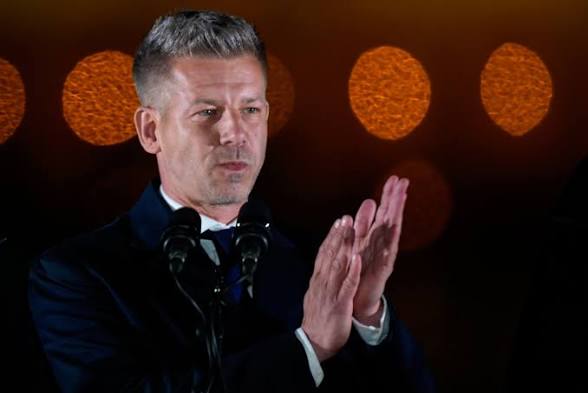
The political landscape of Hungary has undergone a dramatic transformation with the rapid rise of Péter Magyar, a once-little-known political figure who has become a symbol of opposition and reform. His emergence triggered massive protests, strong corruption allegations, and a historic clash with long-time leader Viktor Orbán.
Magyar’s political journey has captured national and international attention. What began as criticism from within the ruling system evolved into a powerful opposition movement that reshaped Hungary’s political future. His rise reflects deep public frustration with alleged corruption, declining public services, and concerns about democratic backsliding.
In recent developments, Hungary witnessed a historic political shift when Magyar’s party achieved a decisive electoral victory, ending Orbán’s 16-year rule. The landslide win signaled a major turning point driven largely by young voters and widespread dissatisfaction with corruption allegations.
Early Life and Political Background of Péter Magyar
From Insider to Challenger
Before becoming a political challenger, Péter Magyar was closely associated with Hungary’s ruling political circles. His background included roles in government-linked institutions, which gave him insight into the workings of power.
However, a turning point occurred when he publicly criticized government practices and resigned from influential roles. He stated that corruption and favoritism were deeply embedded in the system, prompting him to step away from official positions and launch a reformist movement.
Political Awakening
Magyar’s political awakening followed scandals that shook public trust in government leadership. His decision to speak out resonated with citizens who felt marginalized by political elites.
Through public speeches and social media engagement, Magyar built a reputation as a reform-oriented leader determined to challenge entrenched power structures.
Protest Surge: The Movement That Changed Hungarian Politics
Massive Public Demonstrations
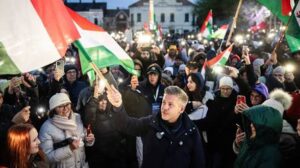
One of the defining elements of Magyar’s rise was the large-scale protests that swept across Hungary. Tens of thousands of citizens gathered in major demonstrations organized in cities such as Budapest.
These rallies were not isolated events. They became part of a sustained national movement calling for transparency, accountability, and political reform.
Several large demonstrations attracted tens of thousands of supporters, including major rallies in 2024 and 2025 that signaled growing dissatisfaction with the ruling establishment.
National Mobilization
Magyar expanded the protests into nationwide campaigns, traveling across rural areas to connect with voters. His grassroots strategy played a critical role in building public trust and expanding the opposition base.
Supporters viewed the protests as a turning point, transforming frustration into organized political action.
Corruption Claims Against the Establishment
Allegations of Systemic Corruption
A central theme of Magyar’s campaign was corruption. He accused powerful figures within the government of using political connections to accumulate wealth and influence.
Magyar claimed that individuals close to political leadership benefited from public contracts and state resources. These accusations fueled public anger and strengthened his reformist message.
Public Reaction to Corruption Issues
Corruption concerns have long been part of political debate in Hungary. Reports suggest that media control and political patronage networks contributed to weakening institutional checks and balances.
Under the Orbán era, Hungary’s media freedom ranking declined significantly, raising concerns about democratic oversight and accountability.
Magyar capitalized on these concerns by promising stricter anti-corruption laws and stronger transparency mechanisms.
The Orbán Clash: Political Rivalry Intensifies
A Historic Political Showdown
The rivalry between Péter Magyar and Viktor Orbán became one of the most dramatic political contests in modern Hungarian history.
Orbán had dominated Hungarian politics for over a decade, shaping domestic and foreign policy while maintaining strong political control. His government faced criticism from opposition groups over media dominance and centralized power.
Magyar positioned himself as the primary challenger, offering voters a clear alternative.
Campaign Battles and Messaging Wars
During the election campaigns, both leaders relied heavily on messaging strategies. Orbán’s supporters portrayed Magyar as inexperienced, while Magyar framed his opponent as representing corruption and stagnation.
Government-linked campaigns also targeted opposition figures, labeling them as threats to national stability. These tactics intensified political polarization across Hungary.
Opposition Rise and Electoral Victory
Building the Opposition Coalition
Magyar’s success was not accidental. He unified various opposition groups and appealed to voters across ideological lines.
His party, widely known as a reform-focused political movement, emphasized accountability, economic recovery, and stronger ties with European institutions.
Landslide Election Victory
The culmination of Magyar’s rise came with a historic election victory. His party secured a commanding majority in parliament, ending Orbán’s long-standing rule.
The election results reflected widespread voter dissatisfaction with corruption allegations, economic pressures, and governance concerns.
Observers described the result as one of the most significant political shifts in Hungary since the end of communist rule.
Policy Promises and Reform Agenda
Anti-Corruption Measures
Following his victory, Magyar pledged to investigate alleged misuse of public funds and hold responsible individuals accountable.
He proposed the creation of specialized offices to recover misused assets and ensure transparency in public spending.
One of his major commitments included joining European anti-corruption mechanisms to restore international trust.
Democratic and Institutional Reforms
Magyar also announced plans to strengthen judicial independence and reduce political influence over public institutions.
His reform proposals included:
- Limiting prime ministerial terms
- Strengthening media independence
- Increasing government transparency
- Modernizing public services
These measures aim to rebuild public confidence in democratic governance.
Youth Support and Grassroots Engagement
The Role of Young Voters
Young voters played a significant role in Magyar’s rise. Many viewed him as a modern leader capable of bringing change to a political system perceived as outdated.
Youth participation reached record levels during the election cycle, contributing to the opposition surge.
Social Media Strategy
Magyar’s campaign relied heavily on social media platforms to reach voters directly. This approach helped bypass traditional media channels and allowed him to connect with supporters nationwide.
His grassroots communication style contributed to the rapid expansion of his political base.
International Impact of the Opposition Rise
European Union Relations
Hungary’s political transformation has drawn attention from the European Union.
Magyar pledged to rebuild relations with EU institutions and unlock frozen development funds that were previously withheld due to governance concerns.
European leaders welcomed his victory as a sign of renewed cooperation and democratic reform.
Global Political Implications
The defeat of a long-standing populist government also resonated internationally. Analysts viewed the election outcome as a signal that voters can challenge entrenched political systems through democratic processes.
The shift is likely to influence political trends beyond Hungary.
Challenges Ahead for Péter Magyar
Institutional Resistance
Despite electoral success, Magyar faces significant challenges. Many institutions remain staffed by individuals loyal to the previous administration.
Reforming these systems will require careful political negotiation and long-term planning.
Economic and Social Pressures
Hungary continues to face economic challenges, including inflation and public service concerns.
Magyar’s administration must deliver visible improvements to maintain public support and credibility.
The Future of Hungarian Politics
A New Political Era
The rise of Péter Magyar marks the beginning of a new chapter in Hungarian political history.
His movement reflects a broader trend toward accountability, transparency, and democratic renewal.
Many citizens view this moment as an opportunity to reshape the country’s governance model.
Long-Term Political Impact
Political analysts believe Magyar’s leadership could redefine Hungary’s role in Europe and global diplomacy.
However, success will depend on the effectiveness of reforms and the ability to maintain unity within the opposition coalition.
Why the Péter Magyar Protest Surge Matters Globally
The protest surge led by Péter Magyar highlights how grassroots activism can reshape political systems.
It demonstrates the power of public mobilization in addressing corruption and strengthening democratic institutions.
Countries around the world are watching Hungary’s political transformation closely, viewing it as a potential model for democratic renewal.
Key Takeaways
- Péter Magyar emerged as a major opposition leader through mass protests.
- Corruption allegations played a central role in mobilizing public support.
- His clash with Viktor Orbán defined modern Hungarian political rivalry.
- A landslide election victory marked the end of Orbán’s 16-year rule.
- Hungary now faces a new era of political reform and democratic rebuilding.
FAQs
Who is Péter Magyar?
Péter Magyar is a Hungarian politician who rose to prominence after criticizing government corruption and leading large public protests. He later became a central opposition figure and won a historic election victory.
What sparked the Péter Magyar protest surge?
The protest surge began after political scandals and corruption allegations triggered public dissatisfaction with government leadership. Magyar organized large demonstrations calling for transparency and reform.
Why did Péter Magyar clash with Viktor Orbán?
Magyar challenged Orbán’s long-standing leadership by accusing his administration of corruption and centralizing power. Their rivalry became the defining political conflict in Hungary.
What reforms has Péter Magyar promised?
He has pledged anti-corruption measures, judicial independence, media freedom, and stronger relations with European institutions.
How did Péter Magyar win the election?
Magyar gained support through grassroots campaigning, youth engagement, and strong messaging focused on corruption and governance reform, leading to a landslide victory.
What does Péter Magyar’s rise mean for Hungary?
His rise signals a shift toward political reform and democratic renewal, marking a new era after years of centralized leadership.
I
How useful was this post?
Click on a star to rate it!
Average rating 0 / 5. Vote count: 0
No votes so far! Be the first to rate this post.
About the Author

usa5911.com
Administrator
Hi, I’m Gurdeep Singh, a professional content writer from India with over 3 years of experience in the field. I specialize in covering U.S. politics, delivering timely and engaging content tailored specifically for an American audience. Along with my dedicated team, we track and report on all the latest political trends, news, and in-depth analysis shaping the United States today. Our goal is to provide clear, factual, and compelling content that keeps readers informed and engaged with the ever-changing political landscape.