Democrat Civil War:Fetterman Rejects Socialism,Terror

The Democratic Party is facing an intense internal debate as lawmakers and activists clash over the future direction of the party. One of the most visible voices in this discussion is Senator John Fetterman, who has openly pushed back against socialist and communist labels while describing himself as a supporter of capitalism.
The controversy has created what many political observers describe as a growing “Democrat civil war” — a struggle between moderates who want a broader electoral appeal and progressives who argue the party should embrace more aggressive economic and social policies.
Fetterman’s comments have attracted national attention because they challenge some popular assumptions about where the Democratic Party is heading. Supporters say he is defending traditional Democratic values, while critics argue he is attacking a movement that represents millions of progressive voters.
The debate is not simply about one politician. It reflects a larger fight over identity, ideology, and the future of American politics.
Fetterman’s Opposition to Socialism Sparks Debate
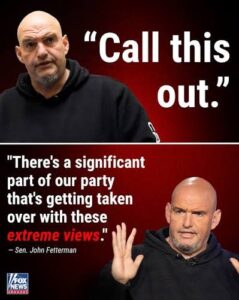
John Fetterman has repeatedly argued that he does not support socialism or communism. During discussions about the direction of the Democratic Party, he has criticized politicians and movements he believes have moved too far toward the political left.
His position has placed him in conflict with some progressive activists who support policies associated with democratic socialism, including expanded government programs, stronger labor protections, and greater economic redistribution.
Fetterman’s argument is that Democrats can support programs benefiting working-class Americans without embracing socialist ideology.
This distinction has become a major dividing line within the party.
For moderate Democrats, the challenge is maintaining support among working-class voters while avoiding political labels they believe could hurt them in elections.
For progressives, the argument is that traditional approaches have failed to solve issues such as income inequality, healthcare costs, and housing affordability.
The Rise of Internal Democratic Party Conflict
Political parties often experience disagreements, but the current Democratic debate has become especially visible because different factions are competing for influence.
The Democratic coalition includes:
- Moderate Democrats focused on economic growth and broader voter appeal
- Progressive Democrats supporting major structural changes
- Younger activists demanding faster reforms
- Traditional liberals emphasizing civil rights and social programs
The disagreement over socialism represents a larger question:
Should the Democratic Party move further left, or should it return toward the center?
Fetterman represents the argument that Democrats must connect with a wider range of voters, especially working-class Americans who may not identify with progressive political language.
Meanwhile, progressive leaders argue that changing demographics and public concerns require bold policies rather than moderation.
Why Fetterman’s Position Has Created Political Shockwaves
Fetterman’s criticism stands out because he is not a Republican politician attacking Democrats from outside the party. He is a Democratic senator questioning some elements within his own political movement.
That creates a different kind of controversy.
When members of a political party criticize their own side, the debate often becomes more intense because it challenges internal unity.
Fetterman has argued that Democrats should not define themselves only in opposition to Republicans but should focus on issues affecting ordinary Americans.
His approach has attracted attention from voters who feel disconnected from political extremes.
However, some Democratic activists believe his criticism gives ammunition to Republican attacks and weakens progressive causes.
Socialism Debate Becomes a Major Political Issue
The word “socialism” has become one of the most controversial political terms in America.
Supporters of socialist policies often argue that government should play a larger role in providing services and reducing inequality.
Critics argue that socialism can reduce economic freedom and create excessive government control.
Within the Democratic Party, the disagreement is often about definitions.
Some Democrats support policies such as:
- Affordable healthcare expansion
- Stronger worker protections
- Public investment programs
But they reject the idea that these policies represent socialism.
Others openly embrace democratic socialism as a political identity.
This difference has created tension over messaging, elections, and party strategy.
The Progressive Wing Pushes Back
Progressive activists have challenged Fetterman’s criticism, arguing that economic inequality remains one of the biggest issues facing Americans.
They believe policies supporting workers, expanding public services, and increasing government investment are necessary responses to modern challenges.
Many progressives reject the idea that supporting stronger social programs automatically means supporting authoritarian systems.
Their argument is that democratic socialism and historical examples of communist governments should not be treated as the same thing.
This disagreement over terminology has become one of the biggest ideological battles inside the Democratic Party.
Could This Divide Impact Future Elections?
Internal party divisions can influence elections by affecting voter enthusiasm, campaign messaging, and candidate selection.
If Democrats become deeply divided between moderate and progressive factions, they could face challenges in building a unified message.
Political analysts often point out that parties must balance their base supporters with independent voters.
A candidate appealing strongly to one faction may struggle with another group.
Fetterman’s position reflects this broader challenge.
He argues Democrats must appeal beyond their traditional political circles and connect with voters concerned about jobs, inflation, security, and economic opportunity.
Fetterman and the Future of Democratic Identity
The controversy surrounding Fetterman highlights a fundamental question:
What does it mean to be a Democrat in modern America?
For some, the answer is expanding government support and addressing inequality.
For others, it means protecting individual opportunity while supporting targeted government programs.
The party’s future may depend on whether these competing visions can coexist.
Political parties have historically changed over time. Internal disagreements often shape new strategies and leadership.
The current debate over socialism is another chapter in that ongoing evolution.
Reactions From Across the Political Spectrum
Fetterman’s comments have produced different reactions.
Supporters argue:
- He represents common-sense Democratic politics
- He challenges extreme positions
- He appeals to working-class voters
Critics argue:
- He unfairly attacks progressive movements
- His language strengthens Republican criticism
- He does not represent the entire Democratic base
The debate shows how difficult it can be for large political parties to maintain unity while representing diverse viewpoints.
The Bigger Picture: A Battle Over America’s Political Future
The disagreement between moderates and progressives is not limited to the Democratic Party.
Across the political spectrum, Americans are debating the role of government, economic systems, and social priorities.
The Fetterman controversy reflects larger national conversations about:
- Capitalism versus socialism
- Government responsibility
- Economic inequality
- Political identity
- The future of American democracy
As elections approach, these debates are likely to become even more important.
Conclusion: Democrat Civil War Highlights Deep Ideological Differences
The debate surrounding John Fetterman’s rejection of socialism reveals deeper divisions inside the Democratic Party.
While Fetterman argues Democrats should avoid moving toward socialist ideology, progressive voices believe stronger economic reforms are necessary.
The disagreement represents more than one politician’s opinion. It reflects a broader struggle over the future direction of the Democratic Party and American politics.
Whether the party moves toward moderation or embraces a more progressive agenda remains one of the biggest political questions ahead.
FAQs
1. Why is John Fetterman criticizing socialism?
John Fetterman has said he identifies as a pro-capitalist Democrat and has criticized movements within the party that he views as too far left.
2. Is John Fetterman leaving the Democratic Party?
Fetterman has discussed disagreements within the party but has also stated he remains a Democrat and has no immediate plans to leave.
3. What is causing the Democratic Party divide?
The divide comes from disagreements over economic policies, government involvement, social issues, and the direction of the party.
4. What do progressive Democrats believe?
Progressive Democrats generally support stronger government action on issues such as inequality, healthcare, wages, and climate policy.
5. What do moderate Democrats argue?
Moderate Democrats often emphasize broader voter appeal, economic growth, and policies they believe can attract independent voters.
6. Why is socialism controversial in America?
Socialism remains controversial because Americans have different views about government power, economic freedom, and public programs.
7. Could this debate affect future elections?
Yes. Internal disagreements can influence voter turnout, campaign strategies, and how political parties present themselves to voters.
John Fetterman’s political style has often been described as different from traditional politicians. His messaging focuses heavily on working-class voters, economic concerns, and issues that he believes directly affect everyday Americans.
His criticism of socialism has become part of a broader argument that Democrats should focus less on ideological debates and more on practical solutions.
Fetterman’s supporters argue that the Democratic Party risks losing voters if it becomes associated with political labels that many Americans view negatively. They believe that winning elections requires reaching voters who may support Democratic policies but are uncomfortable with more radical language.
However, critics argue that focusing on labels can distract from important policy discussions. They say the real debate should be about whether specific programs improve people’s lives rather than whether they fit into a particular ideological category.
Working-Class Voters and the Democratic Party Challenge
One of the biggest concerns for Democrats has been maintaining support among working-class voters.
For decades, many working-class communities were considered a strong Democratic base. However, political shifts have changed voting patterns across the country.
Fetterman has emphasized that Democrats must reconnect with voters who feel ignored by political elites.
Issues that often influence these voters include:
- Rising living costs
- Job opportunities
- Healthcare expenses
- Inflation concerns
- Public safety
- Economic stability
Supporters of Fetterman’s approach believe that rejecting socialism helps Democrats communicate more effectively with these voters.
Progressives, however, argue that many working-class problems are exactly why stronger government intervention is needed.
The Debate Over Capitalism Within the Democratic Party
Fetterman’s defense of capitalism highlights another important division within Democratic politics.
Some Democrats argue that capitalism, combined with regulations and social programs, can create prosperity while protecting workers.
This approach supports:
- Private businesses
- Economic competition
- Worker protections
- Government assistance programs
Other Democrats believe the current economic system creates too much inequality and requires major structural reforms.
They argue that wealth concentration, corporate influence, and economic inequality demand stronger government action.
The disagreement is not only about economics. It is also about how Democrats define fairness and opportunity.
Media Attention and Political Messaging
The controversy surrounding Fetterman has received significant media attention because it represents a larger ideological conflict.
Political debates often become more intense when they involve questions of identity and party direction.
Statements rejecting socialism frequently attract attention because the term itself carries strong emotions among American voters.
For some voters, socialism represents government overreach.
For others, criticism of socialism is viewed as a political strategy designed to attack policies aimed at helping working families.
The way political leaders frame these issues can significantly influence public opinion.
Republicans Use Democratic Divisions as a Political Argument
Republican leaders and conservative commentators have often highlighted disagreements within the Democratic Party as evidence of internal instability.
They argue that progressive policies represent a shift away from traditional American economic values.
Democrats respond that disagreements are normal in a large political coalition and that debates show a healthy democratic process.
Both parties frequently use internal conflicts within the opposing party as campaign issues.
The Fetterman controversy has therefore become part of a wider political battle over which vision for America’s future voters will support.
Can Democrats Balance Moderate and Progressive Voices?
The future of the Democratic Party may depend on whether different factions can work together.
A successful political coalition often requires balancing competing priorities.
Moderates may emphasize:
- Electability
- Bipartisan cooperation
- Economic growth
- Appealing to independent voters
Progressives may prioritize:
- Economic transformation
- Expanded public programs
- Climate action
- Social reforms
Finding common ground between these groups remains a major challenge.
If divisions become too severe, political parties can struggle to create a unified message.
The Role of Young Voters in the Socialism Debate
Young voters have played an important role in changing political conversations.
Many younger Americans have expressed concerns about:
- Student debt
- Housing affordability
- Income inequality
- Healthcare access
Some have become more open to socialist ideas or policies associated with democratic socialism.
At the same time, other young voters remain focused on economic opportunity, entrepreneurship, and personal freedom.
The debate shows that younger generations are not politically identical, but they are influencing the direction of American politics.
Historical Examples of Party Divisions
Political divisions inside parties are not new.
Throughout American history, major political parties have experienced internal battles over:
- Economic policy
- Foreign affairs
- Social issues
- Leadership direction
These conflicts often shape the future identity of political movements.
The current debate over socialism within the Democratic Party follows this historical pattern.
Internal disagreements can create challenges, but they can also force parties to reconsider their priorities and strategies.
What Fetterman’s Position Means for Future Democratic Strategy
Fetterman’s rejection of socialism represents one possible path for Democrats: moving toward a message centered on economic populism without adopting socialist terminology.
This strategy focuses on:
- Supporting workers
- Improving economic opportunity
- Expanding practical assistance
- Avoiding unpopular ideological labels
Whether this approach succeeds depends on how voters respond.
Some may view it as a realistic strategy for winning elections.
Others may believe it compromises important progressive goals.
The National Impact of the Democratic Debate
Although the disagreement is happening inside one political party, its impact extends beyond Democrats.
The debate influences national conversations about:
- The role of government
- Economic fairness
- The meaning of freedom
- The future of capitalism
- Political identity
These issues will continue shaping American elections and policy discussions.
The question is not only what Democrats believe today, but what kind of political movement they want to become in the future.
Final Analysis: A Party Searching for Direction
The debate surrounding John Fetterman’s rejection of socialism highlights a major ideological crossroads for Democrats.
Moderates argue that the party must avoid extreme labels and focus on issues that appeal to everyday voters.
Progressives argue that meaningful change requires stronger reforms and a willingness to challenge existing systems.
The disagreement reflects a larger struggle over the future of American politics.
Whether Democrats move toward the center, embrace progressive ideas, or create a new balance between the two remains uncertain.
What is clear is that the conversation over socialism, capitalism, and party identity will continue to influence political debates for years to come.
Additional FAQs
8. Does rejecting socialism mean rejecting social programs?
No. Many politicians who reject socialism still support government programs such as healthcare assistance, infrastructure investment, and worker protections.
9. Why do some Democrats support socialist ideas?
Some Democrats support socialist ideas because they believe stronger government action can reduce inequality and address economic challenges.
10. Is the Democratic Party officially socialist?
No. The Democratic Party includes a wide range of views, from moderate Democrats to progressive members with socialist-aligned ideas.
11. Why is ideology important in elections?
Ideology influences how voters understand candidates, policies, and the future direction of the country.
12. Will the socialism debate continue?
Yes. Economic inequality, government spending, and the role of capitalism are likely to remain major political issues.
How useful was this post?
Click on a star to rate it!
Average rating 0 / 5. Vote count: 0
No votes so far! Be the first to rate this post.
About the Author

usa5911.com
Administrator
Hi, I’m Gurdeep Singh, a professional content writer from India with over 3 years of experience in the field. I specialize in covering U.S. politics, delivering timely and engaging content tailored specifically for an American audience. Along with my dedicated team, we track and report on all the latest political trends, news, and in-depth analysis shaping the United States today. Our goal is to provide clear, factual, and compelling content that keeps readers informed and engaged with the ever-changing political landscape.