Jeffries Redistricting Push: Virginia Map Fight, Power Battle, US Tension
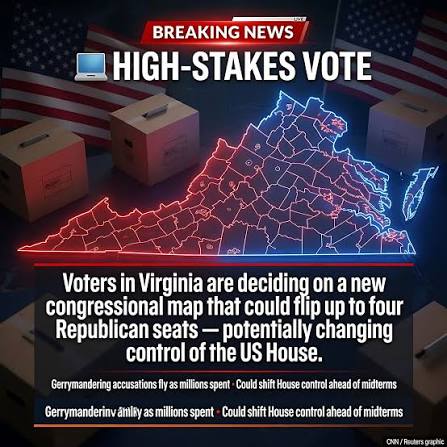
The Jeffries redistricting push has become one of the most consequential political battles in the United States, triggering fierce debates over democracy, representation, and electoral fairness. The approval of new congressional maps in the U.S. state of Virginia has intensified tensions between Democrats and Republicans, with national leaders framing the move as either a necessary countermeasure or a dangerous political maneuver.
At the center of the controversy is Hakeem Jeffries, who has positioned the redistricting fight as part of a broader struggle to prevent partisan manipulation of elections. Supporters say the new maps will restore fairness, while critics argue they represent a calculated attempt to secure political advantage.
As the nation approaches critical elections, the Virginia redistricting decision is now shaping strategies across multiple states and setting the stage for prolonged legal and political battles.
Understanding the Jeffries Redistricting Push

Redistricting is the process of redrawing electoral district boundaries, usually conducted after population counts. However, the current dispute in Virginia marks a rare mid-decade change that has ignited national controversy.
The 2026 Virginia redistricting amendment allowed the state legislature to temporarily redraw congressional maps until the next census cycle in 2030. This measure narrowly passed after months of intense campaigning and legal disputes.
Supporters of the move, including Democratic leaders, argued that Republican-led states had already altered maps in ways that favored their candidates. They framed Virginia’s action as a strategic response designed to maintain electoral balance.
Opponents, however, warned that the shift weakened bipartisan safeguards and could undermine voter confidence in the political system.
Virginia Map Fight: What Changed
The newly approved congressional map could significantly reshape political representation within Virginia.
Previously, the state’s delegation to the U.S. House of Representatives was closely divided. The new configuration, however, is expected to create a strong Democratic advantage in most districts.
Key projected changes include:
- Up to 10 of Virginia’s 11 districts leaning Democratic
- Potential gain of four additional Democratic seats
- Major impact on national control of Congress
Analysts note that this shift could play a decisive role in determining which party controls the U.S. House after upcoming elections.
The political stakes are enormous. Even a few seats can shift legislative priorities, budgets, and federal policy direction.
Jeffries’ Strategy: National Redistricting War
The Jeffries redistricting push is not limited to Virginia. Instead, it represents part of a broader national strategy.
Speaking after the vote, Jeffries declared that Democrats would resist what he described as efforts to “rig the midterm elections.”
His remarks highlight the perception among Democratic leaders that redistricting has become a nationwide arms race.
Major strategic goals include:
- Countering Republican-led redistricting efforts
- Protecting competitive districts
- Expanding Democratic representation
- Strengthening voter turnout in urban regions
Political strategists believe that the Virginia decision may inspire similar moves in other states, escalating tensions further.
Republican Opposition and Legal Challenges
Republican leaders have strongly opposed the Virginia map changes, arguing that the new districts violate constitutional principles and favor one party excessively.
Critics claim:
- The maps dilute representation in rural regions
- Voters in conservative areas may lose influence
- Legal standards for fairness may be compromised
Several lawsuits have already been filed, with cases expected to reach the Virginia Supreme Court.
Legal analysts warn that court decisions could determine whether the new maps remain in place or are redrawn again.
If the courts overturn the maps, it could trigger another wave of political disputes and emergency legislation.
Financial Battle Behind the Map Fight
One of the defining features of the Virginia redistricting fight has been its massive financial scale.
Political organizations poured tens of millions of dollars into campaigns promoting or opposing the referendum.
Reported figures include:
- Over $64 million spent supporting the measure
- Around $30 million raised in opposition
- Nationwide advertising campaigns targeting voters
This level of spending reflects the extraordinary importance of congressional district boundaries in shaping national political power.
Experts suggest that similar financial battles are likely in future redistricting efforts across the country.
Impact on the US House Power Balance
Perhaps the most critical outcome of the Jeffries redistricting push is its potential to shift control of the U.S. House.
Currently, the chamber remains narrowly divided between parties. Small changes in district lines could produce dramatic consequences.
Possible impacts include:
- Democrats gaining enough seats to retake the House
- Republicans losing key battleground districts
- Increased legislative gridlock
- Policy changes affecting taxation, healthcare, and defense
Political observers warn that even minor electoral shifts can reshape national governance for years.
As a result, redistricting battles are now viewed as among the most important political contests in the country.
Public Reaction and Voter Divide
The Virginia redistricting decision triggered strong reactions from voters across political lines.
Urban voters largely supported the measure, viewing it as necessary to counter perceived unfair maps elsewhere. Meanwhile, rural communities expressed concern about losing political influence.
Public opinion remains deeply divided, reflecting broader ideological tensions across the United States.
Key reactions include:
- Praise from progressive organizations
- Anger from conservative advocacy groups
- Calls for national redistricting reform
- Growing distrust in political institutions
Political scientists note that redistricting debates often mirror broader cultural and ideological divisions.
Role of National Leaders in the Debate
Several prominent national figures have weighed in on the Virginia map fight.
Supporters of the measure argue it protects democracy, while critics call it partisan manipulation.
Notable involvement includes:
- Endorsements from prominent Democratic figures
- Public criticism from Republican leaders
- Social media campaigns influencing voter opinion
These reactions demonstrate how state-level decisions can quickly become national political flashpoints.
Observers believe that future elections will increasingly involve similar high-profile battles.
Legal Timeline and Court Battles Ahead
The legal journey of the Virginia redistricting amendment has been complex.
Before reaching voters, the measure faced multiple court challenges. Judges initially blocked the referendum before higher courts allowed it to proceed.
Key legal milestones include:
- Initial court rulings blocking the amendment
- Appeals allowing the vote to move forward
- Post-election lawsuits challenging constitutionality
Legal experts expect prolonged litigation that may continue for years.
Court rulings could ultimately determine the future of congressional representation in Virginia.
National Ripple Effects Beyond Virginia
The Jeffries redistricting push is influencing political strategies across multiple states.
Republican-led states are considering countermeasures, while Democratic states are preparing defensive plans.
Potential ripple effects include:
- New redistricting proposals in states like Texas and Florida
- Increased litigation across the country
- Growing political polarization
- Expanded voter mobilization campaigns
Political analysts describe the current situation as a “redistricting war,” with both parties competing for strategic advantage.
Media and Public Messaging Strategy
Modern political battles rely heavily on messaging, and the Virginia redistricting fight is no exception.
Campaigns used:
- Television advertisements
- Social media outreach
- Community canvassing
- Influencer endorsements
Messaging strategies often framed the issue in emotional terms, emphasizing fairness, democracy, or political survival.
These tactics played a critical role in shaping public opinion during the referendum campaign.
Historical Context of Redistricting Battles
Redistricting disputes are not new in American politics.
Historically, political parties have attempted to shape districts in ways that maximize their electoral advantage.
Common tactics include:
- Gerrymandering (manipulating district boundaries)
- Packing voters into specific districts
- Splitting opposition groups
While legal safeguards exist, critics argue that loopholes still allow significant partisan influence.
The Virginia case reflects a broader historical trend of contested electoral boundaries.
Potential Impact on Future Elections
Looking ahead, the Jeffries redistricting push could shape not only upcoming elections but also long-term political strategies.
Key future implications include:
- Changes in campaign targeting
- Increased emphasis on legal challenges
- Heightened political spending
- Greater voter awareness of district boundaries
Political analysts expect redistricting to remain one of the most important issues in future election cycles.
Global Perspective: Why Redistricting Matters
Although the Virginia dispute is a U.S. issue, its implications extend beyond national borders.
Electoral boundary changes influence:
- Representation fairness
- Government stability
- Public trust in institutions
Countries around the world monitor such developments as part of broader discussions about democratic governance.
The Virginia map fight therefore serves as an international example of how electoral systems evolve under political pressure.
Conclusion: A Defining Political Battle
The Jeffries redistricting push marks a turning point in modern American politics. What began as a state-level referendum has evolved into a nationwide confrontation over electoral fairness and political power.
Virginia’s decision to redraw congressional maps has reshaped the political landscape, sparked legal battles, and intensified partisan tensions across the United States.
As court challenges continue and new elections approach, the outcome of this redistricting fight could influence national governance for years to come.
Whether viewed as a necessary correction or a controversial power move, the Virginia map fight stands as one of the most significant political developments of the decade.
FAQs
What is the Jeffries redistricting push?
The Jeffries redistricting push refers to efforts led by Democratic leaders to support new congressional maps in Virginia and counter Republican-led redistricting efforts nationwide.
Why is the Virginia map fight important?
It could shift several congressional seats, potentially changing control of the U.S. House and influencing national policy decisions.
How many seats could change due to the new map?
Political analysts estimate Democrats could gain up to four additional seats if the new maps remain in effect.
Are there legal challenges to the Virginia redistricting plan?
Yes. Multiple lawsuits have been filed, and courts may determine whether the maps remain valid.
What does redistricting mean?
Redistricting is the process of redrawing electoral district boundaries to reflect population changes or political decisions.
Could other states follow Virginia’s example?
Yes. Several states are considering similar redistricting actions, potentially leading to further political conflict nationwide.
I
How useful was this post?
Click on a star to rate it!
Average rating 0 / 5. Vote count: 0
No votes so far! Be the first to rate this post.
About the Author

usa5911.com
Administrator
Hi, I’m Gurdeep Singh, a professional content writer from India with over 3 years of experience in the field. I specialize in covering U.S. politics, delivering timely and engaging content tailored specifically for an American audience. Along with my dedicated team, we track and report on all the latest political trends, news, and in-depth analysis shaping the United States today. Our goal is to provide clear, factual, and compelling content that keeps readers informed and engaged with the ever-changing political landscape.