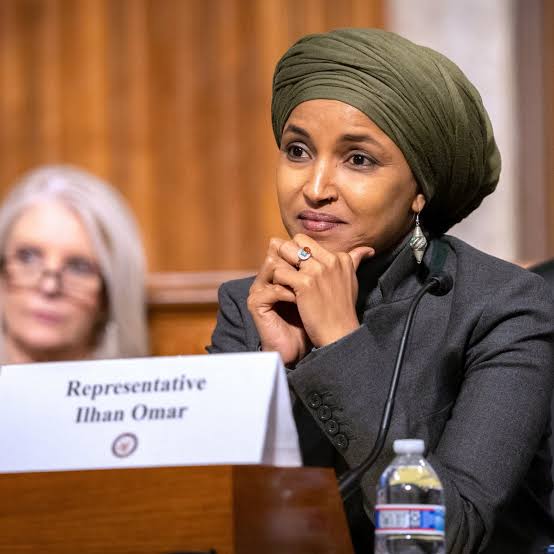
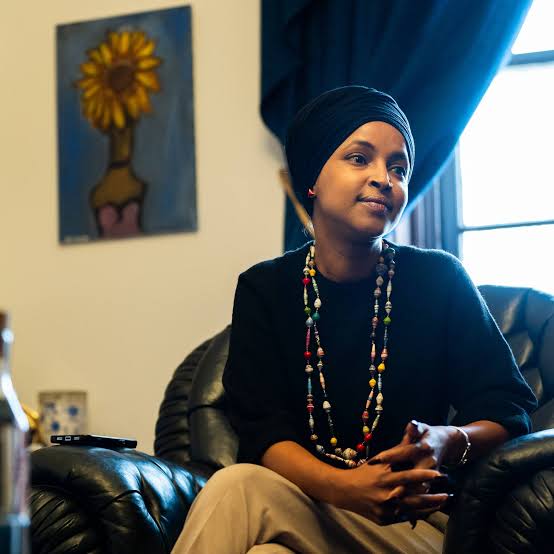
ILHAN OMAR PHONE SEIZED: Federal Probe Expands With Grand Jury Subpoenas In DHS Investigation
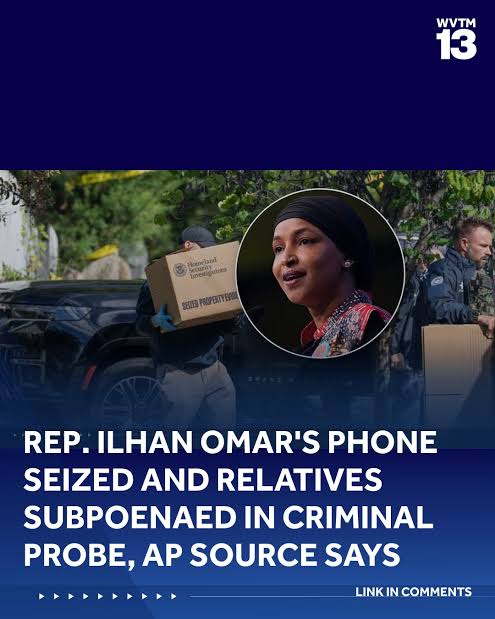
The Ilhan Omar phone seized development has brought renewed attention to a federal criminal investigation involving the Minnesota congresswoman. Federal authorities have reportedly seized her phone and issued more than a dozen grand jury subpoenas, including subpoenas involving some of her relatives, according to reporting by The Associated Press. The investigation reportedly concerns potential fraud involving immigration paperwork connected to Omar’s family.
The developments follow a federal search of Omar’s Washington, D.C., residence on October 12, 2026. The Justice Department confirmed that Homeland Security Investigations (HSI), an investigative agency within U.S. Immigration and Customs Enforcement (ICE), executed a judicially authorized search warrant as part of an ongoing federal investigation. Officials have not publicly disclosed all the evidence being examined or the full scope of the inquiry.
The case has generated political controversy because Omar is a prominent Democratic lawmaker and a frequent critic of President Donald Trump. Her office has condemned the search as politically motivated, while the administration has indicated that the investigation concerns potential violations of federal law.
However, a phone seizure, a search warrant, or a grand jury subpoena does not establish guilt. The investigation remains a developing story, and allegations must be distinguished from proven facts.
1. Why Was Ilhan Omar’s Phone Seized?

The reported seizure of Omar’s phone is one of the most significant developments in the expanding federal investigation. According to an Associated Press report published on October 14, federal authorities seized the congresswoman’s phone while investigators continued examining potential issues involving her family’s immigration records. The same report said authorities had issued more than a dozen grand jury subpoenas.
A seized phone can potentially provide investigators with information relevant to a criminal inquiry. Depending on the search warrant and applicable legal rules, investigators may examine communications, documents, contact information, or other digital records that could help establish a timeline of events.
However, the public does not yet have a complete account of what information investigators are seeking from Omar’s device. It would therefore be premature to claim that the phone contains incriminating evidence or that investigators have established wrongdoing.
The distinction matters because federal authorities can seize electronic devices during an investigation without proving that their owners committed a crime. The legal authority for the seizure, the permitted scope of the search, and the relevance of any recovered information are separate questions.
For now, the reported seizure indicates that investigators are pursuing evidence as part of a broader inquiry. It does not, by itself, establish the outcome of that inquiry.
2. Grand Jury Subpoenas Expand the Federal Investigation
The reported grand jury subpoenas represent another important development in the case.
According to the Associated Press, more than a dozen subpoenas were issued in connection with a grand jury gathering evidence in Minnesota. Some reportedly involved members of Omar’s family. A separate CBS News report also described subpoenas issued to multiple relatives as part of the investigation into potential fraud or false statements in immigration paperwork.
What is a grand jury subpoena?
A grand jury subpoena is a formal legal demand for information, records, documents, or testimony relevant to an investigation. Prosecutors may use subpoenas to gather evidence and determine whether criminal charges are warranted.
For example, investigators may seek historical documents, records concerning an individual’s immigration history, or testimony from people who possess relevant information.
Receiving a subpoena does not automatically mean that someone is accused of a crime. A person may be asked to provide information because they witnessed an event, hold relevant records, or have knowledge of circumstances being investigated.
Why are multiple subpoenas important?
When investigators issue several subpoenas, they may be trying to establish a fuller picture of events, compare records, or verify information obtained from different sources.
In Omar’s case, reports indicate that the subpoenas relate to the investigation of potential irregularities in immigration paperwork. However, authorities have not publicly explained every subpoena’s purpose or disclosed the complete evidence collected by the grand jury.
The number of subpoenas should not be treated as proof that allegations are true. Their significance will depend on the evidence obtained, its reliability, and whether prosecutors ultimately identify a legally sufficient basis for charges.
3. What Is the DHS Investigation About?
The federal investigation reportedly centers on potential fraud involving immigration documents connected to Omar’s family history. Officials have discussed questions concerning paperwork completed when her family came to the United States from Somalia.
Reuters reported on October 12 that federal agents searched Omar’s Washington residence in connection with an alleged immigration fraud investigation. The Justice Department confirmed the execution of a judicially authorized search warrant but did not publicly provide a comprehensive explanation of the case.
The distinction between the agency conducting the search and the agency overseeing the prosecution is important. Homeland Security Investigations operates within ICE, which is part of the Department of Homeland Security. The Justice Department oversees federal criminal prosecutions and can authorize investigative steps through the appropriate legal process.
Immigration paperwork under scrutiny
Investigators reportedly want to examine potential inconsistencies or false statements in historical immigration paperwork. Such an inquiry may involve comparing original applications, supporting records, government databases, and information supplied by people familiar with the relevant events.
The investigation concerns events dating back many years, according to published reports. Establishing what happened historically can require investigators to examine documents created under different circumstances and determine whether any discrepancy reflects an actual legal violation.
A discrepancy alone does not necessarily prove fraud. Investigators must establish the relevant facts and determine whether the evidence supports the elements of a specific offense.
Is the investigation limited to immigration records?
Public reporting has also described scrutiny of Omar’s financial disclosures. The New York Post reported that authorities were examining potential immigration issues and alleged inconsistencies involving financial disclosure forms. However, the publicly available information does not establish that every reported line of inquiry has resulted in a formal accusation or charge.
Readers should therefore avoid treating every reported allegation as a confirmed finding. The precise scope of the investigation and the evidence supporting each line of inquiry remain important unanswered questions.
4. Federal Agents Previously Searched Omar’s Washington Home
The phone seizure and subpoenas follow the federal search of Omar’s Washington, D.C., residence on October 12, 2026.
The Associated Press reported that agents with Homeland Security Investigations conducted the search under a judicially authorized warrant. Agents were seen carrying boxes marked as seized property evidence, according to the report. The Justice Department described the operation as part of an ongoing federal criminal investigation.
The search attracted immediate national attention because Omar is a sitting member of Congress seeking reelection in the November 3 midterm elections.
Why the search warrant matters
A judicially authorized search warrant generally requires legal justification and specifies the places or items that may be searched or seized. The warrant provides the legal framework for the search, but it does not determine whether the subject of the investigation committed a crime.
The full warrant and supporting affidavit would be important sources for understanding the authorized scope of the operation. Without complete access to those documents and the underlying evidence, it is not possible to independently establish every reason investigators sought the search.
The distinction between an investigation and a prosecution is equally important. Investigators may gather evidence for an extended period before deciding whether to recommend or pursue charges.
At this stage, the reported search and phone seizure show that federal authorities are actively collecting evidence. They do not establish that a court has found Omar guilty of wrongdoing.
5. Ilhan Omar Responds to the Federal Search
Omar has strongly criticized the investigation, describing the search as an attempt to target political opponents.
In a statement published by her congressional office on October 12, she characterized the operation as an abuse of power and rejected the suggestion that the federal government should use law enforcement to intimidate its critics.
Her response places the investigation within a broader dispute over the relationship between federal law enforcement and political accountability.
Omar has represented Minnesota’s 5th Congressional District since 2019, following her election in 2018. She is a prominent progressive Democrat and has repeatedly clashed with Trump and Republican officials over immigration, foreign policy, and domestic politics.
Omar disputes the political circumstances
Omar and other Democrats have questioned the timing of the search, particularly because it occurred only weeks before the midterm elections. They argue that a high-profile federal action involving a sitting lawmaker could influence public perceptions during a sensitive political period.
Those objections are separate from the legal question of whether the investigation has a valid evidentiary basis.
The administration’s position, as reflected in public statements, is that the inquiry concerns potential violations of law rather than political retaliation. Omar disputes that characterization.
The ultimate assessment will depend on evidence, legal procedures, and the decisions of the responsible authorities. Neither a politician’s denial nor an allegation from political opponents should substitute for a careful examination of the facts.
6. Why the Timing Before the Midterm Elections Matters
The federal investigation has become politically sensitive because it is unfolding shortly before the November 3, 2026, midterm elections.
Omar is seeking another term in Congress. The search of her residence, followed by reports of a seized phone and grand jury subpoenas, has created a major political controversy at a time when control of Congress is at stake.
Concerns about election-period investigations
The Justice Department has historically sought to avoid overt investigative actions that could improperly influence an election, particularly when a public announcement or law enforcement operation might affect a candidate’s prospects.
The timing of the search has led Democratic lawmakers to question whether those principles were respected. Rep. Jamie Raskin, the ranking Democrat on the House Judiciary Committee, publicly criticized the operation and raised concerns about its proximity to Election Day.
However, the timing alone does not establish that the investigation is politically motivated. It also does not automatically prove that authorities acted improperly.
A fair assessment requires examining the legal basis for the warrant, the development of the investigation, the applicable Justice Department policies, and whether officials followed appropriate procedures.
The wider political consequences
The controversy could influence public discussion of immigration enforcement, congressional oversight, and the independence of federal investigators.
Democrats may use the case to question the administration’s treatment of political opponents. Republicans may argue that elected officials should face scrutiny when credible evidence suggests possible violations of law.
Both arguments ultimately depend on the facts of the case. The central principle is that political status should neither shield someone from legitimate investigation nor make someone a target without sufficient justification.
7. Could the Investigation Lead to Criminal Charges?
One of the biggest questions surrounding the Ilhan Omar phone seizure is whether the investigation could result in criminal charges.
At present, the reported evidence-gathering steps do not establish that prosecutors have decided to charge Omar. Investigations can lead to several outcomes, including additional evidence collection, a decision not to prosecute, or the filing of charges if prosecutors believe the evidence and applicable law support that decision.
What happens after a grand jury investigation?
A federal grand jury examines evidence presented by prosecutors. If the evidence satisfies the applicable legal standard, the grand jury may return an indictment. An indictment is a formal accusation, not a finding of guilt.
If prosecutors pursue a case, the legal process may involve court hearings, challenges to evidence, motions by the defense, and potentially a trial. The accused retains the right to contest the government’s allegations.
In Omar’s case, the public still lacks a complete account of the evidence obtained through the phone seizure and subpoenas. Consequently, predicting whether an indictment will follow would be speculative.
Could the investigation end without charges?
Yes. Federal investigations do not always lead to criminal prosecutions. Authorities may determine that the evidence does not support the suspected offense, that important allegations cannot be substantiated, or that further action is not warranted.
The investigation’s eventual outcome will depend on the evidence and the decisions of federal prosecutors.
8. What Happens to the Seized Phone?
The handling of Omar’s phone is another important aspect of the case.
When investigators seize an electronic device under legal authority, they may seek to preserve its contents and examine information relevant to the investigation. Digital evidence can include messages, files, photographs, records, and other material, depending on the warrant and applicable legal restrictions.
However, the exact forensic procedures used in this investigation have not been fully disclosed publicly.
Digital evidence and legal safeguards
Electronic evidence can be complicated to interpret. A message or document may require additional context, authentication, and corroboration before it can support a particular conclusion.
The defense may also challenge whether investigators complied with the warrant’s scope or followed applicable legal requirements. Courts can consider such challenges when disputes arise over evidence.
Importantly, the seizure of a phone does not mean that every item stored on it is relevant to a criminal investigation. The legal authority governing the search determines what investigators may examine and how the resulting material may be used.
Until authorities disclose more information, claims about the contents of Omar’s phone should be treated cautiously.
9. What the Investigation Means for Congress and Government Accountability
The investigation has renewed debate about the responsibilities of elected officials and the limits of federal investigative power.
Members of Congress are not generally immune from criminal investigations simply because they hold public office. At the same time, government agencies must follow applicable law and respect constitutional protections when investigating elected representatives.
These principles are particularly important when a case involves politically divisive issues, including immigration and national identity.
Accountability must be based on evidence
Supporters of a rigorous investigation argue that potential violations should be examined regardless of a person’s political position. Critics emphasize that law enforcement must not be used to intimidate political opponents or influence elections.
These principles are not mutually exclusive. A legitimate investigation can proceed while the public scrutinizes whether officials have followed the law.
For Omar, the central legal question is whether investigators can substantiate the allegations they are examining. For federal authorities, the challenge is to demonstrate that their actions comply with the applicable legal standards.
The reported phone seizure and grand jury subpoenas are significant developments, but the public should wait for verified information before drawing conclusions about criminal liability.
10. Latest Updates on the Ilhan Omar Federal Probe
As of October 15, 2026, the major publicly reported developments include the following:
October 12: Federal agents searched Omar’s Washington, D.C., residence under a judicially authorized warrant, according to the Justice Department and Associated Press reporting.
The Associated Press+1October 12: Omar’s congressional office condemned the search and characterized it as politically motivated.
Representative Ilhan OmarOctober 14: The Associated Press reported that federal authorities had seized Omar’s phone and issued more than a dozen grand jury subpoenas, including some involving relatives.
The Washington PostOctober 14: CBS News reported that multiple relatives received grand jury subpoenas related to the investigation into possible fraud or false statements in immigration paperwork.
CBS News
The investigation remains ongoing, and important questions remain unanswered. These include the complete scope of the search warrant, the evidence obtained from electronic devices, the precise purpose of individual subpoenas, and whether prosecutors will pursue charges.
For further developments, readers should monitor reporting from established news organizations and official statements from the Justice Department, Omar’s congressional office, and relevant courts.
Conclusion
The Ilhan Omar phone seized story marks a significant development in a federal investigation reportedly focused on potential immigration paperwork irregularities involving her family. The reported seizure of her phone, the issuance of grand jury subpoenas, and the earlier search of her Washington residence have brought the investigation into the national spotlight.
The case is also politically sensitive because Omar is a prominent Democratic lawmaker seeking reelection shortly before the November midterm elections. She has condemned the investigation as politically motivated, while federal authorities have described the search as part of an ongoing criminal inquiry.
Nevertheless, the legal distinction between an allegation and a proven offense remains essential. A search warrant, subpoena, or seized device does not establish guilt, and the complete evidence has not been made public.
The next major developments will depend on what investigators uncover, whether prosecutors take further action, and what information becomes available through official statements or court proceedings. Until then, the most responsible approach is to follow verified updates and avoid treating unproven allegations as established facts.
Frequently Asked Questions (FAQs)
1. Why was Ilhan Omar’s phone seized?
According to Associated Press reporting published on October 14, 2026, federal authorities seized Omar’s phone as part of an ongoing criminal investigation reportedly involving potential fraud in immigration paperwork connected to her family. The complete evidentiary basis for the seizure has not been made public.
2. Why are federal authorities issuing grand jury subpoenas?
Grand jury subpoenas allow investigators to obtain relevant records, documents, or testimony. Reports indicate that more than a dozen subpoenas were issued in connection with the investigation, including some involving Omar’s relatives. A subpoena does not automatically mean its recipient is suspected of a crime.
3. What is the DHS investigation into Ilhan Omar about?
Public reporting indicates that investigators are examining potential fraud or false statements involving immigration paperwork connected to Omar’s family history. Authorities have not publicly disclosed every detail of the investigation or established that the allegations are true.
4. Has Ilhan Omar been charged with a crime in this investigation?
The reports cited in this article describe an ongoing investigation and evidence-gathering measures. They do not establish that Omar has been convicted of a crime. Readers should consult current court records and official statements for any subsequent developments.
5. What did Ilhan Omar say about the federal search?
Omar’s congressional office condemned the October 12 search, describing it as an abuse of power and an attempt to target political opponents. She disputes the political circumstances surrounding the investigation.
6. What is a grand jury subpoena?
A grand jury subpoena is a formal legal demand for documents, records, or testimony relevant to an investigation. Grand juries help determine whether the available evidence supports criminal charges. Receiving a subpoena does not establish guilt.
7. Could the seized phone provide evidence in the investigation?
Potentially. Investigators may examine relevant digital records when legally authorized to do so. However, the public does not have a complete account of what investigators are seeking from Omar’s phone or what, if anything, the device contains that supports the allegations.
8. Why is the timing of the investigation controversial?
The search occurred shortly before the November 3, 2026, midterm elections. Democratic lawmakers have raised concerns about the timing and the potential for political influence. The timing alone, however, does not prove that the investigation is politically motivated or legally improper.
9. Can the investigation end without criminal charges?
Yes. Investigators may conclude that the available evidence does not justify prosecution. Alternatively, prosecutors may pursue charges if they believe the evidence supports them. The outcome will depend on the facts, applicable law, and prosecutorial decisions.
10. Where can readers find reliable updates on the Ilhan Omar investigation?
Readers can follow the Associated Press, Reuters, CBS News, official Justice Department statements, relevant court records, and updates from Omar’s congressional office. Comparing reliable sources helps distinguish confirmed developments from political claims and unverified speculation.
How useful was this post?
Click on a star to rate it!
Average rating 0 / 5. Vote count: 0
No votes so far! Be the first to rate this post.
About the Author

usa5911.com
Administrator
Hi, I’m Gurdeep Singh, a professional content writer from India with over 3 years of experience in the field. I specialize in covering U.S. politics, delivering timely and engaging content tailored specifically for an American audience. Along with my dedicated team, we track and report on all the latest political trends, news, and in-depth analysis shaping the United States today. Our goal is to provide clear, factual, and compelling content that keeps readers informed and engaged with the ever-changing political landscape.