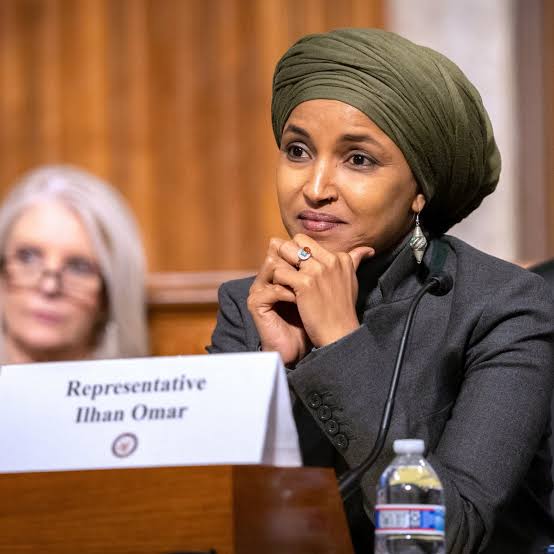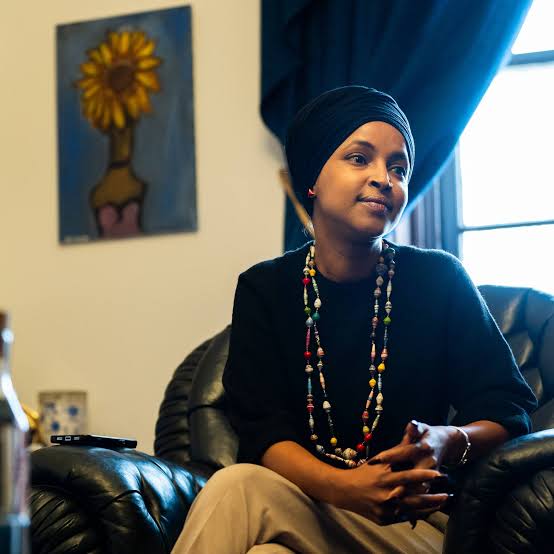
The Ilhan Omar financial disclosure investigation has drawn renewed national attention after federal prosecutors confirmed scrutiny of the Minnesota congresswoman’s financial filings. The controversy centers on a dramatic change in the reported value of businesses associated with her husband, Tim Mynett, and questions about how the couple’s assets and liabilities were presented in congressional disclosure documents.
On October 13, 2026, U.S. Attorney Jeanine Pirro confirmed that her office was examining Omar’s financial disclosures. The announcement came one day after federal agents searched Omar’s Washington, D.C., residence in connection with a separate investigation involving immigration paperwork.
The financial scrutiny follows months of questions raised by congressional Republicans about the valuation of two businesses linked to Mynett. Omar’s office has attributed the earlier figures to accounting errors and liabilities that were not properly reflected in the original filing.
However, the renewed federal inquiry has placed the issue back in the national spotlight.
It is important to distinguish an investigation from a finding of wrongdoing. As of October 15, 2026, publicly available reporting does not establish that Omar has been charged with a crime related to her financial disclosures. A federal investigation does not, by itself, prove that a lawmaker violated the law.
What Is the Ilhan Omar Financial Disclosure Investigation?

The Ilhan Omar financial disclosure investigation concerns questions about financial information reported by the Democratic representative from Minnesota’s 5th Congressional District.
Congressional financial disclosure rules are designed to promote transparency and help the public identify potential conflicts of interest. Members of Congress must report specified financial interests, including assets, liabilities, certain sources of income, and relevant holdings associated with their spouses.
In Omar’s case, attention has focused on two businesses associated with her husband: eStCru LLC and Rose Lake Capital LLC.
Their reported valuations changed substantially between the 2023 and 2024 disclosure periods. The difference attracted scrutiny from House Oversight Committee Chairman James Comer, who requested financial records from the companies in February 2026.
More recently, Pirro confirmed that her office was investigating the financial disclosures.
According to Axios’s October 13 report, Pirro said the federal inquiry would examine the facts regardless of the outcome of congressional proceedings. Her comments indicate that the federal review is separate from the earlier congressional ethics process.
Nevertheless, the scope of the federal inquiry, its evidentiary basis, and its eventual outcome remain important unanswered questions.
The Multi-Million-Dollar Discrepancy Explained
The central issue is the substantial change in the reported values of businesses connected to Mynett.
According to reporting by Fox News and the House Oversight Committee, the original financial disclosure figures showed a significant increase in the reported valuation ranges between 2023 and 2024.
Reported business valuations
The figures reported publicly include the following ranges:
- eStCru LLC: Its reported value increased from approximately $15,000–$50,000 in 2023 to $1 million–$5 million in 2024.
- Rose Lake Capital LLC: Its reported value increased from approximately $1–$1,000 in 2023 to $5 million–$25 million in 2024.
- Combined reported values: The two businesses were listed at approximately $15,000–$51,000 in 2023 and $6 million–$30 million in 2024.
These figures are based on financial disclosure categories, which report values within ranges rather than necessarily identifying an exact market price.
Consequently, the figures do not establish that the couple possessed $30 million in cash or that the businesses generated equivalent profits.
Business valuations, ownership interests, outstanding liabilities, and personal net worth are different financial concepts. Understanding these distinctions is essential to interpreting the controversy accurately.
Why Did the Financial Disclosure Figures Change?
The original figures raised questions because the reported asset ranges increased substantially in a single reporting period.
Omar’s office subsequently said the original disclosure did not properly account for liabilities associated with her husband’s businesses. According to the explanation, the omission produced a misleading picture of the couple’s finances.
In April 2026, Omar amended her disclosure, reducing the reported combined asset range to approximately $18,004–$95,000. The revised filing reportedly assigned no net value to her husband’s two businesses after accounting for liabilities.
A later annual disclosure reportedly listed assets in a range of approximately $20,000–$125,000.
These changes became a central part of the dispute. Critics questioned how the original estimates had been calculated and why the figures differed so dramatically from the amended disclosures.
Omar’s defenders, meanwhile, pointed to the explanation involving accounting errors and liabilities.
The essential question is whether the original and amended documents accurately reflected the relevant financial interests under the applicable reporting rules.
That question requires examination of the underlying records, ownership arrangements, valuation methods, and liabilities. A difference between two disclosure forms can justify further questions, but it does not automatically establish fraud or intentional concealment.
DOJ Probe Escalation: What Has Been Confirmed?
The most significant recent development came on October 13, when Pirro publicly acknowledged that her office was examining Omar’s financial disclosures.
The announcement followed a federal search of Omar’s Washington residence on October 12. However, reports indicate that the search was connected to an immigration-related investigation, and authorities have not established publicly that the search and the financial inquiry are part of one investigation.
This distinction matters because separate investigations can involve different allegations, evidence, legal authorities, and potential outcomes.
The financial disclosure inquiry concerns reported assets and related filings. The other investigation reportedly concerns historical immigration documentation involving Omar and her family.
The precise relationship, if any, between the two matters remains unclear.
According to The Washington Post’s October 13 reporting, investigators examining the immigration matter were looking at allegations concerning historical paperwork. Omar has rejected those allegations.
Likewise, scrutiny of the financial disclosures should not be interpreted as proof of a criminal offense.
Federal prosecutors must assess the relevant evidence and determine whether it supports any legal action. Until more information becomes available, claims about potential charges or the final outcome should be treated cautiously.
Congressional Oversight and the Earlier Ethics Review
The federal inquiry is not the first time Omar’s financial disclosures have attracted official scrutiny.
In February 2026, House Oversight Committee Chairman James Comer requested records and communications concerning eStCru LLC and Rose Lake Capital LLC.
The request focused on the substantial change in the businesses’ reported valuations and sought information about their finances.
That congressional review was followed by a separate development in September 2026.
According to reporting published by Fox News and Axios, the Office of Congressional Conduct voted 5–1 to recommend that the House Ethics Committee dismiss allegations connected to Omar’s financial disclosures.
The watchdog’s review did not find substantial reason to believe that Omar had reported false or incomplete information in violation of federal law or House rules, according to the reported findings.
This recommendation is significant, but it must be described precisely.
A recommendation to dismiss allegations is not identical to a criminal court judgment. Likewise, a federal prosecutor’s decision to investigate an issue does not automatically invalidate an earlier congressional assessment.
The two processes operate under different procedures and may examine different questions.
The federal inquiry therefore raises questions about how prosecutors will assess the available records, particularly in light of the earlier watchdog review and the amended financial filings.
What Does Financial Disclosure Law Require?
Financial disclosure requirements exist to help the public understand the financial interests of elected officials and identify potential conflicts.
Members of Congress must submit reports covering specified assets, income, liabilities, and other financial interests. Certain information concerning spouses may also be reportable, depending on the applicable rules.
However, disclosure forms do not always provide an exact calculation of a person’s net worth.
For example, a form may identify an asset within a broad value range. That range may not represent the amount of money available to the owner, the business’s annual revenue, or its eventual sale price.
Liabilities can also affect the value of an ownership interest. A business with substantial assets may have significant debts or other obligations.
Therefore, investigators examining a possible discrepancy may need to consider several factors:
- Whether the original valuation was supported by appropriate records.
- Whether the reported ownership percentages were accurate.
- Whether liabilities were included in the correct manner.
- Whether the amended disclosure complied with reporting requirements.
- Whether any error was accidental or involved intentional misrepresentation.
The answers depend on documentary evidence and the relevant legal standards. Publicly reported valuation differences alone cannot settle these questions.
Political Reactions and Election-Year Controversy
The renewed investigation has developed amid heightened political tensions in Washington.
Omar is a prominent progressive Democrat and a frequent critic of President Donald Trump. She has described the federal scrutiny as politically motivated and accused the administration of targeting political opponents.
Administration officials have defended the federal actions as part of an investigation. However, public disagreement over the timing has intensified debate about the independence of federal law enforcement.
The October 12 search took place only weeks before the November 2026 midterm elections. That timing has prompted criticism from Democrats and some legal observers, who argue that high-profile investigative actions involving candidates can influence public perceptions before allegations have been resolved.
At the same time, the existence of political controversy does not establish that an investigation is improper. Investigators must follow the law, respect applicable procedures, and evaluate evidence without political interference.
Similarly, allegations of political motivation do not resolve the underlying questions about financial disclosures.
The most reliable approach is to assess each claim separately, using official records, documented statements, and verified developments rather than partisan interpretations.
What Evidence Could Determine the Outcome?
The outcome of the Ilhan Omar financial disclosure investigation will depend on the evidence available to investigators and the legal questions they are examining.
Several categories of records could be relevant.
1. Original and amended disclosure forms
Investigators may compare the original documents with later amendments to determine what changed and why.
Such a comparison could help establish whether the discrepancy resulted from a valuation issue, an accounting error, a liability adjustment, or another factor.
2. Business financial records
Documents concerning eStCru LLC and Rose Lake Capital LLC could help clarify their ownership structures, assets, debts, and reported valuations.
Financial statements, accounting records, and supporting documentation may provide context that cannot be obtained from broad disclosure ranges alone.
3. Explanations of the accounting changes
The explanation provided by Omar’s office is central to understanding the amended filing.
Investigators may need to determine how liabilities were calculated, why they were not reflected adequately in the original filing, and whether the amended information satisfies applicable requirements.
4. Evidence of intent
An inaccurate financial statement and an intentional false statement are not necessarily the same thing.
If prosecutors consider a potential violation, they would need to evaluate the specific legal requirements and supporting evidence. The relevant standard would depend on the law involved.
Without access to the underlying evidence, it would be premature to conclude that the discrepancy proves deliberate misconduct.
What Could Happen Next?
Several outcomes remain possible as the federal inquiry develops.
First, investigators could close the matter without charges. If the evidence does not support a prosecutable violation, authorities may decide against further action.
Second, investigators could request additional records. They may seek clarification about valuations, liabilities, ownership interests, or the preparation of disclosure forms.
Third, prosecutors could consider legal action if sufficient evidence emerges. Any such decision would depend on the relevant law, the evidence, and the applicable prosecutorial standards.
Fourth, the controversy could continue through congressional oversight. Lawmakers may continue examining the financial records and debating whether existing disclosure rules are adequate.
These are possible procedural paths, not predictions about what prosecutors will do.
As of October 15, 2026, the public record does not establish a final outcome in the federal financial disclosure inquiry.
Why the Investigation Matters for Government Transparency
The controversy extends beyond one member of Congress.
Financial disclosures are intended to give voters a clearer picture of lawmakers’ financial interests and help identify possible conflicts between public responsibilities and private business activities.
When reported asset values change dramatically, the public has a legitimate interest in understanding the explanation.
At the same time, transparency requires accurate reporting about investigations themselves. Allegations should not be presented as proven facts, and the existence of an inquiry should not be treated as a finding of guilt.
A fair assessment should consider the original documents, amended filings, business records, official statements, and the results of any completed investigation.
This approach protects both public accountability and the principle that allegations must be evaluated through evidence.
The case also highlights the importance of clear disclosure instructions and consistent reporting standards. When financial forms use broad valuation categories or involve complicated business liabilities, accurate explanations can help reduce confusion and unnecessary speculation.
Ultimately, public confidence depends on both meaningful oversight and fair procedures.
Conclusion
The Ilhan Omar financial disclosure investigation has entered a new phase following confirmation that federal prosecutors are examining her financial filings.
The central controversy involves reported business valuations that increased from as much as $51,000 in 2023 to as much as $30 million in 2024 before the disclosures were amended. Omar’s office has attributed the changes to accounting errors and liabilities associated with her husband’s businesses.
An earlier congressional watchdog review reportedly recommended dismissing the related misconduct allegations, while the federal inquiry represents a separate process.
The relationship between the financial inquiry and the separate immigration investigation has not been fully established publicly. Furthermore, the reported discrepancies do not, on their own, prove criminal wrongdoing.
The next significant developments will be any verified findings, official statements, or legal actions that clarify the evidence and the scope of the investigation.
For now, the story remains one of financial transparency, government oversight, and unresolved questions—not a final determination of guilt.
Frequently Asked Questions (FAQs)
1. What is the Ilhan Omar financial disclosure investigation?
It is a federal inquiry into financial disclosures filed by Representative Ilhan Omar. The scrutiny concerns reported valuations of businesses associated with her husband and the subsequent amendment of those financial filings.
2. Why is Ilhan Omar facing scrutiny over a multi-million-dollar discrepancy?
The original disclosure reportedly listed the combined value of two businesses associated with her husband at between $6 million and $30 million in 2024, compared with approximately $15,000–$51,000 in 2023. Her office attributed the difference to accounting errors and liabilities.
3. Has the DOJ confirmed an investigation into Omar’s financial disclosures?
Yes. On October 13, 2026, U.S. Attorney Jeanine Pirro publicly confirmed that her office was examining Omar’s financial disclosures.
4. Has Ilhan Omar been charged with a crime over her financial disclosures?
Publicly available reporting as of October 15, 2026, does not establish that Omar has been charged with a crime related to these disclosures. An investigation is not proof of criminal wrongdoing.
5. What are eStCru LLC and Rose Lake Capital LLC?
They are businesses associated with Omar’s husband, Tim Mynett. Their reported valuation ranges became a focus of congressional scrutiny after a substantial increase between the 2023 and 2024 disclosure periods.
6. Why did Omar amend her financial disclosure?
Omar’s office said the original filing failed to account properly for liabilities associated with her husband’s businesses, creating a misleading picture of the couple’s finances. The amended filing reported substantially lower asset values.
7. Did a congressional watchdog clear Ilhan Omar?
In September 2026, the Office of Congressional Conduct reportedly recommended that the House Ethics Committee dismiss allegations related to the financial disclosures. That recommendation is separate from the federal inquiry and should not be described as a criminal court ruling.
8. Is the financial disclosure investigation connected to the search of Omar’s home?
The financial inquiry was publicly acknowledged after federal agents searched Omar’s Washington residence on October 12, 2026. Reports describe the search as part of an immigration-related investigation. Authorities have not publicly established that the two matters are part of the same investigation.
9. What evidence could investigators examine?
Potentially relevant records include original and amended disclosure forms, business financial statements, ownership records, liabilities, valuation documents, and communications explaining the accounting changes.
10. When will the investigation conclude?
No publicly confirmed completion date has been established. The timing will depend on the evidence, investigative steps, and decisions made by federal authorities.
11. Does a financial disclosure discrepancy automatically mean fraud?
No. A discrepancy may result from an error, a change in valuation, omitted liabilities, or other circumstances. Whether a legal violation occurred depends on the facts, applicable law, and relevant evidence.
12. Where can readers follow reliable updates?
Readers should monitor official statements from the U.S. Department of Justice, congressional oversight bodies, the House Ethics Committee, and established news organizations reporting on verified developments.
About the Author