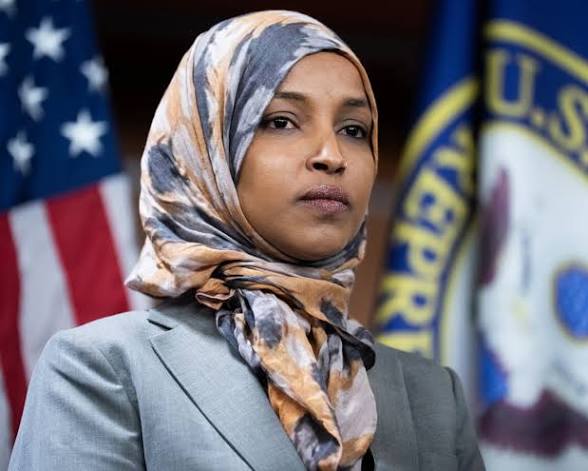
The federal investigation involving Democratic Representative Ilhan Omar has entered a new phase following the release of previously sealed court records connected to a search of her Washington, D.C., residence.
The documents, made public on November 23, 2026, provide new information about the scope of the investigation and the legal arguments surrounding the government’s decision to search the congresswoman’s home. However, they also leave several important questions unanswered.
One of the most significant details is that federal investigators reportedly sought evidence relating to suspected offenses dating from 1980 through the present. The records do not clearly identify the alleged crimes because substantial portions of the documents remain redacted.
The investigation has attracted national attention because it involves a sitting member of Congress, questions about immigration documentation, and constitutional protections designed to safeguard legislative activities.
Legal observers have particular reason to examine the case because the court records reveal disagreements between federal prosecutors and a magistrate judge over the constitutional protections that should apply when investigators search a lawmaker’s private residence.
Omar has denied wrongdoing and described the investigation as politically motivated. She has not been charged with a crime in connection with the investigation.
The newly released documents therefore raise important legal and political questions. They reveal the government’s investigative efforts but do not establish that Omar committed fraud.
What the Newly Unsealed Ilhan Omar Records Reveal
The latest developments follow a legal effort by news organizations and advocacy groups to obtain access to records surrounding the October search of Omar’s Washington residence.
On November 23, a federal court released more than 160 pages of documents connected to the investigation.
The records provide a partial picture of the government’s actions, including its search warrant application, legal arguments, and discussions with the magistrate judge.
However, the documents contain extensive redactions. Some pages are almost entirely blacked out, making it difficult for the public to understand the complete nature of the allegations.
According to reporting by the Minnesota Star Tribune, one filing stated that the government believed Omar had committed certain crimes over several decades, beginning before she entered Congress.
The exact language describing the alleged offenses remains redacted.
Another important detail concerns the period covered by the investigation. Federal authorities reportedly sought evidence involving suspected offenses dating back to 1980.
This unusually broad timeline has attracted attention because it reaches back to the period surrounding Omar’s birth.
Nevertheless, the documents do not establish that every year within that period involved suspected criminal activity.
They also do not reveal a final determination by prosecutors.
The release is significant because it confirms the scope of the government’s investigative request while leaving the underlying evidence unavailable to the public.
Star Tribune+2
Why Federal Investigators Are Examining Immigration Records
One of the central issues surrounding the investigation involves questions about Omar’s immigration history and documentation.
Omar was born in Somalia and arrived in the United States as a refugee with her family in 1995. She later became a U.S. citizen.
Reports published in October 2026 indicated that federal investigators were examining whether Omar or members of her family had provided inaccurate information in immigration paperwork.
The allegations reportedly involve historical documents and questions about personal information submitted during the immigration process.
These claims have circulated in political discussions for years. However, their existence does not mean that they have been proven.
The Washington Post previously reported that the investigation was examining claims concerning Omar’s birth date and citizenship-related documents.
Those allegations have been repeatedly rejected by Omar.
The newly unsealed records have not provided the public with the complete evidence supporting the government’s investigation.
This distinction matters because immigration-related investigations can involve complicated questions about historical records, identity documents, family relationships, and the accuracy of information submitted to federal agencies.
Investigators must establish more than inconsistencies or disputed claims before criminal liability can be established.
They must demonstrate that the relevant legal requirements for an offense have been satisfied.
For example, a fraud allegation generally requires evidence of a legally significant false representation and the necessary criminal intent. The precise requirements depend on the statute involved.
At this stage, the publicly available records do not establish that Omar committed immigration fraud.
The October Search of Omar’s Washington Home
The investigation became a major national story on October 12, 2026, when federal agents searched Omar’s Washington, D.C., residence.
The search followed a warrant application submitted earlier that month.
According to the court documents, federal authorities first applied for a search warrant on October 2. The magistrate judge approved the warrant on October 9, after reviewing the government’s arguments and requesting changes.
Homeland Security Investigations agents executed the warrant on October 12.
The search reportedly involved electronic devices, documents, records, and other materials that investigators believed could be relevant to the investigation.
The authorized materials included:
Documents and personal records.
Computers and electronic devices.
Mobile phones.
Thumb drives and external storage devices.
Photographs and other potentially relevant information.
Reports also indicated that agents seized items including phones, notebooks, a laptop, and a passport.
However, the full inventory and the complete supporting affidavit have not been publicly released.
The search attracted additional attention because Omar is an elected member of Congress.
Searching a lawmaker’s private residence raises questions about the balance between criminal investigations and constitutional protections for legislative activities.
The magistrate judge specifically addressed those concerns before approving the warrant.
CBS Minnesota+2
Legal Experts Focus on the Speech or Debate Clause
One of the most important legal issues emerging from the unsealed records involves the Constitution’s Speech or Debate Clause.
This provision is designed to protect members of Congress from certain forms of executive and judicial interference involving their legislative activities.
The purpose is to preserve the independence of the legislative branch.
It does not provide blanket immunity from criminal investigations or protect every aspect of a lawmaker’s private life.
However, it can create significant legal complications when investigators seek materials that might contain information connected to congressional duties.
In Omar’s case, Magistrate Judge Matthew J. Sharbaugh questioned whether the government’s proposed search procedures adequately protected her constitutional privileges.
Federal prosecutors initially argued that the search did not implicate the Speech or Debate Clause because the investigation concerned private conduct rather than Omar’s work in Congress.
The judge did not fully accept that position.
In an October 9 order, Sharbaugh explained that searching the private residence of a sitting member of Congress could raise constitutional concerns.
He required additional safeguards to ensure that investigators did not improperly examine materials protected by the constitutional provision.
The resulting process allowed Omar an opportunity to identify potentially privileged legislative materials before investigators examined the seized material.
This was an important development because it demonstrated that the court was not simply accepting the government’s position without independent scrutiny.
The dispute also highlights an important distinction.
The Speech or Debate Clause does not prevent authorities from investigating alleged immigration or financial offenses unrelated to legislative activities.
Instead, it limits certain government actions involving protected legislative work.
For that reason, the court had to consider how investigators could pursue legitimate criminal inquiries without interfering with constitutionally protected congressional activities.
The issue could become even more important if prosecutors eventually seek to use materials obtained during the search.
AP News+2
Why the Judge Questioned the Government’s Search Procedures
The unsealed records reveal that the magistrate judge raised concerns before authorizing the search.
The government and the court reportedly exchanged multiple filings and proposed revisions between October 2 and October 9.
The disagreement centered on how investigators would handle potentially privileged congressional materials.
Prosecutors maintained that the investigation concerned Omar’s private conduct and did not involve her legislative responsibilities.
However, the judge considered the practical possibility that a search of her home could uncover congressional documents or other protected materials.
The court therefore required procedures designed to separate potentially privileged information from evidence investigators could lawfully examine.
This process is important for two reasons.
First, it protects constitutional principles governing the separation of powers.
Second, it helps prevent disputes about whether evidence obtained during a search can later be used in criminal proceedings.
A search warrant does not automatically give investigators unlimited authority to review everything they seize.
The scope of the warrant, applicable privilege protections, and constitutional requirements remain important.
The released records suggest that the judge took these issues seriously.
They also show why the investigation has attracted attention beyond the allegations themselves.
The constitutional dispute could become a significant part of any future legal proceedings.
What Are the Main Fraud Allegations?
Although the title of the investigation has generated considerable attention, the public record does not yet provide a complete list of suspected offenses.
Several allegations have appeared in earlier reporting and political discussions.
It is important to distinguish between historical allegations, subjects reportedly being examined by investigators, and facts established by a court.
Here are the main issues receiving attention.
1. Immigration Documentation Questions
The most prominent reported area involves questions about historical immigration documents.
Investigators are reportedly examining whether Omar or members of her family provided inaccurate information during immigration proceedings.
The questions concern historical records and information relating to her family’s arrival in the United States.
However, the public has not received the complete evidence supporting these suspicions.
The released records also do not establish that any immigration offense occurred.
2. Birth Date Allegations
Another issue concerns longstanding allegations about Omar’s date of birth.
Claims have circulated that her birth year may have been recorded inaccurately in historical documents.
These allegations have appeared in political debates and conservative media coverage.
However, they have not been substantiated by the newly unsealed court records.
The fact that investigators are examining a historical period does not establish that a birth-date allegation is correct.
Any criminal finding would require reliable evidence and the application of relevant law.
3. Marriage-Related Allegations
Omar has also faced longstanding allegations concerning her previous marriage history.
Some critics have claimed that a former husband was a close relative and that the marriage was connected to immigration fraud.
Omar has rejected these accusations.
The newly released records do not establish that these claims are true or confirm that they form the basis of the current investigation.
Readers should therefore avoid treating political accusations as established criminal findings.
4. Financial and Tax-Related Questions
Omar’s finances have also attracted political scrutiny over the years.
Earlier complaints and public controversies included allegations concerning financial disclosures, taxes, and other personal financial matters.
Judicial Watch, for example, filed an ethics complaint in 2019 requesting an investigation into several allegations involving Omar.
That complaint included claims concerning immigration, marriage, tax matters, and student loans.
However, an ethics complaint is not the same as a criminal conviction or proof of misconduct.
The latest publicly released court records do not provide enough information to conclude that tax fraud or financial fraud has been established.
5. Possible Identity and Document Issues
The investigation has also generated questions about the accuracy of historical identity records.
Such questions can involve names, dates, family information, and documents submitted to government agencies.
Investigators may examine these records to determine whether any information was intentionally falsified.
However, mistakes, inconsistencies, and intentional fraud are legally different matters.
Prosecutors would need evidence satisfying the elements of any specific criminal offense.
At present, the exact statutes under investigation remain redacted.
Star Tribune+3
Why the 1980 Timeline Matters
One of the most striking details in the released records is the investigation’s reported timeline.
The government’s filings refer to suspected offenses dating from 1980 to the present.
That period covers decades of Omar’s personal history.
It also extends well beyond her time in elected office.
The reference has generated questions about the scope of the investigation and the types of records federal authorities are seeking.
However, the timeline should be interpreted carefully.
It does not mean that prosecutors have proven wrongdoing dating back to 1980.
Nor does it establish that every allegation made against Omar over the years is part of the current investigation.
The specific statutes remain concealed, and the central search warrant affidavit has not been released.
There are also legal questions surrounding the age of potential evidence.
Federal criminal statutes of limitation generally establish deadlines for bringing charges. Some offenses have different limitation periods, and certain circumstances can affect how those deadlines operate.
Consequently, prosecutors must consider whether any suspected offense remains legally prosecutable.
The fact that investigators are examining old records does not automatically mean that charges can be brought for every historical allegation.
Why the Government Wants Some Records to Remain Sealed
Despite the partial release, federal prosecutors have argued that important parts of the investigation should remain confidential.
Their position is that releasing sensitive information too early could damage an ongoing criminal investigation.
It could also expose witnesses, reveal investigative methods, or create problems if prosecutors eventually decide to bring charges.
The government has particularly defended keeping the 67-page search warrant affidavit sealed.
That document is important because it contains the factual basis presented to the magistrate judge when investigators requested permission to search Omar’s home.
Without the affidavit, the public cannot independently evaluate the full evidence that prosecutors presented.
The court has therefore adopted a partial-disclosure approach.
It released records that could be made public without revealing sensitive investigative details while keeping important evidence confidential.
This approach reflects a familiar tension in criminal proceedings.
The public has a legitimate interest in understanding government investigations, especially when elected officials are involved.
At the same time, individuals under investigation have legal interests in privacy, due process, and protection against premature public judgments.
The challenge is finding a balance between transparency and the integrity of an ongoing investigation.
The Washington Post+2
Ilhan Omar Responds to the Investigation
Omar has strongly rejected allegations of criminal wrongdoing.
Following the October 12 search, her office described the operation as an abuse of power and an escalation in what it characterized as the political weaponization of federal law enforcement.
She has also argued that the investigation is politically motivated.
Her criticism comes amid a broader political conflict between the Minnesota Democrat and President Donald Trump.
Omar has been a prominent critic of Trump and his administration, particularly on immigration and other national policy issues.
The investigation has consequently become a political controversy as well as a legal matter.
However, political arguments do not determine criminal liability.
The government’s responsibility is to establish whether evidence supports specific charges under federal law.
Omar retains the right to challenge the investigation and any government action that violates her constitutional protections.
Importantly, she has not been charged with a crime in connection with the current investigation.
The distinction between an investigation and a criminal prosecution remains central to understanding the case.
The Political Impact on Washington and Minnesota
The investigation has created a new political flashpoint in Washington.
Omar represents Minnesota’s Fifth Congressional District and has become a nationally recognized figure in Democratic politics.
Her political profile has made the investigation particularly controversial.
Supporters argue that the government must not use criminal investigations to intimidate elected officials or punish political opponents.
Critics argue that public officials should face the same investigative standards as other citizens when credible allegations arise.
Both arguments raise important questions about accountability and the independence of law enforcement.
The timing of the search has also generated criticism.
Federal agents searched Omar’s home less than a month before the November 2026 midterm elections.
That timing prompted concerns about whether politically sensitive investigative actions were being handled appropriately.
Omar subsequently won reelection, receiving approximately 76% of the vote in Minnesota’s Fifth Congressional District, according to the Minnesota Star Tribune.
Her electoral victory does not resolve the legal questions, just as the existence of an investigation does not establish guilt.
The broader political debate is likely to continue as additional court proceedings develop.
What Happens Next in the Ilhan Omar Fraud Investigation?
The next stage will depend on the government’s investigative decisions and further court proceedings.
Several developments could shape the case.
1. Further document releases
News organizations and advocacy groups may continue seeking access to sealed court records. Additional disclosures could provide more information about the government’s allegations.
2. Review of seized materials
Investigators must examine the materials collected during the October search while respecting applicable constitutional protections.
3. Possible legal challenges
Omar could challenge aspects of the search, the handling of privileged materials, or other investigative procedures if she believes her rights were violated.
4. A decision on criminal charges
Federal prosecutors must decide whether the available evidence supports criminal charges.
They could pursue charges if they believe the evidence satisfies the applicable legal standards. Alternatively, they could continue investigating or close the case without prosecution.
5. Further constitutional disputes
The Speech or Debate Clause issue could remain important if investigators attempt to examine or use materials connected to Omar’s congressional responsibilities.
For now, no public announcement establishes that prosecutors have decided to charge Omar.
The investigation remains ongoing, and the most important supporting evidence remains unavailable to the public.
Why the Case Matters Beyond Ilhan Omar
The investigation raises questions that extend beyond one politician.
It highlights the difficult balance between government accountability, individual rights, and constitutional protections.
Federal authorities have the responsibility to investigate credible allegations of criminal conduct, regardless of a person’s political position.
However, those investigations must follow established legal procedures.
The involvement of a sitting member of Congress makes the constitutional questions particularly important.
The Speech or Debate Clause exists to protect the independence of the legislative branch. At the same time, it does not place lawmakers above the law.
The Omar investigation will therefore be closely watched by legal professionals, lawmakers, and civil liberties organizations.
Its eventual outcome could influence public discussions about how federal investigators handle cases involving elected officials.
For now, the unsealed records provide a glimpse into the government’s investigation rather than a final answer.
The central allegations remain unresolved, and the public will need to wait for additional evidence or official court developments before drawing conclusions.
Conclusion
The newly unsealed records in the Ilhan Omar fraud probes have revealed important details about a federal investigation involving immigration history, historical documentation, and possible criminal offenses.
The documents also expose a significant constitutional disagreement between federal prosecutors and a magistrate judge over protections for congressional activities.
However, substantial portions of the records remain redacted. The exact alleged offenses and the complete evidence supporting the investigation have not been made public.
Omar denies wrongdoing and has described the investigation as politically motivated. She has not been charged with a crime in the current case.
As investigators continue reviewing evidence and courts consider further disclosure requests, the case is likely to remain a major political and legal story.
The most important question is whether federal authorities can establish credible evidence of a specific criminal offense while respecting the constitutional protections afforded to members of Congress.
Until prosecutors make a formal decision and the evidence becomes clearer, the allegations must remain allegations rather than established facts.
Frequently Asked Questions (FAQs)
1. Why is Ilhan Omar under federal investigation?
Federal authorities are reportedly investigating questions involving Omar’s immigration history, historical documentation, and possible violations of federal law. The exact alleged offenses remain redacted in the publicly released court records.
2. What did the newly unsealed Ilhan Omar records reveal?
The records revealed that investigators sought evidence relating to suspected offenses dating from 1980 to the present. They also detailed disagreements between prosecutors and a magistrate judge about constitutional protections during the search of Omar’s home.
3. Has Ilhan Omar been charged with fraud?
No. As of November 25, 2026, Omar has not been charged with a crime in connection with the investigation.
4. Why did federal agents search Ilhan Omar’s home?
Federal agents executed a court-authorized search warrant on October 12, 2026. Investigators were seeking documents, electronic devices, and other materials potentially connected to their investigation.
5. What is the Speech or Debate Clause?
The Speech or Debate Clause is a constitutional protection that safeguards members of Congress from certain government interference involving their legislative activities. It does not provide blanket immunity from criminal investigations.
6. What immigration fraud allegations involve Ilhan Omar?
Earlier reporting described questions about historical immigration paperwork, including allegations concerning birth-date and citizenship-related information. Omar has rejected these allegations, and the publicly released records do not establish that immigration fraud occurred.
7. Why are some court records still sealed?
Federal prosecutors argue that releasing sensitive investigative information could jeopardize the ongoing investigation, expose witnesses, or affect potential future proceedings.
8. When did federal agents search Omar’s residence?
Homeland Security Investigations agents searched Omar’s Washington, D.C., residence on October 12, 2026, following a warrant approved on October 9.
9. Did the judge approve the search without constitutional concerns?
No. Magistrate Judge Matthew J. Sharbaugh raised concerns about the Speech or Debate Clause and required additional safeguards to protect potentially privileged congressional materials.
10. What happens next in the Ilhan Omar investigation?
Investigators are expected to continue examining evidence and relevant documents. Federal prosecutors will ultimately decide whether the evidence supports criminal charges or whether the investigation should close without prosecution.
About the Author