Garden Grove Evacuation Alert: Emergency Zone Map, Public Safety Fearsp
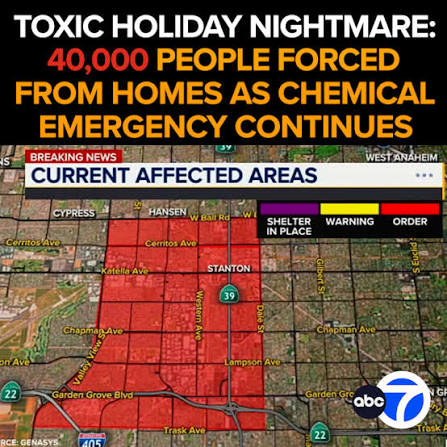
A major public safety emergency has placed Garden Grove at the center of national attention after authorities ordered thousands of residents to evacuate due to fears surrounding a dangerous chemical tank incident. The developing crisis has triggered widespread concern across Orange County as emergency officials warned that a volatile tank could either leak toxic chemicals or explode.
The Garden Grove evacuation alert quickly became one of the most discussed emergencies in Southern California, with evacuation zones stretching across multiple communities. Residents scrambled to leave homes, schools closed operations, and emergency shelters opened as officials worked around the clock to contain the threat.
According to emergency responders, the situation involves a massive storage tank containing methyl methacrylate, a highly flammable industrial chemical used in aerospace and plastics manufacturing. Authorities warned the public that the incident could escalate rapidly if the tank enters what experts call a “thermal runaway” event.
What Triggered the Garden Grove Evacuation Alert?

The emergency reportedly began at a GKN Aerospace facility in Garden Grove after a large chemical storage tank began overheating and releasing dangerous vapors. Officials stated that the tank contained thousands of gallons of methyl methacrylate (MMA), a chemical considered highly toxic and extremely flammable.
Fire officials explained that crews initially attempted to stabilize the tank through cooling operations and pressure control systems. However, mechanical failures and concerns over worsening instability forced authorities to expand evacuation orders throughout surrounding neighborhoods.
Public safety agencies warned residents that there were two possible outcomes:
- The tank could rupture and release toxic chemicals.
- The tank could explode, potentially affecting nearby fuel and chemical containers.
Emergency officials described the situation as “actively in crisis,” increasing fears among local communities.
Emergency Zone Map and Evacuation Areas
Authorities released updated evacuation boundaries as the situation evolved. According to official emergency information, the evacuation perimeter expanded to include areas:
- South of Ball Road
- North of Trask Avenue
- East of Valley View Street
- West of Dale Street
The emergency zone impacted portions of several Orange County communities, including:
- Garden Grove
- Anaheim
- Cypress
- Stanton
- Westminster
- Buena Park
Officials estimated that nearly 40,000 residents were affected by the evacuation orders.
Residents were urged to leave immediately if instructed by law enforcement or emergency crews. Officials emphasized that the evacuation orders were not precautionary but were based on real risks associated with toxic vapor exposure and potential explosion hazards.
Why Authorities Fear a Possible Explosion
One of the biggest concerns surrounding the Garden Grove evacuation alert is the chemical involved in the incident.
Methyl methacrylate is widely used in manufacturing but becomes extremely dangerous under unstable storage conditions. Experts noted that the substance can:
- Produce toxic fumes
- Ignite easily
- Cause respiratory distress
- Trigger large explosions in confined environments
Officials explained that if the tank ruptured or exploded, toxic vapors could spread rapidly across nearby residential areas. Health experts warned that exposure to high concentrations could cause severe breathing problems, dizziness, nausea, and hospitalization.
Authorities also expressed concern because the chemical vapors are heavier than air, meaning they could settle into low-lying neighborhoods and spread unpredictably depending on weather and wind conditions.
Emergency Response Efforts Continue
Emergency response teams from multiple agencies mobilized quickly to manage the incident. Firefighters deployed water cooling systems and remotely operated hoses to stabilize the tank while hazardous materials experts monitored air quality in surrounding communities.
Officials also established sandbag barriers and containment systems to prevent chemical runoff from entering storm drains or nearby waterways. Specialized hazmat crews remained on-site around the clock while authorities coordinated with national chemical safety experts for additional support.
Despite the seriousness of the situation, officials reported that air quality monitoring had not yet detected dangerous vapor concentrations outside the immediate area. However, authorities stressed that conditions could change quickly.
Public Safety Fears Spread Across Orange County
The evacuation alert generated widespread anxiety across Southern California, especially on social media platforms where residents shared evacuation experiences, emergency updates, and concerns about the potential impact of an explosion.
Many residents described hearing sirens, seeing emergency vehicles, and receiving urgent evacuation notices early in the morning. Some communities reported confusion as evacuation zones expanded several times throughout the day.
Online discussions also reflected growing frustration and fear among residents trying to locate accurate evacuation maps and emergency shelter information. Some users described the situation as one of the most alarming public safety emergencies Orange County had faced in recent years.
Emergency officials repeatedly urged residents to avoid spreading misinformation and instead rely on verified updates from public safety agencies and city emergency websites.
Schools, Roads, and Businesses Impacted
The evacuation alert disrupted daily life across several Orange County cities. Authorities temporarily closed roads near the affected industrial area while schools and local businesses suspended operations.
Beach Boulevard and nearby transportation routes experienced major closures due to emergency response activity. Schools inside the evacuation zone canceled classes or shifted operations as parents rushed to coordinate pickups and safety plans.
Local businesses near the evacuation perimeter also faced shutdowns as employees and customers were ordered to leave affected areas.
The economic impact of the incident remains uncertain, but officials acknowledged that prolonged evacuation orders could create significant disruptions for residents and local businesses alike.
Evacuation Shelters and Community Support
To support displaced residents, emergency agencies opened temporary shelters in nearby communities.
Available evacuation centers included:
- Garden Grove Sports and Recreation Center
- Cypress Community Center
Authorities encouraged residents to bring essential medications, identification, and emergency supplies while relocating temporarily.
Community organizations and volunteers also stepped in to help vulnerable residents, including seniors, families with children, and people requiring medical assistance.
Officials reminded residents to check on neighbors who may need transportation or additional support during evacuation efforts.
Official Warnings and Safety Recommendations
Public safety officials issued several recommendations for residents living near the emergency zone:
- Follow all evacuation orders immediately
- Avoid blocked roads and restricted areas
- Monitor official emergency updates
- Stay indoors if outside the evacuation zone but nearby
- Avoid exposure to unusual odors or smoke
- Seek medical attention if experiencing breathing difficulties
Authorities also warned residents not to attempt returning home until officials declared the area safe.
Emergency hotlines and city information portals were activated to provide updates regarding evacuation status, road closures, and air quality conditions.
Social Media Reactions Intensify
The Garden Grove evacuation alert rapidly gained traction online as videos, emergency maps, and eyewitness reports spread across social media.
Users expressed concern about:
- The scale of the evacuation zone
- The possibility of a chemical explosion
- Health risks from toxic vapors
- Lack of clear communication
- Potential long-term environmental impact
Some residents compared the situation to industrial disasters seen in other parts of the country, while others praised first responders for acting quickly to protect surrounding neighborhoods.
Online discussions also highlighted broader concerns about industrial safety regulations and chemical storage practices near residential communities.
Could the Situation Become Worse?
Officials acknowledged that the emergency remains unstable and unpredictable.
Experts warned that if cooling operations fail or the tank pressure rises further, the incident could escalate into a much larger disaster. Emergency planners continued preparing for worst-case scenarios while working to stabilize the site.
Authorities stressed that the evacuation orders were issued to protect lives and reduce potential injuries if conditions deteriorate suddenly.
At the same time, fire crews expressed cautious optimism that ongoing mitigation efforts could eventually bring the situation under control.
How Residents Are Coping
For many families, the evacuation created emotional and logistical challenges. Residents described hurried departures, uncertainty about returning home, and concerns over pets, medications, and personal belongings.
Hotels and shelters in nearby areas experienced increased demand as thousands searched for temporary accommodations. Some residents also worried about the long-term health effects of potential chemical exposure.
Community support networks quickly emerged online, with locals sharing updates, shelter information, and transportation assistance for affected families.
What Happens Next?
Authorities continue monitoring the tank and surrounding chemical infrastructure while emergency teams work to prevent a catastrophic failure.
Officials stated that evacuation orders will remain in effect until the site is fully stabilized and air quality experts confirm the area is safe for residents to return.
The incident may also trigger broader investigations into industrial safety standards, hazardous material storage practices, and emergency preparedness measures in densely populated communities.
For now, residents across Garden Grove and neighboring cities remain focused on safety as emergency crews continue managing one of Southern California’s most serious hazmat incidents in recent years.
FAQs
What caused the Garden Grove evacuation alert?
The evacuation alert was triggered by a dangerous chemical tank incident involving methyl methacrylate at an aerospace facility in Garden Grove.
How many people were evacuated?
Officials estimated that approximately 40,000 residents were affected by evacuation orders across multiple Orange County cities.
What chemical was involved?
The chemical involved was methyl methacrylate (MMA), a highly flammable industrial chemical used in manufacturing.
Why is the situation considered dangerous?
Authorities warned the tank could rupture or explode, potentially releasing toxic vapors and causing severe respiratory health risks.
Which cities were affected?
Affected areas included parts of Garden Grove, Anaheim, Cypress, Stanton, Westminster, and Buena Park.
Are shelters available for evacuated residents?
Yes, emergency shelters were opened at the Garden Grove Sports and Recreation Center and Cypress Community Center.
Is Disneyland included in the evacuation zone?
No, reports indicated that Disneyland was outside the evacuation perimeter.
When will residents be allowed to return home?
Officials said residents can return only after emergency crews stabilize the incident and safety experts confirm the area is secure.
How useful was this post?
Click on a star to rate it!
Average rating 0 / 5. Vote count: 0
No votes so far! Be the first to rate this post.
About the Author

usa5911.com
Administrator
Hi, I’m Gurdeep Singh, a professional content writer from India with over 3 years of experience in the field. I specialize in covering U.S. politics, delivering timely and engaging content tailored specifically for an American audience. Along with my dedicated team, we track and report on all the latest political trends, news, and in-depth analysis shaping the United States today. Our goal is to provide clear, factual, and compelling content that keeps readers informed and engaged with the ever-changing political landscape.