Legal Expert Warns Cornell Faces Serious Risk Over Handling of Sexual Assault Case
Cornell University is facing growing legal and institutional pressure over its handling of a 2024 sexual assault allegation involving students connected to the Chi Phi fraternity.
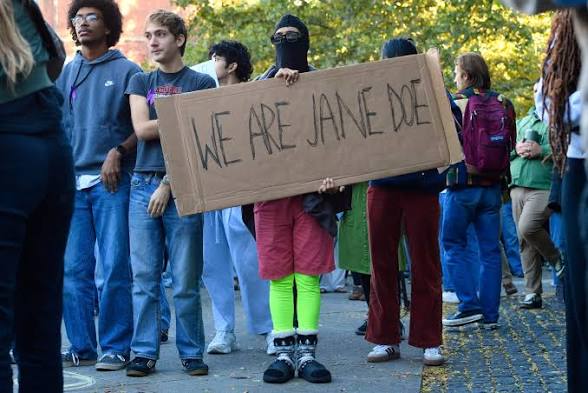
The case has triggered a renewed criminal investigation, a civil lawsuit, student protests and demands for greater transparency. It has also prompted New York Gov. Kathy Hochul to appoint Attorney General Letitia James as special prosecutor.
Now, legal experts are closely examining whether Cornell’s response exposed the university to additional legal risk.
The central issue is not simply the alleged assault itself. It is whether the university responded appropriately after the allegation was reported, whether investigators gathered and shared critical evidence, and whether Cornell’s disciplinary process adequately addressed the allegations.
Cornell has defended its handling of the matter. The university says it conducted an internal investigation and imposed sanctions that included expulsions and suspensions. It has also agreed to an independent review of its response.
The controversy, however, is far from over.
What Happened in the Cornell Sexual Assault Case?
The allegations date to October 2024.
A former Cornell student, identified in court documents as Jane Doe, alleges that she was sexually assaulted by multiple men at the Chi Phi fraternity house after consuming alcohol and drugs.
According to her September 2026 lawsuit, she became incapacitated and was unable to consent. The lawsuit names Cornell, the fraternity, seven men and other defendants.
The accused men have denied the allegations through their attorneys.
The case initially did not result in criminal charges. Tompkins County District Attorney Matthew Van Houten later said his office had reviewed the information available in 2024 and concluded that the evidence did not satisfy New York’s criminal statutes.
That decision has now come under intense scrutiny.
After the lawsuit became public, Van Houten announced that his office would reopen the criminal investigation. New York officials subsequently transferred the criminal investigation to Attorney General Letitia James as special prosecutor.
The renewed investigation means the legal picture could change substantially.
Why Cornell Is Facing New Scrutiny
The university’s legal exposure centers partly on how it handled the allegations after they were reported.
Cornell has said its internal process resulted in disciplinary action against students and that the Chi Phi chapter was closed and remains barred from campus.
However, critics have questioned whether Cornell’s investigation was sufficiently comprehensive and whether information gathered by university investigators was properly communicated to law enforcement.
A particularly important development involved a transcript of the alleged victim’s interview with Cornell police.
CBS News reported that the transcript contained statements in which Jane Doe described herself as incapacitated and said she was raped. The Tompkins County district attorney subsequently said he had not previously seen the transcript.
That revelation has raised questions about communication between Cornell’s police department and prosecutors.
If investigators possessed potentially important evidence that prosecutors did not receive, the issue could become significant in assessing how the case was originally handled.
Legal Expert Deborah Tuerkheimer Raises Concerns
Northwestern University law professor Deborah Tuerkheimer has criticized aspects of the investigation.
Speaking to USA Today, Tuerkheimer, author of Credible: Why We Doubt Accusers and Protect Abusers, said sexual assault investigations require thorough, trauma-informed procedures.
She argued that several aspects of the Cornell case appeared to fall short of that standard.
Among the concerns raised by experts are the failure to involve local law enforcement at an earlier stage, information-sharing problems between investigators and prosecutors, and questions about the sanctions imposed on students.
These criticisms do not establish that Cornell violated the law.
That distinction is important.
An independent investigation is necessary to determine whether the university’s actions met its legal and institutional obligations.
Still, the growing number of unanswered questions explains why Cornell now faces substantial scrutiny.
Jonathan Turley Raises a Different Legal Concern
Constitutional law professor Jonathan Turley has also weighed in on the case, although his criticism focuses primarily on the handling of the criminal investigation and the appointment of Letitia James.
Turley has argued that the appointment raises due-process and prosecutorial-neutrality concerns.
In a recent Fox News appearance, Turley discussed Cornell’s decision to have former Deputy U.S. Attorney General Sally Yates lead an independent review of the university’s handling of the allegations.
Turley’s position differs from experts who have focused primarily on the treatment of the alleged victim.
He has emphasized the importance of protecting the rights of accused individuals while ensuring that sexual assault allegations are thoroughly investigated.
That creates one of the central legal challenges in the case.
Universities must respond seriously to allegations of sexual violence while also maintaining fair procedures for everyone involved.
Cornell Has Now Hired Sally Yates
The university’s latest move could prove important.
Cornell has selected Sally Yates, a former U.S. deputy attorney general, to conduct an independent review of its handling of the sexual assault allegations.
Reuters reported that Yates will examine Cornell’s response to sexual assault and the university’s procedures for addressing and preventing such incidents.
Cornell’s Board of Trustees has created a special committee to oversee the review, with the stated goal of giving the investigation independence.
Yates brings substantial experience with high-profile investigations.
Her appointment is significant because Cornell needs an investigation that students, faculty, the alleged victim, accused students and the public can view as credible.
An independent review could help answer several unresolved questions.
Those questions include whether university investigators handled the initial report properly, whether relevant evidence was preserved and shared, whether disciplinary decisions followed Cornell’s policies and whether systemic problems contributed to the controversy.
The Civil Lawsuit Creates Another Layer of Risk
Cornell is not dealing only with a criminal investigation.
The university is also a defendant in a civil lawsuit filed by Jane Doe.
The lawsuit alleges that Cornell failed to protect her and failed to properly respond after she reported the alleged assault.
Civil litigation operates differently from a criminal prosecution.
A criminal case asks whether prosecutors can prove a crime beyond a reasonable doubt.
A civil case can examine whether an institution or individual may be legally responsible for damages under applicable civil law.
That means Cornell could face significant legal questions even if prosecutors ultimately decide that criminal charges cannot be sustained.
At this stage, however, no court has determined that Cornell is legally liable.
The allegations contained in the lawsuit remain allegations unless established through litigation or another legal process.
Title IX Questions Could Become Important
Another major issue involves federal protections against sex discrimination in education.
Title IX has long played an important role in how colleges respond to sexual misconduct allegations.
The regulatory framework governing Title IX has changed significantly over recent years.
The Trump administration reinstated the 2020 Title IX regulations in September 2026 after later Biden-era regulations were struck down.
Experts have argued that changes in federal rules can affect how universities investigate, adjudicate and discipline sexual misconduct allegations.
Tracey Vitchers, executive director of It’s On Us, told Inside Higher Ed that changes to Title IX rules have affected institutional approaches to sexual assault prevention and discipline.
For Cornell, this makes the timing and structure of its investigations particularly important.
The university will need to demonstrate that its procedures complied with the applicable legal requirements at the relevant time.
New York’s Sexual Assault Law Is Also Under Debate
The Cornell case has exposed a broader dispute about New York’s sexual assault laws.
One major issue concerns voluntary intoxication.
Under New York law, the circumstances under which intoxication can make someone legally incapable of consenting are complicated.
Critics argue that the law can make prosecution more difficult when someone voluntarily consumes alcohol or drugs and later becomes incapacitated.
Gov. Kathy Hochul has called for changes to the law.
Reuters reported that lawmakers are pushing legislation designed to address what critics describe as a loophole involving voluntary intoxication.
The debate is significant because prosecutors previously cited the legal framework when explaining why charges were not initially filed.
That does not automatically mean the law was applied incorrectly.
Instead, it highlights the distinction between what may be morally disturbing and what prosecutors can prove under a specific criminal statute.
Letitia James Takes Over the Criminal Investigation
On October 1, Hochul signed an executive order appointing the New York Attorney General’s Office as special prosecutor.
James said her office would conduct the investigation based on facts and law.
The appointment represents a major escalation in the case.
It also reflects the loss of confidence expressed by state officials in the previous handling of the investigation.
Hochul had argued that newly released information raised serious questions about the investigation conducted by Cornell police and the decision not to prosecute earlier.
James now has authority to review the available evidence and determine whether criminal charges are appropriate.
No individual accused in the case has been criminally charged as of the latest reports.
That means the investigation remains ongoing.
Cornell President Calls the Case a Defining Moment
Cornell President Michael Kotlikoff has acknowledged the seriousness of the controversy.
In a video message to the Cornell community, Kotlikoff described the allegations as deeply disturbing and said the case would affect the university for years.
He also acknowledged that Cornell does not have all the answers.
The president pledged greater transparency while noting that legal and privacy restrictions limit what the university can publicly disclose about individual disciplinary cases.
Kotlikoff also said Cornell would reconsider how fraternities and sororities operate on campus.
That could become a major component of the university’s response.
Students Are Demanding Accountability
The controversy has sparked significant student anger.
Students have organized protests and called for greater transparency from Cornell administrators.
Some students have also demanded changes to the university’s approach to sexual assault cases and stronger accountability for fraternities.
Cornell’s Student Assembly has proposed measures calling for greater institutional transparency, including publishing aggregate disciplinary information and clarifying how university offices coordinate with law enforcement.
The Faculty Senate has also faced pressure.
A proposed resolution posted by Cornell’s Office of the Dean of Faculty calls for a vote of no confidence in the central administration’s ability to address the ongoing sexual assault crisis.
That shows the controversy has moved beyond one criminal case.
It has become a broader institutional crisis.
Cornell’s Sexual Assault Statistics Add Pressure
The controversy has also drawn attention to Cornell’s broader campus climate.
A 2025 Cornell survey found that 35% of undergraduate women who responded reported experiencing nonconsensual sexual contact involving force or incapacitation since attending Cornell.
That figure has become central to discussions about campus safety.
USA Today also analyzed Cornell’s Title IX data and reported that the university received more than 1,200 reports involving sexual assault, dating and domestic violence and stalking between 2018 and 2024.
The analysis found that relatively few cases resulted in expulsion or dismissal.
The university has emphasized that reports can involve very different circumstances and that not every report necessarily results in a formal disciplinary finding.
That qualification is important.
However, the statistics are still likely to increase pressure on Cornell to explain how it handles reports of sexual misconduct.
Could Cornell Face Financial Liability?
Potentially, but it is too early to predict the outcome.
The civil lawsuit creates the possibility of financial damages if the plaintiff ultimately proves legally actionable claims.
The university could also face legal expenses, reputational damage and increased pressure from students and faculty.
However, being sued does not mean Cornell will lose.
The university will have opportunities to defend itself and challenge the allegations.
The court will ultimately determine which claims survive and whether the evidence supports liability.
That process could take considerable time.
Why the Independent Review Matters
The independent review by Sally Yates could be one of the most important developments for Cornell.
A credible review can identify whether mistakes occurred without automatically assuming that every allegation against the university is proven.
It can examine:
- How Cornell received the initial report
- How campus police investigated
- Whether evidence was preserved
- Whether evidence was shared with prosecutors
- How Title IX procedures were applied
- Whether disciplinary decisions followed university rules
- Whether students received appropriate support
- Whether fraternity policies were adequate
- Whether similar cases were handled consistently
The findings could influence future reforms and potentially affect Cornell’s defense in civil litigation.
The Biggest Legal Risk May Be Institutional Trust
The most immediate danger for Cornell may not be a single courtroom ruling.
It may be the accumulation of legal, political and institutional pressure.
The university now faces a civil lawsuit.
The criminal investigation has been reopened.
The state attorney general is involved.
An independent review is underway.
Students are protesting.
Faculty members are questioning university leadership.
And state officials are pushing changes to sexual assault law.
Each development creates another reason for Cornell to provide clear answers.
Yet the university must balance transparency against privacy rights and legal strategy.
That is not an easy task.
Cornell Must Balance Victim Support and Due Process
One of the most difficult aspects of the controversy is the need to protect two principles simultaneously.
First, people reporting sexual assault deserve to be heard and investigated seriously.
Second, people accused of crimes are entitled to due process and cannot be treated as guilty before a legal finding.
Legal experts have emphasized both concerns.
That balance becomes particularly difficult when allegations are emotionally charged and public pressure is intense.
Turley has warned against prejudging accused students, while other experts have criticized the investigation for failing to use trauma-informed approaches.
Both issues can exist at the same time.
A fair investigation should be rigorous enough to protect survivors while remaining fair to those accused.
What Happens Next?
Several investigations and legal processes could now move forward simultaneously.
Attorney General Letitia James will oversee the renewed criminal investigation.
A grand jury could ultimately consider whether criminal charges are warranted.
Cornell’s independent review will examine the university’s response.
Meanwhile, the civil lawsuit will proceed through the courts.
The results could reshape Cornell’s policies on sexual assault, fraternity oversight, campus policing and evidence-sharing.
The case could also influence New York’s laws concerning intoxication and consent.
For Cornell, the stakes are therefore unusually high.
Conclusion: Cornell Faces a Defining Test
The Cornell sexual assault case has evolved into a major test of institutional accountability.
What began with allegations surrounding a 2024 fraternity party has now expanded into a criminal investigation, a civil lawsuit, a state-level review and an independent examination of Cornell’s response.
Legal experts disagree on some aspects of the case, particularly regarding prosecutorial neutrality and the treatment of accused students.
But there is broader agreement that the unanswered questions deserve careful investigation.
Cornell has taken steps to address the controversy, including supporting the renewed criminal investigation and hiring Sally Yates to lead an independent review.
The university now has an opportunity to establish exactly what happened, identify any failures and make meaningful reforms.
For the alleged victim, the case remains deeply personal.
For the accused, the presumption of innocence remains essential.
And for Cornell, the outcome could determine whether the university emerges from the controversy with restored trust or faces years of continued legal and institutional scrutiny.
Frequently Asked Questions
What is the Cornell sexual assault case?
The case concerns allegations by a former Cornell student, identified as Jane Doe, who says she was sexually assaulted by multiple men connected to the Chi Phi fraternity in October 2024. She filed a civil lawsuit in 2026 naming Cornell, the fraternity and seven men, among others.
Why is Cornell facing criticism?
Critics have questioned how Cornell investigated the allegations, how evidence was handled and communicated, and what disciplinary measures were imposed. Cornell says it conducted a formal investigation and issued sanctions that included expulsions and suspensions.
Has Cornell been found legally responsible?
No. Cornell faces a civil lawsuit, but there has been no final court ruling establishing that the university is legally liable.
Who is investigating the case now?
New York Attorney General Letitia James was appointed special prosecutor for the criminal investigation by Gov. Kathy Hochul.
Who is conducting Cornell’s independent review?
Cornell has hired former Deputy U.S. Attorney General Sally Yates to independently review the university’s handling of the sexual assault allegations.
Have the accused students been criminally charged?
As of the latest available reporting, no individual involved in the case has been criminally charged. The investigation has been reopened and could be presented to a grand jury.
What legal issue involving intoxication is being debated?
The case has renewed debate over New York’s treatment of voluntary intoxication in sexual assault prosecutions. Critics say current law can make some cases involving voluntarily consumed alcohol or drugs more difficult to prosecute.
What has Cornell’s president said?
President Michael Kotlikoff called the allegations deeply disturbing, acknowledged unanswered questions and pledged greater transparency and an independent review.
Could Cornell face further legal consequences?
Potentially. The civil lawsuit, independent review and renewed criminal investigation could all create additional legal and institutional consequences. However, the eventual outcome cannot be predicted until the investigations and court proceedings develop.
Why is the case attracting national attention?
The case combines allegations of sexual violence, questions about university accountability, a disputed prosecutorial decision, a state-level investigation, fraternity culture and a broader debate over consent and intoxication laws.
How useful was this post?
Click on a star to rate it!
Average rating 0 / 5. Vote count: 0
No votes so far! Be the first to rate this post.
About the Author

usa5911.com
Administrator
Hi, I’m Gurdeep Singh, a professional content writer from India with over 3 years of experience in the field. I specialize in covering U.S. politics, delivering timely and engaging content tailored specifically for an American audience. Along with my dedicated team, we track and report on all the latest political trends, news, and in-depth analysis shaping the United States today. Our goal is to provide clear, factual, and compelling content that keeps readers informed and engaged with the ever-changing political landscape.