FLYDUBAI HERO PILOT: Divine intervention saves doomed jet, midair faith prayer
Flydubai Flight FZ1073 became the center of an extraordinary aviation emergency after a violent cockpit confrontation sent the Boeing 737 MAX into a dramatic descent while flying from Dubai to Tel Aviv.
What began as a routine international flight on September 30, 2026, turned into a life-threatening emergency when the co-pilot allegedly attacked Captain Smit Machchhar inside the cockpit. The aircraft subsequently experienced rapid altitude changes and transmitted emergency signals before diverting to Saudi Arabia.
Yet the flight did not end in disaster.
Instead, the aircraft landed safely at Tabuk, Saudi Arabia, after the injured captain, passengers, cabin crew and two off-duty pilots played crucial roles in restoring control.
For many passengers, the survival of everyone aboard felt like an act of divine intervention. Religious expressions of gratitude followed the safe landing, with passengers recorded chanting a Jewish phrase expressing faith and relief.
However, investigators are focusing on the concrete sequence of events that prevented a catastrophe.
What Happened on Flydubai Flight FZ1073?

Flight FZ1073 departed Dubai International Airport on September 30 bound for Ben Gurion International Airport near Tel Aviv.
The aircraft was a Boeing 737 MAX 8. According to reporting based on flight-tracking data, the plane climbed to approximately 34,000 feet before the emergency unfolded.
The situation changed dramatically when an altercation occurred inside the flight deck.
Flydubai initially described the event as an “altercation” and confirmed that crew members were injured. The aircraft eventually diverted to Tabuk, where it made a safe emergency landing.
Later reporting from UAE authorities provided more serious details.
Reuters reported on October 3 that UAE authorities said the co-pilot attacked the captain with a crash axe in what prosecutors characterized as an attempted terrorist attack. The investigation remains ongoing, including questions surrounding the suspect’s motive and whether anyone else was involved.
That development significantly changed the understanding of the incident.
What was initially described publicly as a cockpit altercation was later investigated as a potentially deliberate attempt to seize control of the aircraft.
The Hero Pilot Who Refused to Give Up
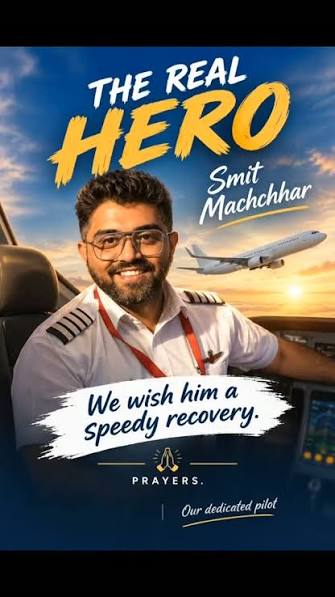
At the center of the rescue was Captain Smit Machchhar.
Reports say the Indian captain was seriously injured during the confrontation but nevertheless managed to open the cockpit door.
That action was critical.
A locked cockpit can prevent passengers and other crew members from reaching the pilots during an emergency. By opening the door, the injured captain effectively allowed other people aboard the aircraft to intervene.
Reuters reported that passengers entered the cockpit after the door was opened and helped subdue the attacker. Two off-duty flydubai pilots who were travelling as passengers subsequently helped regain control of the aircraft.
The sequence demonstrates why the title “hero pilot” has become associated with Captain Machchhar.
His survival alone was not the only factor. His ability to respond while injured created an opportunity for others to act.
The Jet’s Terrifying Descent
One of the most frightening elements of the incident was the aircraft’s sudden loss of altitude.
Flight-tracking information showed that FZ1073 experienced a dramatic descent from cruising altitude.
The aircraft reportedly dropped more than 14,000 feet in roughly 30 seconds during one phase of the emergency. Other accounts have described an overall descent of approximately 17,000 feet during the chaotic episode.
For passengers, the sudden movement could initially have appeared to be extreme turbulence.
But the situation was much more serious.
The aircraft transmitted emergency transponder code 7700, which indicates a general emergency. It later transmitted 7500, the internationally recognized code associated with unlawful interference.
Those signals provided important information to air-traffic authorities while the crew dealt with the crisis inside the aircraft.
Passengers Suddenly Became Part of the Rescue
Modern aviation places enormous emphasis on cockpit security because the flight deck is designed to remain protected from unauthorized access.
Yet FZ1073 presented an unusual problem: the threat reportedly came from inside the cockpit.
Once the injured captain opened the cockpit door, passengers and crew members were able to intervene.
Reuters reported that passengers helped subdue the attacker while additional pilots on board helped stabilize the aircraft.
This was an extraordinary chain of events.
The captain was injured.
The aircraft was experiencing dangerous altitude changes.
The cockpit had become the center of a physical confrontation.
And passengers who had boarded expecting an ordinary flight suddenly found themselves involved in an aviation emergency.
Why Two Extra Pilots Were on the Plane
One of the most remarkable details was the presence of two additional flydubai pilots among the passengers.
Their presence was not reportedly planned as an emergency response.
They were travelling as “deadheading” crew, a routine aviation practice in which pilots travel as passengers so they can report for duty on another flight.
The Indian Express reported that these two off-duty pilots were crucial after the cockpit emergency because they were able to assist with the aircraft’s operation.
This detail has become one of the most striking aspects of the story.
Had those pilots not been aboard, the situation could have presented a different operational challenge.
Their presence gave the surviving crew and passengers another layer of aviation expertise at a moment when the original cockpit crew had been incapacitated or involved in the confrontation.
The Emergency Landing in Saudi Arabia
With the situation brought under control, the aircraft diverted to Saudi Arabia.
FZ1073 landed safely at Prince Sultan bin Abdulaziz International Airport in Tabuk.
Saudi authorities said the aircraft carried 174 passengers and eight crew members. The captain and co-pilot were taken to hospital after the incident.
Passengers were subsequently transferred to another flydubai aircraft for the continuation of their journey.
The safe landing was therefore not the end of the emergency, but it marked the point at which the immediate danger had passed.
The aircraft had survived the cockpit confrontation, the rapid altitude changes and the diversion.
Most importantly, the people aboard survived.
Was It Really “Divine Intervention”?
This is where the story takes a deeply personal turn.
For some passengers, surviving an event of such severity naturally inspired religious reflection.
Video from after the landing showed Israeli passengers chanting “Od Avinu Chai,” a Jewish phrase meaning “Our Father still lives.” The expression was reported as a sign of relief and faith after the terrifying experience.
Some religious commentators have gone further and described the survival as a miracle.
One religious website connected the incident with comments made by Rabbi Eliezer Berland before the flight and interpreted those comments as a prediction or prayer related to the aircraft emergency. That interpretation is a religious claim, not an independently established fact.
There is an important distinction.
The safe outcome can be described factually: the captain opened the cockpit door, passengers intervened, off-duty pilots helped regain control, and the aircraft landed safely in Saudi Arabia.
Whether those events constitute “divine intervention” is a matter of personal faith rather than something an aviation investigation can establish.
The Power of Prayer During an Aviation Crisis
Fear often causes people to turn toward their faith.
Passengers facing an unexpected emergency at 34,000 feet have little control over what happens outside the cabin. In those moments, prayer can become a source of emotional strength.
That does not replace aviation procedures.
Instead, prayer and practical action can exist alongside each other.
On FZ1073, the documented rescue involved concrete actions: the captain’s response, passenger intervention, professional aviation knowledge from additional pilots and coordination with air-traffic authorities.
For passengers who prayed during or after the emergency, however, those actions may have been understood through a spiritual lens.
That difference matters when reporting the story responsibly.
The Crew and Passengers Worked Together
The incident also highlights the importance of teamwork during an aviation emergency.
No single person appears to have solved the crisis alone.
Captain Machchhar’s actions helped open access to the cockpit.
Passengers helped restrain the attacker.
Cabin crew members assisted during the emergency.
Two off-duty pilots provided professional aviation expertise.
Air-traffic controllers and emergency services prepared for the diverted aircraft.
Saudi authorities then provided emergency assistance after landing.
Flydubai CEO Ghaith Al Ghaith later praised the captain, pilots, cabin crew and passengers for their response. The airline said safety remained its highest priority.
That collective response is central to understanding why the aircraft reached the runway safely.
What Authorities Are Investigating
The investigation is still developing.
Early statements used relatively cautious language, describing an incident or altercation in the flight deck.
Later, UAE authorities said the co-pilot attacked the captain with a crash axe and characterized the incident as an attempted terrorist attack.
Investigators are examining the circumstances, motive and possible connections.
The different stages of the official response also demonstrate why early reports must be treated carefully.
Flydubai itself urged people not to speculate while investigators gathered evidence.
As a result, some details circulating online should not automatically be treated as established facts.
Why the Incident Matters for Aviation Security
The FZ1073 emergency raises an important aviation-security question.
Most airport security systems are designed around preventing dangerous people or objects from entering an aircraft.
But this incident involved an alleged threat originating inside the flight deck.
That creates a fundamentally different security challenge.
Pilots must have access to tools and equipment required to operate and protect an aircraft. At the same time, those tools can potentially become dangerous if misused.
The crash axe reportedly involved in the incident is an emergency tool carried aboard aircraft.
The episode may therefore prompt renewed discussion about internal aviation threats, crew vetting, cockpit security and emergency procedures.
However, any changes will ultimately depend on the findings of official investigations.
The Human Side of the Flydubai Rescue
Beyond the security questions, the story is also about human courage.
Passengers boarded FZ1073 expecting to arrive in Israel.
Instead, they experienced a sudden emergency thousands of feet above the ground.
Some passengers reportedly rushed toward the cockpit after realizing something was seriously wrong.
The injured captain continued to respond despite being attacked.
Additional pilots who were travelling as passengers became operationally important.
And the aircraft eventually arrived safely in Tabuk.
These events explain why survivors described the experience in emotional and, for some, spiritual terms.
A Flight That Ended in Survival
The phrase “doomed jet” captures the fear surrounding FZ1073, but the available evidence shows something more precise.
The aircraft was placed in an extremely dangerous situation.
It experienced rapid altitude changes.
An emergency was declared.
A cockpit security incident unfolded.
The aircraft diverted to Saudi Arabia.
Yet the chain of response prevented the worst outcome.
The plane landed safely.
Passengers survived.
The crew received medical attention.
And investigators began examining how such an incident could occur.
For people of faith, the survival may be remembered as divine intervention.
For aviation professionals, it may be remembered as a complex emergency in which training, teamwork, cockpit access and contingency planning proved crucial.
Both perspectives can be discussed without confusing faith with independently verified evidence.
What Happens Next?
The investigation into FZ1073 is expected to examine the cockpit confrontation, the actions of the pilots, the aircraft’s flight path, communications, emergency signals and the background of the accused co-pilot.
Authorities are also expected to assess how the situation developed and whether existing aviation security procedures were followed.
The final findings will be important because they could influence future discussions about pilot screening, internal threats and emergency response.
For now, the clearest confirmed fact is simple:
Flight FZ1073 survived a terrifying midair emergency and landed safely in Saudi Arabia.
The rescue involved an injured captain, passengers, cabin crew, off-duty pilots and emergency authorities.
And for the passengers who walked away from the aircraft, the experience was more than an aviation incident. It was a moment that tested courage, faith and human cooperation.
Frequently Asked Questions
What happened to Flydubai Flight FZ1073?
Flydubai Flight FZ1073 was flying from Dubai to Tel Aviv on September 30, 2026, when a serious cockpit incident occurred. The aircraft experienced rapid altitude changes before diverting to Tabuk, Saudi Arabia, where it landed safely.
Who was the pilot involved in the Flydubai incident?
Captain Smit Machchhar was the captain of FZ1073. Reports say he was attacked by the co-pilot but managed to open the cockpit door, enabling passengers and crew to intervene.
Did the Flydubai plane crash?
No. FZ1073 did not crash. The aircraft was diverted to Saudi Arabia and landed safely at Tabuk.
How much altitude did the Flydubai plane lose?
Flight-tracking reports showed a dramatic descent of more than 14,000 feet during one phase of the emergency. Other reports described an overall loss of approximately 17,000 feet.
Did passengers help save the Flydubai plane?
Yes. Reporting indicates that passengers helped subdue the attacker after the cockpit door was opened. Two off-duty flydubai pilots travelling as passengers then helped stabilize and land the aircraft.
Did passengers pray after the Flydubai emergency?
Reports showed Israeli passengers chanting “Od Avinu Chai” after the aircraft landed safely. The phrase expresses faith and gratitude.
Was the Flydubai incident officially called a terrorist attack?
Yes. On October 3, UAE authorities said the co-pilot attacked the captain with a crash axe in an attempted terrorist attack. The wider investigation remains ongoing.
Was divine intervention responsible for saving the aircraft?
Some passengers and religious commentators have interpreted the survival as a miracle or divine intervention. That is a matter of faith. The independently reported sequence of events attributes the rescue to the actions of the injured captain, passengers, additional pilots and emergency responders.
Where did Flydubai FZ1073 land?
The aircraft made an emergency landing at Prince Sultan bin Abdulaziz International Airport in Tabuk, Saudi Arabia.
What happens to the investigation now?
Authorities are continuing to examine the circumstances, motive and possible connections surrounding the cockpit attack. Flydubai has said a full official investigation is needed to establish what happened.
How useful was this post?
Click on a star to rate it!
Average rating 0 / 5. Vote count: 0
No votes so far! Be the first to rate this post.
About the Author

usa5911.com
Administrator
Hi, I’m Gurdeep Singh, a professional content writer from India with over 3 years of experience in the field. I specialize in covering U.S. politics, delivering timely and engaging content tailored specifically for an American audience. Along with my dedicated team, we track and report on all the latest political trends, news, and in-depth analysis shaping the United States today. Our goal is to provide clear, factual, and compelling content that keeps readers informed and engaged with the ever-changing political landscape.