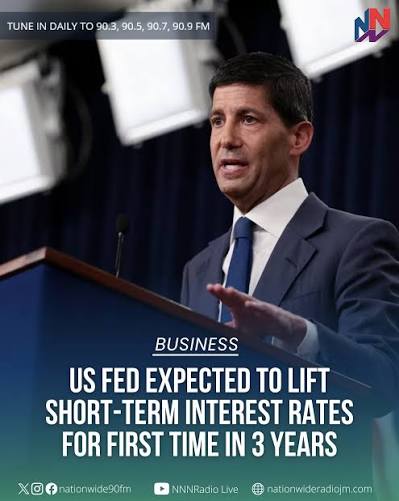
The Federal Reserve rate hike debate has reached a critical moment as U.S. policymakers prepare to announce their September 2026 interest-rate decision. Markets are widely expecting the central bank to raise borrowing costs, which would mark the first increase in the federal funds rate since 2023.
The expected move comes as inflation remains well above the Federal Reserve’s 2% target. At the same time, economic growth has remained relatively resilient, creating a difficult policy environment for the central bank.
The Federal Open Market Committee is meeting on September 15–16, with the rate decision scheduled for Wednesday. Ahead of the announcement, financial markets have increasingly priced in a quarter-point increase. Several major banks, including Goldman Sachs, JPMorgan, HSBC and Deutsche Bank, have forecast a 25-basis-point hike.
However, the decision is not simply about one interest-rate increase. Investors are also watching what Fed Chair Kevin Warsh says about future policy, inflation and the possibility of additional rate increases.
Why Is the Federal Reserve Considering a Rate Hike?

The central issue is inflation.
The Federal Reserve aims to achieve maximum employment and stable prices, with a longer-run inflation goal of approximately 2%. However, inflation has remained significantly above that objective.
According to the Federal Reserve Bank of San Francisco, headline personal consumption expenditures, or PCE, inflation reached 3.7% in July 2026. Core PCE inflation, which excludes food and energy prices, stood at 3.3%.
That matters because core inflation can provide policymakers with a clearer view of underlying price pressures.
Moreover, inflation has not returned to the Fed’s target as quickly as policymakers would like. As a result, officials face pressure to prevent higher prices from becoming entrenched.
August CPI Adds to Inflation Concerns
The latest consumer inflation data has strengthened expectations for a Federal Reserve rate hike.
The Consumer Price Index increased 0.4% in August. On an annual basis, consumer prices were up 3.4%, according to reporting following the August inflation release. Core prices increased 0.3% during the month.
Gasoline prices were an important contributor to the monthly increase. However, policymakers are also watching inflation outside energy because broader price increases can make inflation more persistent.
The August CPI report therefore changed the conversation around the September meeting. Before the report, some analysts expected the Fed to leave rates unchanged. After the report, expectations shifted strongly toward a rate increase.
First Federal Reserve Rate Hike Since 2023
If the Federal Reserve raises rates in September 2026, it would be the first increase since July 2023.
The current target range has been 3.50% to 3.75%. A quarter-point increase would take the target range to approximately 3.75% to 4.00%.
That would represent an important change in monetary-policy direction.
For much of the recent period, investors had been focused on the possibility of lower interest rates. Instead, persistent inflation has pushed expectations toward tighter policy.
The shift demonstrates how quickly monetary-policy expectations can change when economic data surprises markets.
What Is Driving Inflation Pressure?
Several factors are contributing to the current inflation environment.
Energy Prices
Energy costs have become an important source of price pressure. Higher gasoline prices directly affect household budgets and can also increase transportation costs for businesses.
Those higher costs can eventually spread into other goods and services.
Goods Prices
The Federal Reserve Bank of San Francisco has highlighted elevated goods prices as one contributor to higher inflation in 2026. Food, energy and goods categories together accounted for a substantial share of headline PCE inflation in July.
Services Inflation
Services inflation also remains important.
Housing-related inflation has moderated compared with earlier periods, but other services remain relatively expensive. The San Francisco Fed noted that inflation in services excluding housing remained elevated.
Therefore, the Fed cannot focus only on gasoline or food prices. Officials need to determine whether inflation is broadening across the economy.
Fed Officials Signal Concern About Inflation
Recent comments from Federal Reserve officials have added to expectations of tighter policy.
Fed Governor Michael Barr said earlier in September that if inflation does not moderate sufficiently, policymakers should be prepared to raise rates. He also noted that the economy and labor market remained relatively stable.
Fed Chair Kevin Warsh has similarly emphasized the need for underlying inflation to move toward the central bank’s objective.
That language is important because markets are not simply watching the September decision. Investors want to know whether a possible hike would be a one-time adjustment or the beginning of a longer tightening cycle.
The Labor Market Creates a Complication
Inflation is not the only issue facing the Federal Reserve.
The labor market has shown signs of slowing.
The Federal Reserve Bank of San Francisco reported that the unemployment rate was 4.1% in July. It also noted that monthly job gains had weakened, with payroll growth averaging only about 44,300 jobs per month over the six months through July.
This creates a difficult balance.
Higher interest rates can reduce demand and help control inflation. However, they can also slow hiring, investment and economic activity.
Consequently, the Fed must consider both sides of its mandate.
A more aggressive approach could help bring inflation down faster, but it could also increase pressure on interest-sensitive parts of the economy.
What Would a Federal Reserve Rate Hike Mean for Consumers?
A rate hike would not immediately change every borrowing cost by the same amount.
However, higher Fed rates generally increase the cost of borrowing throughout the financial system.
Credit Cards
Credit-card rates are often tied to short-term interest-rate benchmarks. Therefore, consumers with variable-rate credit-card balances could see borrowing costs remain elevated or increase further.
For households carrying significant balances, even a small increase can add to monthly interest expenses.
Auto Loans
Car loans can also become more expensive when market interest rates rise.
Consumers planning to finance a vehicle may therefore face higher monthly payments compared with an environment of falling rates.
Mortgages
Mortgage rates do not move one-for-one with the federal funds rate. They are influenced heavily by longer-term Treasury yields and expectations about inflation and future monetary policy.
Nevertheless, a Fed hike can affect mortgage-market expectations.
Recent reporting indicated that mortgage rates were already above 7%, adding to affordability challenges for potential homebuyers.
Savings Accounts
Higher interest rates can have a positive effect on savers.
Banks may offer higher yields on savings accounts, certificates of deposit and other interest-bearing products when market rates remain elevated.
Therefore, the effect of a Federal Reserve rate hike differs depending on whether a household is primarily a borrower or a saver.
What Could the Rate Hike Mean for Stocks?
Stock investors are closely watching the Fed because interest rates affect corporate borrowing, consumer spending and valuations.
Higher rates can increase financing costs for companies. At the same time, investors may demand higher returns from riskier assets when safer bonds offer more attractive yields.
However, the market reaction depends on more than the rate decision itself.
If investors already expect a 25-basis-point increase, the hike may be largely reflected in asset prices. In that situation, Fed Chair Kevin Warsh’s comments and the central bank’s future guidance could matter more than the immediate decision.
Reuters reported that the bond market had already reacted to changing expectations, with the 10-year Treasury yield moving above 5%.
Treasury Yields Are an Important Signal
Treasury yields provide clues about investor expectations for inflation, economic growth and future interest rates.
When investors expect rates to remain higher for longer, longer-term Treasury yields can rise.
That matters because Treasury yields influence borrowing costs across the economy.
For example, mortgage rates and corporate borrowing costs can be affected by movements in longer-term bond yields.
Therefore, investors will be watching the Treasury market closely after the Fed announcement.
Will the Federal Reserve Keep Raising Rates?
That remains uncertain.
A September rate increase does not automatically mean that additional hikes will follow.
The Fed will have to assess incoming data on inflation, employment, economic growth and financial conditions.
The Federal Reserve Bank of San Francisco has said that financial markets had shifted toward expectations of additional tightening, with markets previously pricing a federal funds rate around 4.25% by mid-2027.
Still, market expectations can change quickly.
If inflation begins falling consistently, policymakers could decide that additional increases are unnecessary.
On the other hand, if inflation remains stubbornly high, the Fed could face pressure to keep rates elevated.
Why the Fed Cannot Ignore Inflation
Inflation reduces the purchasing power of money.
When prices rise faster than wages or household income, consumers may find it harder to afford everyday necessities.
Persistent inflation can also make it difficult for businesses to plan investments, wages and pricing.
For that reason, the Federal Reserve has repeatedly emphasized its 2% inflation goal.
The current environment is particularly challenging because some inflation pressures may come from supply-side factors, including energy and goods prices. Interest rates cannot directly produce more oil, lower tariffs or eliminate supply disruptions.
Nevertheless, monetary policy can influence overall demand.
If demand becomes weaker, businesses may have less ability to pass higher costs onto consumers.
The Risk of Raising Rates Too Much
There is also a risk on the other side.
If the Federal Reserve raises rates too aggressively, it could slow economic growth more than necessary.
Higher borrowing costs can discourage businesses from investing and consumers from making large purchases.
Housing can also become less affordable when mortgage rates remain elevated.
The labor market could weaken further if companies reduce hiring or investment.
Some economists therefore argue that the Fed should proceed cautiously. Recent analysis has highlighted disagreement among economists over whether inflation is sufficiently persistent to justify an immediate hike.
This disagreement is important because the current economy presents mixed signals: inflation is elevated, but some labor-market indicators are weakening.
The Importance of Kevin Warsh’s Guidance
The September 2026 meeting also has significance because it comes during Kevin Warsh’s tenure as Federal Reserve chair.
Markets are watching how he communicates the Fed’s approach to inflation.
A rate increase accompanied by warnings about continued inflation could lead investors to expect additional tightening.
Conversely, a hike accompanied by language suggesting patience could reduce expectations for another immediate increase.
Therefore, the post-meeting press conference and updated economic projections could be just as important as the rate decision itself.
What Happens Next?
The Federal Reserve’s September decision will provide the next major signal for monetary policy.
Investors will focus on three things:
- The size of the rate move
- The Fed’s updated economic projections
- Kevin Warsh’s comments about future policy
The first question is straightforward: Will policymakers raise rates?
The second question is more complicated: What will officials expect inflation and economic growth to look like in the coming months?
Finally, markets will want to know whether the Fed considers the expected hike sufficient or whether additional tightening could be necessary.
Federal Reserve Rate Hike: What Consumers Should Watch
Consumers should pay attention to interest rates even if they do not directly follow the Federal Reserve.
People with variable-rate debt should monitor borrowing costs.
Homebuyers should watch mortgage rates rather than assuming they will move directly with the Fed’s policy rate.
Savers, meanwhile, may benefit from higher yields if banks pass higher market rates through to deposit products.
Businesses should also monitor financing conditions because higher interest costs can affect investment decisions.
Ultimately, the impact of a Federal Reserve rate hike will depend on how long rates remain elevated and how inflation develops.
Conclusion
The expected Federal Reserve rate hike in September 2026 represents a major shift after more than three years without an increase.
Inflation remains the central concern. July PCE inflation was 3.7%, while August CPI inflation reached 3.4% annually. Core inflation also showed continued pressure.
At the same time, the labor market has shown signs of cooling, creating a difficult policy trade-off.
Markets are widely expecting a quarter-point increase, potentially moving the federal funds target range to 3.75%–4.00%.
However, the most important question may be what happens after September.
If inflation remains elevated, additional rate increases could remain part of the discussion. If inflation falls meaningfully toward the Fed’s 2% goal, policymakers could have more room to pause.
For consumers, investors and businesses, the September decision is therefore more than a single rate announcement. It is a signal about how the Federal Reserve intends to balance inflation control, economic growth and employment in the months ahead.
FAQs About the Federal Reserve Rate Hike
What is the Federal Reserve rate hike expected in September 2026?
Markets are widely expecting a 25-basis-point increase at the September 15–16, 2026 meeting. If implemented, the federal funds target range would move from 3.50%–3.75% to approximately 3.75%–4.00%.
Why is the Federal Reserve considering raising interest rates?
The main reason is persistent inflation. U.S. inflation remains above the Federal Reserve’s 2% target, while recent CPI and PCE data indicate continued price pressure.
When was the last Federal Reserve rate hike?
The expected September 2026 increase would be the first Federal Reserve rate hike since July 2023.
How does a Fed rate hike affect mortgage rates?
Mortgage rates do not move directly with the federal funds rate. However, Fed policy can influence Treasury yields and broader financial conditions, which can affect mortgage rates.
Will a Federal Reserve rate hike increase credit-card costs?
It can. Many credit-card rates are variable, so higher short-term interest rates can increase borrowing costs for consumers carrying balances.
Could a Fed rate hike help reduce inflation?
Higher interest rates can reduce economic demand and borrowing, which can help ease inflationary pressure over time. However, the effect is not immediate and depends on the causes of inflation.
Will the Federal Reserve continue raising rates after September 2026?
That is not yet certain. Future decisions will depend on inflation, employment, economic growth and financial conditions. Market expectations currently include the possibility of further tightening, but those expectations can change as new data arrive.
What should investors watch after the Fed meeting?
Investors will be watching the interest-rate decision, updated economic projections, Treasury yields and Kevin Warsh’s comments about the future direction of monetary policy.
What is the Federal Reserve’s inflation target?
The Federal Reserve’s longer-run inflation goal is 2%, measured through the Personal Consumption Expenditures price index.
Why is the September 2026 Fed meeting important?
The meeting could mark the first U.S. interest-rate increase since 2023. It will also provide new guidance on how policymakers intend to respond to inflation that remains above target while the labor market shows signs of cooling.
About the Author