Byron Allen Move: Media Empire Growth, Billion-Dollar Push, Hollywood Reacts
Byron Allen has once again captured Hollywood’s attention with his relentless expansion strategy and billion-dollar ambitions. Over the past decade, Allen has transformed himself from comedian and television host into one of the most powerful media moguls in America. His growing influence across television, streaming, film distribution, local broadcasting, and digital media has made him a disruptive force in the entertainment industry.
Hollywood executives, investors, and media analysts are closely watching Allen’s latest moves as he continues building an empire that competes with legacy media giants. His aggressive acquisitions, strategic investments, and outspoken stance on media ownership diversity have positioned him as a major player in the future of entertainment.
The rise of Allen’s media empire is more than a business story. It represents a larger shift happening inside Hollywood, where independent ownership, streaming competition, and minority-led media companies are gaining momentum.
Byron Allen’s Journey From Comedian to Media Mogul

Many people first knew Byron Allen as a stand-up comedian and television personality. He began his career performing comedy at a young age before landing opportunities in television hosting. However, Allen’s long-term vision extended far beyond entertainment appearances.
In the early 1990s, he founded what would later become Allen Media Group, formerly known as Entertainment Studios. The company initially focused on syndicated television programming, producing affordable shows for local television stations.
Allen developed a business model based on owning content instead of simply appearing in it. That strategy became the foundation for his future empire.
Unlike many Hollywood personalities who rely heavily on studio partnerships, Allen concentrated on full ownership. He repeatedly emphasized that content ownership creates long-term wealth and influence. That philosophy helped him steadily expand his media holdings over the years.
The Billion-Dollar Expansion Strategy
Allen’s expansion accelerated dramatically during the late 2010s and early 2020s. His company pursued acquisitions across multiple entertainment sectors, including television stations, streaming platforms, cable channels, and film distribution.
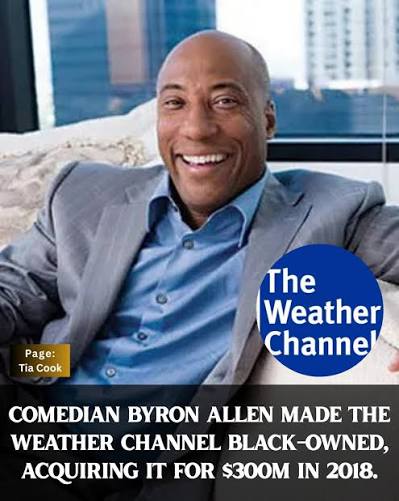
One of the most significant moves came when Allen acquired The Weather Channel in a deal reportedly valued at around $300 million. The acquisition surprised many media analysts because weather programming was considered a stable but highly competitive sector.
The Weather Channel purchase demonstrated Allen’s willingness to invest heavily in established media brands with strong audience loyalty. It also expanded his influence beyond entertainment and into news and information broadcasting.
Allen Media Group later expanded further through television station acquisitions across the United States. The company steadily built a portfolio of local broadcast stations, giving Allen greater control over content distribution and advertising revenue.
According to reports, the company’s assets reached approximately $1 billion while employing thousands of workers across multiple divisions.
Hollywood Reacts to Byron Allen’s Aggressive Moves
Hollywood reactions to Byron Allen’s rise have been mixed. Some industry executives praise him as an innovative entrepreneur who understands the changing media landscape. Others view him as a disruptive outsider challenging traditional entertainment power structures.
Allen has frequently criticized major media corporations for lack of diversity in ownership and advertising partnerships. His lawsuits against major corporations over discrimination and media access generated significant headlines in the entertainment world.
Supporters argue that Allen’s success highlights the importance of independent ownership in Hollywood. Many analysts point out that he built his empire without relying on inherited media assets or traditional studio systems.
Critics, however, question whether his rapid expansion can remain sustainable amid increasing competition from streaming giants and declining traditional television revenues.
Despite skepticism, Allen continues making ambitious moves that keep Hollywood talking.
Streaming Wars and Digital Media Ambitions
The streaming era has transformed entertainment economics, and Byron Allen clearly wants a strong position in that future.
Allen Media Group has invested in streaming content and digital platforms while expanding its network portfolio. The company operates multiple niche television channels focused on lifestyle, entertainment, pets, comedy, food, and travel programming.
These channels serve both traditional cable audiences and digital streaming viewers. Allen’s strategy appears focused on building scalable content libraries that can generate revenue across multiple platforms simultaneously.
This diversified approach differs from the high-risk spending models used by some streaming competitors. Instead of spending billions exclusively on prestige productions, Allen focuses on cost-efficient programming with broad syndication potential.
Industry observers believe this strategy could become increasingly valuable as media companies search for profitability in a crowded streaming environment.
Byron Allen’s Interest in Major Hollywood Deals
Allen has repeatedly demonstrated interest in acquiring major entertainment assets. In recent years, he made headlines with reported billion-dollar offers involving major media companies and broadcast groups.
His interest in acquiring large entertainment companies signaled his desire to compete directly with the biggest names in Hollywood. Reports connected Allen to discussions involving major television and film assets during ongoing industry consolidation.
Even when deals did not materialize, Allen’s involvement showed how seriously investors and executives now take his financial influence.
Media consolidation has become one of Hollywood’s defining trends. Companies continue merging to strengthen streaming libraries, advertising reach, and international distribution. Allen appears determined to ensure his company remains part of that evolving power structure.
The Starz Investment Sparks New Speculation
One of the latest developments attracting industry attention involved Allen acquiring a reported 11% stake in Starz Entertainment.
The investment sparked speculation about Allen’s future ambitions in premium entertainment and streaming. Starz remains an important brand within the television and digital subscription market, making the investment strategically significant.
Analysts believe the move could position Allen for future partnerships, content expansion, or broader influence within subscription entertainment.
Hollywood insiders immediately began debating whether Allen could eventually pursue even larger premium media acquisitions.
Why Byron Allen’s Business Model Stands Out
Allen’s business philosophy differs from many traditional entertainment executives.
Instead of chasing celebrity-driven prestige alone, he focuses heavily on scalable business infrastructure. His company prioritizes:
- Content ownership
- Syndication revenue
- Advertising partnerships
- Distribution control
- Long-term asset growth
- Cross-platform monetization
This approach resembles classic media empire building rather than purely streaming-era experimentation.
Allen also built many of his early programs using cost-efficient production techniques. According to reports, some of his television operations were developed with remarkably low budgets compared to mainstream Hollywood standards.
That discipline helped Allen survive periods when many independent production companies struggled financially.
Diversity and Representation in Media Ownership
A major aspect of Byron Allen’s public identity involves advocacy for diversity in media ownership.
Allen has repeatedly argued that minority ownership in major media remains extremely limited despite decades of diversity discussions inside Hollywood.
His legal battles and public statements often focus on advertising access, distribution fairness, and inclusion within corporate media structures.
For many supporters, Allen’s success symbolizes progress toward broader ownership representation in entertainment. Rather than simply promoting on-screen diversity, Allen emphasizes the importance of controlling infrastructure and distribution networks.
This message resonates strongly within conversations about economic power inside Hollywood.
Challenges Facing Allen Media Group
Despite impressive growth, Allen’s empire faces significant challenges.
The media industry remains highly volatile due to:
- Declining cable subscriptions
- Streaming competition
- Advertising uncertainty
- Rising production costs
- Audience fragmentation
Traditional television companies continue struggling with shifting consumer behavior, especially among younger viewers who increasingly prefer digital streaming platforms.
Allen Media Group must also compete against massive corporations with enormous content budgets and global distribution systems.
Additionally, expansion through acquisitions can create financial pressure if advertising markets weaken or integration costs rise.
Still, Allen has consistently shown willingness to adapt his strategy to changing market conditions.
Hollywood’s Future May Include More Independent Empires
Byron Allen’s rise reflects broader changes happening across the entertainment business.
For decades, Hollywood power remained concentrated among a relatively small group of legacy studios and corporate giants. However, digital distribution and changing audience habits created opportunities for independent entrepreneurs.
Allen’s success demonstrates that media ownership is no longer limited exclusively to traditional studio families or multinational conglomerates.
Independent companies can now compete through strategic acquisitions, digital platforms, and targeted content strategies.
Some analysts believe the future entertainment industry could become more decentralized, with specialized media groups serving different audience segments rather than relying solely on massive studio systems.
Allen appears determined to position his company at the center of that transformation.
Public Reaction to Byron Allen’s Growth
Public reaction to Byron Allen’s expansion has been largely positive, especially among audiences interested in entrepreneurship and representation.
Many social media users and entertainment observers praise Allen for building a billion-dollar company from modest beginnings. His story frequently appears in discussions about Black entrepreneurship and media ownership.
Fans also admire Allen’s persistence. Despite skepticism from some Hollywood insiders, he continued expanding steadily while avoiding many of the dramatic collapses experienced by other entertainment startups.
Business analysts often point to Allen as an example of disciplined long-term growth instead of hype-driven expansion.
At the same time, critics question whether the company can maintain momentum as industry economics continue evolving.
Regardless of opinions, Allen has undeniably become one of the most discussed figures in modern media business conversations.
The Importance of Ownership in Modern Entertainment
One of the central lessons from Byron Allen’s rise involves ownership.
Allen consistently emphasizes that controlling intellectual property, distribution systems, and advertising relationships creates long-term leverage in entertainment.
This strategy became increasingly important during the streaming revolution, where companies owning large content libraries gained major competitive advantages.
Hollywood’s current business environment rewards companies capable of monetizing content across:
- Cable television
- Streaming platforms
- Digital advertising
- International licensing
- Syndication markets
- Mobile distribution
Allen Media Group’s diversified structure reflects this reality.
Could Byron Allen Become One of Hollywood’s Biggest Power Brokers?
As Allen continues expanding, many observers wonder how large his empire could eventually become.
His recent investments and acquisition attempts suggest ambitions extending far beyond niche broadcasting. Industry insiders increasingly mention Allen alongside major media executives when discussing future entertainment consolidation.
If Allen continues acquiring strategic assets while maintaining financial discipline, he could become one of Hollywood’s most influential independent media owners.
His combination of entrepreneurial instincts, aggressive dealmaking, and ownership-focused strategy has already reshaped perceptions about independent media growth.
Hollywood clearly continues paying attention.
Conclusion
Byron Allen has evolved from entertainer to major media power player through persistence, strategic acquisitions, and a relentless focus on ownership. His billion-dollar push into broadcasting, streaming, and premium entertainment continues generating strong reactions across Hollywood.
While challenges remain in the rapidly changing media industry, Allen’s empire demonstrates how independent entrepreneurs can still reshape entertainment power structures in the digital era.
Whether through television stations, streaming investments, or future acquisitions, Byron Allen appears committed to expanding his influence even further. Hollywood may still be adjusting to his rise, but few now doubt that he has become a major force in modern media.
FAQs
Who is Byron Allen?
Byron Allen is an American entrepreneur, comedian, television producer, and founder of Allen Media Group.
What is Allen Media Group?
Allen Media Group is a media company involved in television production, broadcasting, film distribution, digital media, and streaming operations.
Did Byron Allen buy The Weather Channel?
Yes. Allen Media Group acquired The Weather Channel in a deal valued at approximately $300 million.
Why is Byron Allen important in Hollywood?
Allen is considered important because he built one of the largest independently owned media companies in America while advocating for greater diversity in media ownership.
What recent investment made headlines for Byron Allen?
Allen recently gained attention for acquiring a stake in Starz Entertainment, sparking speculation about future entertainment expansion.
What makes Byron Allen’s business strategy different?
Allen focuses heavily on ownership, scalable programming, syndication revenue, and long-term asset growth rather than relying solely on celebrity-driven content strategies.
Is Byron Allen involved in streaming media?
Yes. Allen Media Group operates digital channels and streaming-related media operations while expanding across television and online distribution platforms.
How useful was this post?
Click on a star to rate it!
Average rating 0 / 5. Vote count: 0
No votes so far! Be the first to rate this post.
About the Author

usa5911.com
Administrator
Hi, I’m Gurdeep Singh, a professional content writer from India with over 3 years of experience in the field. I specialize in covering U.S. politics, delivering timely and engaging content tailored specifically for an American audience. Along with my dedicated team, we track and report on all the latest political trends, news, and in-depth analysis shaping the United States today. Our goal is to provide clear, factual, and compelling content that keeps readers informed and engaged with the ever-changing political landscape.