Electoral Calculus Buzz: New Poll Model, Seat Predictions, UK Reacts
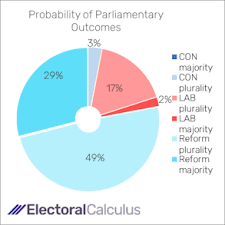
British politics is once again being shaken by a wave of new polling analysis, and at the centre of the discussion is Electoral Calculus. The forecasting platform’s latest MRP-based seat projections have triggered major reactions across Westminster, social media, and political circles throughout the United Kingdom.
With projections suggesting dramatic changes in party fortunes, the latest Electoral Calculus model has become one of the most talked-about political developments in Britain. Reform UK’s rise, Labour’s slipping numbers, Conservative uncertainty, and Green Party momentum are all contributing to a rapidly changing political environment.
As Britain heads deeper into another intense political cycle, many voters, analysts, and campaign strategists are asking the same question: how accurate are these forecasts, and what do they reveal about the future of UK politics?
What Is Electoral Calculus?
Electoral Calculus is a British political forecasting and polling analysis platform known for predicting UK election outcomes using statistical modelling. Founded by Martin Baxter, the site combines polling data, demographics, historical voting behaviour, and constituency-level analysis to estimate election results.
Over the years, Electoral Calculus has built a reputation for producing detailed forecasts that often influence media coverage and political debate. The platform gained particular attention during recent UK general elections due to its use of MRP polling — short for Multi-level Regression and Post-stratification.
MRP polling attempts to estimate voting behaviour at constituency level rather than relying only on national vote share. That allows analysts to model how support shifts across specific regions and demographic groups.
In the current political climate, where Britain’s electoral map appears increasingly fragmented, constituency-level forecasting has become more important than ever.
The New Poll Model Creating Buzz
The latest Electoral Calculus projections released in April and May 2026 have sparked enormous discussion because of one striking conclusion: Reform UK could emerge as the largest party in Parliament if current trends continue.
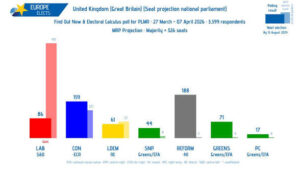
One recent MRP poll conducted for PLMR suggested the following possible seat outcomes:
- Reform UK: 188 seats
- Conservatives: 159 seats
- Labour: 86 seats
- Greens: 71 seats
- Liberal Democrats: 61 seats
- Plaid Cymru: 17 seats
Other Electoral Calculus projections have shown Reform potentially winning as many as 248 or even 266 seats under different modelling scenarios.
These numbers are politically explosive because they suggest a historic collapse in support for Britain’s two traditional major parties — Labour and the Conservatives.
For decades, UK politics has largely revolved around a two-party system. The latest forecasts indicate that British politics may now be entering a more fragmented and unpredictable era.
Why Reform UK Is Surging
Much of the discussion around the new Electoral Calculus model focuses on the rise of Reform UK.
The party, associated with populist and anti-establishment messaging, has benefited from voter frustration surrounding immigration, living costs, public services, taxation, and dissatisfaction with traditional parties.
Recent polling averages show Reform UK consistently performing strongly nationwide.
Electoral Calculus projections indicate that Reform’s support is translating efficiently into parliamentary seats because of geographic concentration and shifting voter coalitions.
Analysts suggest several factors are driving the surge:
1. Conservative Vote Collapse
Many former Conservative voters appear to be moving toward Reform UK. Polling trends show the Conservatives struggling to maintain support after years of internal division and electoral setbacks.
2. Labour Disillusionment
Some working-class voters who previously backed Labour are also drifting away, particularly in areas facing economic pressure.
3. Anti-Establishment Energy
Reform UK continues to position itself as an outsider movement challenging political elites in Westminster.
4. Media Visibility
High-profile debates, social media campaigns, and controversial political messaging have helped keep Reform UK in headlines.
Labour’s Difficult Position
The latest Electoral Calculus forecasts are particularly troubling for Labour Party.
Despite winning a large parliamentary majority in 2024, some models now project Labour falling below 100 seats.
That dramatic decline reflects growing public frustration in several areas:
- Economic concerns
- NHS waiting times
- Taxation debates
- Housing affordability
- Immigration policy
- Internal party tensions
Polling experts caution that projections remain fluid, but the trend lines are clearly concerning for Labour strategists.
Several commentators argue that Labour’s challenge is not simply losing voters to one rival. Instead, support appears to be fragmenting in multiple directions — toward Reform UK, the Greens, Liberal Democrats, and regional nationalist parties.
Conservatives Face Historic Pressure
The Conservative Party is also under enormous pressure according to current projections.
While some forecasts place the Conservatives ahead of Labour in seats, the party still faces the possibility of losing significant portions of its traditional support base.
Political analysts say the Conservatives are trapped between competing electoral pressures:
- Losing right-wing voters to Reform UK
- Struggling to regain moderate centrist voters
- Managing internal ideological divisions
- Addressing economic concerns after years in government
This creates a difficult balancing act for Conservative leadership.
Some projections even suggest a future coalition or informal cooperation between Reform UK and Conservatives could become politically relevant in a hung parliament scenario.
Green Party and Liberal Democrat Momentum
Another major talking point in the Electoral Calculus projections is the growing strength of smaller parties.
The Green Party of England and Wales is projected in some forecasts to win dozens of seats, a dramatic improvement compared to previous elections.
The party’s rise reflects:
- Increased climate change concern
- Progressive voter frustration with Labour
- Strong local campaigning
- Younger voter engagement
Meanwhile, the Liberal Democrats continue to maintain relevance in southern England and tactical voting areas.
Britain’s political landscape increasingly resembles a multi-party competition rather than a traditional two-party contest.
What Makes MRP Polling Different?
One reason Electoral Calculus forecasts attract so much attention is the use of MRP modelling.
Traditional polling simply estimates national vote share. MRP goes much deeper.
The model examines:
- Age
- Education
- Region
- Previous voting behaviour
- Socioeconomic status
- Constituency demographics
This allows analysts to estimate how individual seats could change hands.
MRP gained major recognition during recent UK elections after successfully predicting several unexpected outcomes.
However, experts also warn that no model is perfect.
Political events can shift rapidly, especially during campaigns. Debates, scandals, economic shocks, leadership changes, and turnout differences can all dramatically affect final results.
UK Public Reactions Online
The latest Electoral Calculus forecasts have triggered intense reactions online.
Across social media platforms, users have debated whether the projections represent genuine political change or temporary polling volatility.
Supporters of Reform UK argue the forecasts prove Britain is experiencing a political realignment.
Labour supporters claim current dissatisfaction will fade before the next election.
Conservative activists argue polling exaggerates Reform momentum.
Meanwhile, many undecided voters appear increasingly frustrated with the overall political system.
Political discussion forums and commentators have also focused heavily on whether Britain is entering an era of permanent coalition politics.
Polling Experts Urge Caution
Despite the excitement surrounding the projections, polling analysts continue to stress caution.
Individual polls can fluctuate significantly due to:
- Sample variation
- Turnout assumptions
- Timing of fieldwork
- Regional weighting
- Undecided voters
Polling expert Mark Pack recently noted that voters should avoid overreacting to individual surveys and instead focus on longer-term trends.
That warning is particularly relevant in Britain’s first-past-the-post electoral system, where small vote shifts can create massive seat swings.
The Future of UK Politics
The latest Electoral Calculus projections may ultimately prove inaccurate in exact numbers, but they clearly reveal one important reality: British politics is undergoing major change.
Several long-term trends appear increasingly visible:
Fragmentation of Major Parties
Labour and Conservatives no longer dominate voter loyalty in the same way they once did.
Rise of Smaller Parties
Reform UK, Greens, Liberal Democrats, Plaid Cymru, and regional movements are gaining visibility.
Volatile Voters
Modern voters appear more willing to switch parties between elections.
Issue-Based Politics
Economic pressure, immigration, housing, and identity politics are reshaping voting behaviour.
Can Electoral Calculus Predict the Next Election Correctly?
That remains the biggest question.
Historically, Electoral Calculus has achieved a reasonably strong track record in identifying overall election trends.
Still, forecasting modern elections has become increasingly difficult because of voter volatility and rapid political change.
Several factors could dramatically alter future projections:
- Leadership changes
- Economic recovery or recession
- International crises
- Immigration debates
- Public service performance
- Campaign strategy
- Tactical voting
As a result, today’s projections should be viewed as indicators of political momentum rather than guaranteed outcomes.
Why the Electoral Calculus Buzz Matters
The reason the Electoral Calculus story has captured so much public attention is simple: it reflects growing uncertainty about Britain’s political future.
For years, UK politics followed relatively predictable patterns.
That stability now appears to be weakening.
Whether or not Reform UK eventually becomes the largest party, the current projections suggest that British politics is entering a highly competitive and fragmented phase.
For voters, campaigners, journalists, and political strategists, Electoral Calculus has become more than just a forecasting website. It is now a symbol of a political system in transition.
And with every new poll release, the debate only grows louder.
FAQs
What is Electoral Calculus?
Electoral Calculus is a UK political forecasting platform that predicts election outcomes using polling data and statistical models.
What does MRP polling mean?
MRP stands for Multi-level Regression and Post-stratification. It is a polling method used to estimate constituency-level election outcomes.
Why is Electoral Calculus trending?
The platform is trending because recent seat projections suggest major political changes in the UK, including strong gains for Reform UK.
Is Electoral Calculus accurate?
Electoral Calculus has correctly identified several election trends in the past, but like all polling models, forecasts are not guaranteed.
Which party is leading in current Electoral Calculus projections?
Recent projections suggest Reform UK could become the largest party in Parliament under certain scenarios.
Could the UK have a hung parliament?
Yes. Many recent forecasts suggest Britain could face another hung parliament with coalition negotiations becoming increasingly important.
Why are Labour and Conservatives losing support?
Analysts point to economic concerns, voter frustration, political fragmentation, and dissatisfaction with traditional parties.
Are smaller parties becoming more influential?
Yes. The Greens, Liberal Democrats, Plaid Cymru, and Reform UK are all gaining increased attention in recent polling models.
How useful was this post?
Click on a star to rate it!
Average rating 0 / 5. Vote count: 0
No votes so far! Be the first to rate this post.
About the Author

usa5911.com
Administrator
Hi, I’m Gurdeep Singh, a professional content writer from India with over 3 years of experience in the field. I specialize in covering U.S. politics, delivering timely and engaging content tailored specifically for an American audience. Along with my dedicated team, we track and report on all the latest political trends, news, and in-depth analysis shaping the United States today. Our goal is to provide clear, factual, and compelling content that keeps readers informed and engaged with the ever-changing political landscape.