US Ford: Carrier Deployment, Air Ops Ready, Naval Power, War Tension Surge
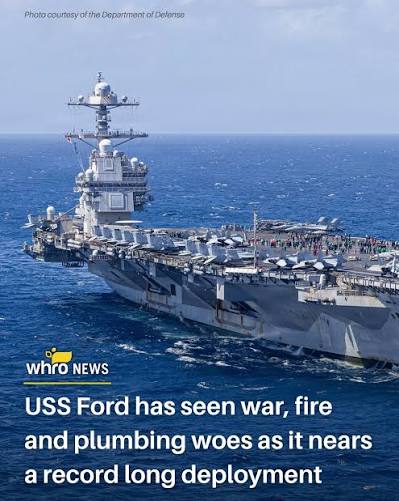
The deployment of the USS Gerald R. Ford (CVN-78) has become one of the most significant military developments shaping global security dynamics in 2026. As the United States strengthens its naval posture, the aircraft carrier stands at the forefront of strategic readiness, signaling power projection and rapid-response capability in regions experiencing rising tensions.
The USS Gerald R. Ford, widely recognized as the most advanced aircraft carrier ever built, has been central to recent naval movements and air operations readiness efforts. Its deployment aligns with broader U.S. military positioning amid heightened geopolitical tensions, particularly in regions such as the Middle East and Mediterranean.
Reports indicate that the carrier has been operating for extended periods at sea, nearing record-breaking deployment durations. These extended operations reflect both operational necessity and the increasing demand for naval deterrence in volatile areas.
This article explores the strategic significance of the USS Gerald R. Ford deployment, the readiness of its air operations, the role of naval power in modern warfare, and how rising war tensions are reshaping global military strategy.
USS Gerald R. Ford: The Most Advanced Naval Power Platform
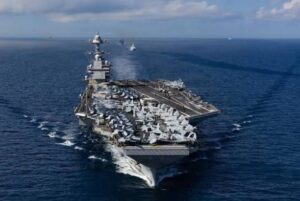
The USS Gerald R. Ford represents a new generation of aircraft carriers designed to enhance naval capability, operational efficiency, and strike power.
Key Features of USS Gerald R. Ford
The carrier belongs to the Gerald R. Ford-class aircraft carrier, a modern fleet built to replace older nuclear-powered carriers.
Major Technological Advancements
- Electromagnetic Aircraft Launch System (EMALS):
Allows faster aircraft launches and higher sortie rates than traditional steam catapults. - Advanced Arresting Gear:
Improves aircraft recovery efficiency and reduces stress on airframes. - Reduced Crew Requirements:
Automation reduces personnel requirements compared to older carriers. - Increased Electrical Power Capacity:
Supports future weapons such as directed-energy systems.
The carrier can host more than 80 aircraft, including advanced fighter jets and surveillance systems, enabling large-scale air operations from a single floating base.
Carrier Deployment: Strategic Movement and Global Impact
Route and Deployment Path
The USS Gerald R. Ford has been actively repositioned across major operational zones. Reports show that the carrier moved across the Atlantic toward strategic regions during rising tensions.
The carrier strike group traveled toward the Strait of Gibraltar and entered operational theaters aligned with U.S. Central Command priorities.
This movement marked a critical escalation in military readiness and signaled the United States’ willingness to maintain strong forward-deployed forces.
Record-Length Deployment Signals Rising Pressure
Recent reports indicate the USS Gerald R. Ford may set a modern record for the longest aircraft carrier deployment.
The carrier has already matched historic deployment lengths and could surpass previous records if operations continue.
Extended deployments highlight:
- Increasing operational demand
- Intensified geopolitical tension
- Greater reliance on naval deterrence
They also place additional stress on crew endurance and equipment readiness.
Air Operations Ready: Fighter Jets and Strike Capabilities
One of the most critical aspects of the USS Gerald R. Ford deployment is its air wing readiness.
Carrier Air Wing Strength
The ship supports advanced aircraft capable of executing multiple mission types.
Aircraft Types Typically Deployed
- F/A-18E/F Super Hornets
- EA-18G Growlers
- E-2D Hawkeye surveillance aircraft
- MH-60 helicopters
- F-35C Lightning II fighters
These aircraft allow the carrier to conduct:
- Air superiority missions
- Electronic warfare
- Precision strikes
- Reconnaissance and surveillance
Such readiness ensures rapid-response capability during crises.
High Sortie Rates and Rapid Launch Capability
Thanks to EMALS technology, the USS Gerald R. Ford can launch more aircraft in less time than previous carriers.
This improves:
- Strike speed
- Mission flexibility
- Combat sustainability
Faster launch cycles enhance operational dominance in high-intensity conflict scenarios.
Naval Power Projection: Strength Beyond Borders
Aircraft carriers like the USS Gerald R. Ford symbolize the ability of a nation to project power far beyond its borders.
Why Naval Power Matters
Naval power offers:
- Global reach
- Mobility
- Rapid response capability
- Strategic deterrence
A single carrier strike group can influence military outcomes across vast regions.
Multi-Carrier Strategy in High-Tension Regions
Reports suggest that the United States has deployed multiple carriers simultaneously to reinforce strategic positions.
The deployment of additional naval assets alongside USS Gerald R. Ford has created one of the largest concentrations of U.S. naval power in recent years.
This strategy increases flexibility and strengthens deterrence against potential adversaries.
War Tension Surge: Global Implications
Rising Geopolitical Friction
Recent military movements are closely tied to rising geopolitical tensions.
Increased U.S. naval activity in key maritime corridors reflects concerns over regional instability and strategic competition.
Analysts believe such deployments serve dual purposes:
- Deterrence
- Rapid combat readiness
Reports have highlighted growing military presence near conflict zones amid escalating tensions.
Strategic Deterrence and Messaging
The presence of USS Gerald R. Ford sends a clear signal to adversaries.
Military analysts describe such deployments as:
- A demonstration of military capability
- A deterrent against escalation
- A reassurance to allied nations
This signaling strategy helps maintain stability while preparing for potential conflict scenarios.
Operational Challenges During Deployment
While powerful, long deployments also present significant challenges.
Fire Incident Highlights Risks
During recent operations, a fire broke out aboard the USS Gerald R. Ford.
The incident:
- Took hours to contain
- Temporarily affected crew accommodations
- Demonstrated onboard emergency readiness
Despite the disruption, operations resumed without major casualties.
Crew Fatigue and Maintenance Demands
Extended missions can lead to:
- Crew exhaustion
- Equipment wear
- Increased maintenance needs
Reports suggest extended operational tempo has created logistical strain across carrier fleets.
Naval Aviation Role in Modern Warfare
Naval aviation has evolved into a decisive force in contemporary military strategy.
Precision Strike Capability
Modern carrier-based aircraft enable:
- Long-range missile strikes
- Targeted operations
- Coordinated air campaigns
Carrier air wings serve as floating airbases capable of delivering immediate combat response.
Integration with Allied Forces
Joint operations enhance mission effectiveness.
Allied aircraft and refueling tankers stationed in strategic locations allow carrier-based aircraft to operate across extended distances.
This integration strengthens coalition warfare capabilities.
Logistics and Support Systems Behind Deployment
A carrier deployment relies on extensive logistical support.
Supporting Fleet Elements
Typical strike group components include:
- Guided-missile destroyers
- Cruisers
- Supply ships
- Submarines
These vessels provide:
- Defense
- Resupply
- Intelligence support
Such coordination ensures sustained operational readiness.
The Future of Ford-Class Carriers
The USS Gerald R. Ford represents the beginning of a new era in naval warfare.
Expanding the Ford-Class Fleet
Multiple Ford-class carriers are currently under development to replace aging fleets.
Future carriers will:
- Enhance operational flexibility
- Increase sortie generation
- Reduce lifecycle costs
This modernization strategy aims to maintain naval superiority well into the future.
Strategic Importance in Global Conflict Scenarios
Deterrence Against Large-Scale Conflict
Aircraft carriers provide scalable military response options.
From humanitarian missions to full-scale combat operations, carriers enable rapid deployment of force without relying on foreign bases.
Regional Stability and Crisis Management
Carrier deployments help stabilize volatile regions.
Their presence:
- Supports diplomatic negotiations
- Provides emergency response capability
- Protects maritime trade routes
Such roles make carriers indispensable tools of modern geopolitics.
Military Readiness and Operational Tempo
Continuous Training and Readiness Drills
Carrier strike groups regularly conduct:
- Combat simulations
- Air defense drills
- Strike coordination exercises
These drills maintain readiness and ensure mission effectiveness.
Adapting to Modern Threats
Modern warfare includes:
- Cyber threats
- Drone warfare
- Hypersonic missiles
Aircraft carriers must evolve to counter emerging technologies.
Economic and Political Implications
Military deployments often have broader impacts beyond defense.
Economic Costs of Deployment
Aircraft carriers represent:
- Massive infrastructure investment
- High maintenance expenses
- Significant operational costs
Despite the expense, nations view carriers as essential strategic assets.
Political Messaging Through Military Presence
Deployments serve as diplomatic signals.
They demonstrate national commitment to security alliances and deterrence strategies.
Public and Global Reaction
The deployment of USS Gerald R. Ford has attracted worldwide attention.
International Observations
Global observers interpret such deployments as:
- Indicators of potential escalation
- Strategic defense preparation
- Signals of military readiness
Media coverage has amplified public awareness of these developments.
Domestic Considerations
Within the United States, extended deployments can raise questions about:
- Military sustainability
- Budget allocation
- Personnel welfare
Such debates influence defense policy decisions.
What Comes Next: Future Outlook
The future trajectory of USS Gerald R. Ford operations depends on evolving geopolitical dynamics.
Possible Scenarios
- Continued forward deployment
- Rotation with other carrier groups
- Increased multi-carrier operations
Military analysts predict ongoing naval presence in high-risk regions.
Long-Term Strategic Planning
Naval leadership continues to adapt deployment strategies to balance readiness with sustainability.
Maintaining operational tempo without overextending resources remains a critical priority.
FAQs: USS Gerald R. Ford Carrier Deployment
1. What is the USS Gerald R. Ford?
The USS Gerald R. Ford is the lead ship of a new class of U.S. Navy aircraft carriers designed to enhance combat capability and efficiency.
2. Why is the USS Gerald R. Ford deployment important?
Its deployment demonstrates U.S. military readiness and acts as a deterrent in regions experiencing rising geopolitical tensions.
3. What aircraft operate from the USS Gerald R. Ford?
Aircraft include F/A-18 Super Hornets, EA-18 Growlers, E-2 Hawkeye surveillance planes, and F-35C fighter jets.
4. How long can an aircraft carrier remain deployed?
Typical deployments last around seven months, but recent operations have extended beyond this timeframe due to strategic needs.
5. What role does naval power play in modern warfare?
Naval power allows nations to project force globally, maintain maritime security, and respond rapidly to emerging threats.
6. Has USS Gerald R. Ford faced any operational challenges?
Yes. Incidents such as onboard fires and extended deployment durations highlight the challenges of continuous operations.
Conclusion: USS Ford at the Heart of Modern Naval Strategy
The deployment of the USS Gerald R. Ford represents a defining moment in contemporary naval operations. As geopolitical tensions continue to rise, the role of advanced aircraft carriers has never been more critical. Their ability to launch sustained air operations, support allied missions, and maintain global presence underscores their importance in modern defense strategies.
With record-length deployments, intensified operational readiness, and expanded global reach, the USS Gerald R. Ford symbolizes the evolving face of naval power in the 21st century. As tensions fluctuate and military strategies evolve, the carrier will remain a cornerstone of deterrence and global stability in the years ahead.
How useful was this post?
Click on a star to rate it!
Average rating 0 / 5. Vote count: 0
No votes so far! Be the first to rate this post.
About the Author

usa5911.com
Administrator
Hi, I’m Gurdeep Singh, a professional content writer from India with over 3 years of experience in the field. I specialize in covering U.S. politics, delivering timely and engaging content tailored specifically for an American audience. Along with my dedicated team, we track and report on all the latest political trends, news, and in-depth analysis shaping the United States today. Our goal is to provide clear, factual, and compelling content that keeps readers informed and engaged with the ever-changing political landscape.